The Best Time to Drive After Drinking – What Science Actually Says
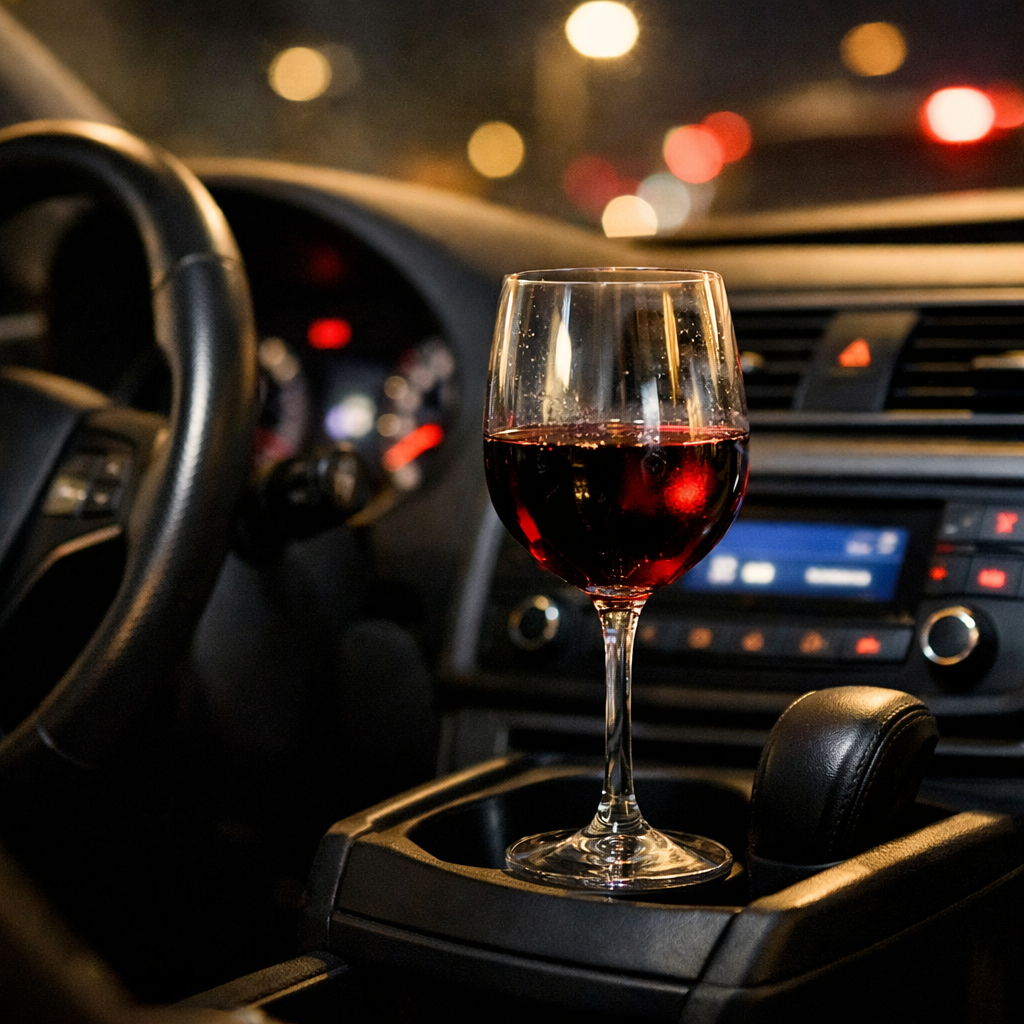
It was a Saturday night, and one person was sitting at a dinner table with friends. The evening was going well. There was good food, conversation, and a few drinks shared among everyone.
A couple of hours later, he looked at the clock and started thinking about heading home. “I feel fine now.” This is where understanding BAC becomes important.
Your BAC (Blood Alcohol Concentration) measures the amount of alcohol in your bloodstream. It is one of the main factors used to determine whether someone is legally impaired.
Many people search for quick answers -“How long after drinking can I drive?” “Can coffee lower my BAC?” “Does sleeping remove alcohol faster?” But the science is more complicated. The truth is that your body needs time.
Understanding What Happens After Your Last Drink
Imagine a person finishes the final drink at 10 PM. At that moment, many people assume the countdown to sobriety begins immediately. But alcohol does not disappear instantly.
Your body goes through different stages:
- Alcohol continues moving through your bloodstream
- Your BAC may continue changing after your last drink
- Your liver slowly breaks alcohol down
- Your reaction time and judgment may still be affected
A person may feel more alert after stopping drinking, but their BAC may still be elevated. This is why experts focus on time rather than quick fixes.
Why “I Feel Fine” Can Be Misleading
One of the biggest mistakes people make is using their feelings as a measurement. For example a girl attends a party and has several drinks. After a few hours, she feels:
- Less tired
- More energetic
- More confident
She assumes the alcohol has left her system. But inside her body, the liver is still processing alcohol. The brain can also become less aware of impairment, which makes people underestimate their condition. This is why someone can feel okay but still have a higher BAC than they expect.
How Long Does Alcohol Stay in Your System?
There is no single answer that works for everyone. Alcohol processing depends on several factors:
- Number of drinks consumed
- Alcohol percentage
- Body size
- Biological differences
- Food or Water intake
- How quickly drinks were consumed
A person who has one drink is not in the same situation as someone who has several drinks over a short period. This is why using a simple “one hour per drink” rule can be inaccurate.
The Science Behind BAC Reduction
Your liver does most of the work. Once alcohol enters your bloodstream, your body processes it at a relatively steady pace.
Things like:
- Drinking coffee
- Taking a cold shower
- Exercising
- Drinking water
- Eating food after drinking
may change how you feel, but they do not magically remove alcohol from your bloodstream.
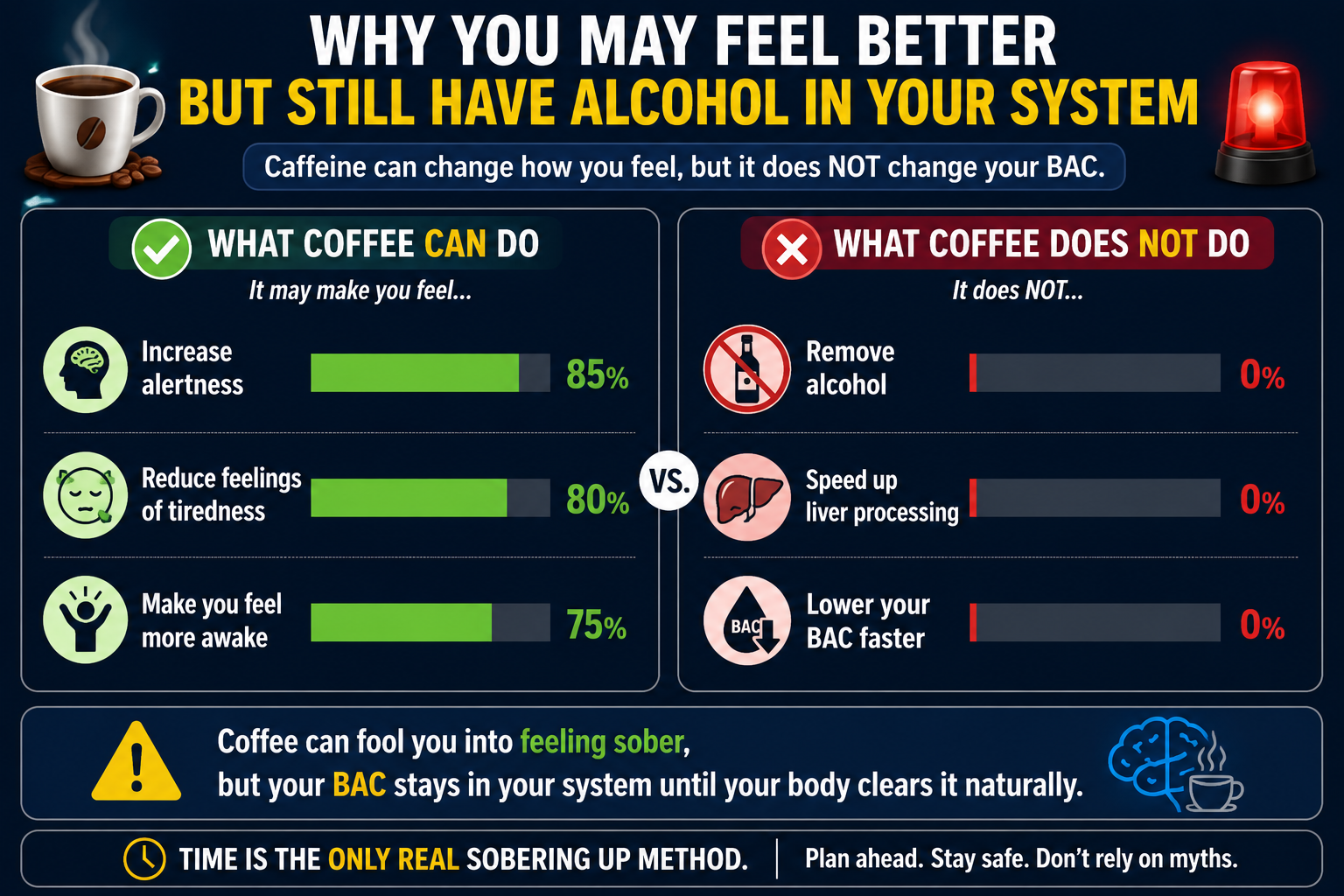
For example, a person drinks coffee before driving. The coffee may make another person feel more awake. But the BAC level has not suddenly dropped because of caffeine.
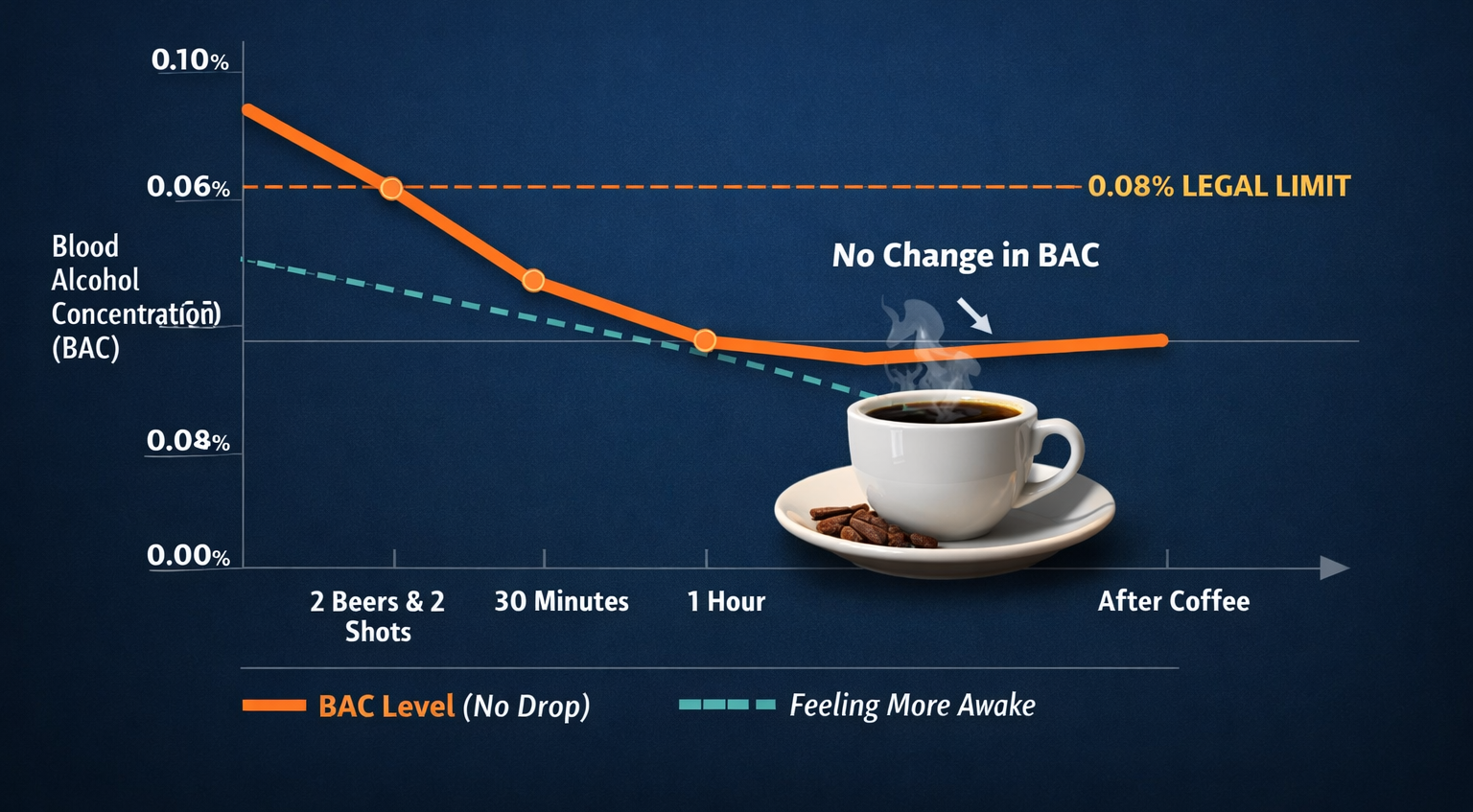
This creates a dangerous situation where confidence increases while alcohol remains in the body. Here is an example chart showing how alcohol levels can change over time.
| Time |
What May Happen |
|
| During drinking |
BAC begins increasing |
|
| Shortly after last drink |
BAC may still rise |
|
| Following hours |
Liver continues processing alcohol |
|
| Later period |
BAC gradually decreases |
|
Actual BAC varies from person to person. This is why waiting is the only reliable way for alcohol levels to reduce naturally.
Can a BAC Calculator Tell You When You Are Safe to Drive?
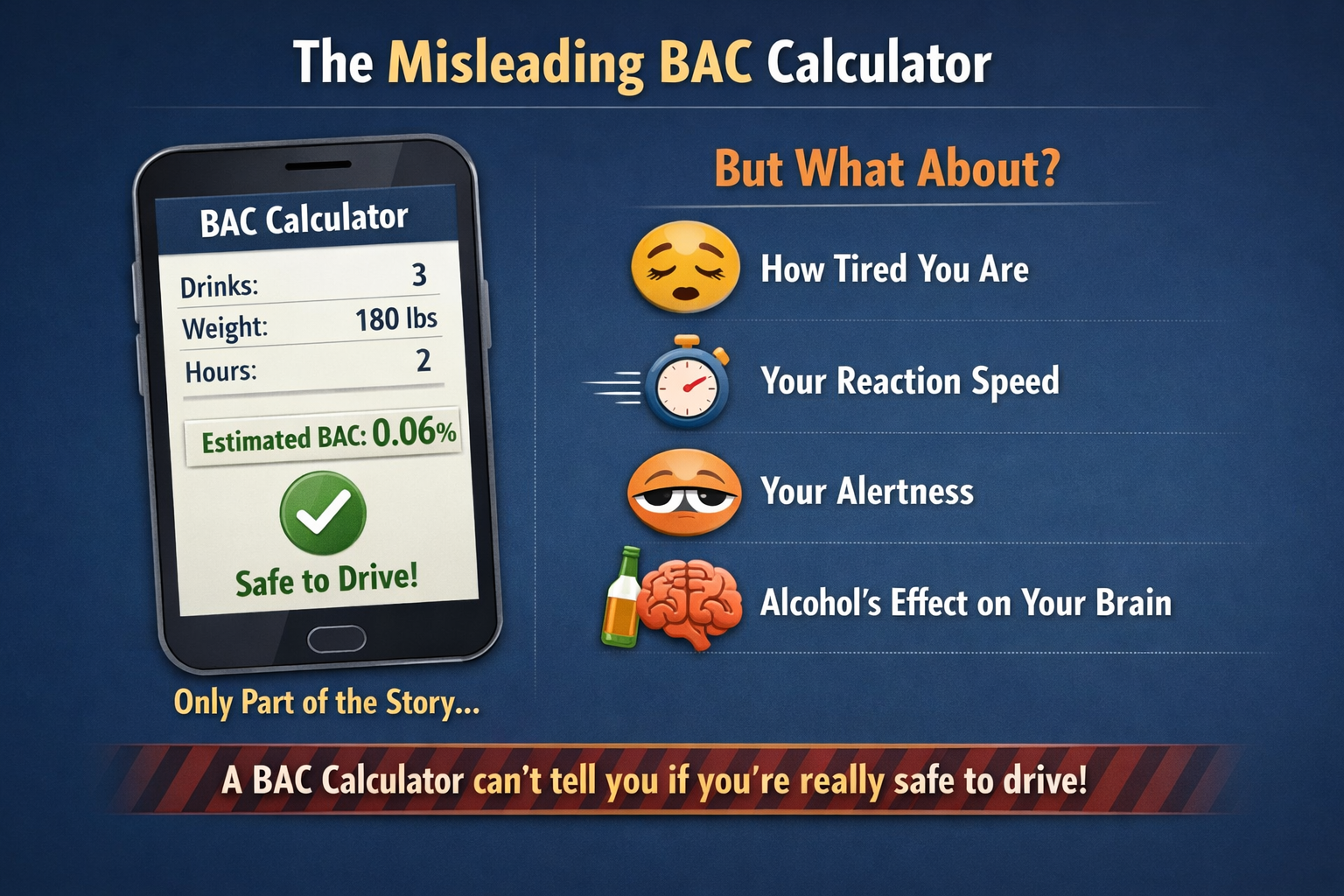
Many people use a BAC calculator online to estimate their alcohol level. A BAC calculator can be useful for understanding how alcohol affects the body.
However, it should not be treated as a guarantee that someone is safe to drive. Why? Because a BAC calculator usually estimates based on information like:
- Drinks consumed
- Time period
- Weight
- Gender
But it cannot perfectly measure:
- Your exact alcohol absorption
- Your metabolism
- Your current impairment
A BAC calculator is an educational tool, not a replacement for a real measurement.
What About the Legal Limit?
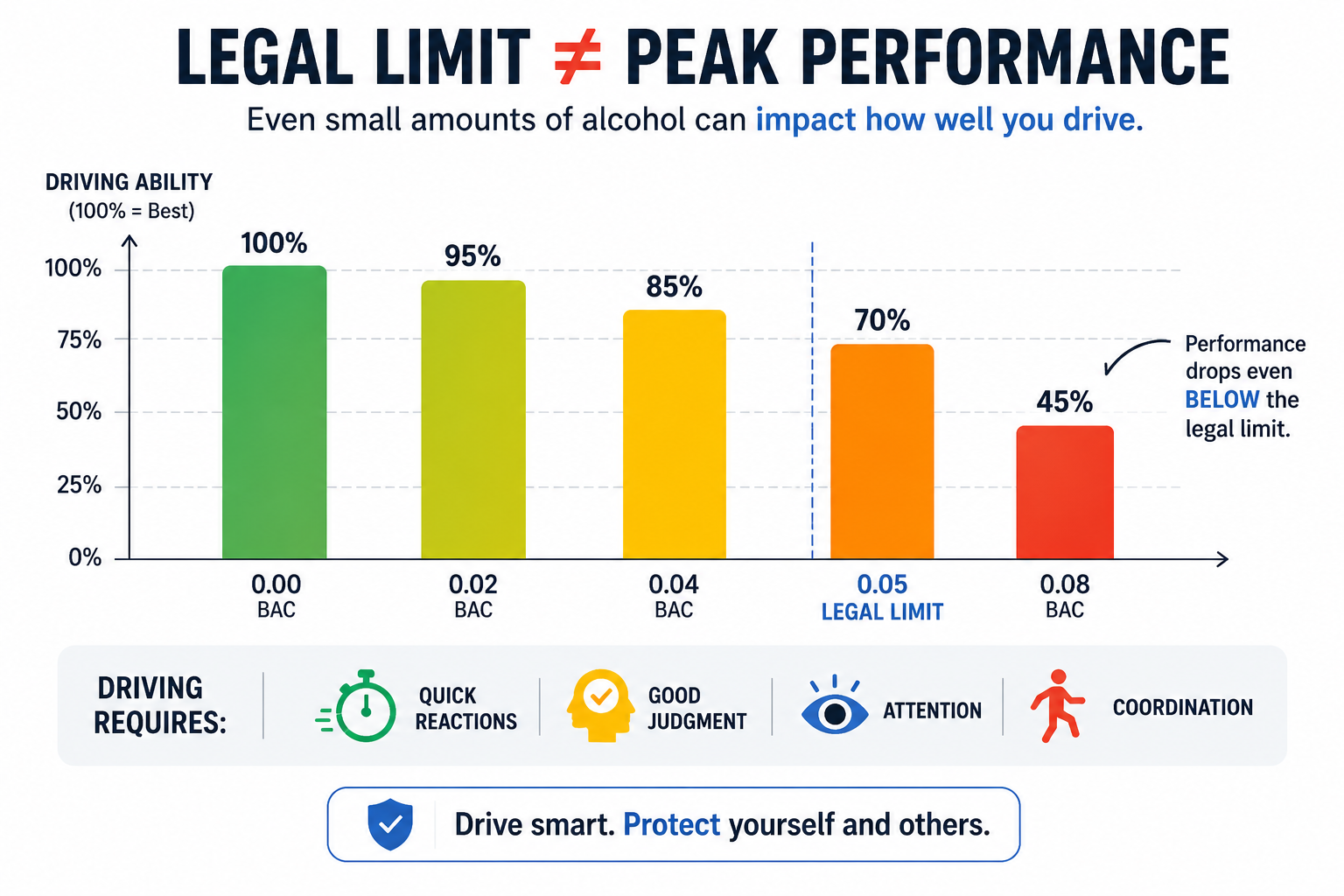
Many places set a legal limit for driving. For example, in many regions, the legal limit is based on a specific BAC number. However, being below the legal limit does not always mean someone is performing at their best.
Driving requires:
- Quick reactions
- Good judgment
- Attention
- Coordination
Alcohol can affect these abilities before someone reaches the legal limit. This is why the safest approach is not to calculate the maximum amount you can drink and still drive.
Now imagine another situation. A person goes to a celebration and drinks late into the night. Before sleeping, he thinks – “I’ll wake up tomorrow and everything will be gone.” The next morning, the person feels better – no dizziness, no obvious signs of drinking.
But depending on how much alcohol he consumed and when he stopped, alcohol may still be present. This is why morning-after driving can also be risky. Feeling refreshed is not the same as having zero alcohol in your system.
The Best Time to Drive After Drinking
So what does science actually say? There is no magic waiting time that works for everyone. The safest answer is only drive when alcohol has fully cleared from your body and you are confident you are not impaired.
If there is any doubt use another transportation option, ask someone sober to drive, wait longer. A few extra hours are far better than taking a risk.
Wrapping Up
Alcohol affects everyone differently. A person may feel normal while their BAC is still changing. A BAC calculator can provide an estimate, and a chart can help explain the process, but neither can guarantee that someone is safe to drive.
The legal limit exists for a reason, but the safest decision is always to avoid driving when alcohol may still affect your body. Time is the only real solution. Because when it comes to alcohol and driving, feeling okay is not always the same as being okay.
How Food Really Changes Your Blood Alcohol Concentration (BAC) — The Science Behind Drinking on an Empty Stomach
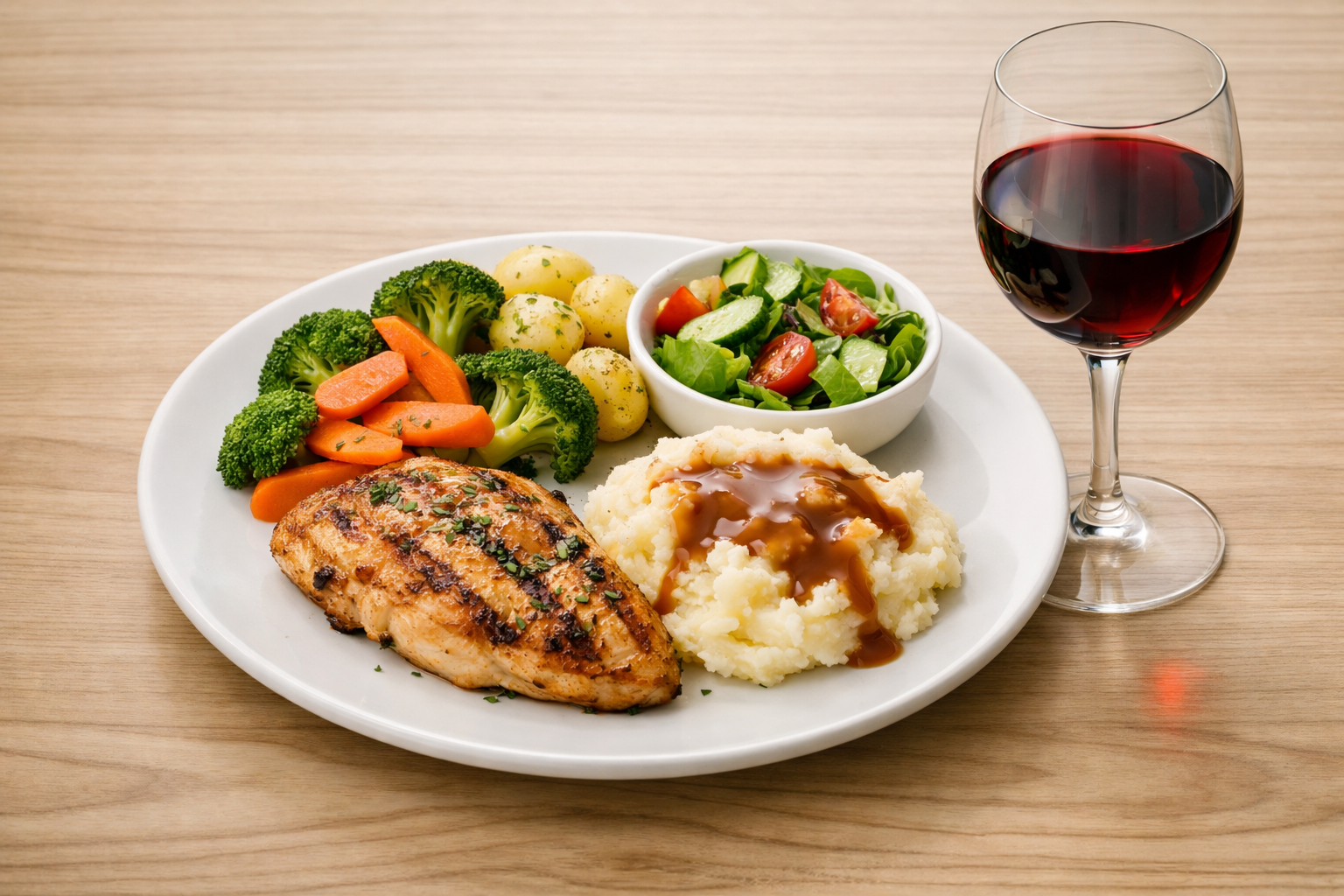
Imagine this. It is Friday night. A group of friends meets at a restaurant after a long week. One person orders a drink before dinner arrives. Another waits until after eating a full meal.
Both drink the same amount. But 30 minutes later, something feels different. One person feels the effects quickly. The other says, “I barely feel anything.” This creates a common belief – “Food absorbs alcohol, so I won’t get drunk.” It’s due to biological variability.
But is that actually true? The answer is more complicated. Food can change how quickly alcohol enters your bloodstream, but it does not magically remove alcohol from your body or make you immune to its effects.
Understanding this difference is important because many people misunderstand how food affects BAC (Blood Alcohol Concentration).
What Happens When You Drink Alcohol?
When you drink alcohol, your body begins processing it almost immediately. Unlike food, alcohol does not need much digestion.
It moves from your stomach and small intestine into your bloodstream, where it travels throughout your body.
This is when your BAC starts changing. Your BAC represents the amount of alcohol present in your blood.
A higher BAC generally means stronger effects, such as:
- Slower reaction time
- Reduced coordination
- Poor judgment
- Changes in concentration
Many people use a BAC calculator to estimate their alcohol level based on factors like:
- Number of drinks
- Body weight
- Time spent drinking
- Gender
However, a BAC calculator is only an estimate. It cannot replace an actual measurement.
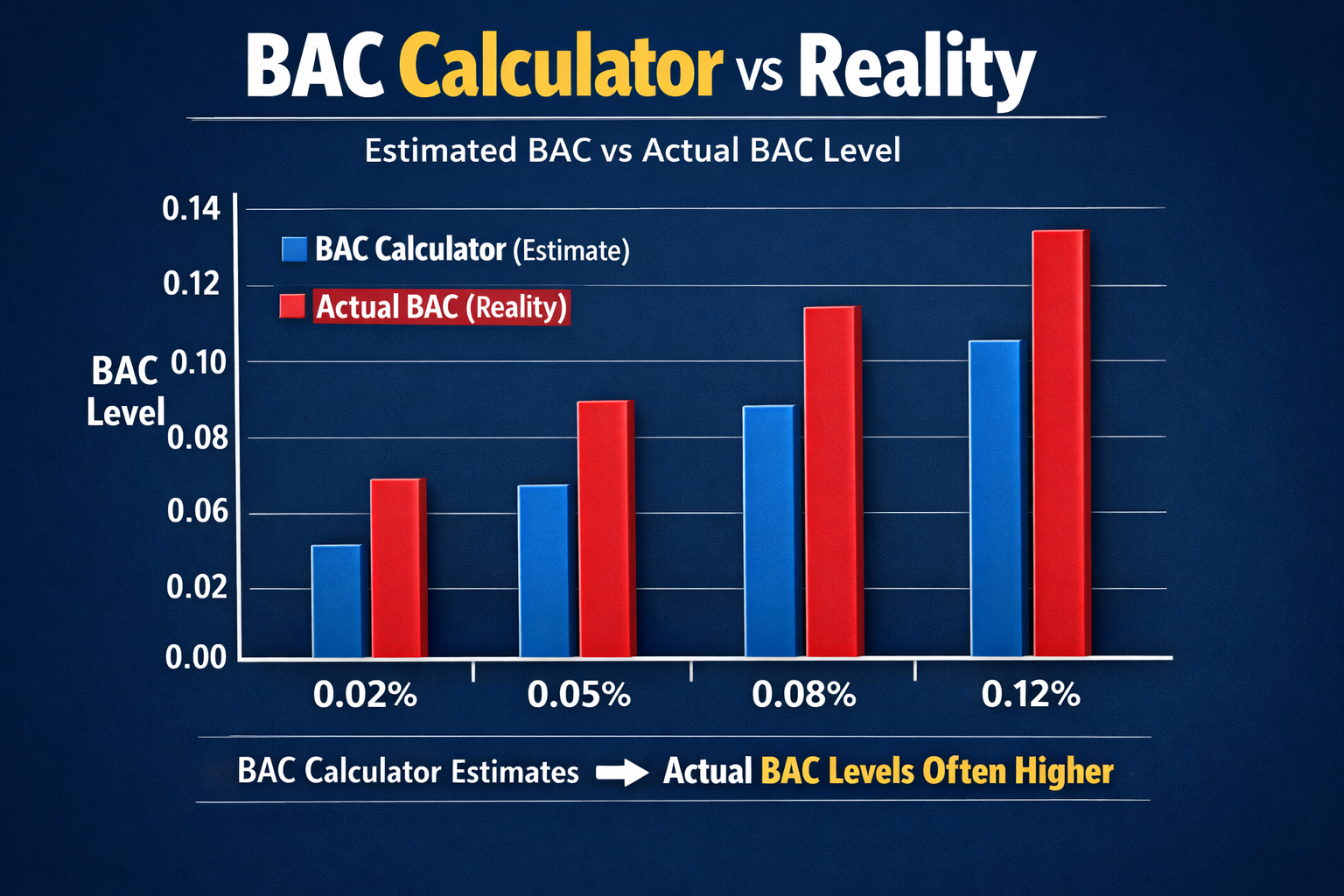
The Empty Stomach Effect: Why Alcohol Feels Stronger
Let’s return to our restaurant example.
Imagine someone arrives hungry and starts drinking before eating. The alcohol quickly passes through the stomach into the small intestine, where absorption happens rapidly. Because there is no food slowing the process, BAC can rise faster.
This is why people often say- “I had the same number of drinks, but it hit me harder this time.”The difference may not be the alcohol amount. It may be the timing of the meal.
How Food Changes Your BAC
Now imagine the same person eats a meal first. The food creates a temporary slowdown.
Alcohol stays in the stomach longer before moving into the small intestine. This means:
- Alcohol enters the bloodstream more slowly
- BAC rises more gradually
- The effects may feel less sudden
But here is the important part – food does not lower your final BAC instantly. The alcohol is still entering your system. It is just happening at a slower pace. Think of food like a speed control, not an erase button.
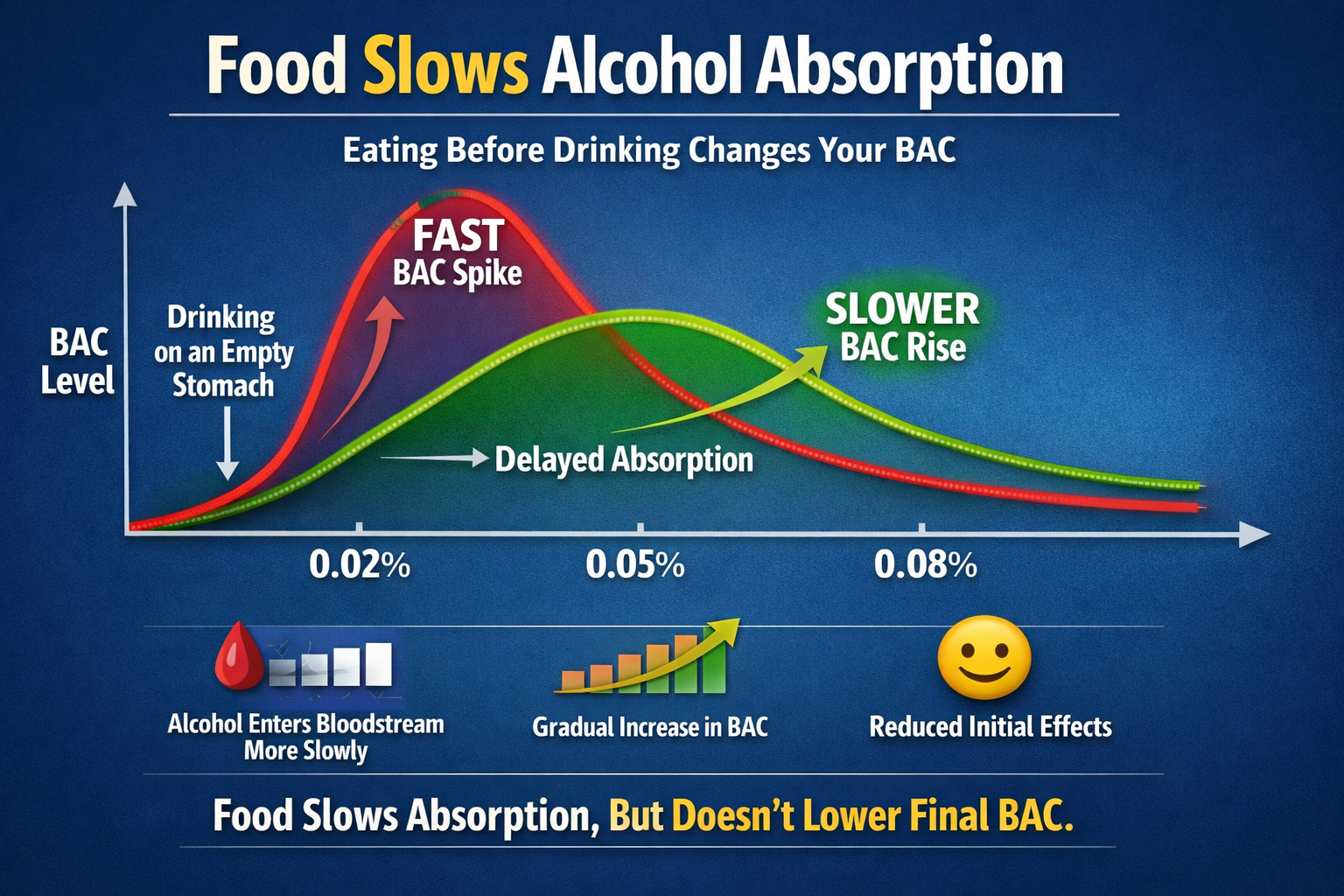
A Simple BAC Comparison
Real BAC depends on many factors, including body size, metabolism, drink strength, and timing.
The big myth is that – “If I Eat, I Can Drink More”. This is one of the biggest misunderstandings. Someone may think – “I ate a big meal, so I can handle more alcohol.” But food does not change the amount of alcohol your body must process.
Your liver still has to break down the alcohol. A meal may delay the feeling of intoxication, but the alcohol is still there. This can actually create a problem, because the effects feel delayed, some people drink more than they planned. Later, when the alcohol catches up, their BAC may be much higher than expected.
Consider a person attends a birthday dinner. Before eating, she has one cocktail. Then she enjoys a large meal. She feels fine. An hour later, she thinks – “I’m okay. I don’t even feel the drink.” So she orders another one. Then another.
The food helped slow the absorption, but it did not stop the alcohol. Later in the evening, the combined drinks begin affecting her. This is why relying only on how you feel can be misleading.
Does Fatty Food Work Better?
You may have heard people say- “Eat greasy food before drinking.” There is some truth behind the idea that meals containing fat, protein, and carbohydrates can slow stomach emptying.
But greasy food is not a magic solution. Eating – Pizza, burgers, fried food does not cancel alcohol. It may slow absorption, but your body still has to process the same amount of alcohol.
Water, Food, and Other Common Myths
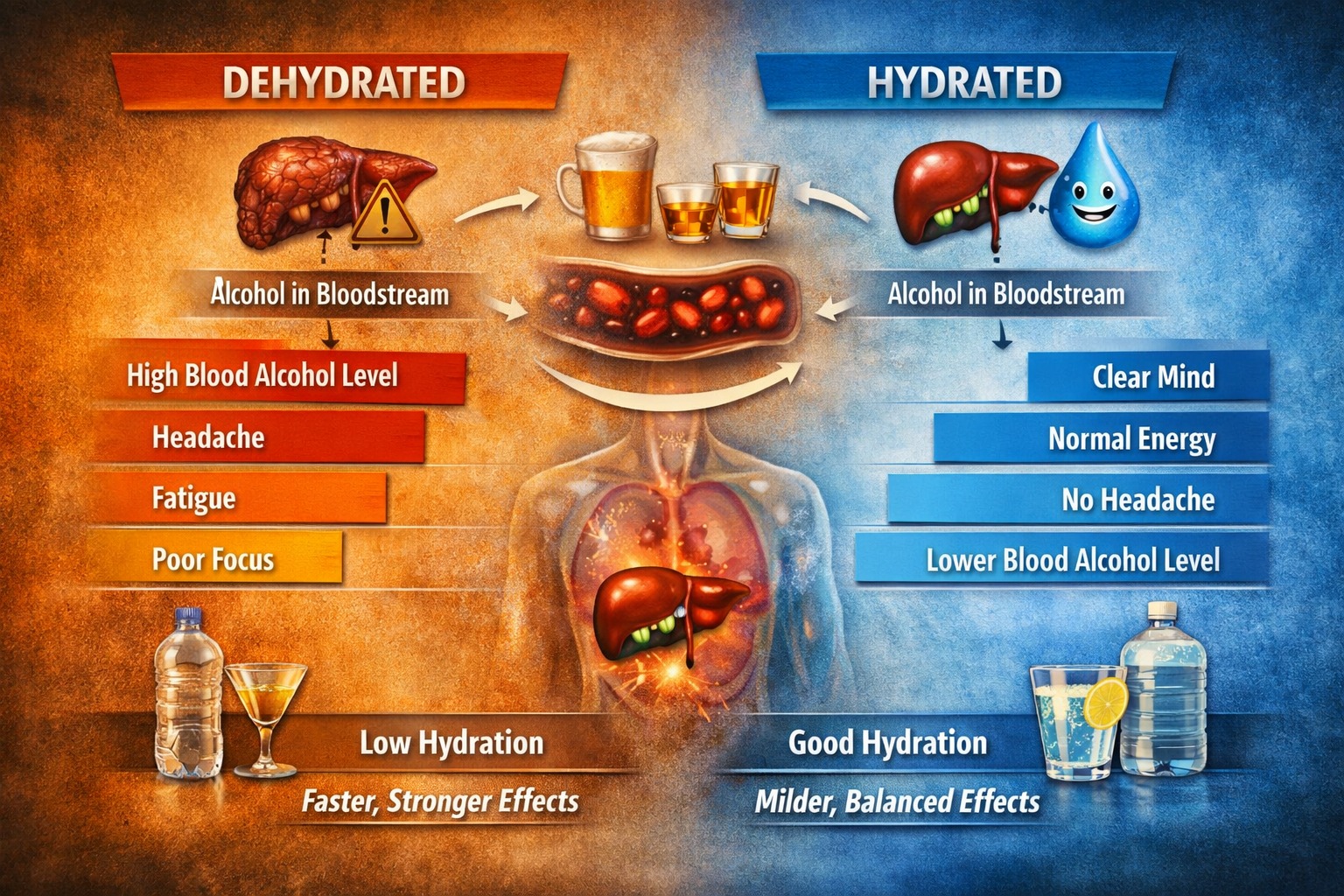
People often combine drinking with different “solutions.”
They may try drinking water. Water can help with hydration. But it does not remove alcohol from your bloodstream.
Eating afterward may slow additional absorption if alcohol is still in your stomach. But it does not instantly reduce BAC.
Coffee may make someone feel more awake. But caffeine does not speed up alcohol breakdown. Feeling alert does not mean BAC is lower.
Understanding Legal Limits
Many countries have legal driving limits based on BAC. For example, some places use a BAC limit around 0.08%, while others have lower limits.
These legal limits exist because alcohol affects:
- Reaction speed
- Decision making
- Driving ability
The dangerous mistake is assuming -“I feel fine, so I must be under the legal limit.”
Your perception is not a reliable BAC measurement.
Can A BAC Calculator Tell You If You Are Safe?
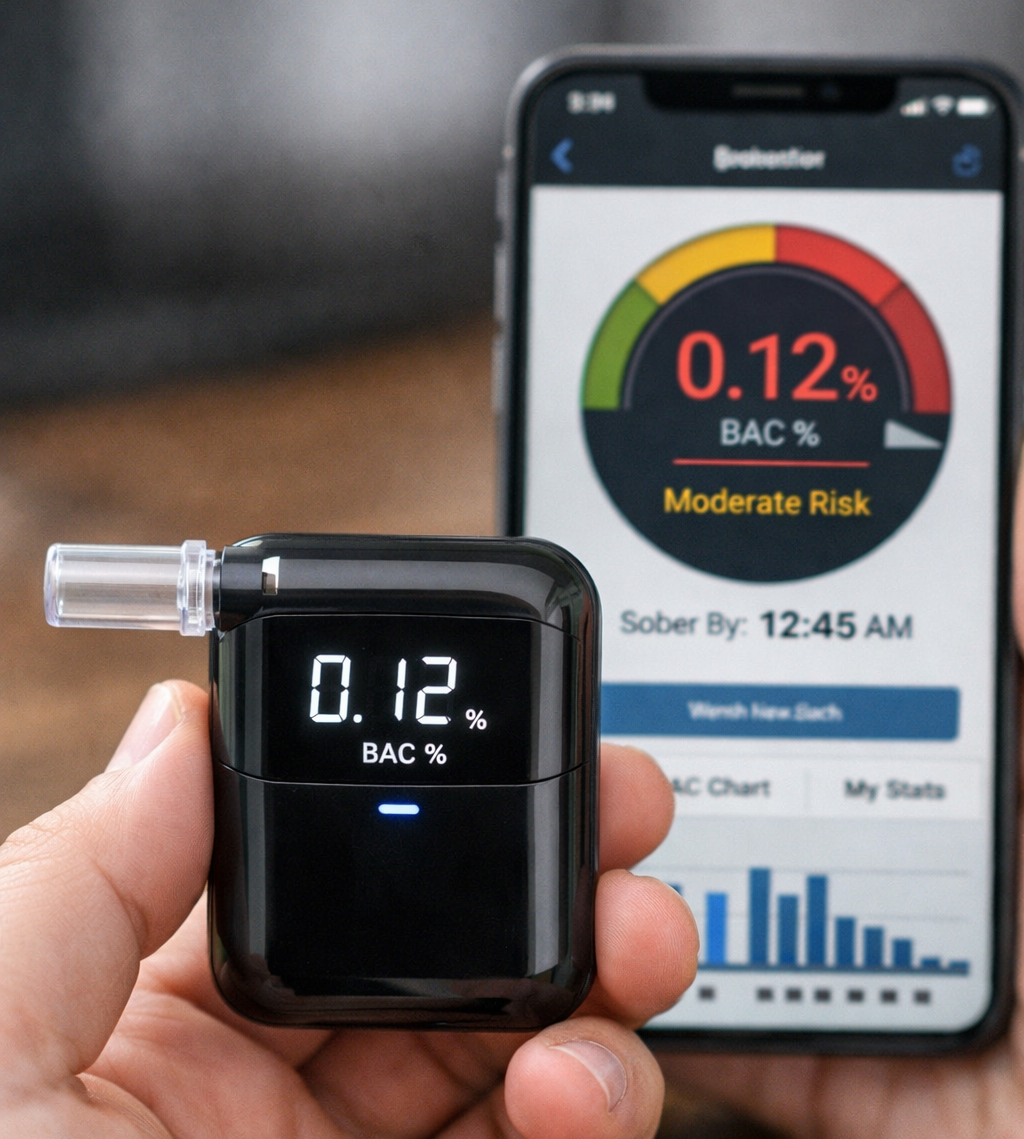
A BAC calculator can be useful for education. It can show how different factors may influence alcohol levels.
But remember A BAC calculator is an estimate. It cannot know:
- Your exact metabolism
- Your health condition
- Your exact drink size
- How quickly you consumed alcohol
The safest approach is never to use a calculator as a guarantee that you are okay to drive.
The Real Relationship Between Food and BAC
The easiest way to remember it:
- Food can slow alcohol absorption.
- Food cannot remove alcohol.
- Food can change how quickly BAC rises.
- Food cannot instantly bring BAC below legal limits.
Only your body’s natural processing over time reduces BAC.
Wrapping Up
The next time someone says – “I ate a big meal, so I’m fine.” Remember the restaurant story. The meal may have changed the timing. It may have made the alcohol feel weaker at first. But the alcohol is still being processed inside the body. Understanding how food affects BAC helps you make better decisions.
A BAC calculator, a chart, or personal experience can help explain the science — but they cannot replace responsible choices. Because when it comes to alcohol, time is the only real factor that lowers BAC.
The Enzyme Gap – Why Alcohol Metabolism Isn’t Equal For Men and Women

It often begins with something simple—a drink at dinner, a toast with friends, or a quiet moment to unwind. Within minutes, you start to feel its effects, and it’s easy to assume that alcohol goes straight into your bloodstream and then to your brain.
But that’s not exactly how it works.
Even before alcohol reaches your bloodstream, your body has already begun processing it. This early stage, known as first-pass metabolism, starts right in the stomach. And at the center of it is a key enzyme—alcohol dehydrogenase, or ADH—that quietly begins shaping how alcohol will affect you.
Here’s a detailed look at how this process works, why it differs between people, and how you can take more informed decisions about how many drinks are too many.
What Happens Before the Alcohol Reaches Your Bloodstream
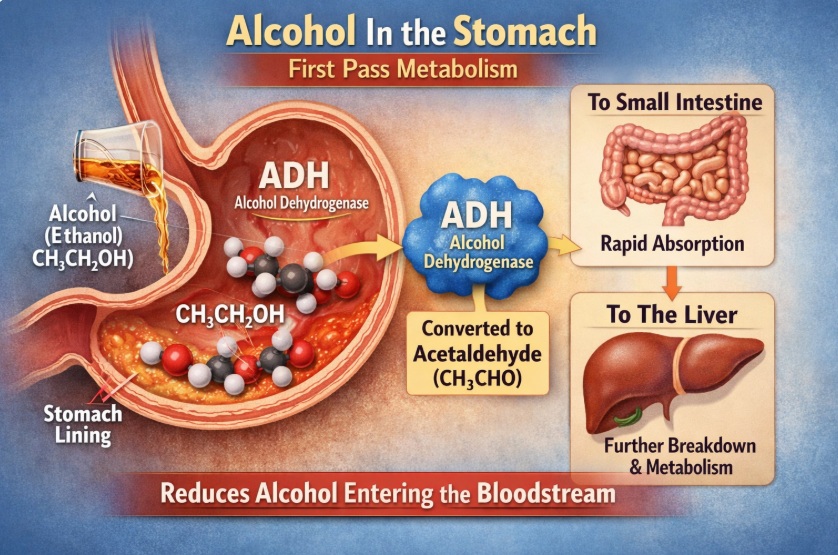
As alcohol enters the stomach, it doesn’t just sit there waiting to be absorbed. Instead, ADH or Alcohol Dehydrogenase—present in the stomach lining—starts breaking it down immediately.
You can think of ADH as an early filter. Its job is to convert alcohol (ethanol – CH3CH2OH) into a compound called acetaldehyde, which is then further processed by other enzymes later in the liver. This means that a portion of the alcohol you consume never actually makes it into your bloodstream in its original form.
This “first pass” through the stomach reduces the overall amount of alcohol that circulates through your body. After that, the remaining alcohol moves into the small intestine, where absorption is much faster, and then into the liver for further metabolism.
Although the liver handles most of the metabolism, this early stage in the stomach plays a surprisingly important role in determining your Blood Alcohol Concentration (BAC)—something often visualized using a BAC chart or estimated through a calculator.
If you’re curious about your own levels, you can try using a BAC calculator like this one to get a rough estimate based on your drinks, body weight, and time.
Why First-Pass Metabolism Isn’t the Same for Everyone
At first glance, it might seem like this process would work the same way for everyone. But that’s not the case.
The activity of ADH in the stomach varies significantly between individuals, and two of the biggest factors influencing this are Biological sex & genetics and, Biological variability.
Biological Sex and ADH Activity
One of the most well-documented differences in alcohol metabolism is between men and women.
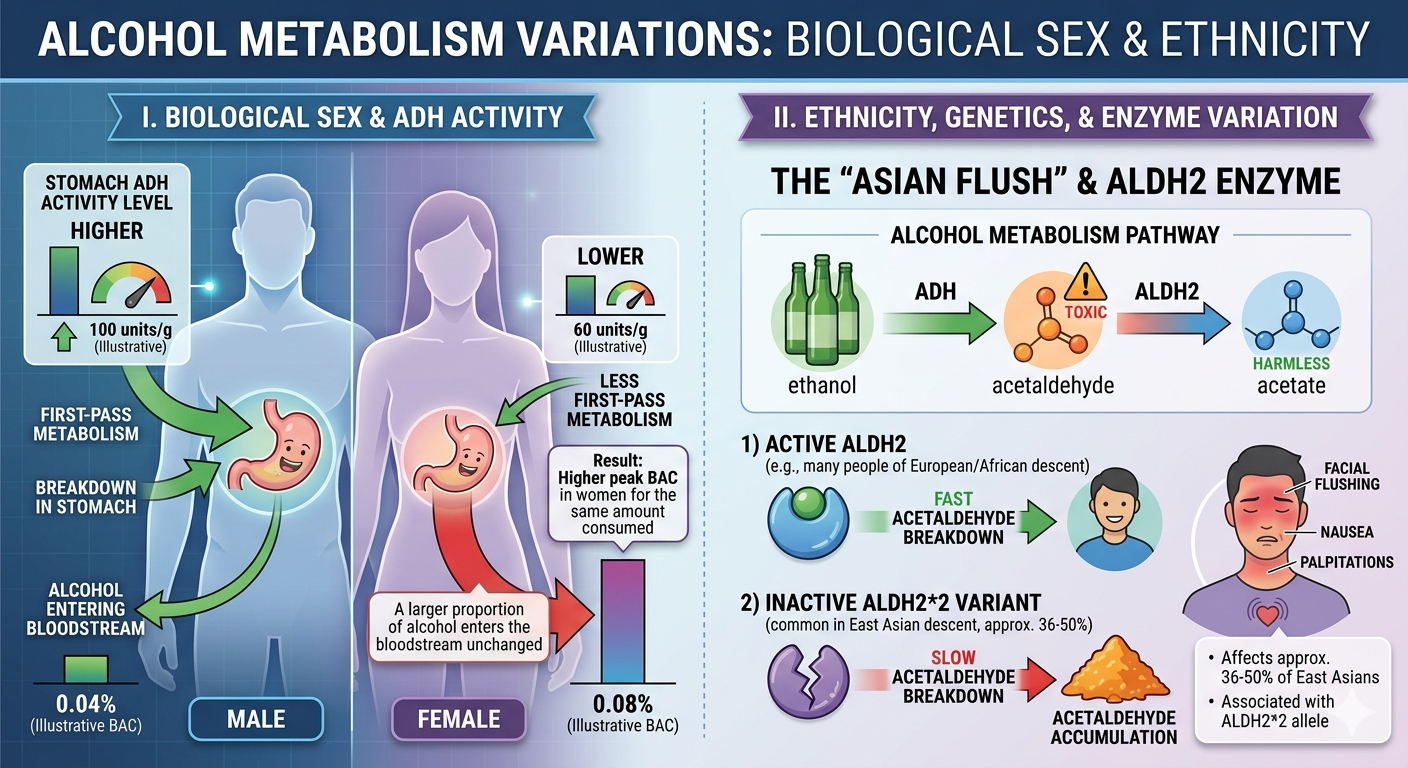
Research shows that, on average, women tend to have lower levels of ADH activity in the stomach compared to men. This means that during the first-pass metabolism stage, less alcohol is broken down in the stomach for women.
As a result, a larger proportion of alcohol enters the bloodstream unchanged. This leads to higher Blood Alcohol Concentrations (BAC) after consuming the same amount of alcohol.
This difference helps explain why alcohol often has a stronger and quicker effect on women. It’s not just about body size or weight—it’s also about how the body processes alcohol before it even gets absorbed.
Ethnicity, Genetics, and Enzyme Variation
Beyond biological sex, genetics also plays a major role in how alcohol is metabolized.
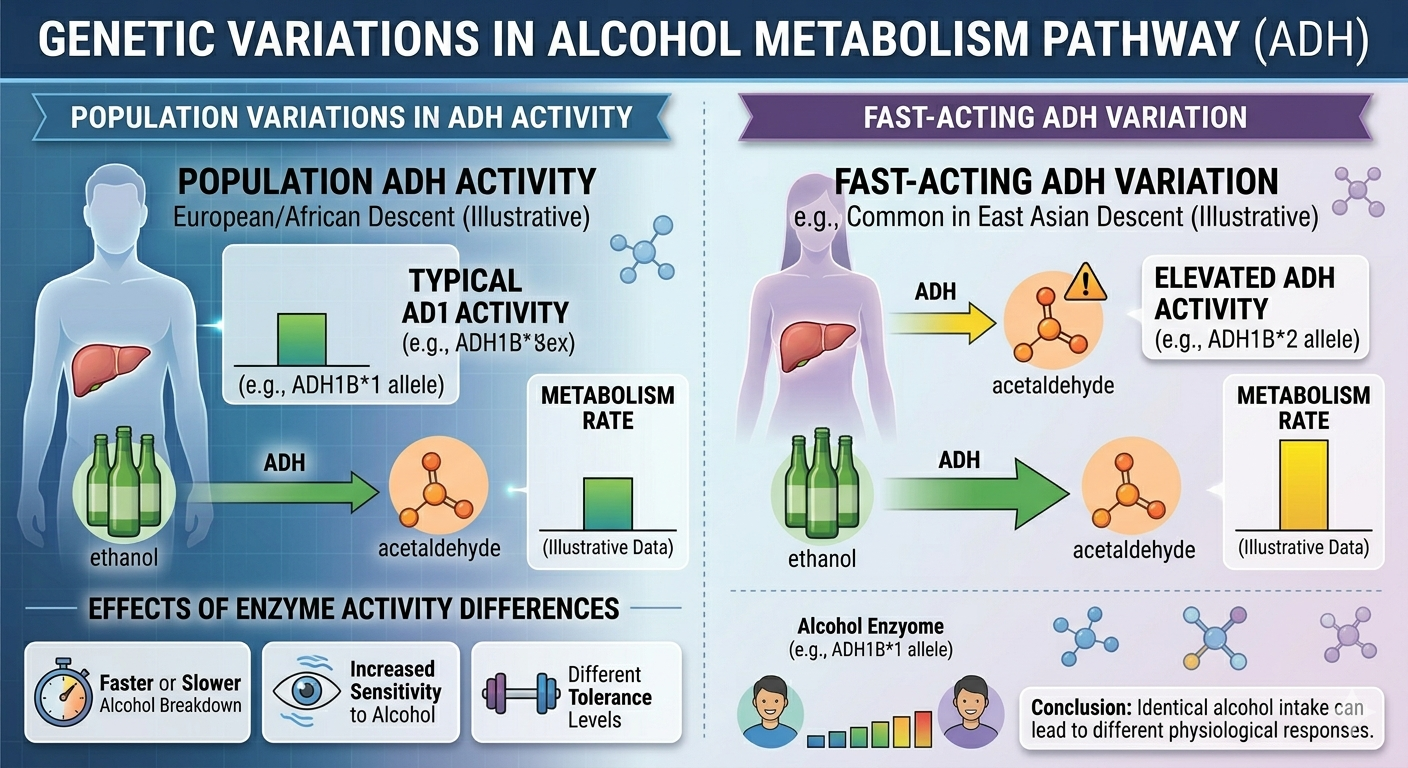
Different populations can have variations in the genes that control enzymes like ADH. Some individuals may have more active forms of the enzyme, while others may have less efficient versions.
In certain East Asian populations, for example, genetic variations affect how alcohol and its byproducts are processed. While much attention is given to another enzyme called ALDH- which breaks down acetaldehyde, variations in ADH also influence how quickly alcohol is initially metabolized.
These genetic differences can lead to noticeable effects, such as:
·Faster or slower alcohol breakdown
·Increased sensitivity to alcohol
·Different tolerance levels
This is why two people—one male and one female—drinking the same number of drinks can end up with very different BAC levels on a chart or calculator.
It also explains why the legal limit for driving can be reached faster for some individuals, even if the number of drinks seems “moderate.”
Why This Process Matters in Everyday Life
Understanding first-pass metabolism helps explain many everyday observations.
Have you ever noticed that some people feel the effects of alcohol almost immediately, while others take longer? Or that the same drink can affect people differently even in similar situations? Or alcohol absorption speed completely differs from person to person.
Part of the answer lies in how much alcohol is absorbed in the body.
If more alcohol is metabolized early, less enters the bloodstream. If less is broken down, more circulates through the body, leading to stronger effects.
This also highlights why factors like food intake matter. Eating before drinking can slow alcohol absorption, giving enzymes like ADH more time to act in the stomach.
Wrapping Up
The idea of first-pass metabolism reminds us that what happens inside the body is often more complex than it appears on the surface.
That first sip of alcohol doesn’t go straight to your bloodstream—it begins a journey shaped by enzymes, biology, and genetics. The role of ADH in the stomach, though often overlooked, can significantly influence how alcohol affects you.
Differences in ADH activity—whether due to biological sex or genetic background—mean that alcohol is never a one-size-fits-all experience. What feels mild to one person may feel strong to another, closer to the legal limit much faster.
Understanding this process—and using tools like BAC calculators and charts—can help you make more informed, safer decisions.