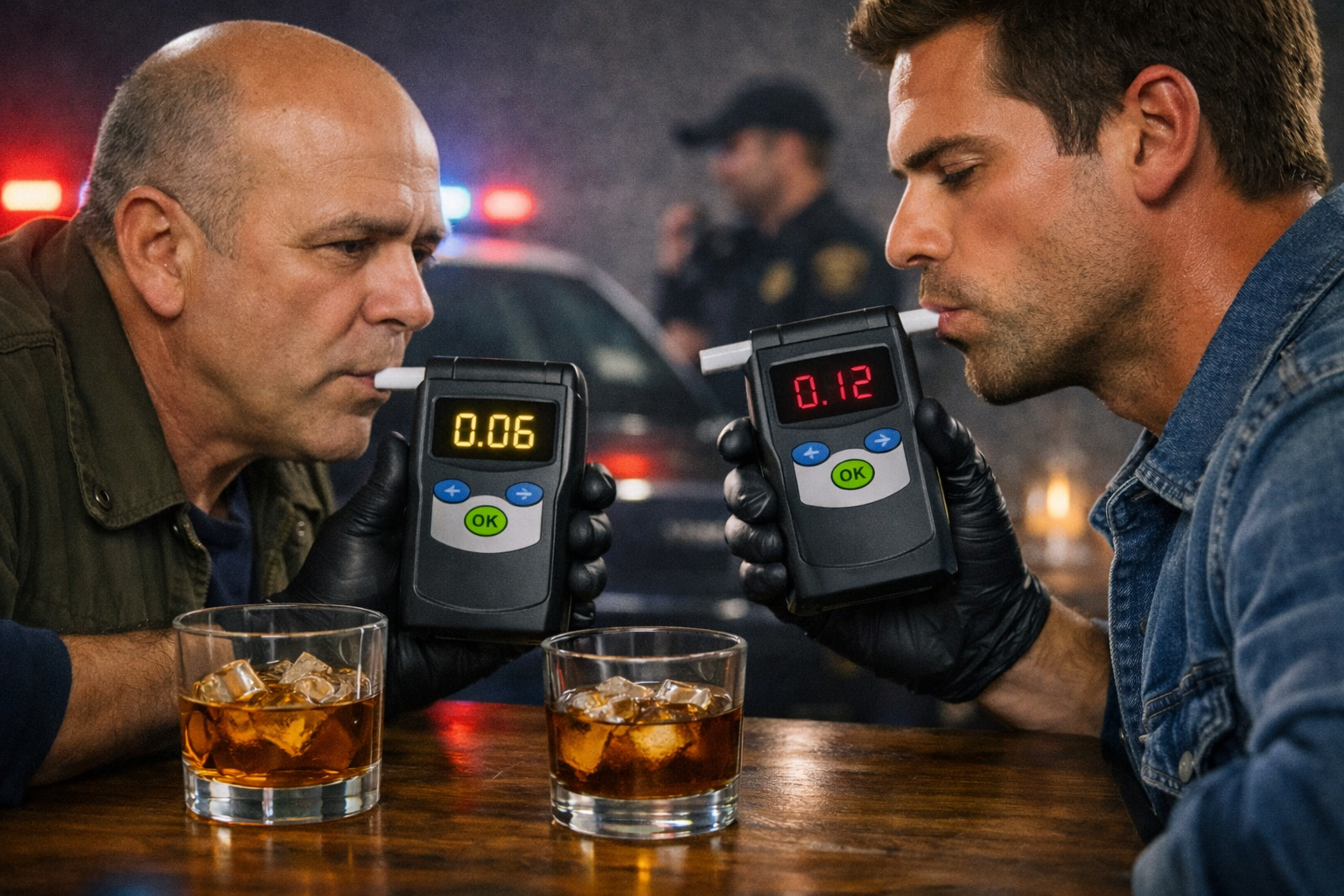
A breathalyser can estimate intoxication accurately enough to determine whether someone is above the legal limit.
Simple in theory. Blow into a device. Get a number. Compare it to a chart. Determine whether someone is legally impaired.
But buried underneath modern breath testing is a scientific shortcut that many people never hear about. Because the human body is not standardized.
And that creates a serious problem for every BAC calculator, roadside analyser, and legal breath-testing system used today.
The issue is called Biological variability. And once you understand it, the idea that one universal formula can apply equally to every person starts falling apart very quickly.
The Formula That Built Modern Breath Testing
Every modern breathalyser relies on a mathematical assumption called the 2100-to-1 partition ratio.
This ratio assumes that 2100 milliliters of breath contains the same amount of alcohol as 1 milliliter of blood. The analyser uses this conversion to estimate Blood Alcohol Content (BAC) from breath alcohol concentration (BrAC).
This became the foundation of modern DUI enforcement because breath testing is:
- Fast
- Portable
- Cheap
- Non-invasive
Compared to blood testing and for large populations, the system works reasonably well statistically.
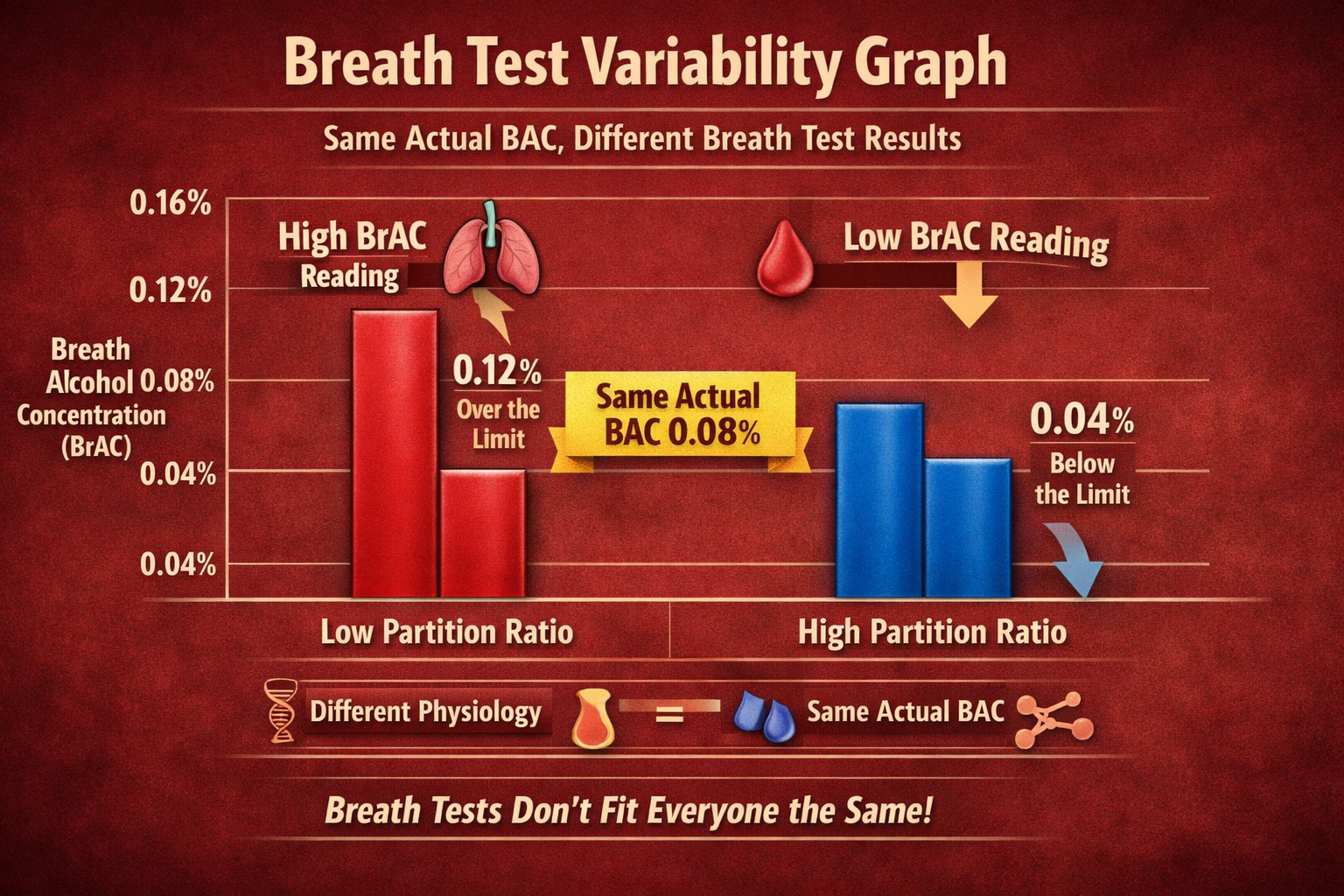
But there’s one major flaw the 2100-to-1 ratio is only an average. Not a biological constant and averages do not perfectly represent individuals.
Why the “Average Human” Doesn’t Exist
The biggest misconception about breathalyser science is that everyone processes alcohol identically. They don’t.
Two people with the exact same BAC can produce completely different breath test results. Not because the analyser is broken. Not because one person cheated the test.
But, because human physiology varies enormously from person to person. This is where biological variability becomes critical.
The breathalyser assumes every human body behaves close enough to the same standard. But real-world biology refuses to cooperate with neat mathematical formulas.
And this creates uncertainty around every BAC calculator and legal limit threshold currently used.
Body Temperature Can Change Breathalyser Results
One of the biggest physiological variables is body temperature. Alcohol evaporates more easily at higher temperatures. That means warmer lungs produce more alcohol vapor in exhaled breath.
So if someone has:
- A fever
- Elevated stress
- Anxiety
- Recently exercised
- Been exposed to heat
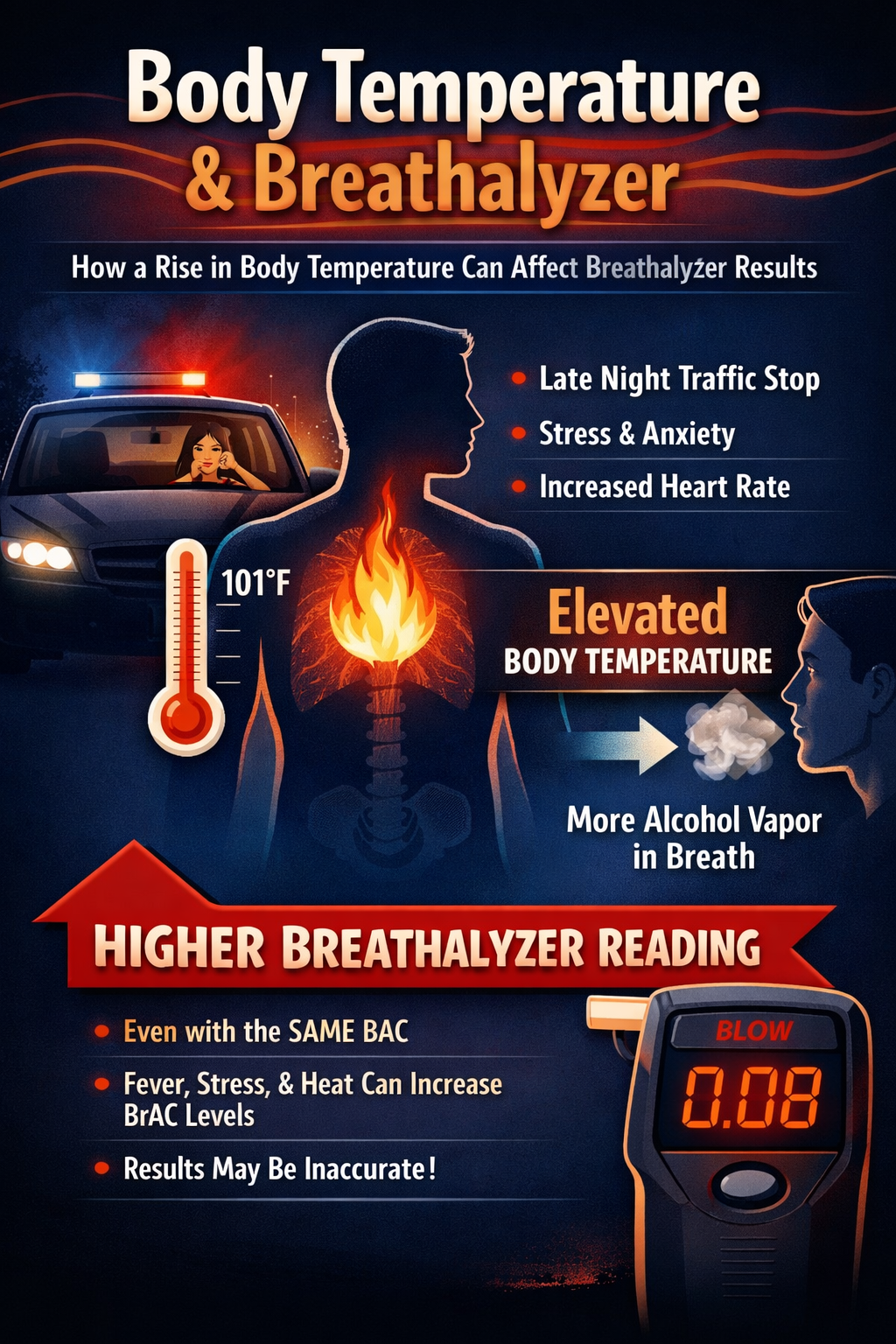
Their breathalyser result may rise even if their actual BAC remains unchanged. Scientific studies have shown that even small increases in body temperature can significantly elevate BrAC readings.
Now think about roadside testing conditions – Someone gets pulled over late at night. Their heart rate spikes. They panic. They breathe harder. Their body temperature rises.
And suddenly the analyser may detect higher alcohol concentration levels than expected. The legal limit remains fixed.
But the biology underneath the reading has already changed.
Hematocrit Levels Create Another Problem
Now things become even more complicated. Alcohol distributes primarily through water in the bloodstream. Not through red blood cells themselves.
This means a person’s hematocrit level — the percentage of red blood cells in blood — can affect alcohol distribution inside the body.
People naturally vary in hematocrit levels based on:
- Genetics
- Sex
- Hydration
- Fitness levels
- Altitude adaptation
- Certain medical conditions
And this affects how alcohol partitions between blood and breath. Yet the analyser still applies the same fixed ratio to everyone.
The chart stays identical. The BAC calculator stays identical. The legal limit stays identical. But the bodies being tested are not identical at all.
Breathing Patterns Can Alter the Reading
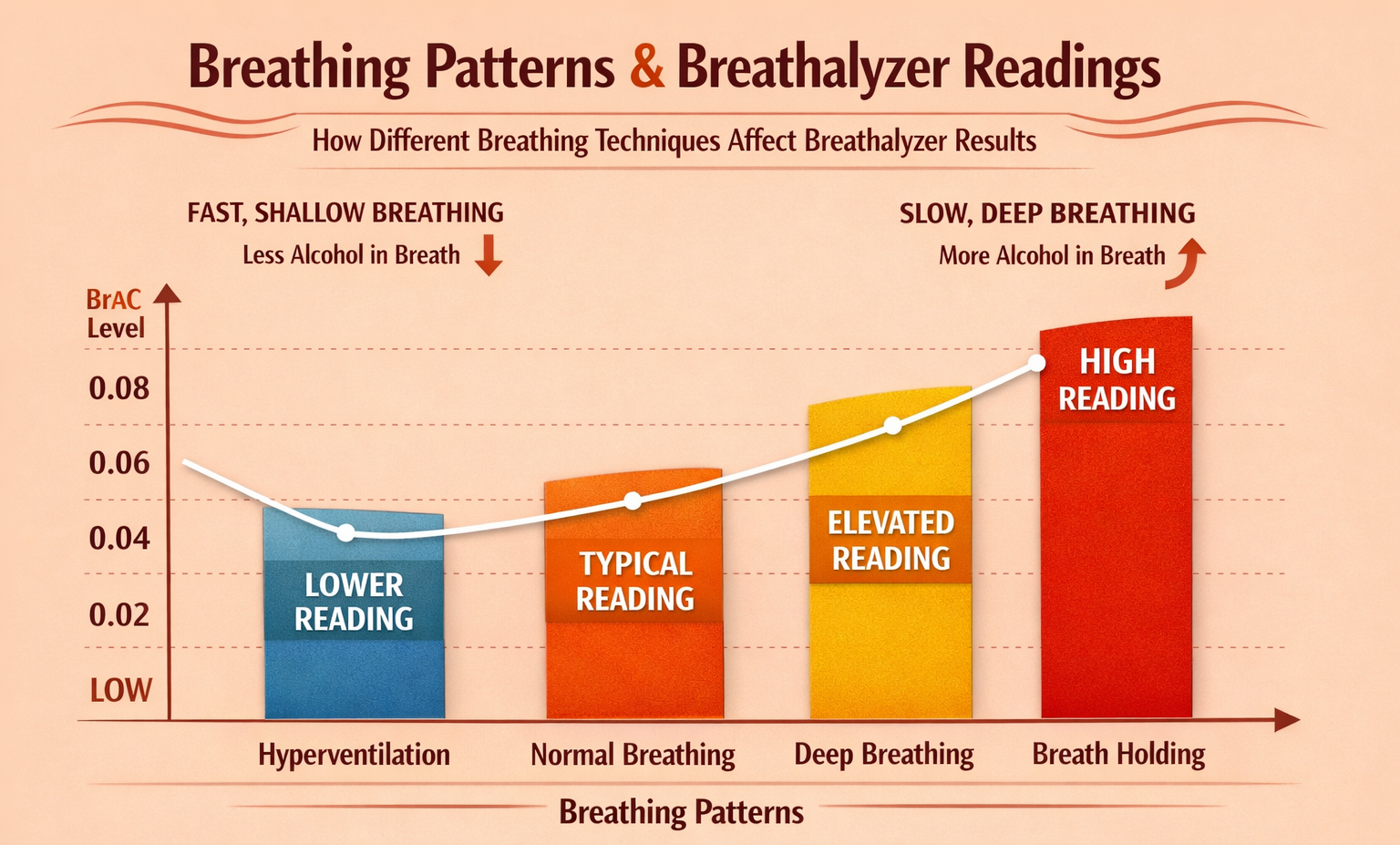
Now this is where breath testing starts sounding almost absurd. The way someone breathes before taking the test can influence the result. Yes — breathing itself can alter the outcome. For example:
Hyperventilation can temporarily lower breath alcohol readings. Meanwhile holding your breath can raise them. Why?
Because breath alcohol concentration depends heavily on gas exchange inside the lungs.
The longer air remains in the lungs, the more alcohol diffuses into it.
This means:
- Fast breathing
- Deep breathing
- Nervous breathing
- Breath holding
Can all influence the analyser reading. Now imagine someone during a traffic stop. They’re stressed. Sweating. Breathing rapidly. Trying not to panic. That person’s physiology is no longer stable.
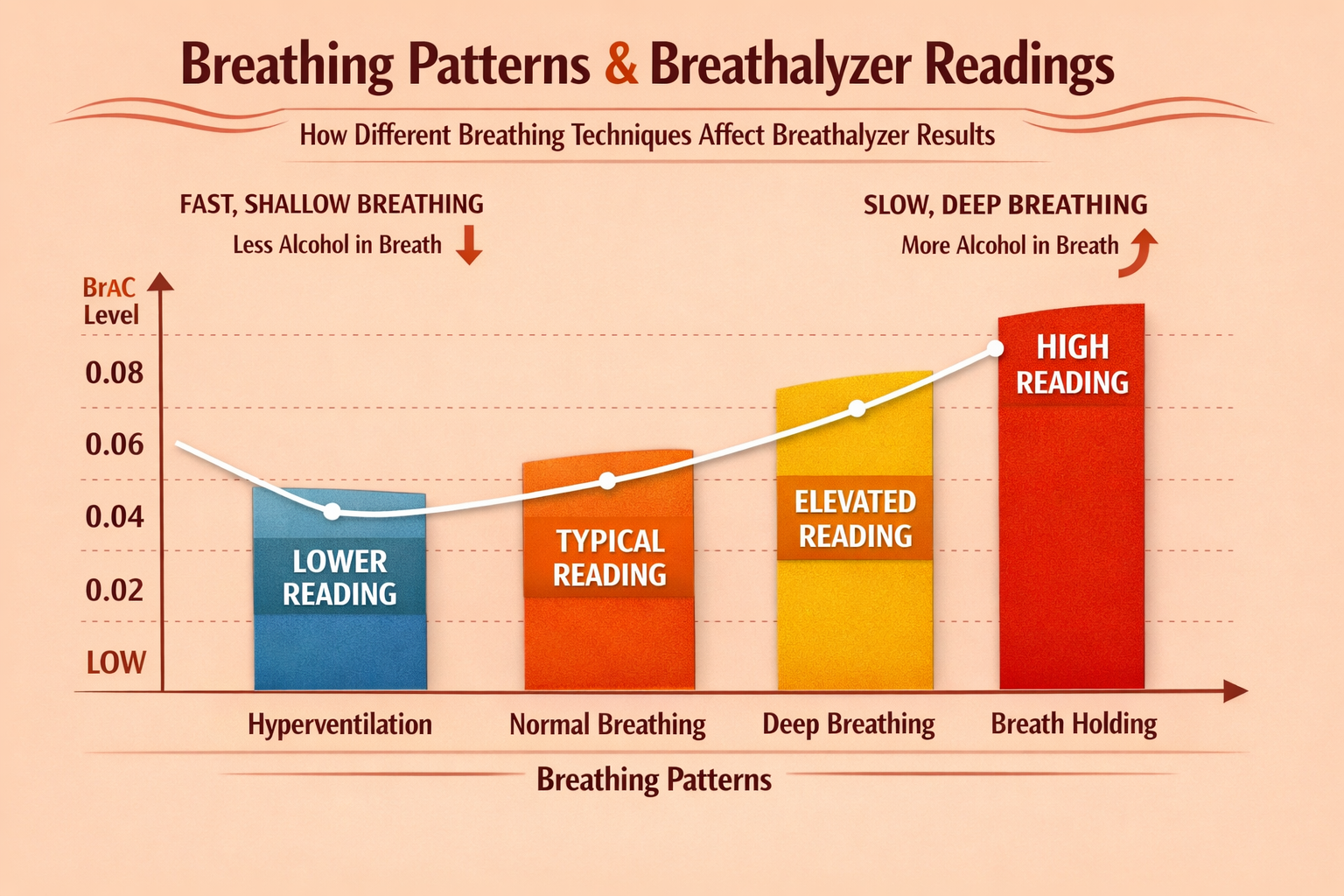
Yet the breathalyser still assumes standardized conditions. This is one of the biggest weaknesses in modern breath-testing science.
The Entire System Depends on Deep Lung Air
Breathalysers are designed to sample what’s called Alveolar air.
This is deep lung air where gas exchange occurs between blood and breath.
The analyser assumes this air reflects the actual blood alcohol concentration accurately. But, obtaining perfect alveolar air consistently is extremely difficult. Human lungs vary dramatically between individuals.
Factors include:
- Lung capacity
- Age
- Smoking history
- Respiratory conditions
- Breathing strength
- Exhalation duration
Even how hard someone blows into the analyser can affect sampling characteristics. And because alcohol concentration rises during exhalation, timing becomes incredibly important. This is why many modern analysers require prolonged blowing.
The machine is attempting to reach deeper lung-air. But even then, biological variability remains unavoidable.
The Problem with BAC Charts and Legal Thresholds
One of the biggest issues with modern DUI law is the assumption that impairment can be reduced to one universal number.
BAC charts create the illusion of precision – 0.05 – 0.08- 0.10 But real impairment is far more complicated, it begins much earlier.
Some individuals may experience serious impairment below the legal limit. Others may appear less impaired above it.
Factors influencing impairment include:
- Tolerance
- Sleep deprivation
- Medication
- Body composition
- Metabolism
- Neurological differences
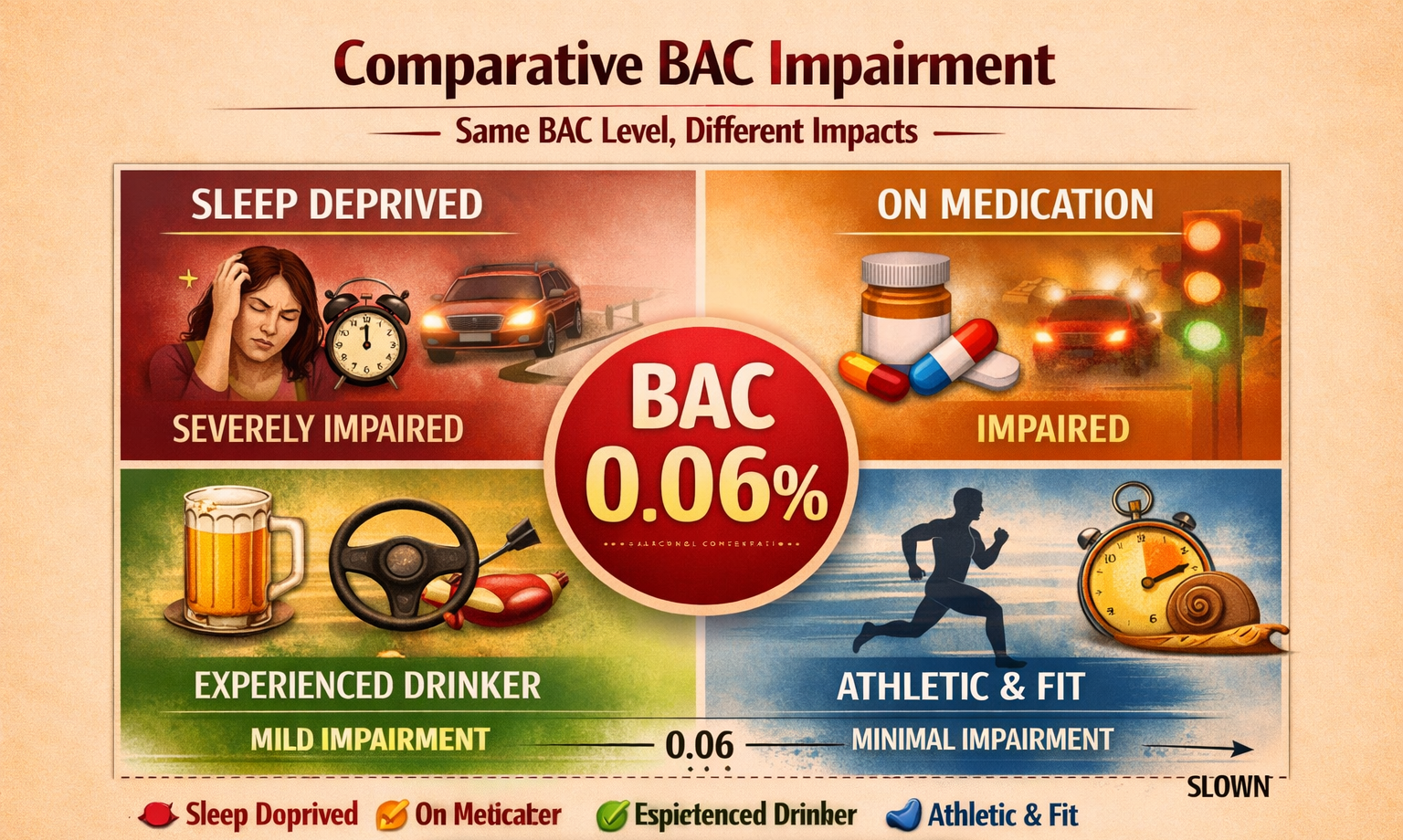
And yet modern systems still rely heavily on standardized BAC calculator models and fixed legal thresholds. The analyser generates a number. The chart determines legality. But biology itself remains highly individual.
Why Breathalysers Still Exist
Now this raises an obvious question – If biological variability creates so many problems. Why are breathalysers still widely accepted?
The answer is practicality. Blood testing is slower, more expensive, more invasive, harder to administer roadside. Breath testing provides immediate results and statistically, across large populations, it works “well enough” operationally.
That’s the key distinction. Operational efficiency is not the same thing as physiological perfection. The legal system values consistency and practicality. Science deals with variability. And those two goals do not always align perfectly.
The Illusion of Precision
One of the most fascinating psychological aspects of breath testing is how precise the numbers appear.
The analyser prints – 0.081 and people instinctively interpret that as scientific certainty. But hidden behind that number are layers of assumptions:
- Average lung function
- Average breathing behavior
- Average body temperature
- Average blood chemistry
- Average alcohol partitioning
The machine itself may be mathematically precise. But the human body is biologically inconsistent. And that distinction matters enormously. Because precision is not always accuracy.
Cheap Breathalysers vs Professional Analysers
Now this biological variability becomes even more problematic when comparing consumer breathalysers to professional analysers used by law enforcement.
Cheap consumer devices often suffer from:
- Poor sensor quality
- Calibration drift
- Environmental sensitivity
- Inconsistent sampling
Meanwhile, professional analysers attempt to compensate using:
- Temperature correction
- Deep lung sampling
- Calibration standards
- Multiple sample verification
But even expensive analysers cannot eliminate biological variability itself. Because the problem isn’t only the machine.
The problem is the assumption that all humans behave similarly enough for one conversion formula to apply universally. And biology simply doesn’t cooperate perfectly with that model.
The Real Scientific Debate
The real debate around breath testing isn’t whether breathalysers work at all. They clearly do measure alcohol presence. The deeper issue is this – How accurately can one universal formula represent millions of biologically different individuals?
That’s where physiological variability becomes impossible to ignore also alcohol absorption in human bodies differs. Because no BAC calculator can perfectly account for:
- Body temperature changes
- Lung variability
- Hematocrit differences
- Breathing behavior
- Metabolic differences
And no legal limit fully captures individual impairment either.
Wrapping Up
Modern breath testing was designed to create certainty. But biology introduces uncertainty everywhere. The famous 2100-to-1 ratio is not fake science.
It’s a statistical approximation. And while that model may work reasonably well for a large population it can fail individuals.
That’s the uncomfortable reality behind every breathalyser reading, BAC chart, and roadside analyser currently used around the world.
Because behind every printed number is a human body and no two human bodies process alcohol exactly the same way.
