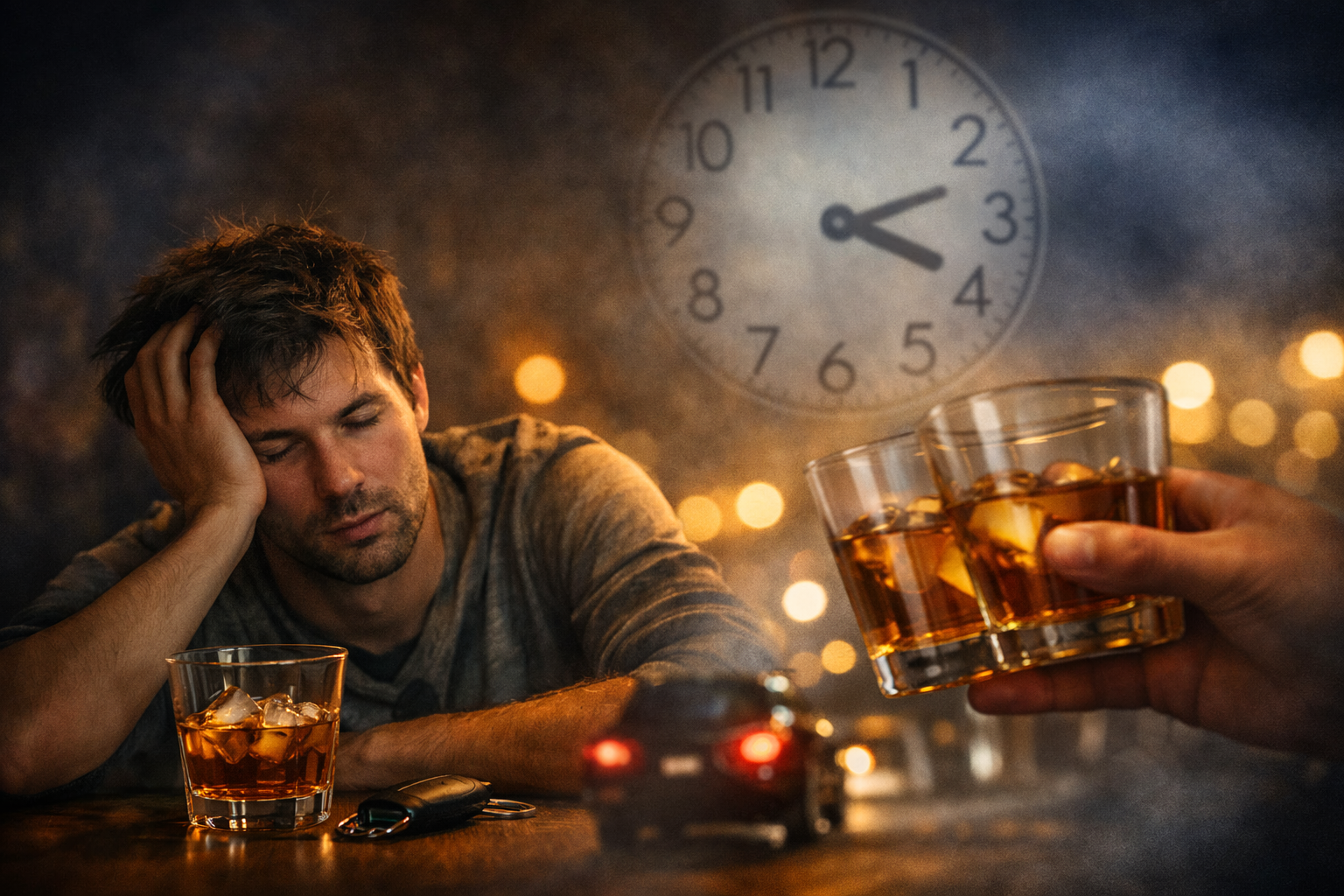
Imagine this situation. It’s Friday night, and after a long week at work, a person finally meets friends for dinner. The problem is, one of them barely slept the night before because of a late project deadline.
He feels exhausted. After dinner, someone offers a drink. He thinks I’m tired anyway. One or two drinks won’t make much difference.”
But after the first drink, something feels different. His eyes become heavier. He feels much more affected than he expected.
The surprising part? The amount of alcohol was not necessarily higher. Sleep deprivation can change how your brain responds to alcohol, making the effects feel stronger and increasing impairment.
Why Does Being Sleep-Deprived Change the Way Alcohol Feels?
Alcohol already affects the brain by slowing down communication between nerve cells.
It can reduce:
- Alertness
- Coordination
- Reaction speed
- Decision-making ability
- Concentration
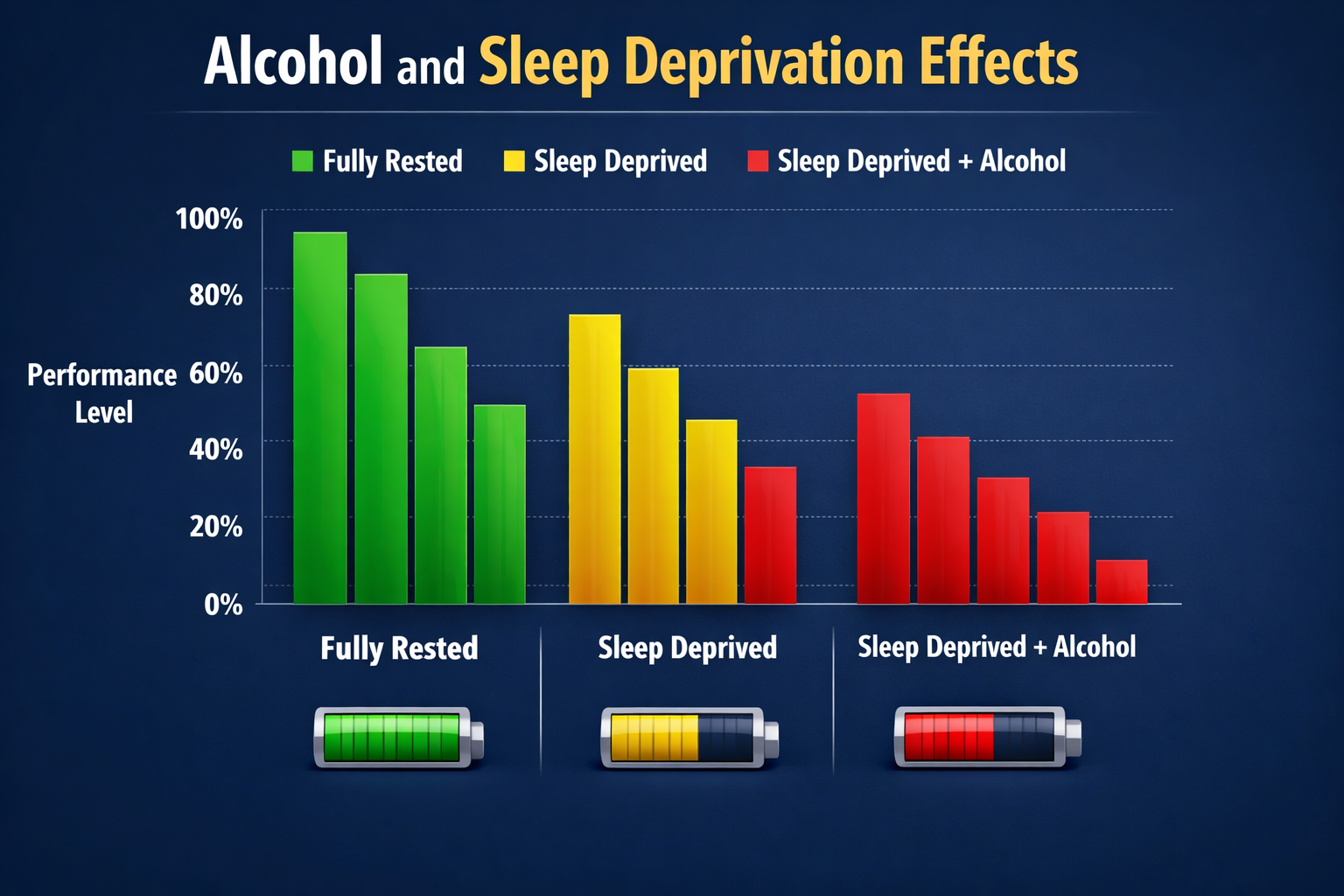
Now add sleep deprivation into the mix. When you are sleep deprived, your brain is already struggling to stay focused and process information.
Alcohol adds another layer of impairment. Think of it like this – a fully rested person is starting with a charged battery. A sleep-deprived person is already running on low power.
Adding alcohol is like putting extra pressure on a system that is already struggling.
The Difference Between BAC and How Drunk You Feel
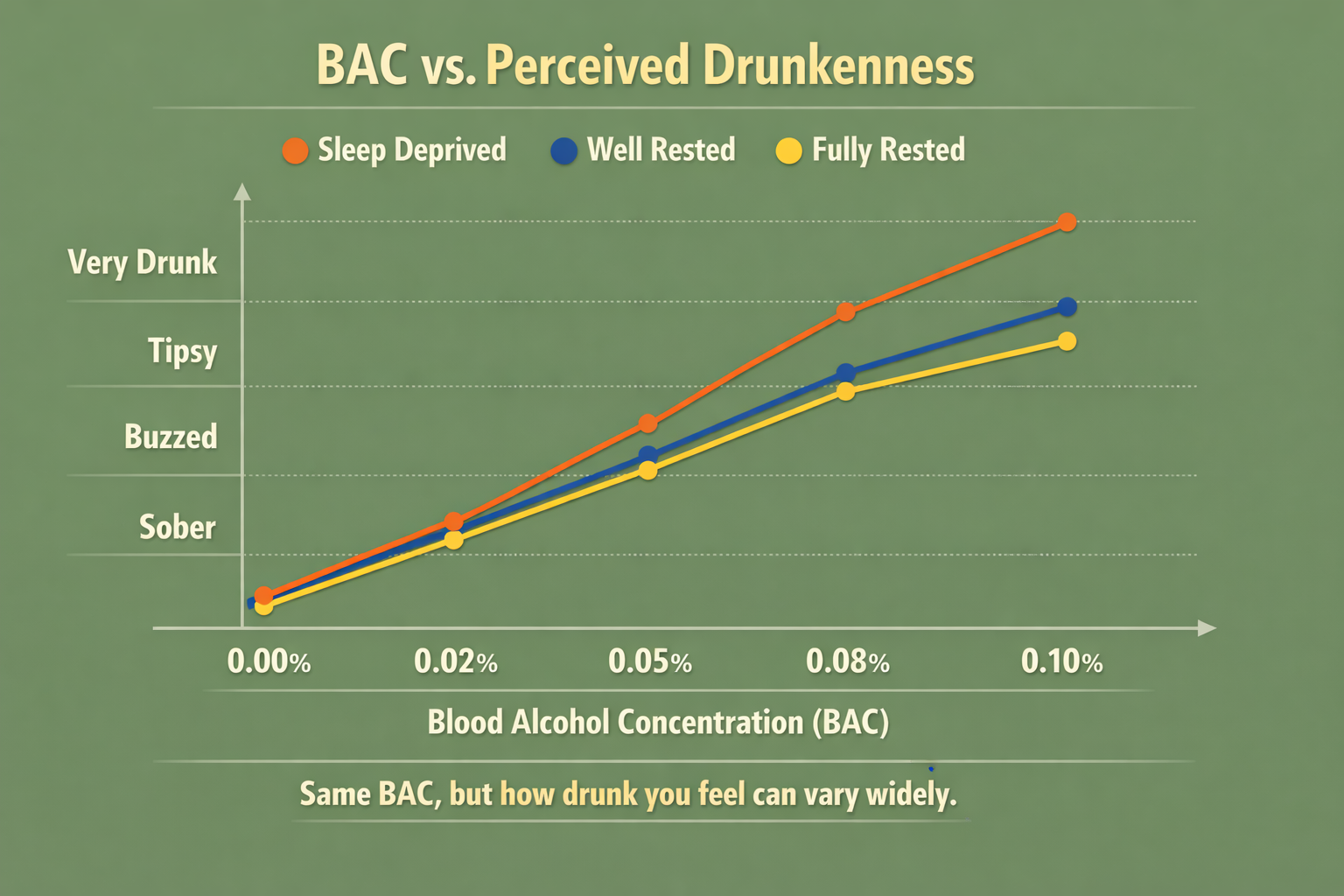
A common misunderstanding is that feeling more drunk always means your BAC is higher. That is not always true. BAC (Blood Alcohol Concentration) measures the amount of alcohol in your bloodstream.
For example, a person may have a BAC of 0.05%, while another person may have the same BAC but feel completely different depending on:
- Sleep
- Food intake
- Body size
- Drinking speed
- Tolerance
- Overall health
Sleep deprivation does not magically create more alcohol in your blood. Instead, it can make your brain less capable of handling the effects.
Sleep Loss Can Affect Judgment
Imagine a girl. She works a night shift and finishes at 6 AM. Instead of sleeping, she stays awake all day for a family event. By evening, she has been awake for more than 24 hours.
At dinner, she drinks the same amount she usually does. Normally, she handles that amount easily.
But this time, she feels dizzy faster, she becomes tired quickly, she has trouble focusing.
Her reactions feel slower. She thinks – “Why does this feel so much stronger today?”
The answer is not necessarily the drink. Her brain was already exhausted. One of the biggest risks is that tired people may underestimate their impairment. A person who is exhausted may think – “I only had two drinks. I’m fine.”
But alcohol and sleep loss can combine to affect:
- Decision-making
- Risk assessment
- Attention
- Response time
This can become especially important when driving. Many places use a BAC legal limit for driving.
For example, in many regions, 0.08% BAC is the legal limit, though the exact limit depends on local laws.
But being below the legal limit does not always mean someone is performing at their best. Fatigue can add another layer of impairment.
A Simple BAC Calculator Can Be Misleading
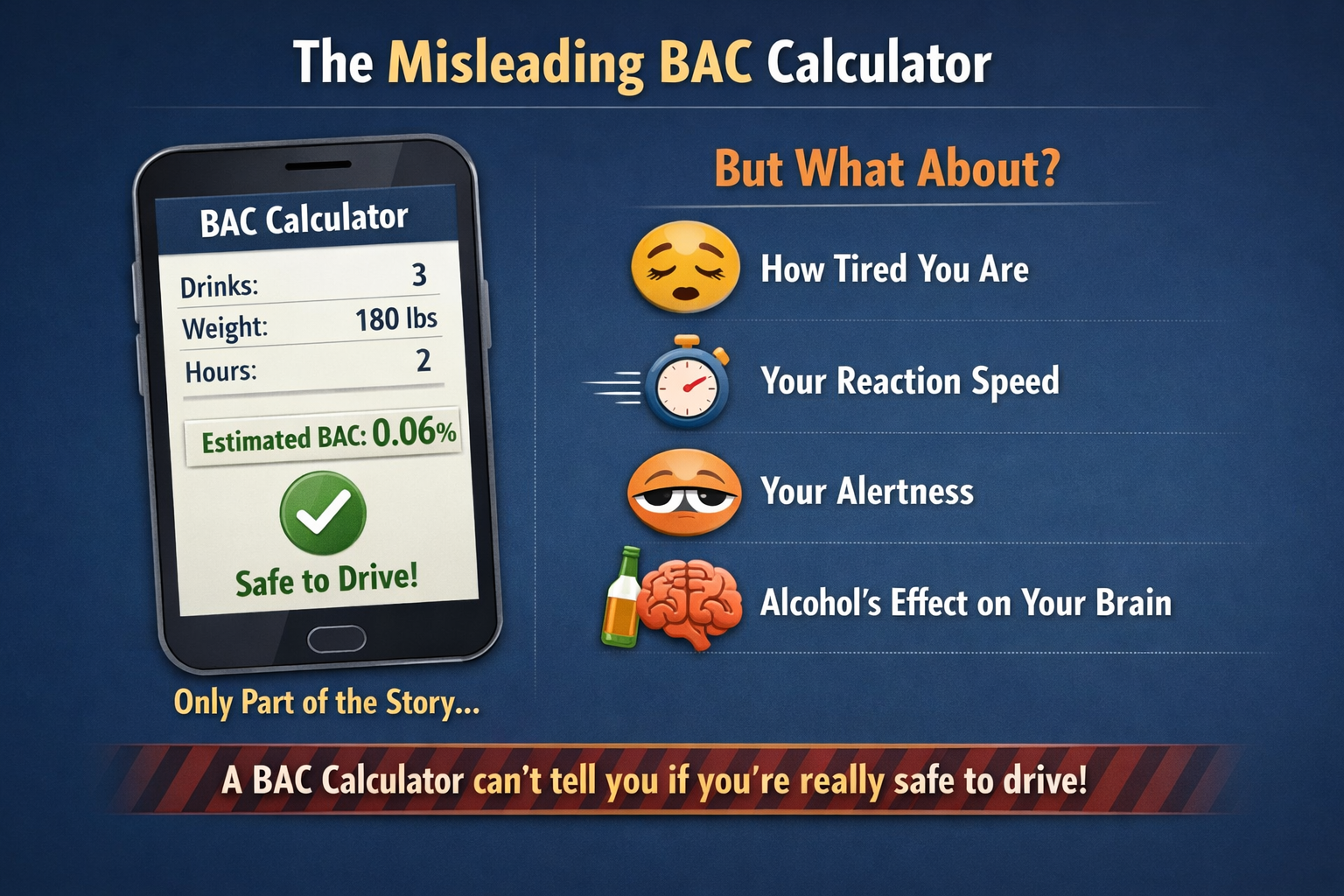
Many people use an online BAC calculator before deciding whether they are okay to drive.
These calculators can estimate BAC based on things like:
- Number of drinks
- Body weight
- Time period
- Gender
However, they cannot fully measure:
- How tired you are
- Your reaction speed
- Your alertness
- How alcohol is affecting your brain
A BAC estimate is only one part of the picture.
Sleep Deprivation + Alcohol: Why The Combination Feels Worse
Here is a simple comparison chart:
| Situation | Brain Condition | Alcohol Effect |
| Well rested + alcohol | Normal alertness | Alcohol effects are noticeable |
| Slightly tired + alcohol | Reduced focus | Alcohol feels stronger |
| Very sleep deprived + alcohol | Already impaired | Alcohol effects can feel much stronger |
The important point – Sleep loss does not remove alcohol faster. It does not lower BAC.
It changes how your brain experiences and manages the effects. Now imagine a person wakes up early for a road trip. He drives for hours, sleeps only a few hours the previous night, and later stops with friends.
He has a couple of drinks. Because he does not feel “drunk,” he assumes everything is fine. But his problem is not only alcohol. His brain is fighting two things:
- Fatigue
- Alcohol effects
Both can reduce attention and slow reactions. Can Coffee fix this? Many people believe: “I’ll drink coffee and wake up.”
Coffee may make you feel more alert because caffeine stimulates your brain.
But coffee:
- Does not remove alcohol
- Does not lower BAC
- Does not reverse sleep deprivation
You may feel awake, but your abilities may still be affected.
How Much Sleep Is Enough Before Drinking?
There is no magic number that makes alcohol risk-free. But getting proper rest helps your brain function normally.
If you are extremely tired, the safest decision is to avoid adding alcohol on top of severe fatigue.
Your body needs both:
- Time to process alcohol
- Sleep to restore brain function
Final Thoughts
The biggest lesson is simple – being tired can change the way alcohol affects you.
You may drink the same amount you usually do, but if you are sleep deprived, the experience can feel much stronger and your performance can be more affected.
Your BAC may be the same, but your brain is not operating at the same level.
So the next time you think – “I only had a little to drink, but I feel completely different,” remember to consider something else – how much sleep did you get before that drink.
