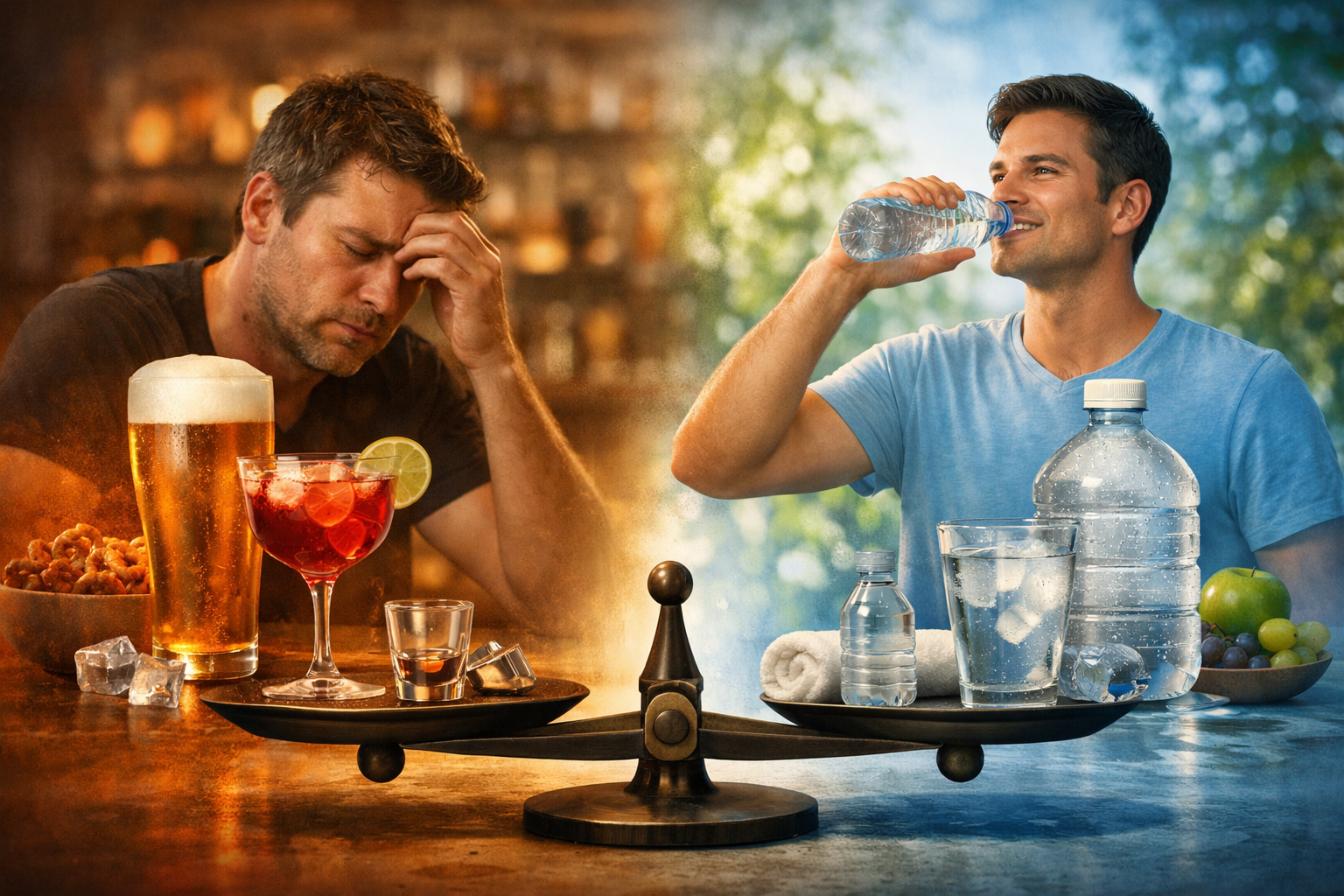
Many people believe alcohol affects the body in a simple way. A person drinks alcohol, the liver breaks it down, and eventually the effects disappear.
But the reality is much more complicated. There are many factors that influence how alcohol affects the body — food intake, body composition and weight, drinking speed, sleep, and one factor that is often ignored hydration.
A person can drink the same amount of alcohol on two different days and experience completely different results. Sometimes the hidden factor is the body’s hydration level. Let’s check this in detail.
To understand why, it helps to look at how alcohol moves through the body, how it affects BAC (Blood Alcohol Concentration), and why hydration can influence how someone feels during and after drinking.
The Moment Many People Notice Something Is Different
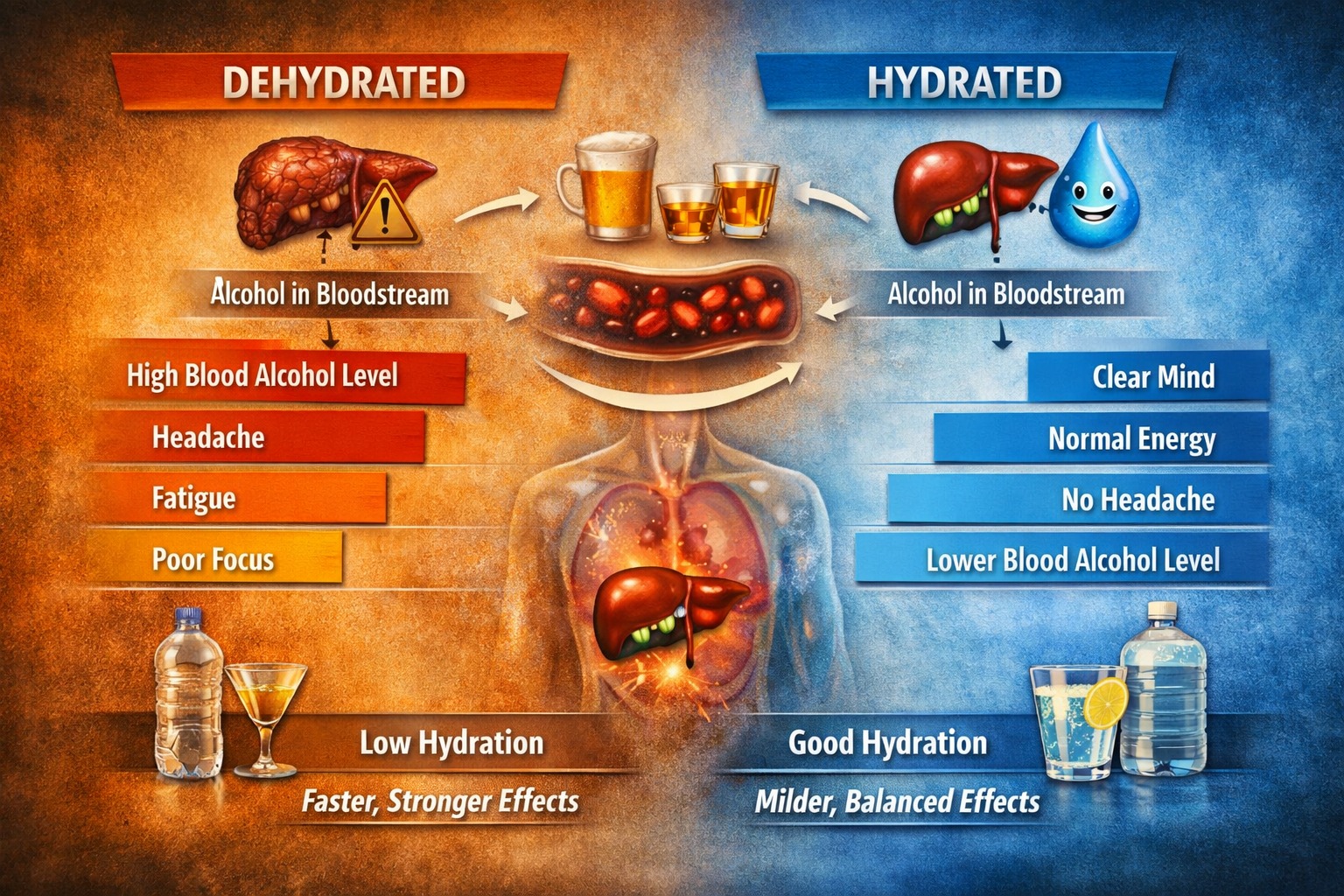
A common situation happens during social events. Someone spends the entire day working, walking outside, exercising, or simply staying busy.Water intake is low.
By evening, the body is already slightly dehydrated. Then alcohol is added into the equation. After a few drinks, the effects may appear faster. Concentration drops, tiredness increases, and the next morning feels much harder.
Many people blame alcohol alone. However, dehydration can make the body’s response feel much worse because the body is already dealing with fluid imbalance.
Many people blame alcohol alone. However, dehydration can make the body’s response feel much worse because the body is already dealing with fluid imbalance — and this can intensify impairment even before someone reaches the legal limit of intoxication.
This is where hydration becomes an important factor when understanding alcohol effects and BAC changes. You can check your BAC here.
How Alcohol Moves Through the Body
When alcohol is consumed, it does not simply stay in the stomach. It enters the bloodstream and travels throughout the body.
The liver becomes the main processing center. Inside the liver, alcohol is broken down using enzymes, mainly:
Alcohol dehydrogenase
Acetaldehyde dehydrogenase enzymes convert alcohol into other substances that the body can eventually remove. However, there is an important limitation.
The liver can only process alcohol at a certain rate. Drinking water does not make the liver process alcohol faster.
This is one of the biggest misconceptions people have. Many assume -“Drinking water will make someone sober faster.” That is not true. Hydration does not remove alcohol instantly. Instead, it helps the body manage some of the stress caused by alcohol consumption.
Why Alcohol Causes Water Loss
Alcohol has a unique effect on the body’s fluid balance. It can act as a diuretic, meaning it can increase urine production. This causes the body to lose more fluids.
Now, suppose a person attends a party after a long day. They have eaten very little, drank very little water, and then start consuming alcohol.
Over the next few hours, the body loses additional fluids while alcohol is being processed.
The result can include:
- Dry mouth
- Headache
- Fatigue
- Low energy
- Difficulty concentrating
These symptoms are commonly associated with hangovers, and dehydration is one contributing factor.
Drinking Alcohol While Dehydrated vs Properly Hydrated
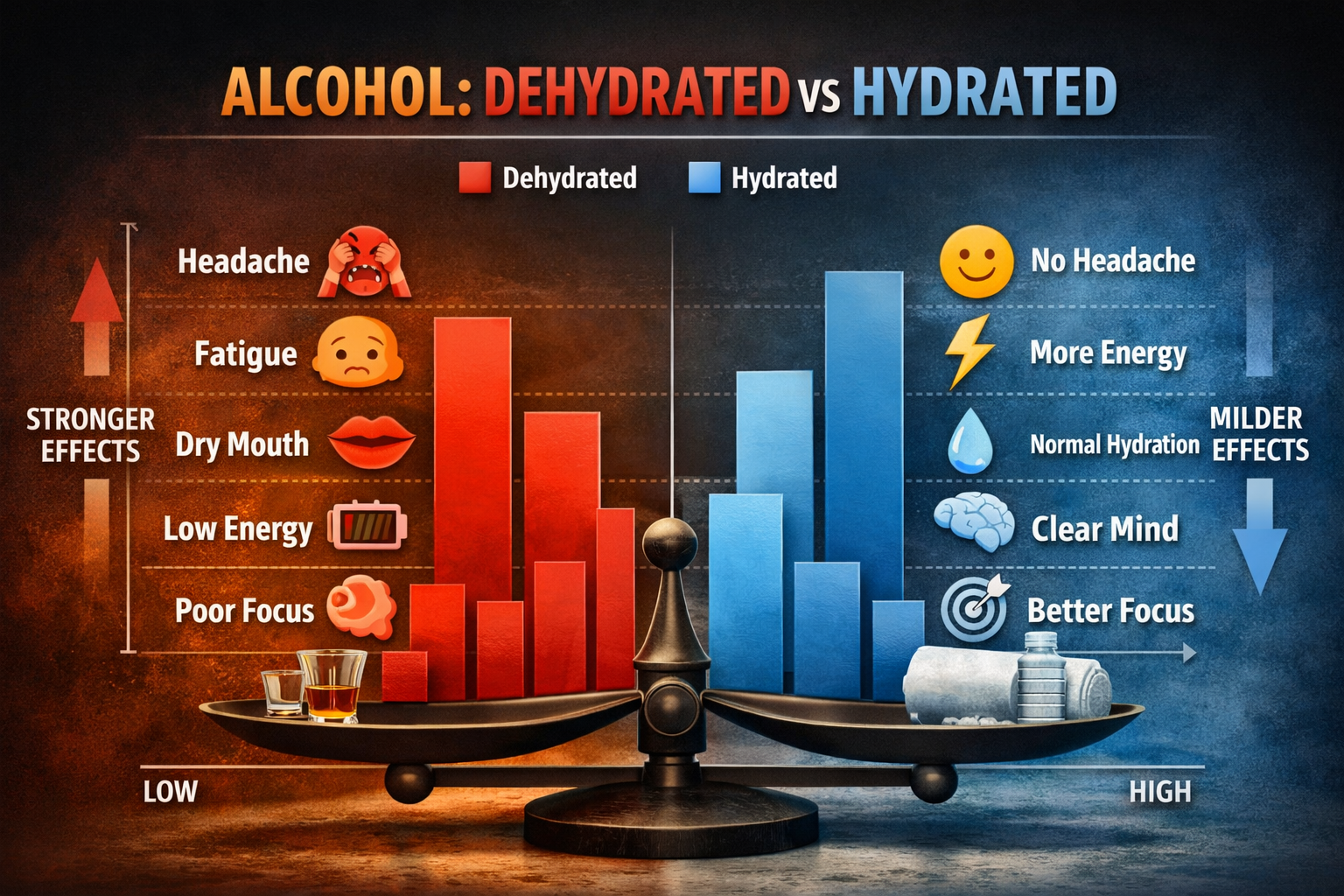
The condition of the body before drinking can make a noticeable difference. Imagine someone spends the afternoon outdoors.
The weather is warm. They sweat. They forget to drink enough water. Later, they meet friends and start drinking alcohol. The body is already under stress before alcohol even enters the system.
The effects may feel stronger because the body is managing both dehydration and alcohol at the same time. Now imagine the same person, they drink enough water throughout the day.
They eat a proper meal. They begin the evening feeling normal. They consume the same amount of alcohol. The alcohol still affects the body, and the liver still processes it at the same speed.
But the body is not starting from a weakened state. This can make the overall experience feel very different.
The Connection Between Body Water and Alcohol Concentration
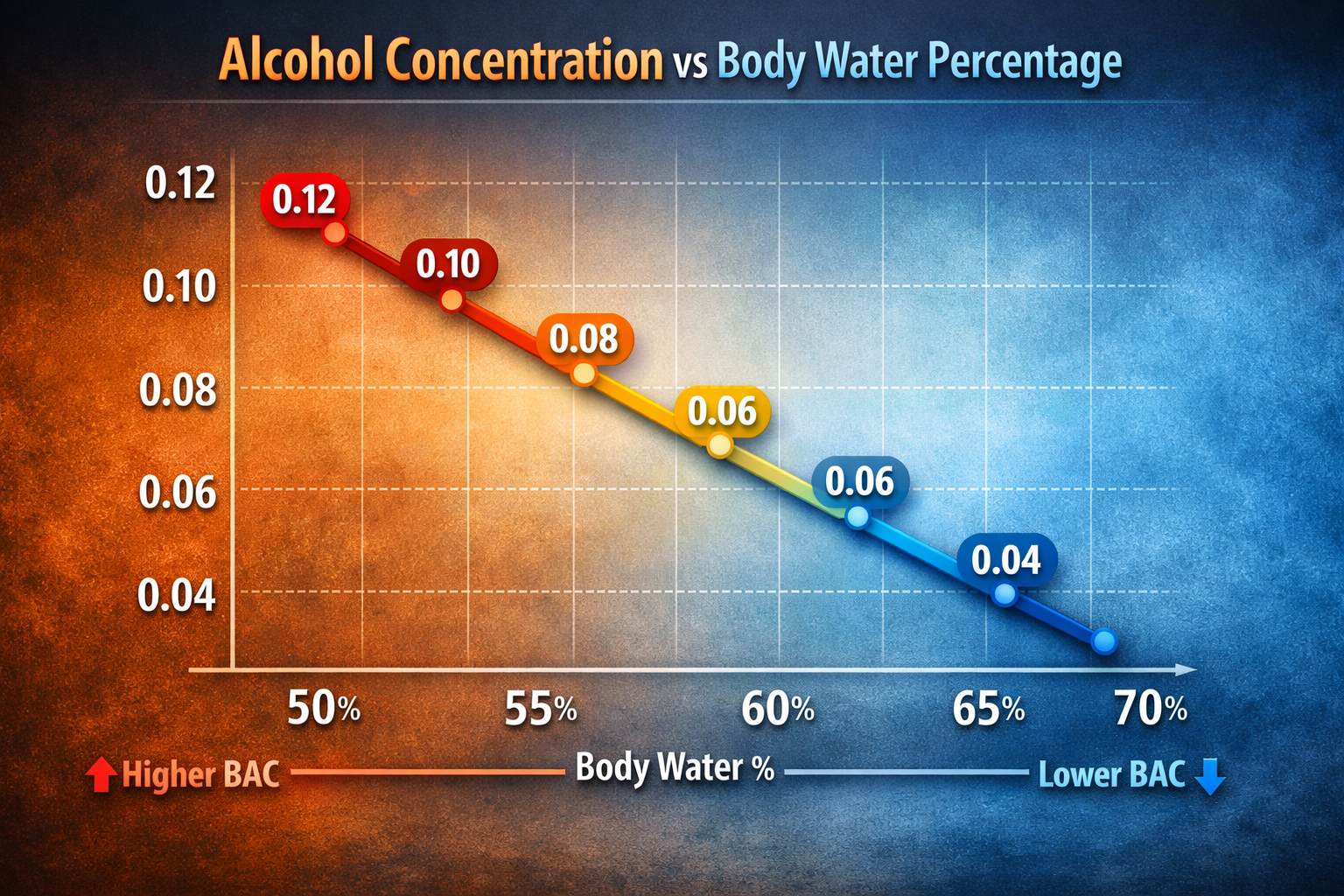
Another important factor is how alcohol spreads throughout the body. Alcohol distributes through body water. People with different body compositions may experience different alcohol concentrations and absorption even after consuming the same amount.
Factors that influence this include:
- Body size
- Muscle mass
- Body water percentage
- Food intake
- Drinking speed
- Individual metabolism
This explains why two people can drink the same drink and have completely different reactions.
Why the Next Morning Feels So Different
The morning after drinking is often when hydration becomes obvious.
Many people experience:
- Thirst
- Headaches
- Tiredness
- Weakness
- Difficulty focusing
During alcohol metabolism, the body processes alcohol and produces byproducts such as acetaldehyde. At the same time, fluid balance may be affected.
Drinking water can help replace lost fluids and support normal recovery processes. However, it is important to understand –
Water does not erase alcohol from the body. It does not instantly remove intoxication. It simply supports the body’s normal functions.
The Common Mistake – Waiting Until the End
A common mistake is thinking about hydration only after drinking. Many people wait until the next morning to drink water.
But hydration works best when maintained consistently.
A better approach is:
- Drink water regularly throughout the day
- Avoid starting alcohol consumption already dehydrated
- Eat before drinking
- Drink water alongside alcoholic beverages
Small habits can change how the body handles the overall experience.
Now, consider two similar evenings. On the first occasion – a person has a busy day. Water intake is low. Food intake is poor. Alcohol is consumed later.
The next day feels exhausting. On the second occasion – the person stays hydrated. They eat properly. They drink water during the evening.
The amount of alcohol may be similar, but the next morning can feel completely different also, the alcohol metabolism is different for men and women. The difference is not that water prevented alcohol from working. The difference is that the body was better prepared.
What Hydration Can and Cannot Do
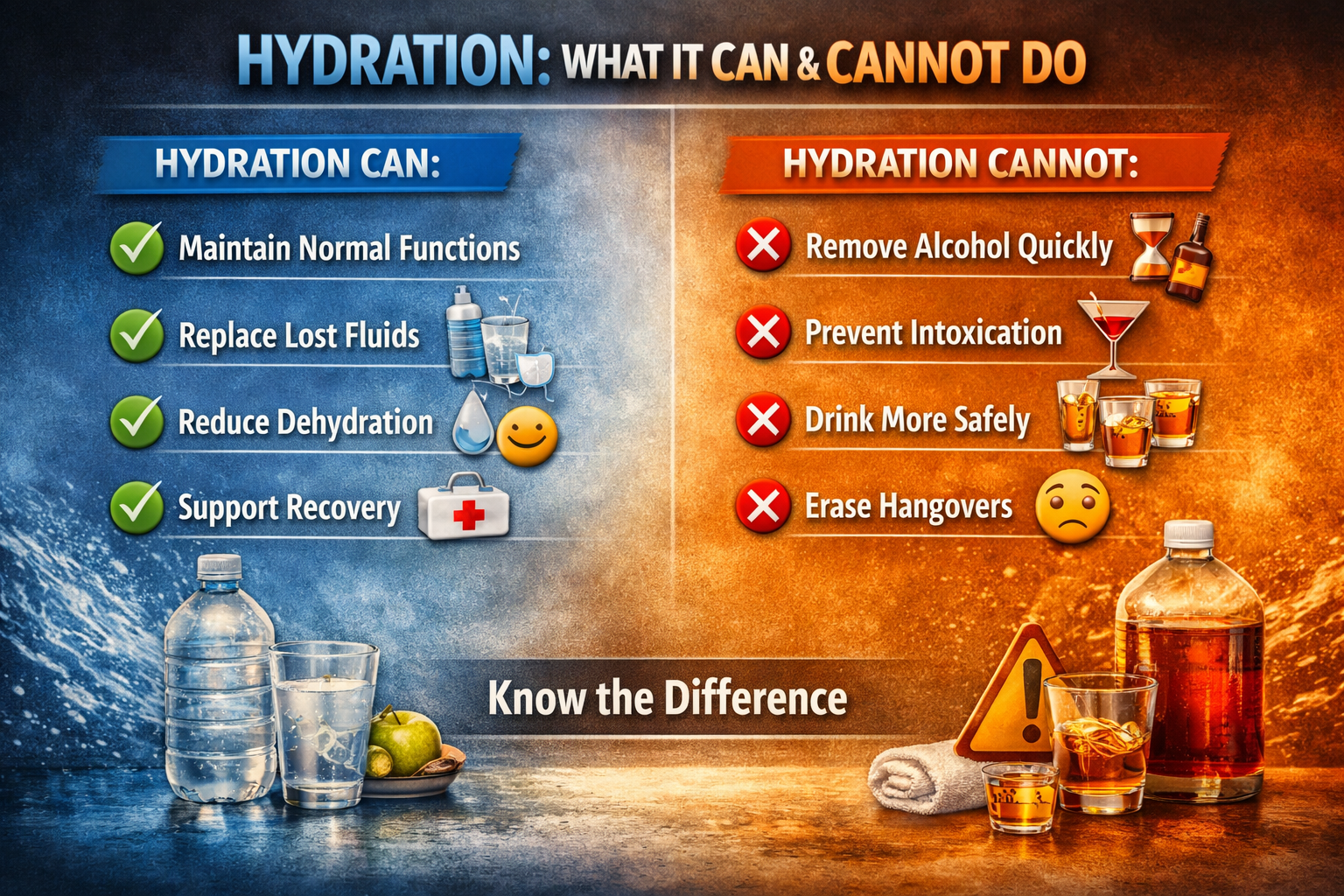
Hydration can:
- Help maintain normal body functions
- Replace fluids lost during alcohol consumption
- Reduce dehydration-related discomfort
- Support recovery after drinking
Hydration cannot:
- Make alcohol leave the bloodstream instantly
- Prevent intoxication
- Allow someone to safely drink more alcohol
- Remove the effects of excessive drinking
Understanding this difference is important.
Wrapping Up
Alcohol metabolism is not just about the liver. The entire body is involved. Hydration plays a quiet but important role in how the body responds to alcohol.
Water does not speed up alcohol breakdown, but it helps the body handle the additional stress created by alcohol consumption. Many people focus only on the drink itself.
But sometimes the factors around the drink — especially hydration — determine how the body feels before, during, and after the experience.
A simple glass of water may seem insignificant, but it is one of the easiest ways to support the body while it is doing the complex work of processing alcohol.
