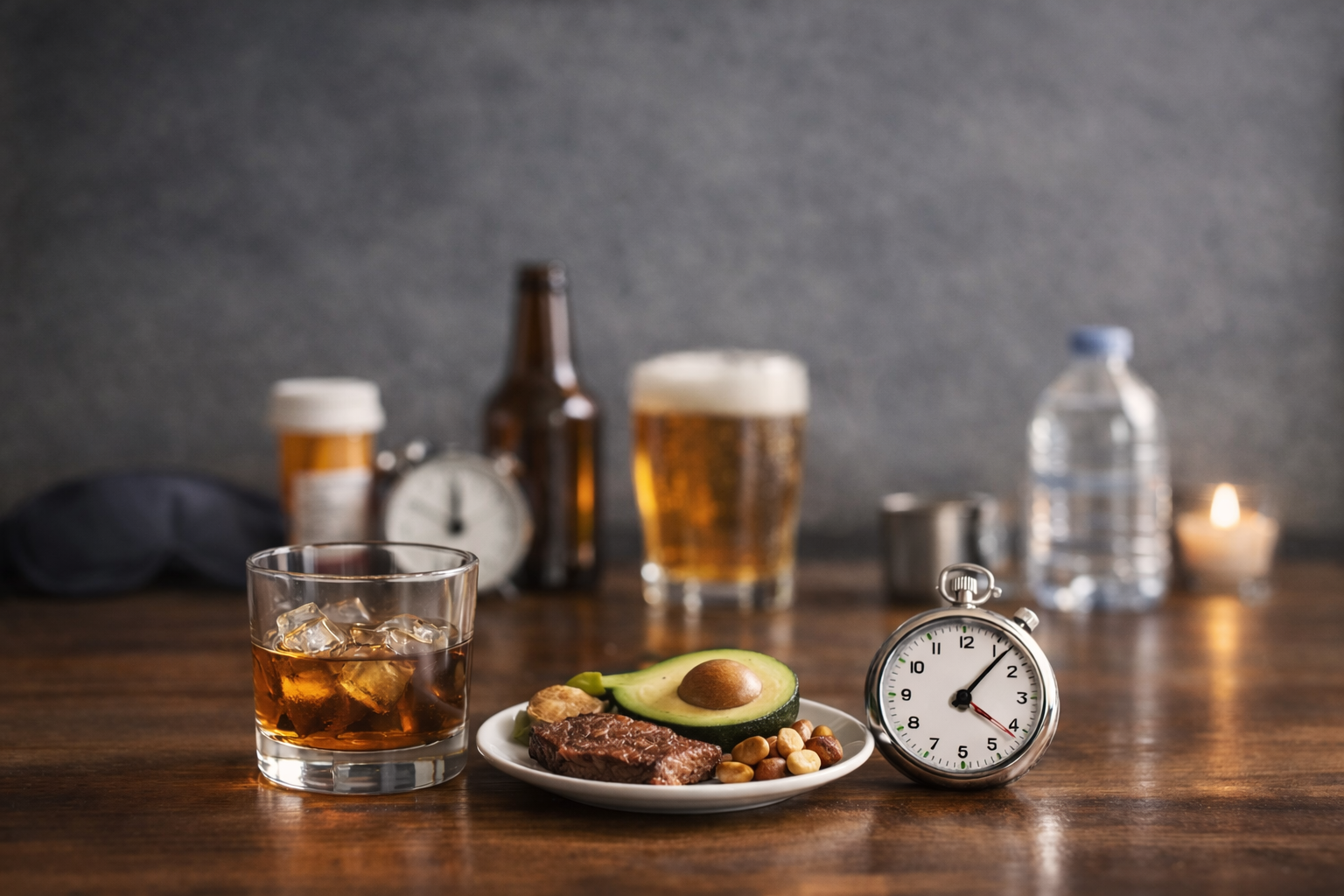
Alcohol affects millions of people worldwide every day, yet most individuals still misunderstand how the body actually absorbs it.
From social drinking habits to online BAC charts and intoxication calculator tools, many people rely on simplified assumptions that ignore real biological complexity.
The truth is that alcohol absorption is influenced by far more than just body weight and the number of drinks consumed.
Here is the real science behind how alcohol enters the bloodstream, why carbonation changes intoxication speed, how different foods affect absorption, and why legal limit charts and automated calculators often fail to predict real-world impairment accurately – the reality vs myth – in alcohol absorption of body.
Understanding the difference between myth and reality is essential not only for personal health but also for making safer decisions about drinking, driving, and alcohol consumption in social environments.
How Alcohol Is Actually Absorbed in the Body
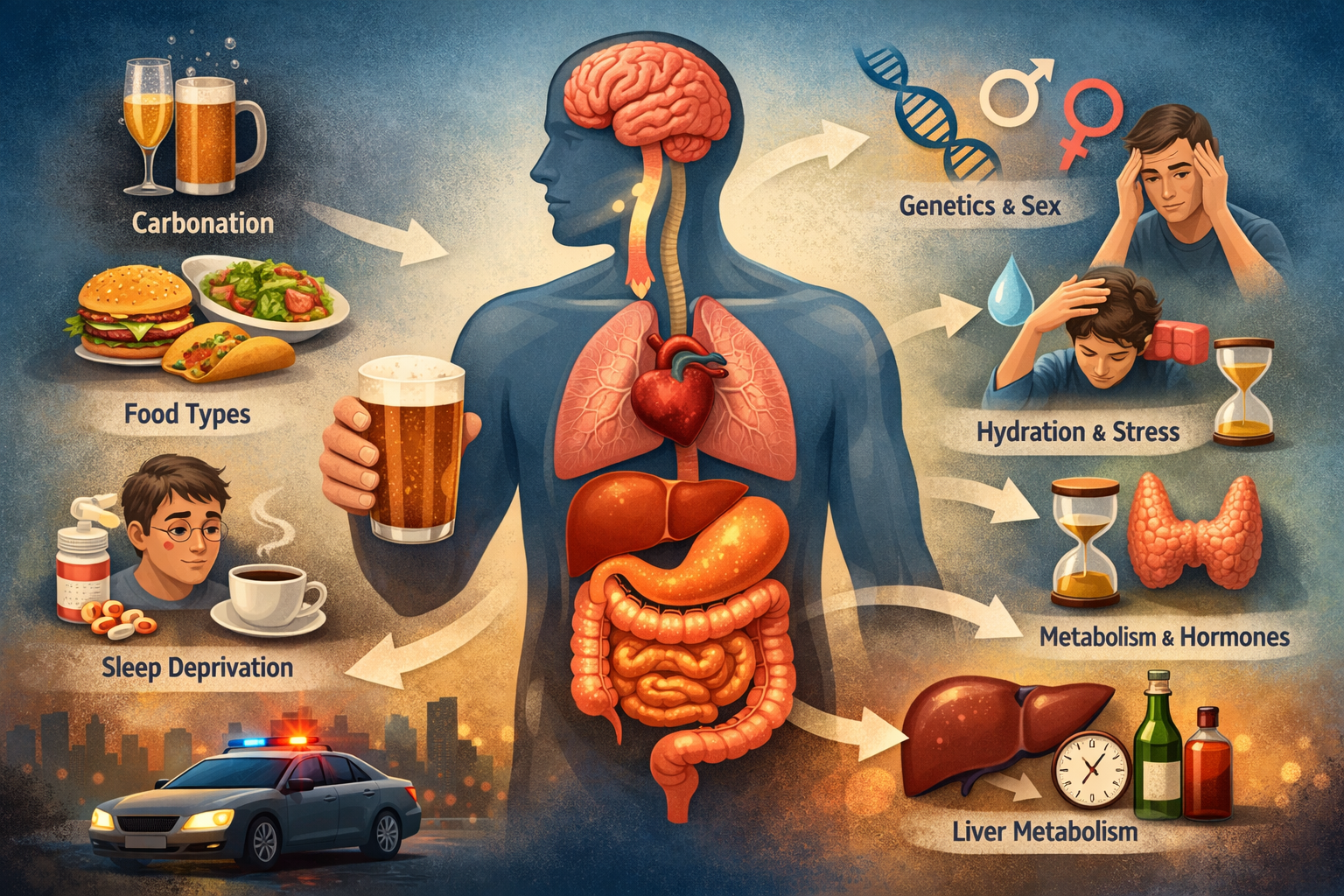
Picture this – you’re at a wedding reception, champagne flutes clinking all around. You’ve only had two glasses, but the carbonation pushes alcohol into your bloodstream faster than you expect. Within minutes, you feel lightheaded, even though a calculator might still place your BAC under the legal limit.
Now imagine a different scene—late-night street food after a party. You grab a greasy burger and fries before heading home. That heavy meal slows alcohol absorption, keeping your BAC rise delayed. On paper, you might already be close to the legal threshold, but in reality, you feel steadier than someone who skipped dinner.
Or think about the exhausted student pulling an all-nighter. One beer after hours of sleep deprivation hits like three. Stress hormones and fatigue magnify impairment, even though the BAC chart says otherwise.
Here’s the science behind it:
- Approximately 20% of alcohol is absorbed through the stomach lining and 80% is absorbed through the small intestine.
- The small intestine works much faster, so the speed at which alcohol leaves the stomach is the real gatekeeper of intoxication.
- Once in the bloodstream, alcohol races to the brain, liver, heart, and nervous system.
- The liver metabolizes alcohol with enzymes, but it can only process a limited amount per hour. Drinking faster than the liver can keep up means intoxication builds quickly.
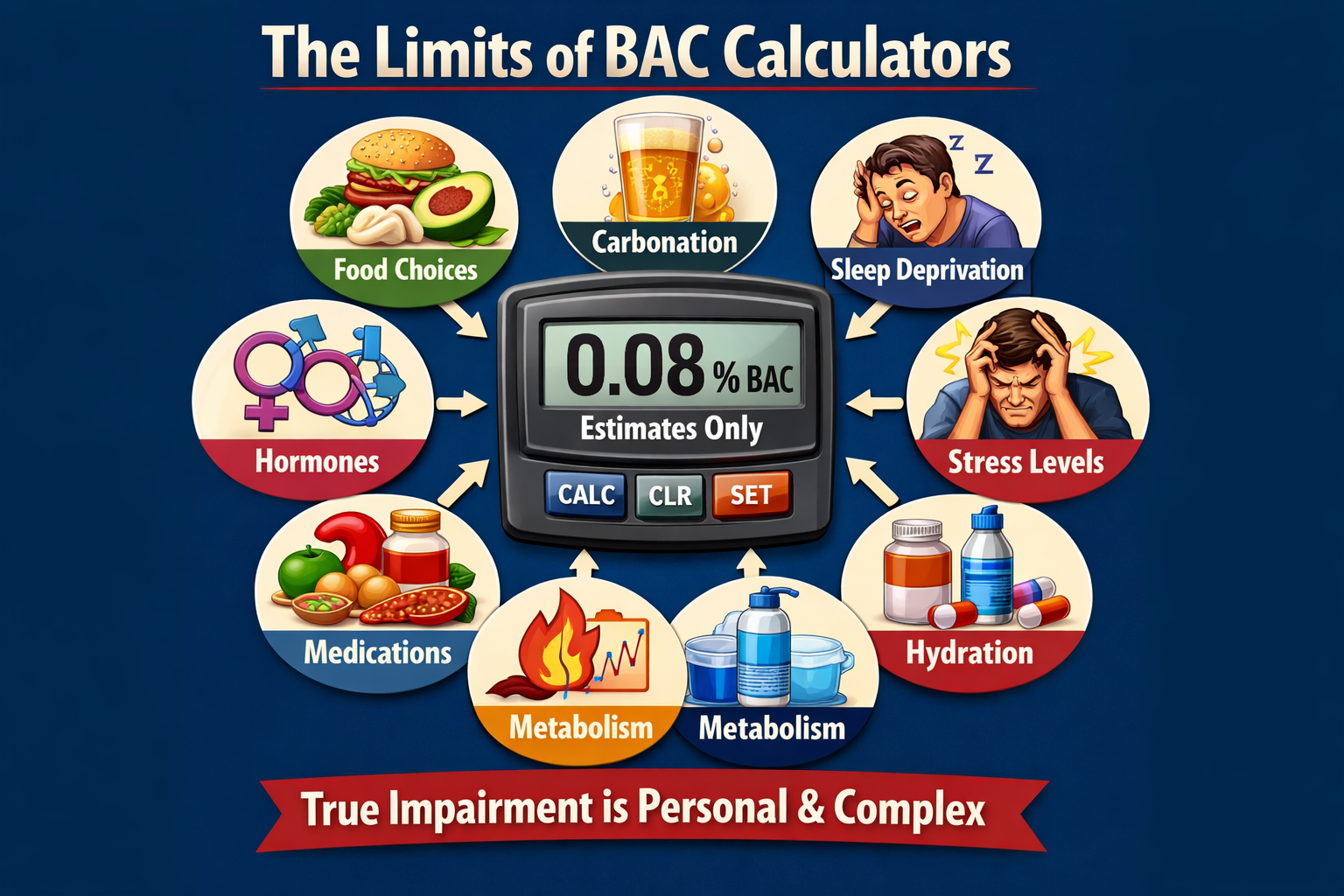
This is why BAC calculators and intoxication charts often fail—they don’t account for food, carbonation, sleep, stress, hydration, medications, hormones, metabolism, or digestive disorders.
If you want to calculate your Blood Alcohol Concentration (BAC), you can try a calculator here.
Reality vs. Myth in Alcohol Absorption is clear – calculators provide estimates, not guarantees of sobriety. Impairment is personal, unpredictable, and often invisible until it’s too late.
Myth – Eating Anything Before Drinking Prevents Intoxication
One of the biggest misconceptions surrounding alcohol is the belief that any type of meal offers equal protection against intoxication. This is scientifically inaccurate.
The Empty Stomach Fallacy
In Reality Vs Myth – In Alcohol Absorption of Body, one of the most important truths is that the type of food matters more than many people realize.
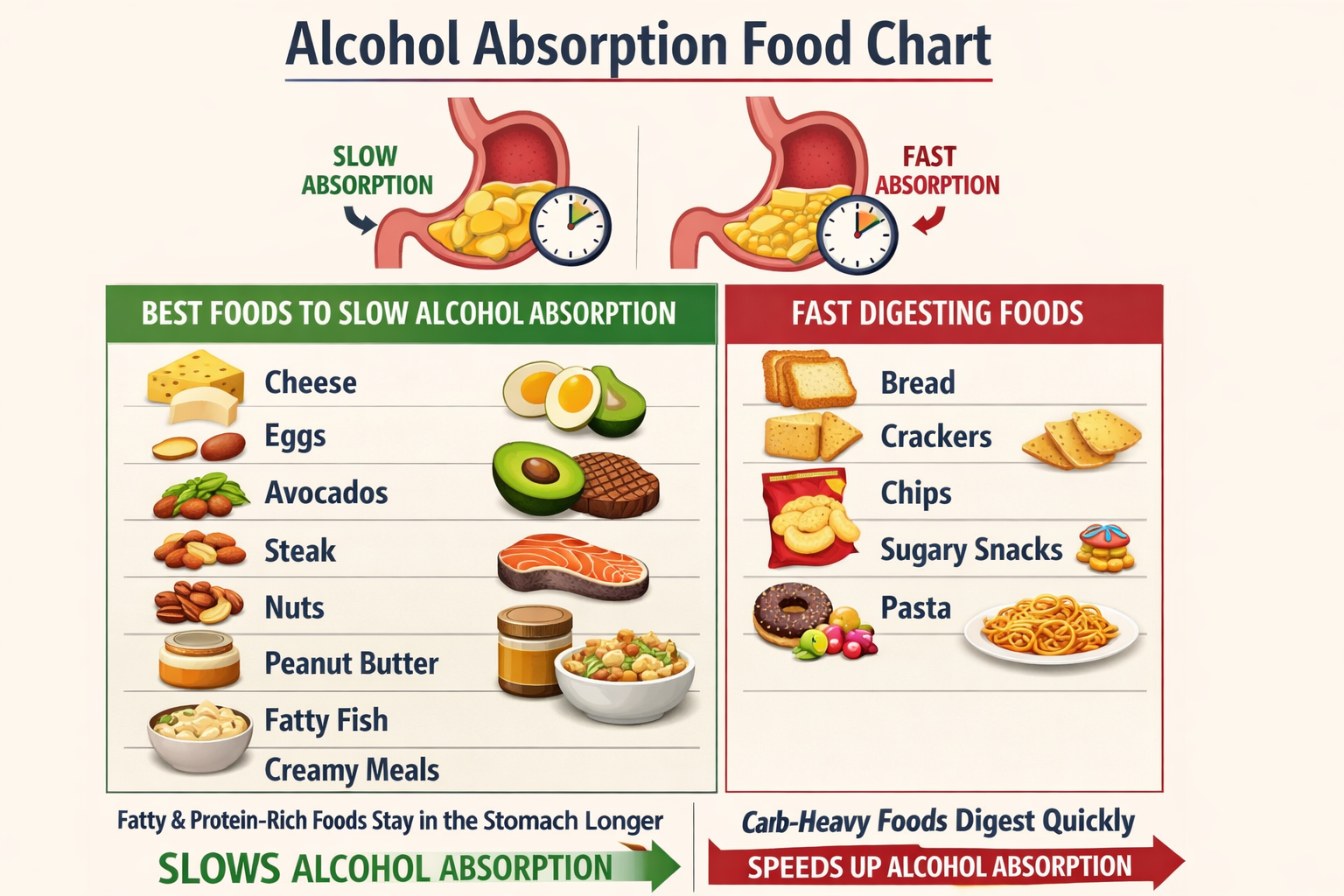
High-fat meals slow gastric emptying far longer than high-carbohydrate meals. Gastric emptying refers to how quickly the stomach passes contents into the small intestine — where most alcohol absorption occurs.
Foods That Slow Alcohol Absorption More Effectively
- Cheese
- Eggs
- Avocados
- Nuts
- Steak
- Fatty fish
- Peanut butter
- Cream-based meals
These foods stay in the stomach longer, delaying alcohol from reaching the small intestine quickly. By contrast, carbohydrate-heavy foods such as:
- Bread
- Crackers
- Chips
- Sugary snacks
- Pasta
may temporarily fill the stomach but digest rapidly. As a result, alcohol can still move into the bloodstream relatively fast.
This explains why two people drinking the same amount may experience very different levels of intoxication depending on what they ate beforehand.
The Carbonation Trap – Why Fizzy Drinks Hit Faster
Many people assume carbonated drinks are lighter and therefore safer. In reality, carbonation may accelerate alcohol absorption.
How Carbonation Changes Alcohol Absorption
Carbonated mixers such as:
- Soda water
- Tonic water
- Cola
- Sparkling beverages
- Hard seltzers
can increase stomach pressure and speed gastric emptying. This pushes alcohol into the small intestine faster, where absorption becomes significantly more rapid.
This phenomenon is sometimes called the Carbonation Trap.
Drinks such as:
- Gin and tonic
- Rum and cola
- Whiskey and soda
- Champagne cocktails
may cause intoxication to occur faster than non-carbonated alternatives.
Champagne is a classic example. Many people report feeling drunk quickly after drinking champagne because carbonation accelerates alcohol delivery into the bloodstream.
Most alcohol absorption charts and online calculator tools do not account for carbonation effects, even though they can noticeably influence intoxication speed.
Why Alcohol Calculators Are Often Misleading
Online BAC calculators have become popular tools for estimating intoxication levels. They usually rely on:
- Body weight
- Gender
- Number of drinks
- Time elapsed
However, these systems use generalized averages and cannot accurately predict real biological responses.
What Most Calculators Ignore
Most BAC calculators give the illusion of precision, but they’re really just rough estimates. They don’t account for the countless variables that shape how alcohol actually affects the body.
- Food composition – A heavy, fatty meal slows absorption, while light or carb-heavy meals speed it up.
- Carbonation – Bubbles accelerate alcohol entering the bloodstream.
- Sleep deprivation – Even small amounts of alcohol hit harder when you’re exhausted.
- Stress levels – Stress hormones alter how alcohol is metabolized.
- Medication use – Interactions can intensify impairment.
- Hydration – Dehydration makes alcohol effects sharper.
- Hormonal fluctuations – Cyclical changes can shift tolerance.
- Metabolic rate – Faster or slower metabolism changes how quickly BAC rises and falls.
- Digestive disorders – Conditions affecting the stomach or intestines can radically change absorption.
That’s why two people can drink the same amount and end up in completely different states – one may remain under the legal limit on paper yet feel severely impaired, while another might feel relatively normal despite already exceeding the threshold.
In Reality vs. Myth – Alcohol Absorption in the Body, this distinction is critical—calculators can’t measure sobriety, they can only estimate. The real story is that impairment is personal, variable, and often invisible until it’s too late.
The Legal Limit Myth
Many people mistakenly believe staying under the legal limit automatically means they are safe to drive. This is dangerous thinking.
Legal blood alcohol concentration limits vary by country and region, but impairment often begins before someone reaches the official legal threshold.
Even small amounts of alcohol can affect:
- Reaction time
- Coordination
- Judgment
- Focus
- Peripheral vision
Sleep deprivation, dehydration, stress, and medications can intensify these impairments further. A person under the legal limit may still be unsafe behind the wheel.
This is one reason law enforcement officers rely not only on BAC readings but also on behavioral observations and field sobriety tests.
Environmental Factors That Alcohol Charts Cannot Predict
One of the most overlooked aspects of alcohol absorption is the environment itself. Automated intoxication charts cannot measure real-world surroundings that influence how alcohol feels and behaves inside the body.
Heat and Outdoor Drinking
Warm environments increase dehydration and circulation. Combined with alcohol’s natural dehydrating effects, heat can intensify dizziness and fatigue.
Beach parties, concerts, clubs, and crowded venues often amplify intoxication more than people expect.
Emotional State and Stress
Stress hormones affect digestion and metabolism. Anxiety may alter stomach emptying rates, while excitement can temporarily mask feelings of intoxication.
This creates situations where people believe they are “fine” until alcohol suddenly affects them more intensely later.
Sleep Deprivation
Fatigue magnifies alcohol impairment dramatically. Someone who is exhausted may become impaired faster than someone who is fully rested, even after consuming the same amount of alcohol.
Again, no standard alcohol calculator or legal limit chart can fully account for these environmental realities.
Myth: Coffee and Cold Showers Sober You Up
This myth continues to persist despite decades of medical evidence proving otherwise.
Coffee may increase alertness temporarily, but it does not lower blood alcohol concentration. Cold showers may make someone feel awake, but they do not remove alcohol from the bloodstream. Only time allows the liver to metabolize alcohol.
The danger is that people may feel more awake while remaining heavily impaired. This false confidence contributes to poor decisions, especially driving under the influence.
Why Two People React Differently to Alcohol
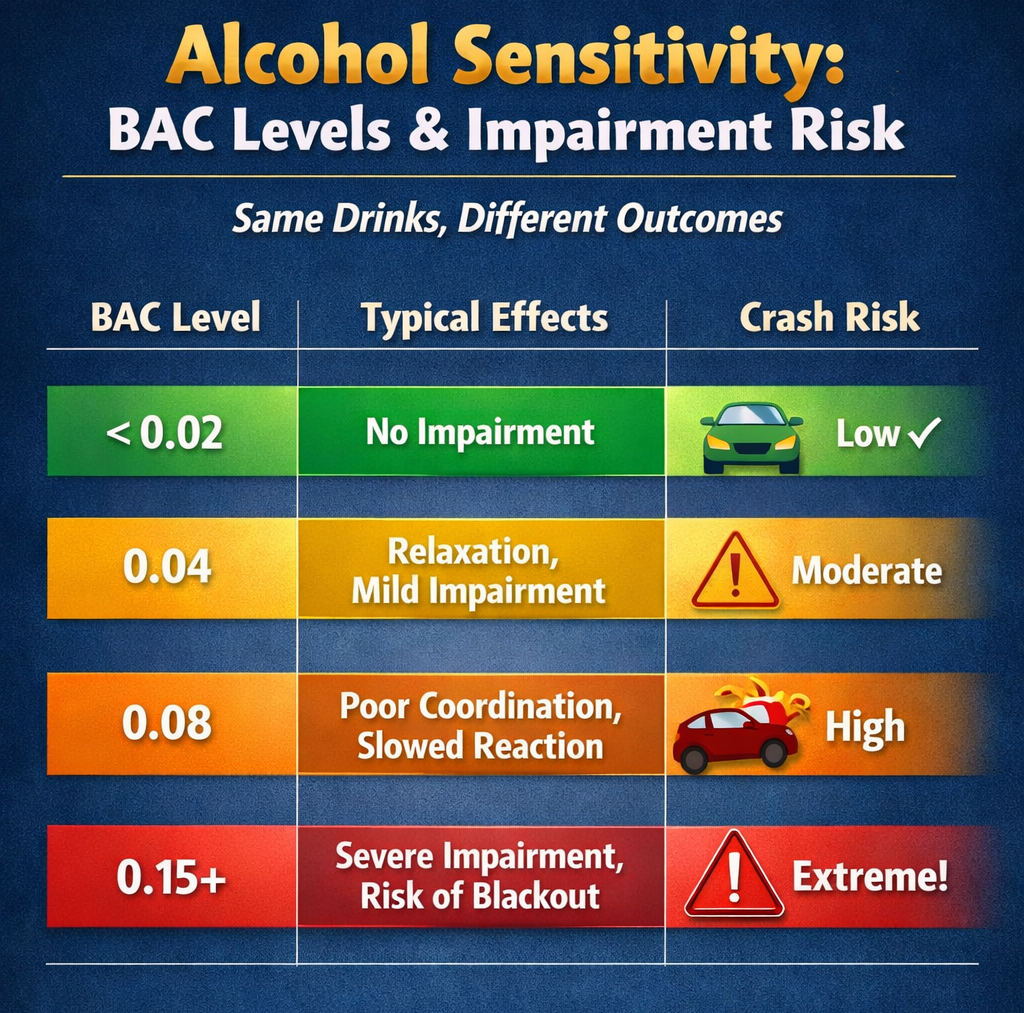
At a family dinner, two siblings share a bottle of wine. One feels flushed and dizzy after a single glass, while the other seems unaffected. The difference isn’t just the drink—it’s biology.
- Genetics – Some people naturally produce fewer alcohol-processing enzymes, making them more sensitive.
- Muscle-to-fat ratio – Alcohol disperses differently in lean tissue versus fat, changing how quickly intoxication builds.
- Biological sex – Women often experience stronger effects at lower amounts due to body composition and hormonal factors.
- Age –Older adults metabolize alcohol more slowly, amplifying impairment.
- Liver health – A compromised liver struggles to process alcohol, intensifying its impact.
- Hormones – Fluctuations can shift tolerance from one day to the next.
- Hydration – Dehydration sharpens alcohol’s effects.
- Medications – Interactions can magnify impairment unexpectedly.
Picture a young athlete with high muscle mass and good hydration—he may handle a beer more smoothly than his friend who is stressed, dehydrated, and on medication. Identical drinks, identical pace, yet completely different outcomes.
This is why standard BAC charts and online calculators should never be treated as exact science. They provide estimates, but the reality is personal, unpredictable, and often invisible until it’s too late.
Reality Vs Myth – In Alcohol Absorption of Body — The Real Truth
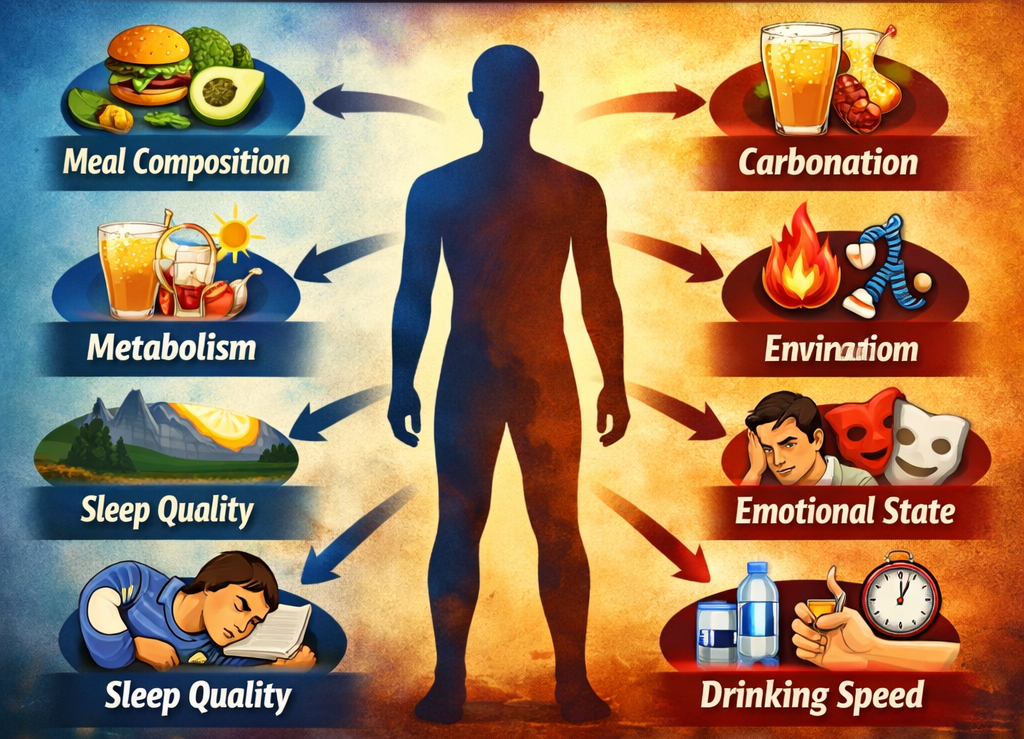
The real science of alcohol absorption is far more complex than popular myths suggest.
The body is influenced by:
- Meal composition
- Carbonation
- Metabolism
- Environment
- Emotional state
- Sleep quality
- Hydration
- Drinking speed
A greasy meal slows alcohol absorption differently than a carb-heavy snack. A carbonated mixer may increase intoxication speed. A tired or dehydrated person may become impaired faster than expected.
No chart, calculator, or legal limit estimate can perfectly predict how alcohol will affect every individual in every situation.
That is the central lesson behind Reality Vs Myth: In Alcohol Absorbtion of Body — the human body does not follow simple formulas.
Wrapping Up
Alcohol absorption is shaped by biology, digestion, environment, and behavior in ways most people underestimate. Common myths often oversimplify the process and create a false sense of control. Understanding the realities helps people make more informed and responsible decisions about drinking.
Ultimately, alcohol absorption of body is about recognizing that alcohol affects everyone differently — and that true awareness comes from understanding the science rather than trusting myths.
