
Imagine this. You’ve just met a few friends after work. Someone orders the first round of drinks, and you join in. After one or two drinks, you feel completely normal. You’re talking, laughing, checking your phone, and you don’t feel drunk at all.
So, when someone suggests driving to another restaurant across town, you think, “I’m fine. I barely feel anything.” The problem is that your brain doesn’t always wait for you to feel drunk before alcohol begins affecting it.
One of the biggest misconceptions about drinking is that intoxication starts when you feel dizzy or struggle to walk. In reality, alcohol begins interfering with your judgment, reaction time, and decision-making much earlier—even while you still feel perfectly capable.
This is why many people make poor choices long before reaching the legal BAC limit or feeling obviously intoxicated. Understanding how Blood Alcohol Concentration (BAC) affects the brain can help you make safer decisions and better interpret BAC charts and BAC calculators.
Alcohol Starts Affecting the Brain Almost Immediately
After your first drink, alcohol enters your bloodstream and begins traveling to your brain. As your BAC starts to rise, alcohol slows communication between brain cells.
The first part of the brain affected isn’t the one responsible for balance or speech. Instead, alcohol initially impacts the prefrontal cortex—the area responsible for:
- Judgment
- Decision-making
- Self-control
- Planning
- Risk assessment
Ironically, these are the very abilities you rely on to decide whether you’re safe to continue drinking or drive home.
Why You May Not Feel Drunk
Many people assume intoxication and impairment happen at the same time. They don’t. Your brain starts losing efficiency before obvious physical symptoms appear.
You may still:
- Walk normally.
- Hold a conversation.
- Remember names.
- Feel completely alert.
But behind the scenes, alcohol is already reducing your ability to evaluate risk accurately. This explains why someone can confidently say, “I’m perfectly fine to drive,” while already making poorer decisions than they realize.
Consider two coworkers attending a company dinner. Both have a couple of drinks over the course of an hour. Neither appears intoxicated. One decides to call a taxi. The other insists they’re perfectly capable of driving because they “don’t even feel buzzed.”
Objectively, both may have similar BAC levels. The difference isn’t alcohol itself—it’s judgment. Alcohol often reduces the ability to recognize its own effects.
Confidence Increases While Judgment Declines
One of alcohol’s most deceptive effects is that it often increases confidence while reducing sound judgment.
As BAC rises, people frequently become:
- More optimistic.
- Less cautious.
- More willing to take risks.
- More likely to underestimate danger.
This creates a dangerous combination. You may genuinely believe you’re making good decisions even as your brain becomes less capable of doing so.
Decision-Making Changes Before Coordination
People often watch for obvious signs such as:
- Slurred speech
- Poor balance
- Difficulty walking
But these usually appear later. Long before that happens, alcohol can already affect:
- Reaction time
- Attention span
- Concentration
- Divided attention
- Hazard recognition
- Impulse control
For drivers, these changes are especially important because safe driving depends more on decision-making than simply steering a vehicle.
The Role of BAC
Your Blood Alcohol Concentration (BAC) measures how much alcohol is present in your bloodstream. As BAC increases, the likelihood of impaired judgment also rises. However, impairment doesn’t suddenly begin at one specific number.
Even relatively low BAC levels may reduce:
- Mental processing speed.
- Visual tracking.
- Decision-making.
- Multitasking ability.
This is why experts emphasize that impairment exists on a spectrum rather than beginning only at the legal threshold.
Can BAC Charts Predict Decision-Making?
Many people search for BAC charts after drinking. These charts estimate BAC based on:
- Body weight
- Biological variability
- Number of drinks
- Drinking duration
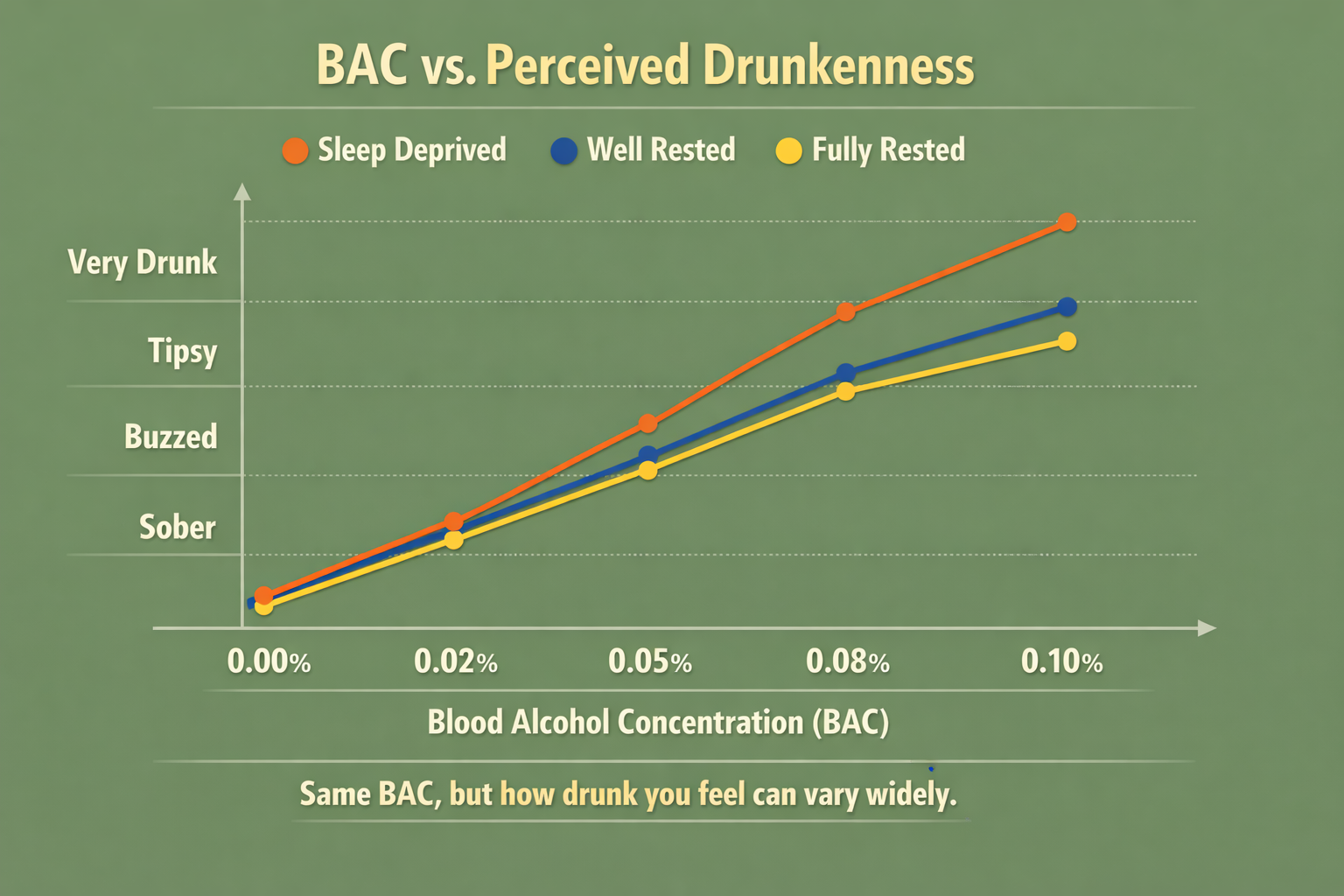
While BAC charts are useful educational tools, they cannot predict exactly how alcohol will affect your judgment. Two people with identical BAC values may behave very differently depending on:
- Sleep quality and deviation
- Fatigue
- Stress
- Medications
- Food intake
- Alcohol tolerance
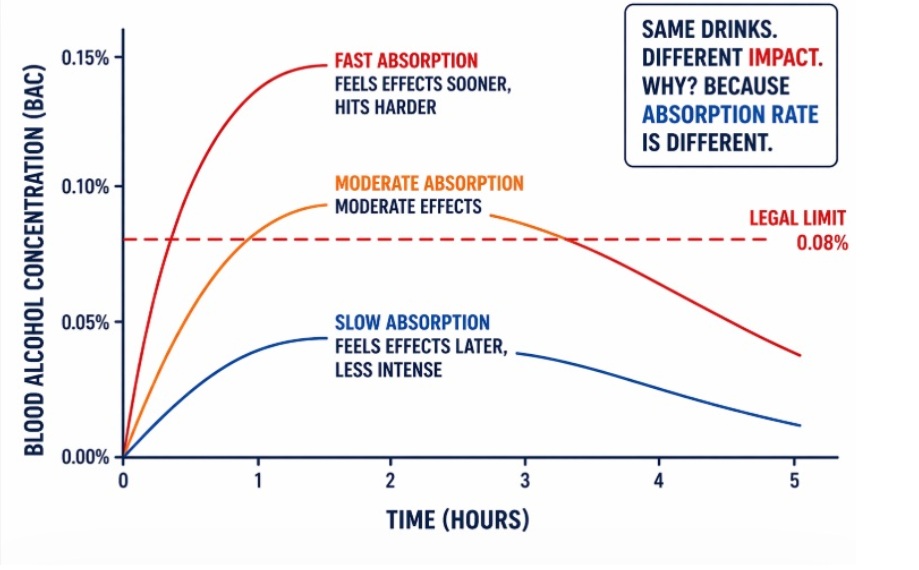
A BAC chart estimates alcohol concentration—not decision-making ability. You may have same drinks however different impacts because of the absorption rate.
What About BAC Calculators?
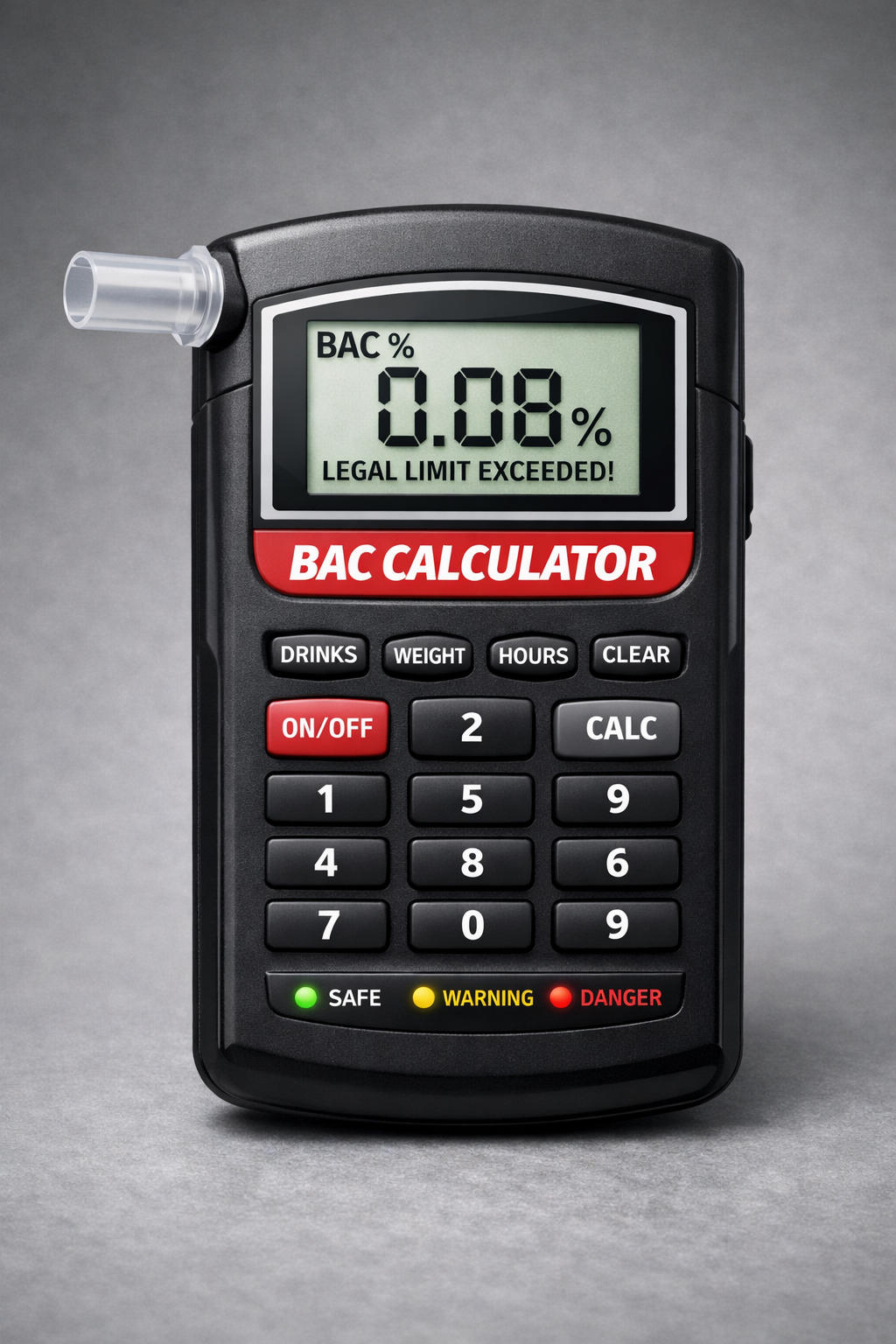
Online BAC calculators use similar information to estimate Blood Alcohol Concentration. They’re helpful for understanding how alcohol generally affects the body.
However, they cannot determine:
- Whether you’re thinking clearly.
- Whether your reaction time is impaired.
- Whether you’re safe to drive.
BAC calculators estimate numbers—not your ability to make good decisions. Many people rely on how they feel. Unfortunately, feelings aren’t reliable indicators of impairment.
Alcohol changes the very part of the brain responsible for evaluating your own condition. In other words, the more alcohol affects your judgment, the less likely you are to recognize it. That’s why relying on personal confidence can be misleading.
Legal BAC Limits Aren’t Safety Guarantees
Every country sets legal BAC limits to reduce impaired driving. However, reaching or staying below the legal limit doesn’t automatically mean you’re unaffected by alcohol.
Research has consistently shown that reaction time and judgment can begin declining before many people feel intoxicated.
Legal BAC limits represent legal thresholds—not guarantees of safe performance. The safest decision is always to avoid driving after drinking.
Signs Your Judgment May Already Be Impaired
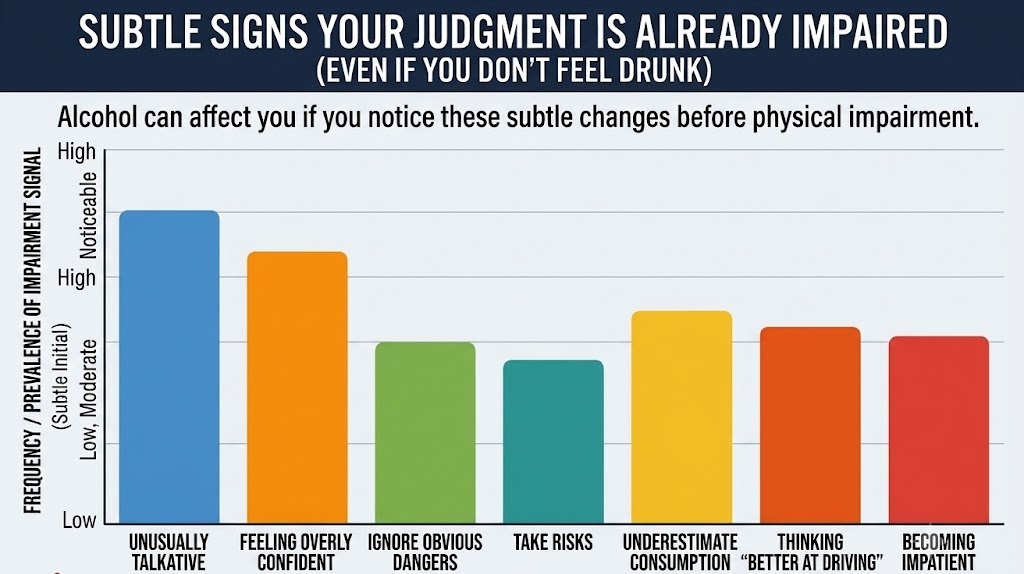
Even if you don’t feel drunk, alcohol may already be affecting you if you notice:
- Becoming unusually talkative
- Feeling overly confident
- Taking risks you normally wouldn’t
- Ignoring obvious dangers
- Becoming impatient
- Underestimating how much you’ve consumed
- Thinking you’re “better at driving after a drink”
These subtle changes often appear before noticeable physical impairment.
Tips to Make Better Decisions
If you choose to drink:
- Eat before drinking.
- Pace your drinks.
- Alternate alcohol with water.
- Decide on transportation before the first drink.
- Don’t rely solely on how you feel.
- Use BAC charts and BAC calculators as educational guides—not driving tests.
- If you’re uncertain, don’t drive.
Planning ahead removes the need to make important decisions after alcohol has already affected your judgment.
Wrapping Up
One of alcohol’s greatest dangers is that it changes how you think before it changes how you feel.
Long before you experience slurred speech or poor balance, your BAC may already be affecting your judgment, reaction time, and ability to assess risk. That’s why relying on confidence or “feeling okay” isn’t a dependable way to judge impairment.
Whether you’re looking at BAC charts, using BAC calculators, or trying to stay within legal BAC limits, remember that alcohol’s effects begin well before obvious intoxication.
The smartest decision is the one you make before your first drink: plan ahead, know your limits, and never assume that feeling fine means you’re thinking clearly.
