It’s Saturday night. You meet a few friends for dinner. You have one drink while waiting for your food. Then another during dinner. You don’t feel particularly drunk. You’re walking or talking normally. But then you notice something unexpected.
Your heart feels like it’s beating faster than usual. Maybe you can actually feel it pounding in your chest. You wonder -“Is this normal?”The answer is—yes, it can be.
Long before alcohol causes obvious signs like slurred speech or poor balance, it has already started affecting your cardiovascular system. One of the earliest changes many people experience is an increase in heart rate.
Understanding what happens inside your body as your BAC rises can help you make safer decisions—not just about driving, but also about exercising, working, or even recognizing when your body is telling you something isn’t right.
Why Does Alcohol Make Your Heart Beat Faster?
Your heart doesn’t simply react to alcohol itself. Instead, alcohol changes several body systems at the same time. Shortly after drinking, alcohol relaxes and widens your blood vessels—a process called vasodilation. Normally, your blood vessels help maintain blood pressure. When they suddenly widen, blood pressure can begin to fall.
Your body notices this immediately. To compensate, your nervous system tells your heart -“Pump faster.” As a result, your heart rate increases. At the same time, alcohol also stimulates stress hormones like adrenaline. These hormones further increase your heartbeat. So, although many people describe alcohol as a “relaxant,” your heart may actually be working harder.
What Happens to Your Heart as BAC Increases?
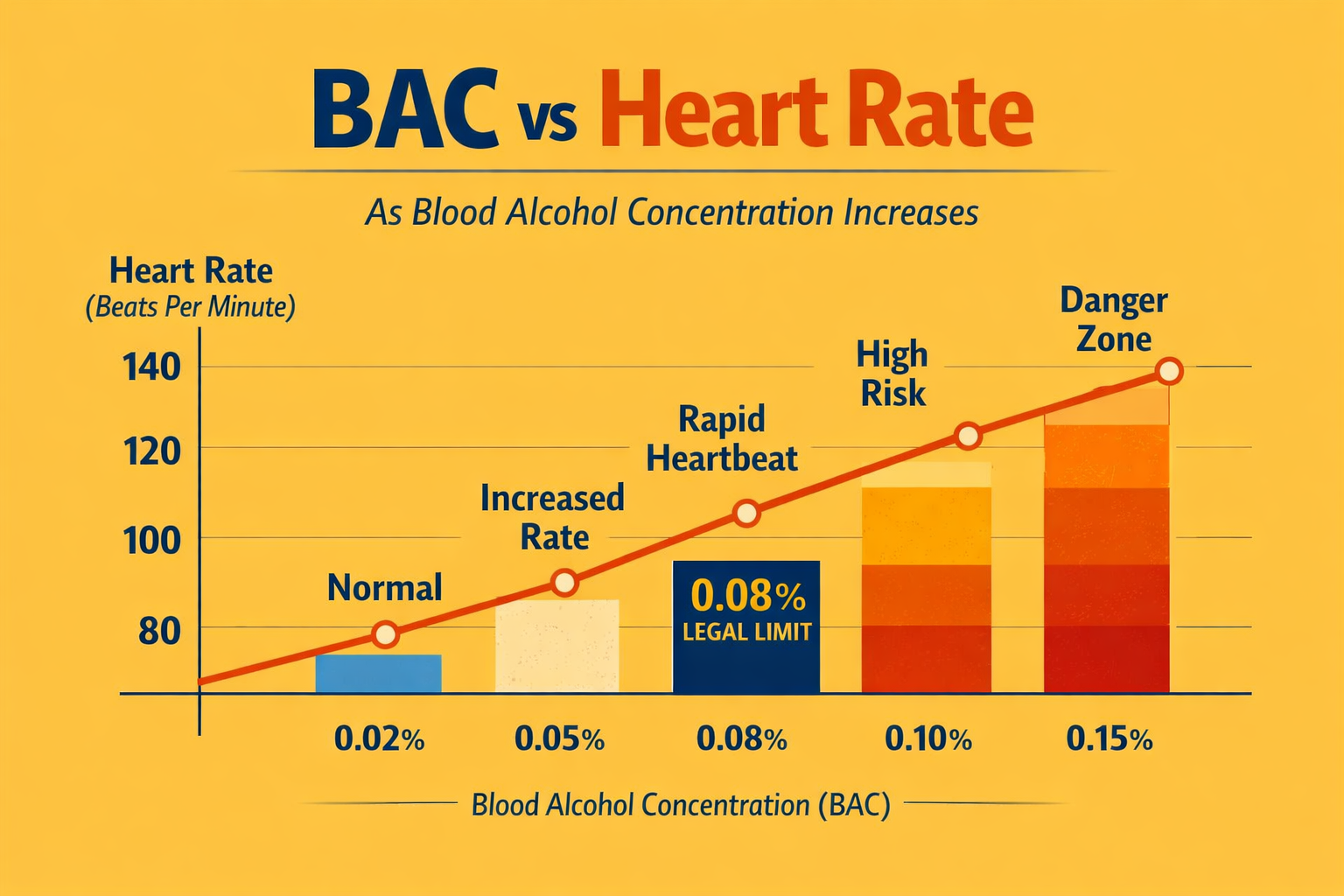
Think of BAC as climbing a staircase. Each step affects your body a little more. At around 0.02% BAC, you may feel relaxed. Your heart rate may rise only slightly. Most people don’t even notice it. By 0.05% BAC, your heartbeat may become noticeably faster.
Some people begin feeling warm because widened blood vessels allow more heat to escape through the skin. Many mistakenly think alcohol is warming them up, when it’s actually causing heat loss. At 0.08% BAC—the legal driving limit in many regions—your reaction time, concentration, judgment, and coordination have already declined.
Meanwhile, your heart is often beating significantly faster than normal. As BAC continues climbing beyond 0.10%, cardiovascular strain becomes much greater. Blood pressure fluctuates. The heart works harder. Electrical signals inside the heart become less stable. This is when irregular heartbeats become more likely.
At very high BAC levels, alcohol starts slowing many of the body’s critical systems. Breathing slows. Blood pressure drops.Heart rhythm becomes increasingly unstable. Medical emergencies become much more likely.
Numbers alone can be difficult to picture. That’s why doctors, driving instructors, and alcohol education programs often use BAC charts.
Instead of memorizing percentages, a BAC chart visually shows how increasing alcohol levels affect the body.
A good BAC chart typically illustrates:
- Judgment
- Reaction time
- Vision
- Coordination
- Heart rate
- Driving ability
When viewed together, these changes make it much easier to understand why someone who “doesn’t feel drunk” may already be impaired.
Why Do Some People Feel Their Heart Racing?
Have you ever been lying in bed after a night out and suddenly noticed your heart pounding? Many people experience exactly this.
Alcohol can trigger:
- Rapid heartbeat
- Heart palpitations
- Fluttering sensations
- Skipped beats
For some people, this lasts only a few minutes. For others, it may continue for several hours. This doesn’t always mean something serious is happening. But it should never be ignored—especially if it’s accompanied by chest pain, dizziness, or shortness of breath.
Holiday Heart Syndrome – When One Night of Drinking Affects the Heart
Doctors have even given this phenomenon a name – Holiday Heart Syndrome. Imagine someone who rarely drinks. Then comes a wedding. Or New Year’s Eve. Or a holiday celebration. They consume much more alcohol than usual. The next morning, their heart suddenly feels like it’s racing or fluttering.
They may even end up in the emergency department. This temporary irregular heartbeat is often linked to binge drinking. Fortunately, many people recover once the alcohol leaves their system. However, repeated episodes can increase the risk of future heart problems.
Does Every Drink Raise Heart Rate?
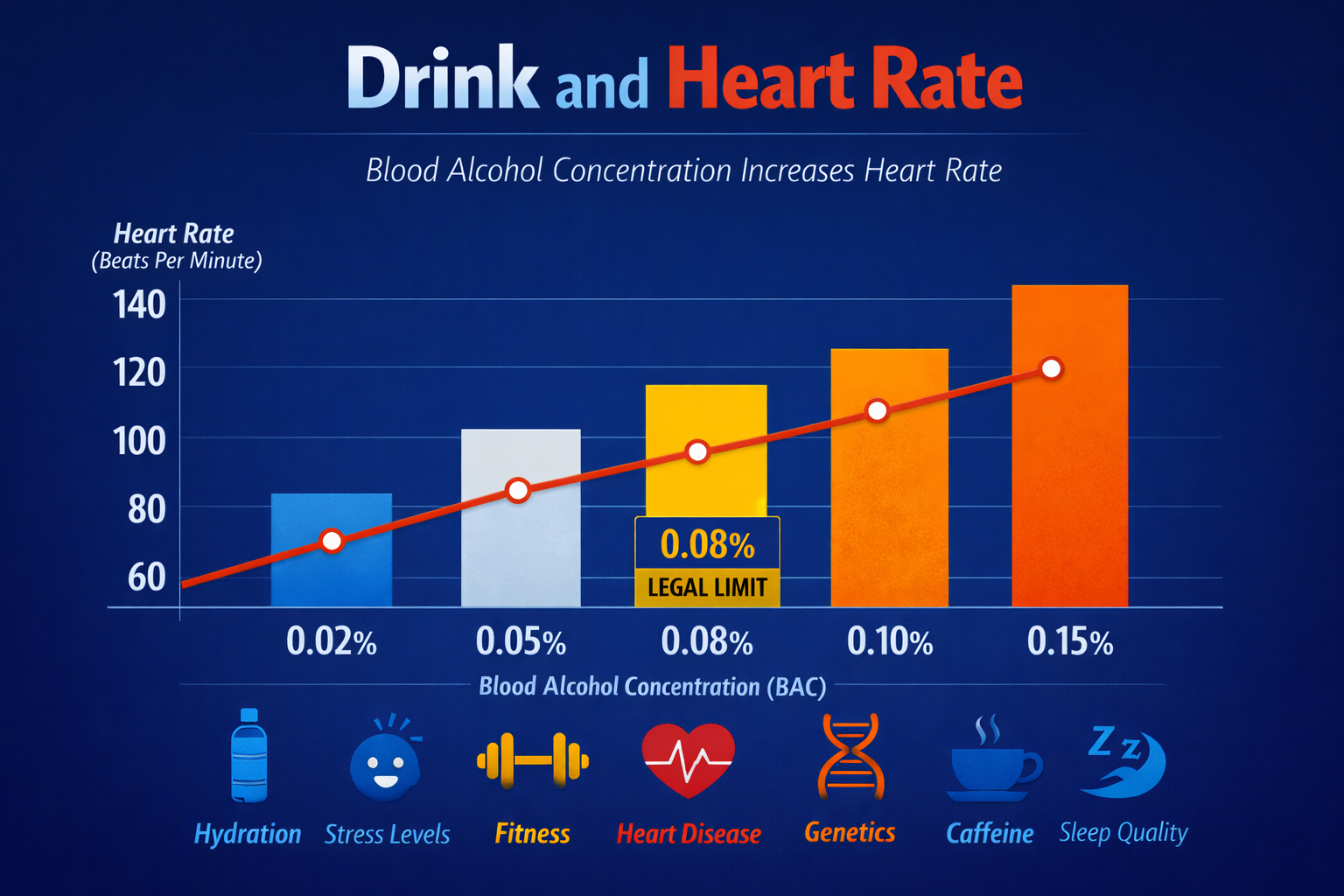
Everyone responds differently. Some people notice almost no change after one drink. Others feel their heartbeat increase within 20 or 30 minutes. Several factors influence your body’s response:
- Hydration
- Stress levels
- Fitness
- Existing heart disease
- Biological Variability
- Caffeine intake
- Sleep quality
- Genetics
This is one reason alcohol affects people so differently.
Can Alcohol Actually Slow the Heart?
Surprisingly, yes. Most people think alcohol always speeds up the heart. That’s only true during the earlier stages of drinking. As BAC reaches dangerously high levels, alcohol begins depressing the central nervous system. Instead of stimulating the heart, it starts slowing vital body functions.
Heart rate may decrease. Breathing becomes slower. Blood pressure falls. Consciousness may be lost. These are signs of severe alcohol poisoning and require immediate medical attention.
Many drivers focus only on one number – The legal BAC limit. But here’s the problem. Your body doesn’t wait until you reach the legal limit before alcohol starts affecting you.
Reaction time may already be slower. Judgment may already be impaired. Your heart may already be working harder. Your confidence often increases even while your actual driving ability decreases. That’s one reason many safety experts say – Being below the legal BAC limit does not necessarily mean you’re safe to drive.
Can a BAC Calculator Help?
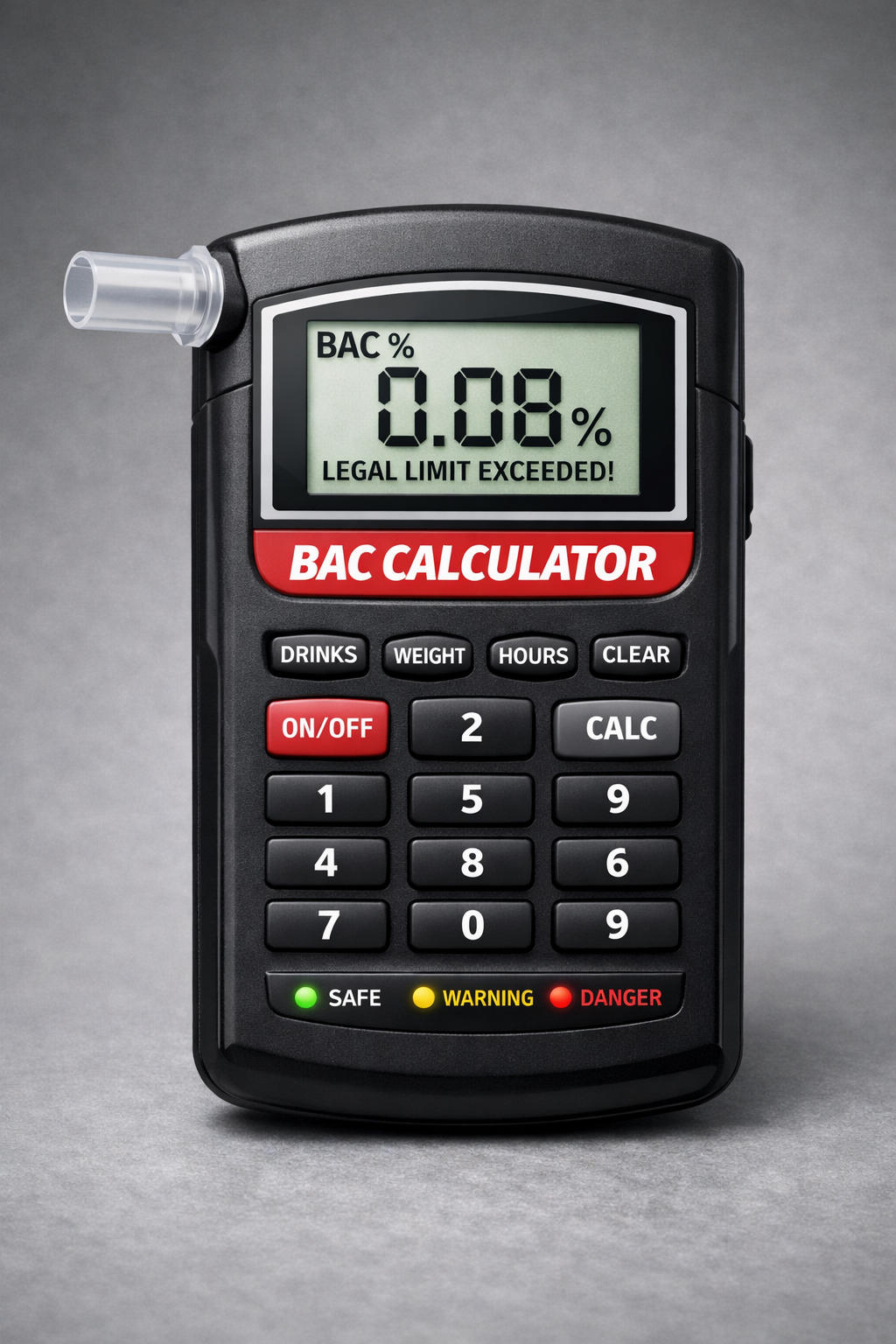
A BAC calculator estimates your blood alcohol level using information like:
- Weight
- Biological sex
- Number of drinks
- Drinking duration
These calculators can be useful educational tools. They help demonstrate how quickly BAC can rise. However, they cannot measure your actual BAC.
No calculator can perfectly account for metabolism, medications, hydration, food, or individual biology. For that reason, BAC calculators should never be used to decide whether it’s safe to drive.
Wrapping Up
Alcohol affects much more than your mood. Even before you feel obviously intoxicated, your heart, brain, and nervous system may already be responding to rising BAC levels. A faster heartbeat can be one of the earliest physical signs that alcohol is affecting your body.
Understanding BAC charts, BAC calculators, and the legal BAC limit can help you appreciate how alcohol influences your body—but no chart or calculator can replace good judgment.If you’ve been drinking, the safest choice is always to avoid driving and give your body enough time to recover. That’s because the effects of alcohol begin long before many people realize they’re impaired.
