Have you ever felt perfectly normal after drinking, only to find yourself struggling to concentrate, type accurately, or remember a simple instruction? Alcohol does not always make its effects obvious. You may feel relaxed and alert while your brain is already having difficulty managing tasks that usually require little effort.
This happens because feeling sober and performing normally are not the same thing. Alcohol can affect attention, coordination, judgment, and information processing before you fully recognise a change in your abilities.
How Alcohol Affects Everyday Tasks

Alcohol changes communication between brain cells, particularly in areas involved in attention, movement, memory, and decision-making. As a result, familiar activities can require more effort than usual.
Typing and Using Your Phone
Sending a message, entering a password, or navigating an app may seem effortless when you are sober. After drinking, however, you may make more typing errors, overlook a notification, or take longer to find the right words.
These activities depend on several abilities working together, including visual attention, finger coordination, and working memory. Alcohol can interfere with these processes, making small mistakes more likely even when you feel mentally present.
Following Instructions
Imagine assembling a simple piece of furniture or following a recipe with several steps. You might understand each instruction but forget what comes next or accidentally skip a step.
This can happen because alcohol affects working memory, which temporarily holds information while you use it. It can also make it harder to divide your attention between multiple tasks.
Maintaining Balance and Coordination
Walking across a room, picking up a cup, or reaching for a small object involves constant adjustments between your eyes, muscles, and brain.
Alcohol can interfere with the brain systems responsible for movement and balance. You might notice less precise movements, slower corrections, or difficulty judging distances. These changes are not always dramatic enough to make someone visibly appear intoxicated.
Making Quick Decisions
Everyday decisions often require you to assess information, compare options, and anticipate consequences. Alcohol can impair these abilities by affecting judgment and inhibitory control.
You may interrupt someone, ovelook a potential problem, or choose an option without considering the alternatives carefully. The difficulty is not necessarily that you cannot understand a situation; rather, you may be less effective at evaluating it.
Switching Between Tasks
Answering a message while listening to someone speak or checking directions while carrying on a conversation requires your brain to switch attention.
Alcohol can make this switching less efficient. You may lose track of a conversation when interrupted or need extra time to return to what you were doing.
Why You Might Not Notice the Difference
One reason alcohol-related impairment can be misleading is that your subjective feeling of intoxication does not reliably reflect your actual performance.
If you drink regularly or gradually become accustomed to alcohol’s noticeable effects, you may feel less intoxicated at a given level of alcohol exposure. This is sometimes called tolerance. However, feeling less affected does not mean every cognitive or motor function has returned to normal.
Familiarity with a task can also hide problems. You may complete a routine activity reasonably well because you have practised it many times, while struggling more with an unfamiliar task that demands concentration and flexibility. In other words, you can feel confident about your abilities without accurately recognising changes in your performance.
Does Your BAC Determine How Difficult Tasks Become?
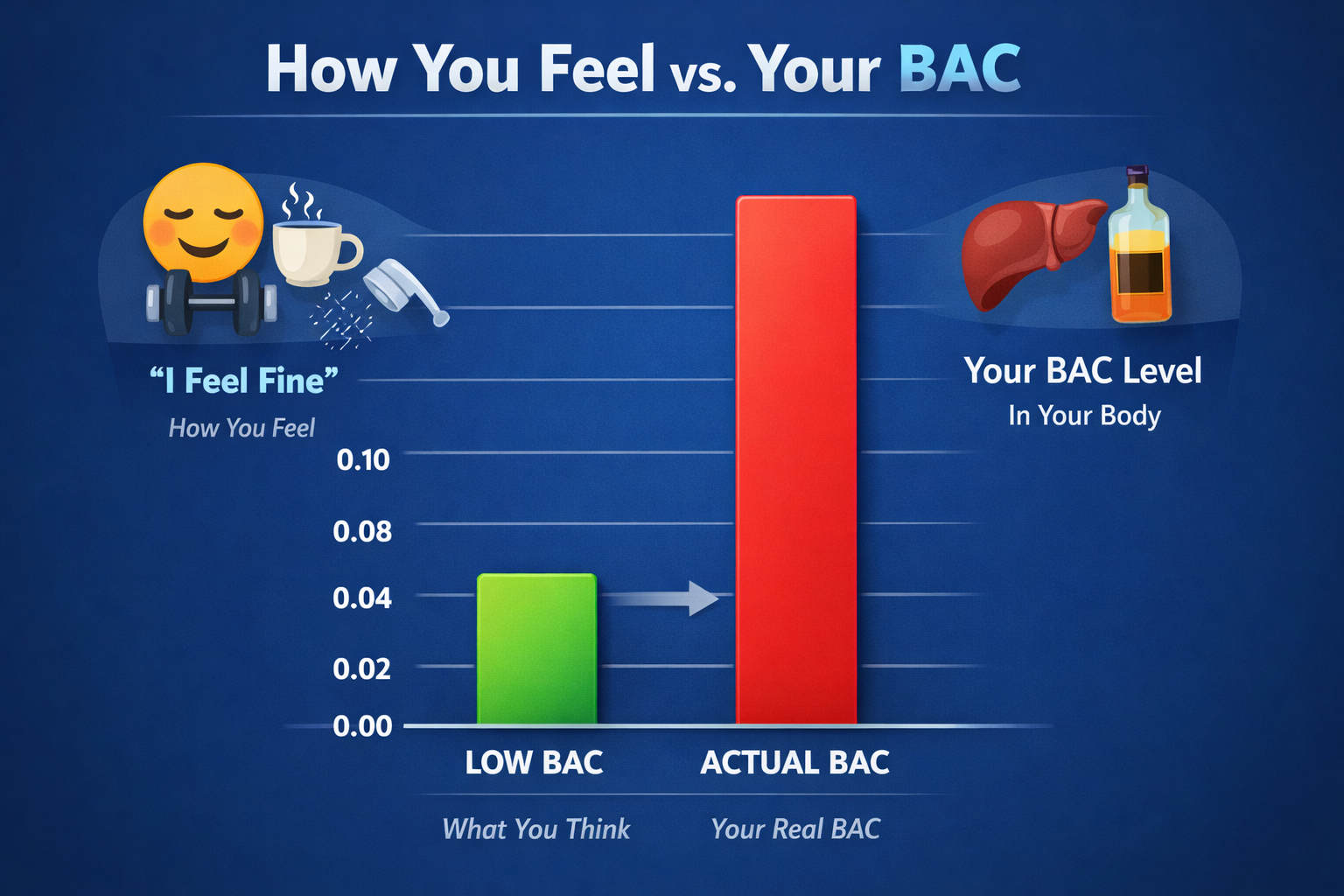
Blood alcohol concentration (BAC) measures the amount of alcohol in your bloodstream. As BAC increases, the risk of impairment generally increases too, but the relationship between BAC and performance is not identical for everyone.
The effects depend on factors such as the amount and speed of alcohol consumption, individual sensitivity, fatigue, and the complexity of the task. Some abilities may be affected at levels where a person notices few obvious symptoms.
There is no single BAC value below which every person can assume that all everyday skills are unaffected. Equally, a BAC estimate cannot tell you precisely how well you will perform a particular task.
How to Reduce the Risk of Alcohol-Related Mistakes
If you have been drinking, avoid activities where a lapse in attention or coordination could cause harm. These include driving, cycling in traffic, operating machinery, and handling potentially dangerous equipment.
Do not rely on feeling alert, drinking coffee, or completing a simple coordination test to determine whether you are safe to drive. These measures cannot reliably establish that alcohol-related impairment has resolved.
If a task requires careful judgment, accurate movements, or quick reactions, the safest approach is to postpone it until you are no longer affected by alcohol.
Wrapping Up
Alcohol does not always announce its effects through slurred speech or obvious loss of balance. Sometimes, the changes appear in smaller ways: a forgotten instruction, a typing mistake, a slower reaction, or a decision made without enough thought.
Feeling normal is a subjective experience, not a reliable test of cognitive or physical performance. Recognising that difference can help you make safer decisions, even when the effects of drinking are not immediately apparent.
