
Have you ever noticed that you feel more awake after drinking alcohol, yet your movements still seem slower or less precise? This happens because feeling alert does not necessarily mean your brain and body have recovered from alcohol’s effects.
Alcohol affects several areas of the central nervous system, including those responsible for balance, reaction time, judgment, and muscle coordination. Even when drowsiness fades, these functions may remain impaired.
Understanding the relationship between alcohol, blood alcohol concentration (BAC), and coordination can help explain why someone may feel normal but still struggle with tasks that require accuracy, quick reactions, and physical control.
How Alcohol Affects Coordination
Coordination depends on communication between the brain, nerves, muscles, and sensory systems. Your brain continuously processes information from your eyes, inner ears, and body to help you maintain balance and control movement.
Alcohol interferes with this process in several ways:
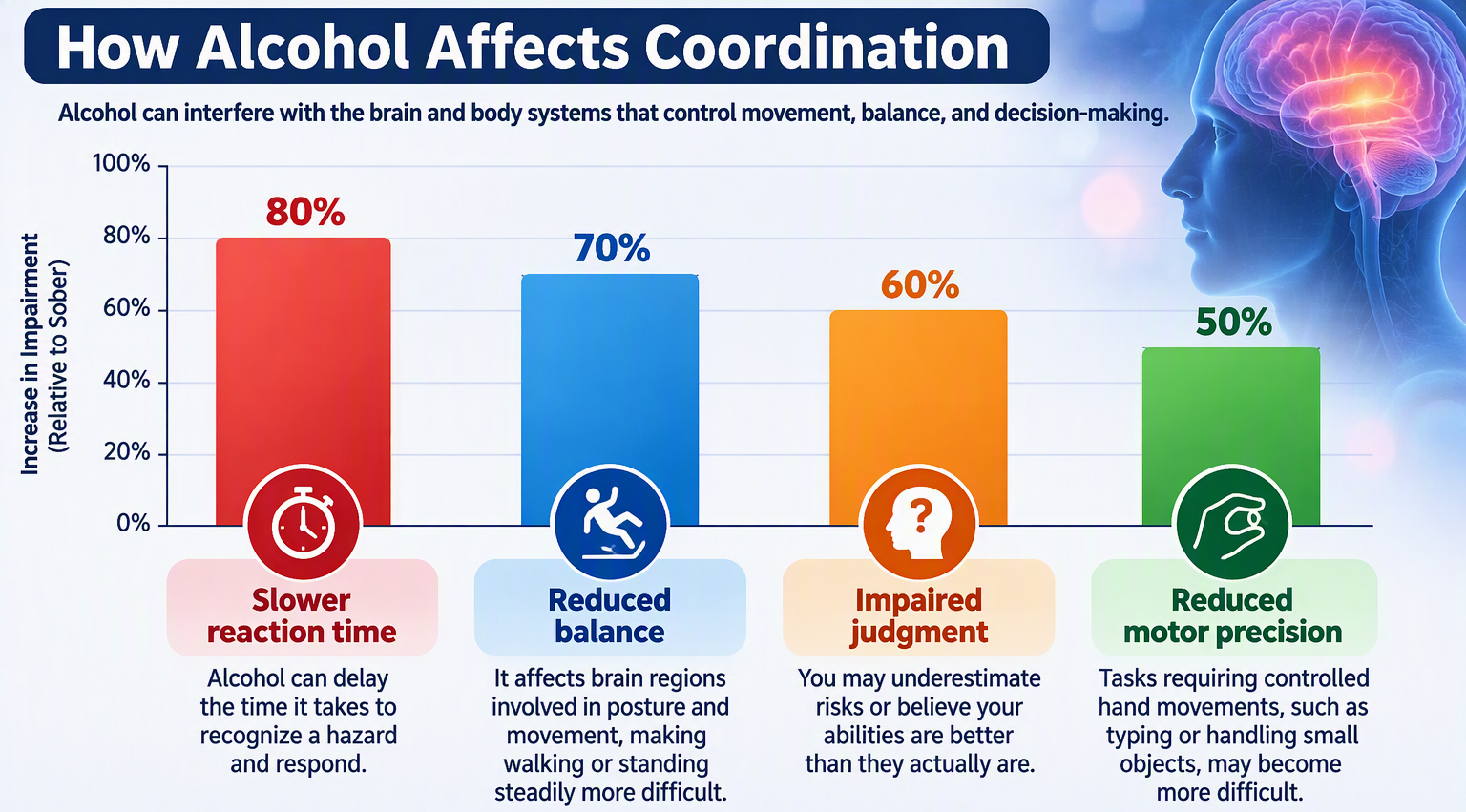
Slower reaction time: Alcohol can delay the time it takes to recognize a hazard and respond.
Reduced balance: It affects brain regions involved in posture and movement, making walking or standing steadily more difficult.
Impaired judgment: You may underestimate risks or believe your abilities are better than they actually are.
Reduced motor precision: Tasks requiring controlled hand movements, such as typing or handling small objects, may become more difficult.
These effects can occur even when you do not feel particularly drunk. The severity depends on factors such as the amount consumed, drinking speed, individual sensitivity, and whether other substances or medications are involved.
Why You May Feel More Alert While Still Being Impaired
As time passes after drinking, the initial feelings of relaxation or sleepiness may decrease. You might feel more energetic, think more clearly, or believe you have returned to normal.
However, subjective alertness is not a reliable measure of coordination.
Alcohol affects different brain functions in different ways. Feeling awake does not establish that the systems responsible for balance, judgment, and rapid responses have recovered.
Caffeine can make this difference particularly noticeable. Coffee may temporarily reduce feelings of fatigue, but it does not remove alcohol from your bloodstream or reliably reverse impairment.
Similarly, taking a shower, exercising, or getting fresh air does not rapidly restore normal coordination.
The Role of BAC in Coordination
Blood alcohol concentration, commonly known as BAC, measures the amount of alcohol in the bloodstream. In the United States, it is commonly expressed as a percentage.
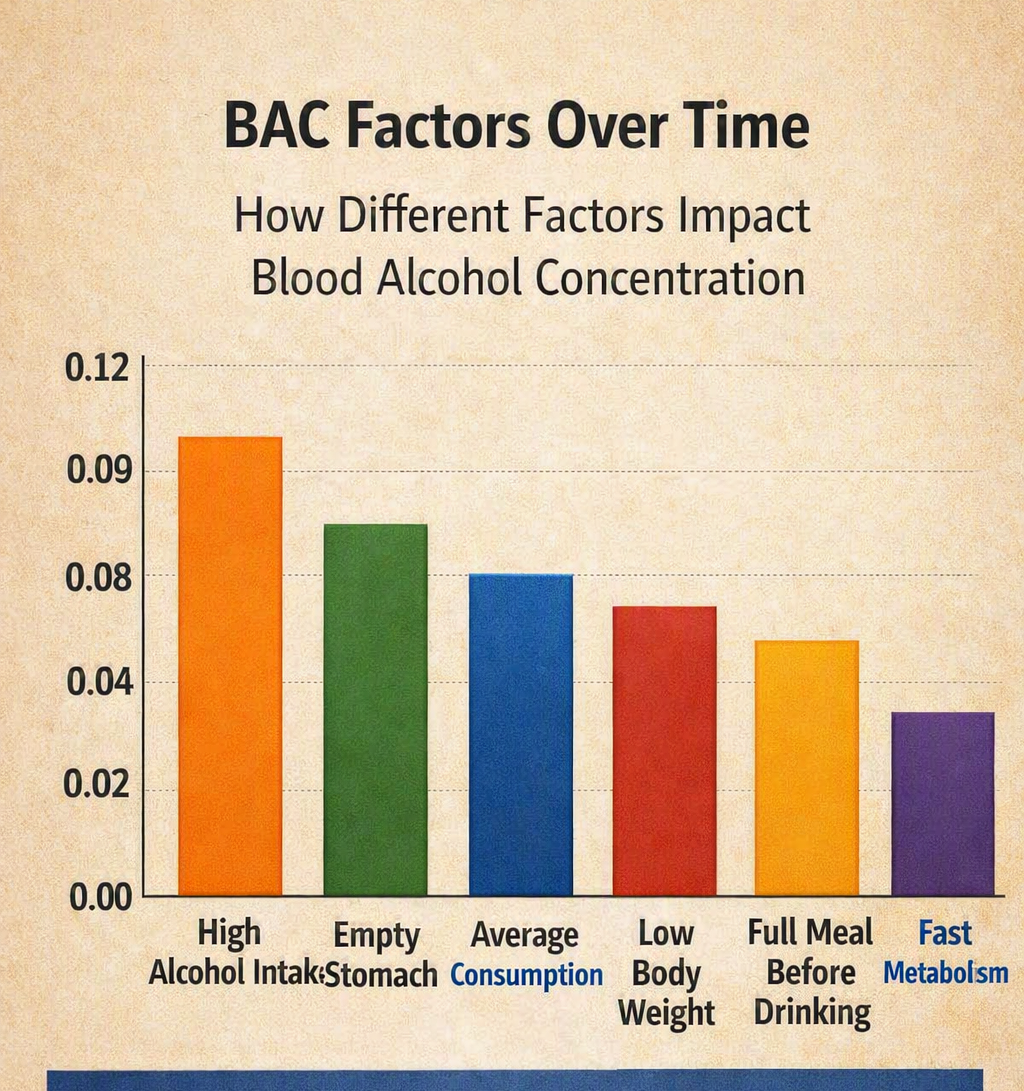
As BAC rises, alcohol can increasingly interfere with the brain processes involved in movement and decision-making. However, impairment varies between individuals, and no single BAC value predicts exactly how coordinated someone will be.
BAC also changes over time. After drinking stops, alcohol may continue to be absorbed before the concentration begins to decline. The liver then metabolizes alcohol gradually.
This means you may feel more alert while alcohol is still present in your bloodstream.
Why Coordination Can Remain Impaired the Next Morning
Alcohol-related impairment does not always disappear when you wake up.
If you drink heavily or finish drinking late at night, alcohol may still be present in your bloodstream the following morning. Even after BAC returns to zero, poor sleep and hangover symptoms can affect concentration, reaction time, and overall performance.
For example, someone who drinks several alcoholic beverages late in the evening may wake up feeling refreshed after coffee but still experience reduced attention or slower responses.
These effects matter during activities such as driving, cycling, operating machinery, or working at heights.
Legal BAC limits are designed for legal purposes, not to guarantee unimpaired coordination. A person can experience reduced performance even below a particular legal driving limit, and laws vary by jurisdiction.
How to Recognize the Warning Signs
Possible signs of impaired coordination after drinking include:
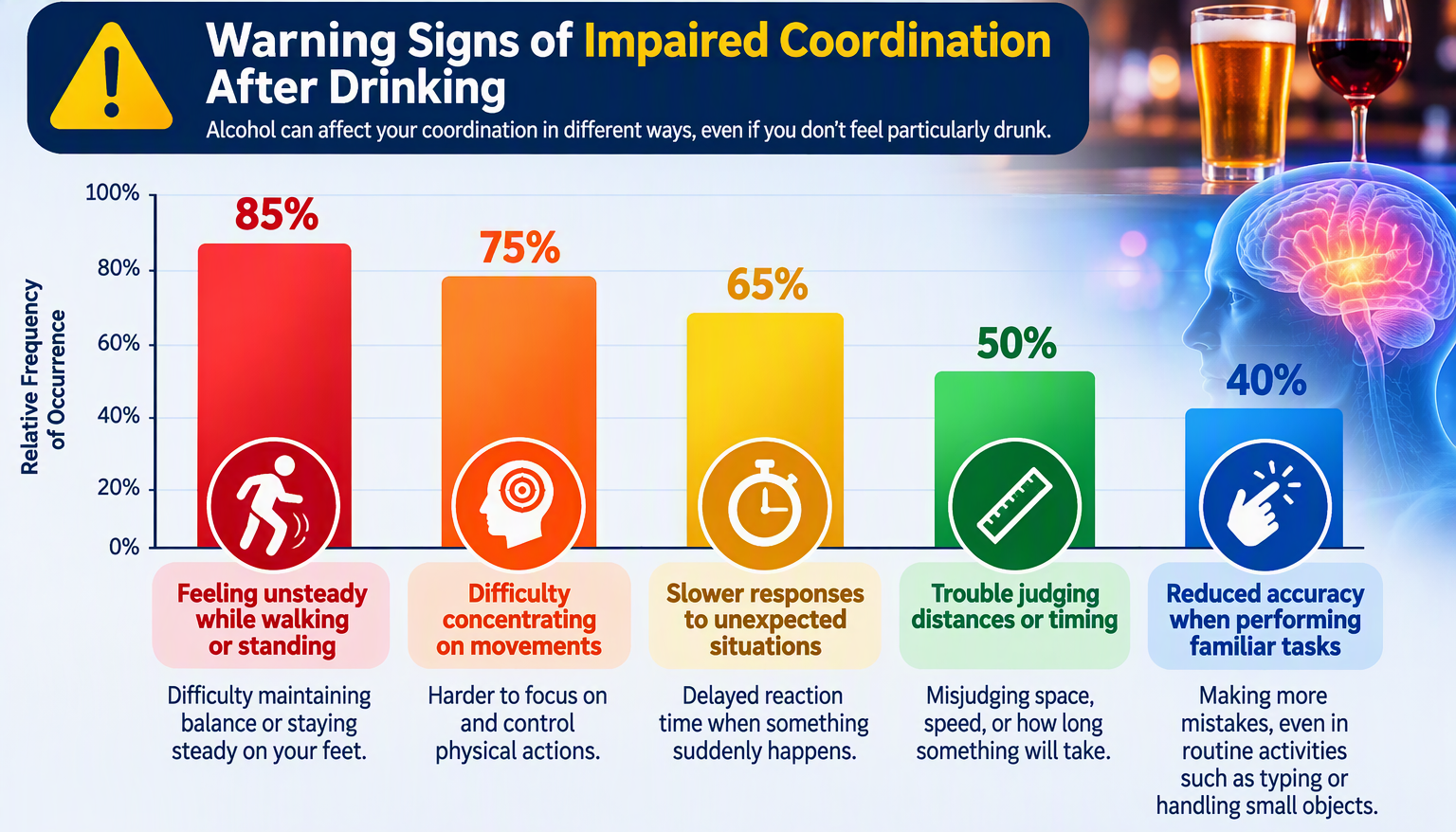
- Feeling unsteady while walking or standing.
- Difficulty concentrating on movements.
- Slower responses to unexpected situations.
- Trouble judging distances or timing.
- Reduced accuracy when performing familiar tasks or decision-making.
However, the absence of these signs does not prove that you are unimpaired. Alcohol can affect judgment and reaction time without producing obvious symptoms.
If you have been drinking, avoid driving or operating machinery until you are confident alcohol is no longer affecting you. When there is any doubt, choose a sober alternative.
How to Support Recovery After Drinking
Time is the primary factor in allowing your body to metabolize alcohol. Drinking water may help with dehydration, eating may support general recovery, and resting can help relieve fatigue, but none of these measures rapidly eliminates alcohol or guarantees restored coordination.
Avoid consuming additional alcohol to relieve hangover symptoms, and do not combine alcohol with sedatives or other medications that can increase impairment without appropriate medical guidance.
If you experience severe confusion, difficulty staying conscious, seizures, or slow or irregular breathing after drinking, seek emergency medical assistance.
Wrapping Up
Alcohol can affect coordination long after you stop feeling sleepy or drunk because alertness and motor control are separate functions. Your brain may feel more awake while reaction time, balance, judgment, and precision remain impaired.
Understanding BAC, alcohol metabolism, and the limitations of BAC calculators can help you make safer decisions. Most importantly, never assume that feeling normal means your coordination has fully recovered.
Feeling alert is not the same as being unimpaired. When safety depends on quick reactions and accurate movement, do not rely on how you feel to judge whether alcohol is still affecting you.
