Does Drinking Water Between Cocktails Actually Help
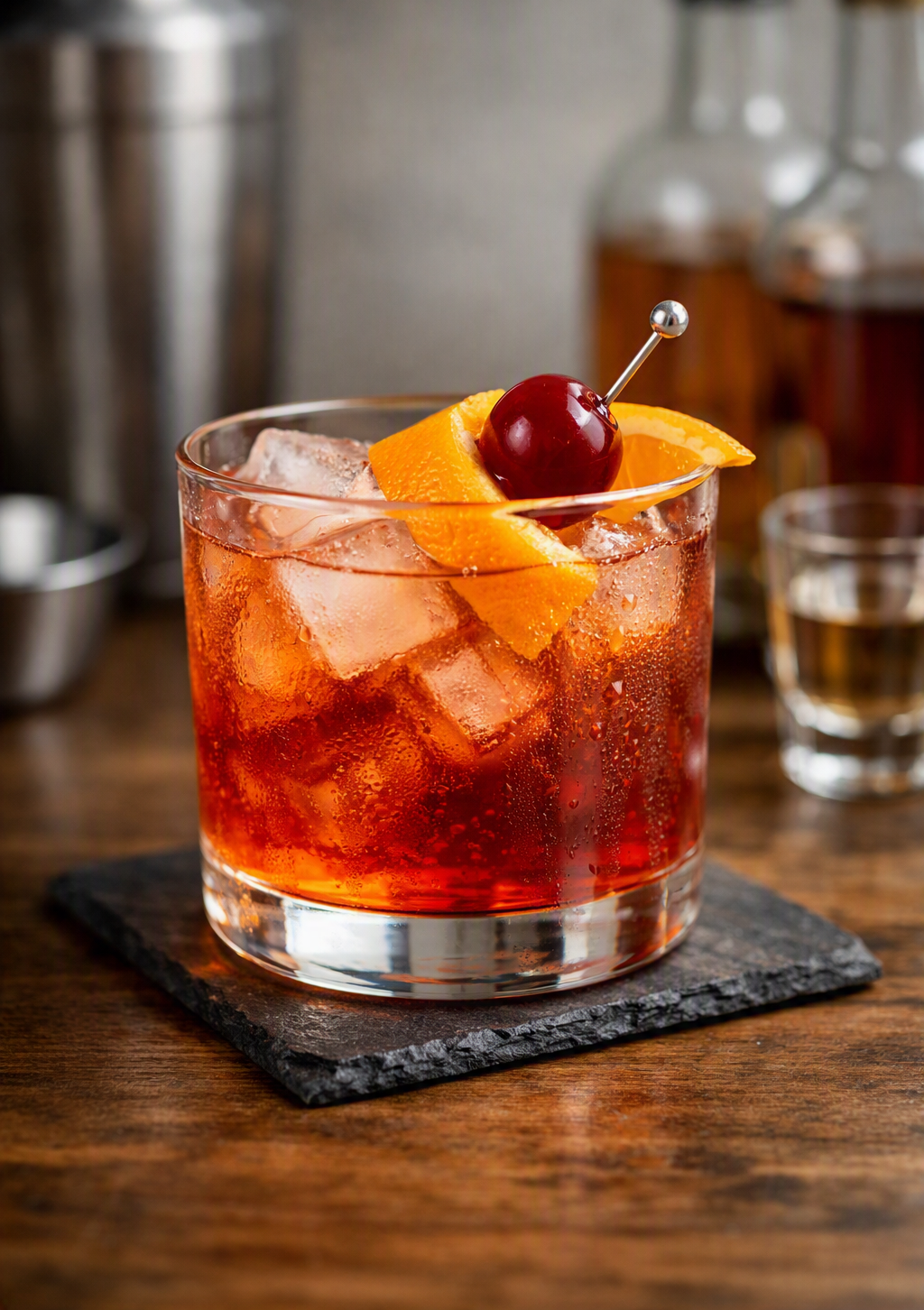
If you enjoy cocktails, you may have heard the advice to drink water between alcoholic drinks. It’s a common strategy for slowing down your drinking, avoiding dehydration, and feeling better the next day.
But can drinking water actually lower your BAC (blood alcohol concentration)? The short answer is no. Water can help with hydration, but it does not make your body eliminate alcohol faster or bring your BAC down more quickly.
Understanding this difference is important, especially if you’re using a BAC calculator to estimate your alcohol level or trying to determine whether you’re below the legal limit for driving.
What Affects Your BAC?
Your BAC can be affected by several factors, including:
- How much alcohol you drink
- How quickly you drink
- Your body size
- Biological variability
- Whether you’ve eaten
- How your body metabolizes alcohol
- The alcohol concentration and serving size of your drinks
Because these factors vary from person to person, there’s no simple formula that can tell you exactly how intoxicated you are.
A BAC calculator can provide an estimate based on information such as your drinks, weight, sex, and drinking period. However, a calculator is only an approximation and shouldn’t be used to decide whether you’re safe or legally able to drive.
Does Water in Between Cocktails Lower BAC?
When you drink water between cocktails, the water itself doesn’t remove alcohol from your bloodstream.
Your liver needs time to metabolize the alcohol you’ve consumed. Drinking water doesn’t significantly speed up this process.
So if your BAC is, for example, 0.08%, drinking several glasses of water won’t instantly bring it down below that level.
What water can do is help you stay hydrated. Alcohol can increase fluid loss, and alternating alcoholic drinks with water can help you consume less alcohol overall because you’re spacing out your drinks. That’s where the real benefit comes in.
Why Drink Water Between Cocktails?
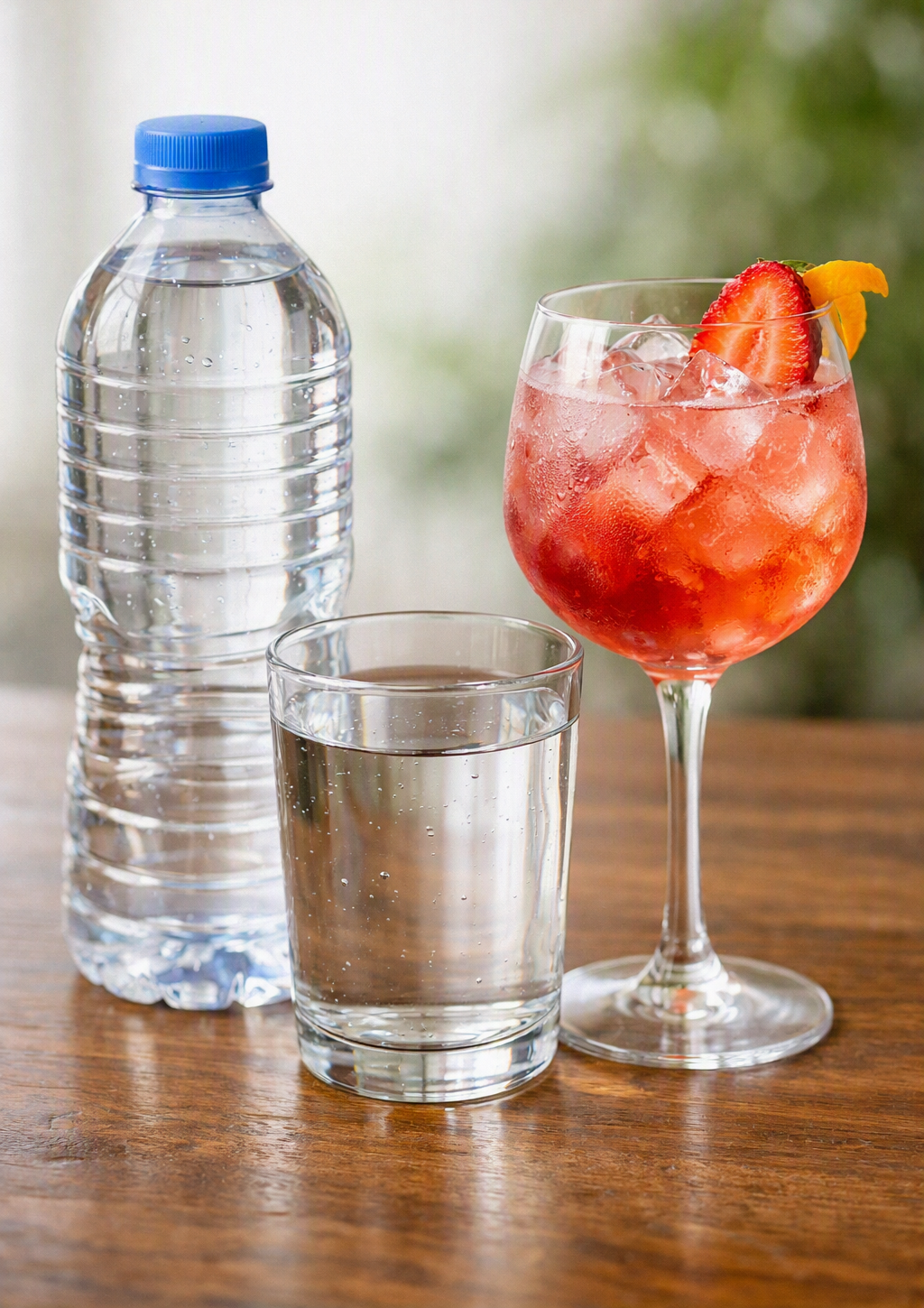
Even though water doesn’t lower BAC directly, it can still be a useful drinking habit.
It Can Help You Slow Down
If you drink a glass of water between cocktails, you’re naturally putting more time between alcoholic drinks.
This gives your body more time to process the alcohol you’ve already consumed. Drinking more slowly can also help prevent your BAC from rising as quickly as it might if you consume several drinks close together.
It Helps With Hydration
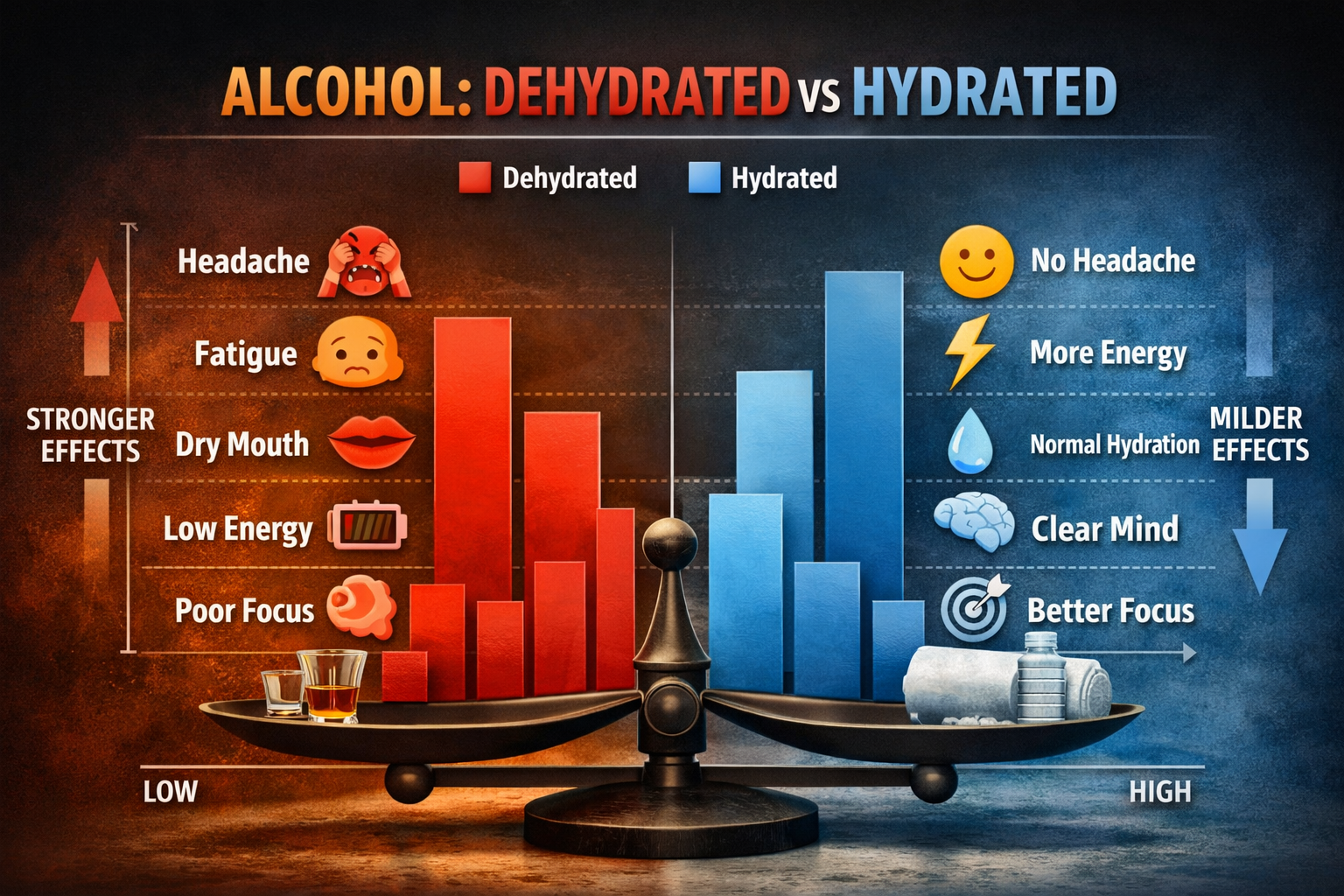
Alcohol can contribute to dehydration. Water can help replace fluids and may reduce some of the unpleasant effects associated with dehydration, such as thirst, dry mouth, and headache.
However, hydration doesn’t mean you’re sober. You can be well hydrated and still have a significant BAC.
It May Help You Drink Less
This is probably the biggest practical advantage. If you’re alternating cocktails with water, you’re giving yourself a non-alcoholic drink during the time you might otherwise order another cocktail. That can reduce the total amount of alcohol you consume during an evening.
And consuming less alcohol generally means a lower peak BAC than drinking more alcohol over the same period.
What About Coffee, Cold Showers, or Food?
Water isn’t the only thing people believe can “sober you up.” You may have heard that coffee, cold showers, exercise, or eating a large meal can quickly reduce BAC.
They don’t work that way. Coffee might make you feel more awake, but it doesn’t remove alcohol from your bloodstream.
A cold shower can make you feel alert, but it doesn’t eliminate alcohol. Food can slow the absorption of alcohol when consumed before or while drinking, but it doesn’t instantly remove alcohol that is already in your bloodstream.
The only reliable factor that lowers BAC is time, as your body metabolizes the alcohol.
Can a BAC Calculator Tell You When You’re Safe to Drive?
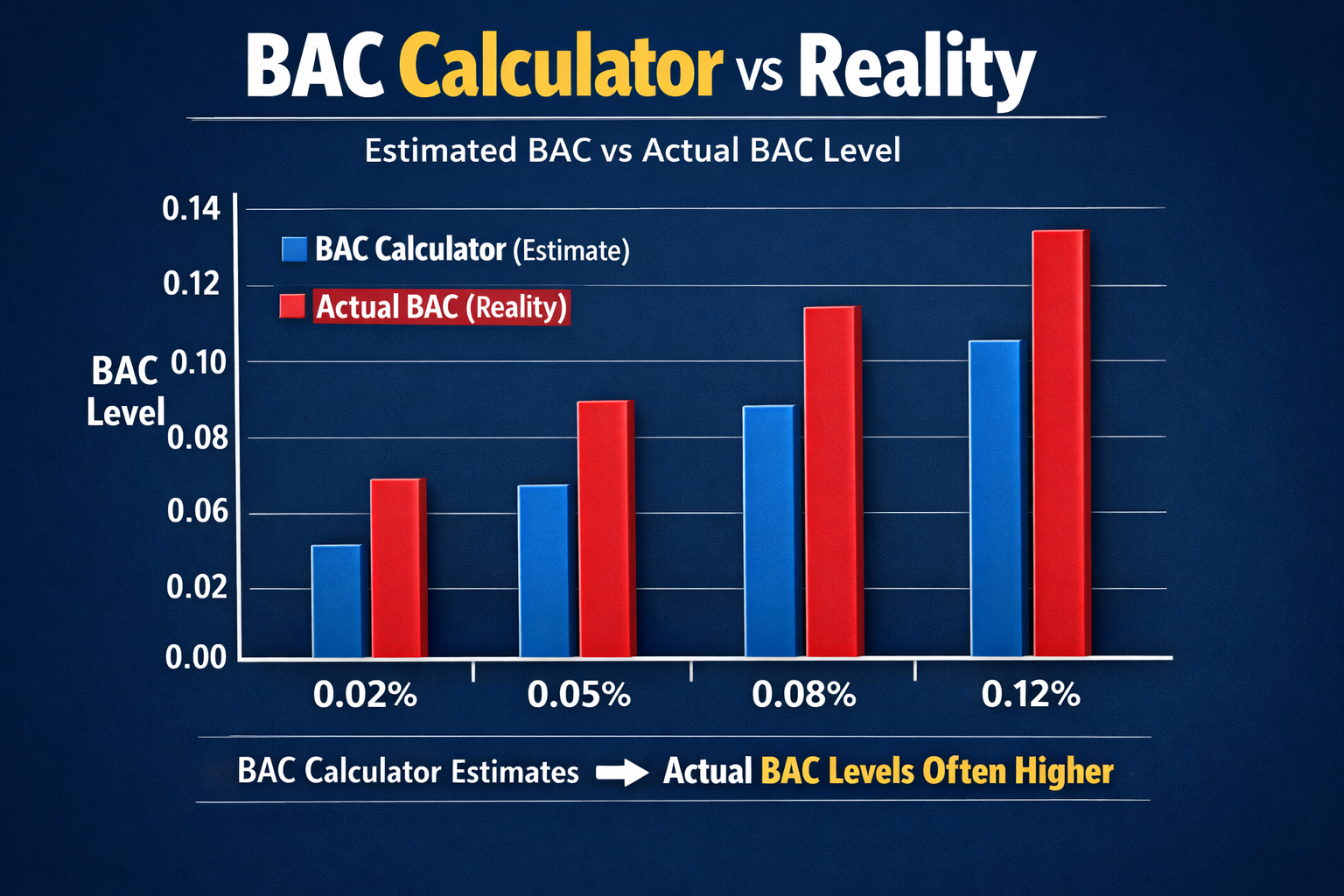
A BAC calculator can be useful for educational purposes. For example, you can enter information such as:
- Number of drinks
- Approximate drink size
- Alcohol percentage
- Body weight
- Drinking duration
The calculator can then provide an estimated BAC. But don’t treat that number as a guarantee.
Actual BAC can differ significantly from an estimate, and a calculator cannot measure your real-time blood alcohol concentration.
This is especially important when you’re considering the legal limit for driving.
The Safest Approach While Driving
The legal BAC limit depends on where you live and can also depend on your age, license type, and other circumstances.
In the United States, 0.08% BAC is the standard legal limit for drivers age 21 and older in most states.
However, being below a specific legal limit doesn’t necessarily mean you’re completely unimpaired. Impairment starts much earlier.
Alcohol can affect reaction time, judgment, coordination, and attention before someone reaches the legal limit.
There can also be stricter limits for commercial drivers and drivers under the legal drinking age. So don’t use a BAC calculator to decide whether you should drive.
If you’ve been drinking cocktails, the safest approach is simple: don’t drive.Have a designated driver, use a taxi or rideshare service, take public transportation, or arrange another safe way to get home.
You can still drink water between cocktails to stay hydrated and help pace yourself, but remember what it can and cannot do. Water can help you stay hydrated and may help you drink more slowly. It cannot lower your BAC or make you sober faster.
Wrapping Up
So, does drinking water between cocktails actually help? Yes—but not by lowering your BAC.
Water can help with hydration, slow down your drinking, and potentially reduce how much alcohol you consume.
But once alcohol is in your bloodstream, your body needs time to metabolize it.
If you’ve been drinking, don’t rely on water, coffee, food, or a BAC calculator to tell you that you’re safe to drive. The safest choice is to avoid driving altogether.
10 Surprising Factors That Influence Your BAC More Than Body Weight

When people think about blood alcohol concentration (BAC), body weight is often the first thing they consider. It seems logical – if two people drink the same amount of alcohol, the person who weighs more should have a lower BAC.
While body weight does play a role, it is far from the only factor that matters. How quickly you drink, whether you’ve eaten, the strength of the drink, your body composition, metabolism, medications, and even genetics can all influence how alcohol affects your body.
This is why two people who weigh the same can consume the same amount of alcohol and still experience very different BAC levels.
Here are ten surprising factors that can influence your BAC more than you might expect.
What Determines Your BAC?
BAC is influenced by much more than just your body weight. The amount of alcohol you drink, how quickly you drink it, how much alcohol is absorbed into your bloodstream, how it is distributed throughout your body, and how quickly your body metabolizes alcohol can all affect your BAC.
As BAC rises, alcohol can increasingly impair reaction time, coordination, judgment, concentration, and decision-making.
This is why a simple BAC chart based only on body weight cannot provide a complete picture. Two people who weigh the same and consume the same number of drinks can still have different BAC levels depending on factors such as drinking speed, food intake, metabolism, and individual differences. Now, if you want to measure your BAC, you can measure it here.
How Quickly You Drink
One of the biggest factors influencing BAC is how quickly you consume alcohol. Consider two people who consume the same total amount of alcohol. One drinks slowly over several hours. The other drinks the same amount within a short period.
Their BAC levels can be very different because alcohol may enter the bloodstream faster than the body can process it. When several drinks are consumed close together, BAC can rise rapidly. This is one reason binge drinking carries particularly serious risks.
So when looking at BAC estimates, the number of drinks alone doesn’t tell the whole story. Time matters too.
Whether You Have Food in Your Stomach
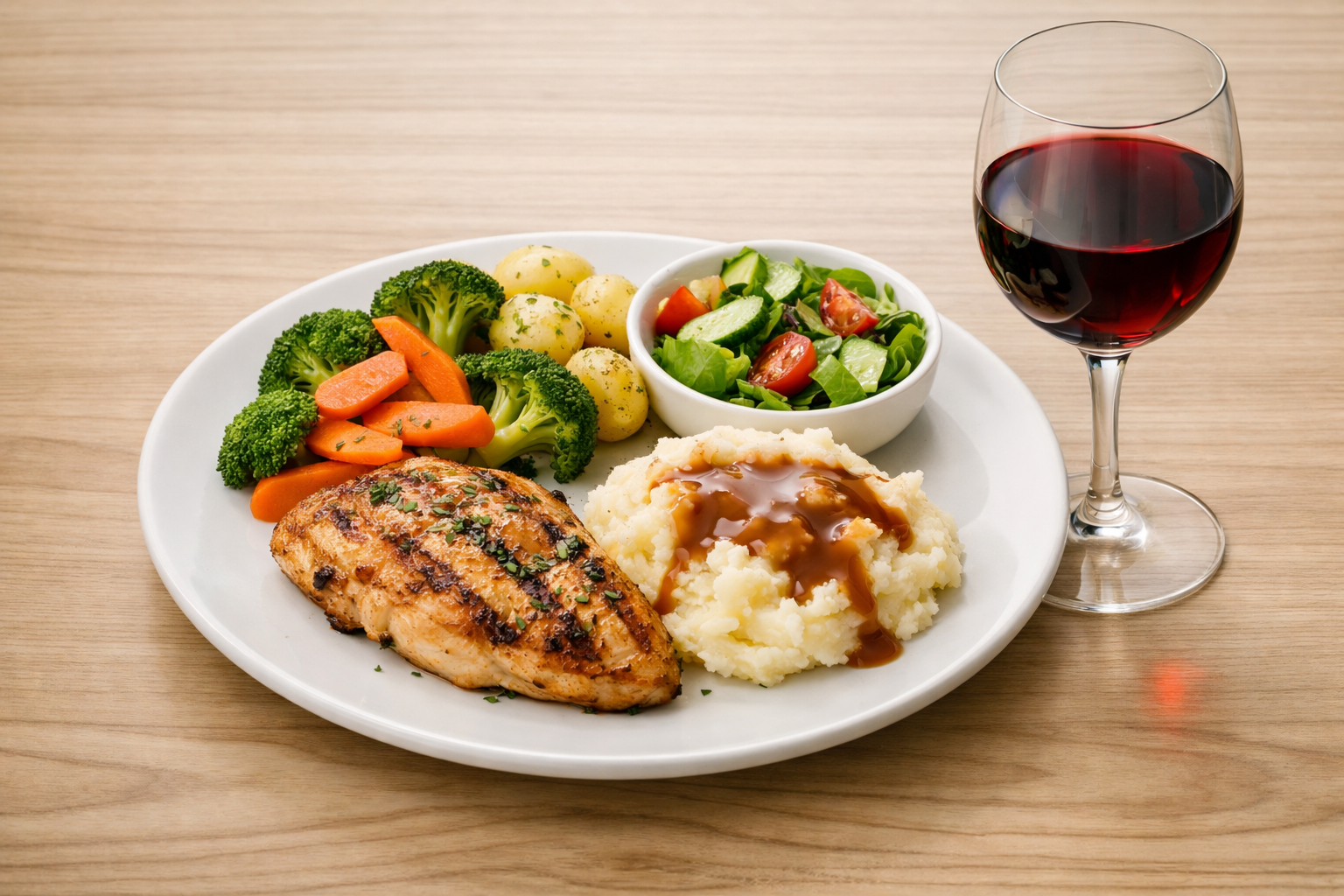
Food can significantly affect how quickly alcohol is absorbed. Alcohol consumed on an empty stomach generally reaches the bloodstream faster than alcohol consumed after eating.
Food can slow the movement of alcohol into the small intestine, where much of the alcohol is absorbed. This doesn’t mean that eating eliminates alcohol or prevents intoxication. Instead, it can slow the rate at which alcohol enters the bloodstream.
That means two people with identical body weights can experience different BAC patterns after consuming the same amount of alcohol depending on whether they have recently eaten.
The Actual Amount of Alcohol in Your Drink
The phrase “one drink” can be misleading. A beer, glass of wine, or cocktail isn’t automatically equivalent to one standard drink.
Serving sizes and alcohol concentrations can vary considerably. A large glass of wine may contain more alcohol than a standard serving. A cocktail can contain multiple servings of alcohol depending on its ingredients and preparation.
This is particularly important when estimating BAC because people often count beverages rather than the actual amount of alcohol they contain.
For example, someone might say -“I only had two drinks.” But if both drinks contained significantly more alcohol than a standard serving, their actual alcohol intake could be much higher than expected.
Biological Variability and Body Composition
Biological variability can influence BAC because alcohol is distributed primarily through body water.
On average, women have less body water per pound of body weight than men. As a result, consuming the same amount of alcohol can produce a higher BAC in a woman than in a man of the same weight.
But body weight itself doesn’t tell you how much body water someone has. Two people can weigh exactly the same while having different proportions of muscle, fat, and lean tissue. Since alcohol doesn’t distribute equally into body fat, body composition can affect the relationship between alcohol consumption and BAC. This is another reason why weight-based BAC charts should only be treated as estimates.
Genetics
Your genetics can influence how your body processes alcohol. Alcohol is primarily broken down through enzymes including alcohol dehydrogenase and aldehyde dehydrogenase. Genetic variations can affect how efficiently these pathways process alcohol and its byproducts.
Some people have genetic variants that can cause acetaldehyde to accumulate more readily, resulting in reactions such as facial flushing, nausea, dizziness, or a rapid heartbeat. Genetics don’t mean that someone can simply “handle alcohol better.” Instead, they can influence how the body responds to and processes alcohol.
Age
Age can also affect how alcohol interacts with the body. Changes in body composition and physiology can alter how alcohol is distributed and experienced. Older adults may also be more likely to take medications that interact with alcohol.
This means that two people with similar weights and similar BAC levels can potentially experience alcohol very differently. BAC is therefore only one part of the overall picture.
Medications

Certain medications can interact with alcohol and change the effects of drinking. Some medications may affect alcohol absorption or metabolism, while others can make alcohol’s effects considerably stronger. Alcohol can also interact with medications used for conditions involving sleep, anxiety, pain, allergies, and other health concerns.
In some cases, the problem isn’t necessarily that the medication dramatically changes BAC.
The bigger concern may be that combining alcohol with the medication increases drowsiness, dizziness, impaired coordination, or breathing problems. If you take medication, checking for alcohol interactions is important.
Your Alcohol Metabolism
After alcohol enters your bloodstream, your body begins breaking it down. Most alcohol metabolism takes place in the liver through enzymatic processes.
However, alcohol metabolism isn’t identical in everyone. Genetics, body composition, liver health, nutrition, and other biological factors can influence how an individual processes alcohol.
This is also why common “sobering up” tricks don’t work the way people often believe. Coffee may make you feel more awake, but it doesn’t instantly remove alcohol from your bloodstream. Your body still needs time to metabolize the alcohol.
Hydration and Body Water
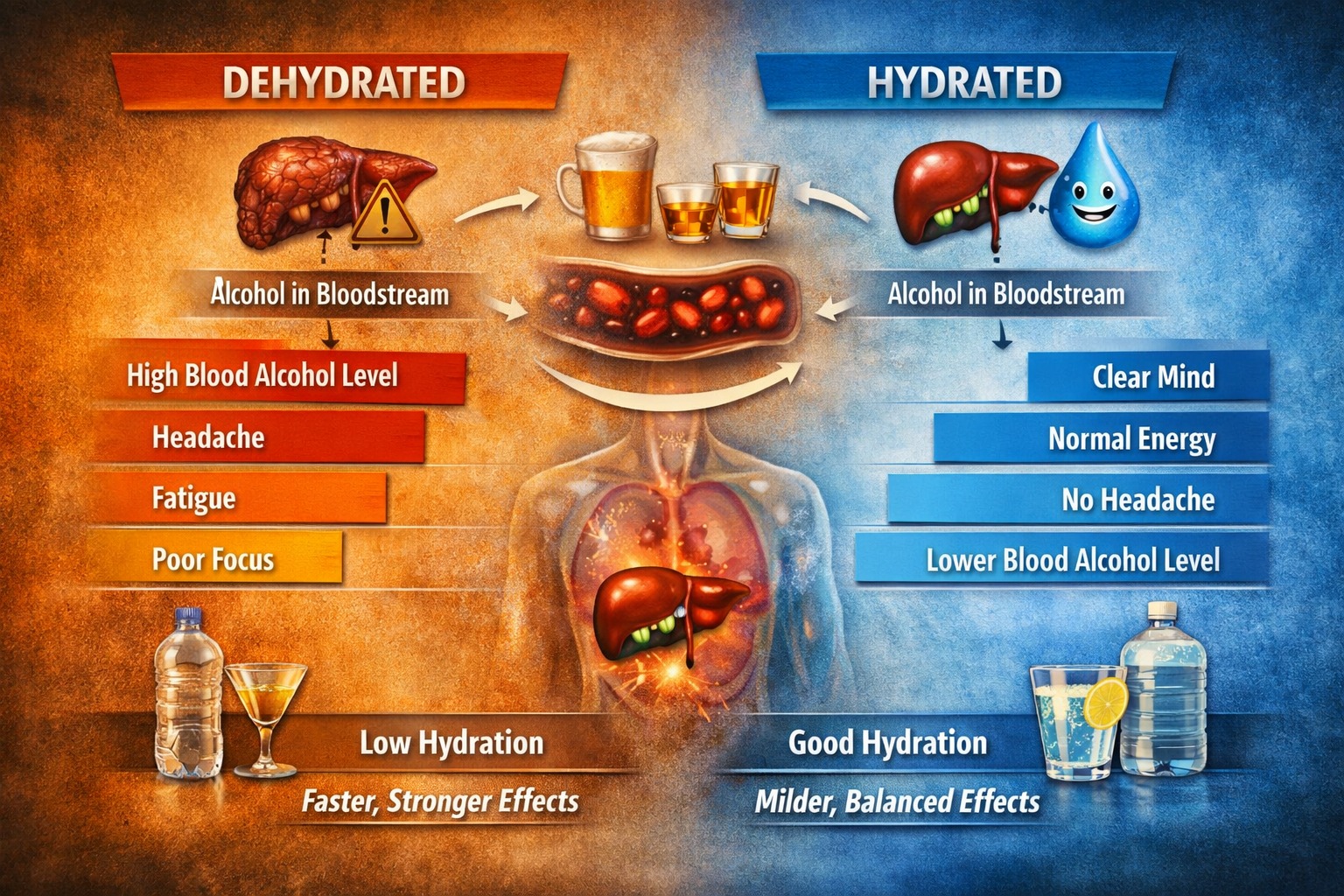
Hydration and body water can affect how alcohol is distributed throughout the body. Alcohol is distributed primarily through water-containing tissues rather than body fat. This means that two people with identical body weights can have different amounts of body water and therefore potentially different BAC responses.
However, drinking water after consuming alcohol does not rapidly lower BAC. Water can help with hydration, but it doesn’t remove alcohol from the bloodstream.
Your Overall Drinking Pattern
Finally, your overall drinking pattern can make a major difference. It’s not simply about how many drinks you have. It’s about how much you drink, how quickly you drink, and how those drinks are spread over time.
Consuming the same total amount of alcohol over a longer period can produce a different BAC pattern from consuming it rapidly. This is why looking only at the total number of drinks can be misleading.
Why the Same Number of Drinks Can Produce Different BAC Levels
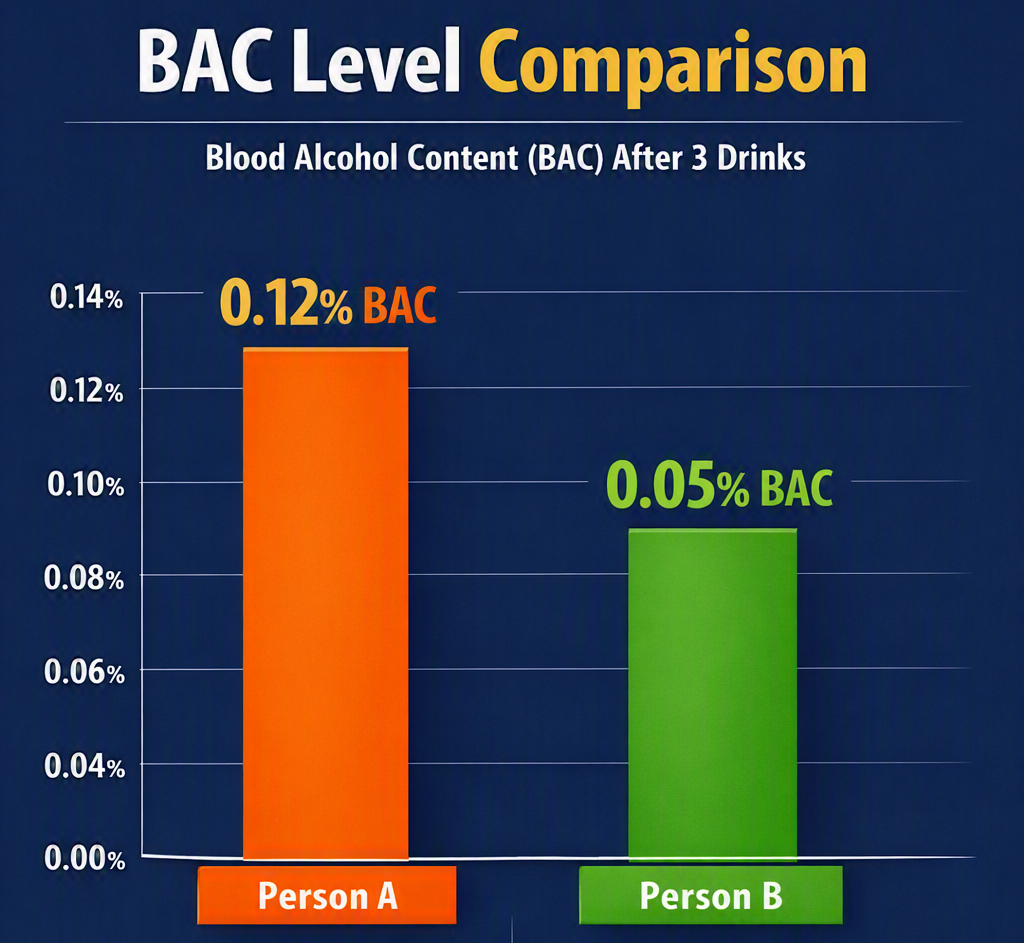
Imagine two people who each consume three alcoholic beverages.
They might still end up with different BAC levels because of differences in:
- Body composition
- Sex
- Drinking speed
- Food intake
- Alcohol concentration
- Age
- Genetics
- Medications
- Metabolism
- Amount of body water
This is why there isn’t a single universal formula that can perfectly predict everyone’s BAC.
A BAC calculator can provide an estimate based on available information, but real-world BAC can be more complicated.
Why Body Weight Isn’t the Whole Story
Body weight is useful when estimating BAC, but treating it as the most important factor can create a misleading picture.
A more complete way to think about BAC is – Amount of alcohol + drinking speed + absorption + body composition + body water + metabolism + individual differences = BAC
That’s why two people who weigh the same can have different BAC levels after drinking the same amount of alcohol.
Wrapping Up
Body weight matters when it comes to BAC, but it is only one piece of the puzzle. Drinking speed, food, drink strength, body composition, sex, genetics, age, medications, hydration, and alcohol metabolism can all influence how alcohol affects your body.
BAC charts and BAC calculators can help explain these relationships, but they provide estimates rather than direct measurements. And while knowing the legal limit is useful, it shouldn’t be treated as a target for drinking and driving. If you’ve been drinking, don’t rely on how you feel, a BAC calculator, or a BAC chart to decide whether you can drive. The safest BAC for driving is zero.
Can You Fail a BAC Test the Morning After Drinking
It is easy to assume that a night of drinking is finished once you wake up the next morning. The headache may be fading, you may feel completely sober, and the last drink might have been several hours ago.
But your body does not measure sobriety by how you feel. You can still have alcohol in your bloodstream the morning after drinking, which means you may still register a measurable BAC (Blood Alcohol Concentration) on a breath or blood test.
In some circumstances, that BAC can be high enough to create legal problems or make driving unsafe. The important point is simple – feeling sober does not necessarily mean your BAC is zero. According to the National Highway Traffic Safety Administration (NHTSA), alcohol affects driving ability even at BAC levels below the commonly discussed 0.08 g/dL threshold.
Why Can Your BAC Still Be Positive in the Morning?
BAC describes the amount of alcohol present in your bloodstream. Alcohol is absorbed through the stomach and small intestine and then enters the bloodstream. Your liver gradually metabolizes it, but that process takes time. If you want to measure your BAC, you can measure it here.
A breathalyzer does not directly draw blood from you. Instead, it measures alcohol in your breath and uses that measurement to estimate the alcohol concentration in your body. Blood tests can directly measure alcohol concentration in a blood sample.
This creates an important distinction – You can wake up feeling normal while alcohol is still present in your system. That is one reason morning-after drinking can be deceptive. The biggest factor is how much alcohol you consumed and how late you continued drinking. Consider two situations. One person stops drinking at 9 PM after having two drinks.
Another person stops drinking at 2 AM after consuming several drinks throughout the evening. Both wake up at 8 AM, but they have had very different amounts of time since their last drink. The first person has had around 11 hours since drinking stopped, while the second has had only about six hours.
Their morning BAC can therefore be very different. This is why simply saying “I stopped drinking last night” doesn’t tell you whether you will pass a BAC test in the morning.
Your Last Drink Matters More Than Your Bedtime
One common mistake is calculating alcohol clearance from the time you went to bed. That’s not necessarily the right starting point. The next morning when you wake upSuppose someone drinks until 2:00 AM and sleeps from 2:30 AM until 8:00 AM.
They might say – “I slept for almost six hours.” But their body has only had roughly six hours since the drinking ended. Depending on when the alcohol was consumed and absorbed, their BAC may still be measurable. Now imagine someone who stopped drinking at 10:00 PM and woke up at 8:00 AM.
They have had around ten hours since their final drink. Those situations are very different.
How Fast Does Alcohol Leave Your Body?
There is no universal number of hours that guarantees a BAC of zero for everyone. Alcohol metabolism varies from person to person, and BAC depends on factors such as:
- Number of drinks consumed
- How quickly the drinks were consumed
- Body size
- Biological Variability
- Food consumed
- Individual metabolism
- How long drinking continued
- The strength and size of the drinks.

Some educational materials use rough alcohol-clearance estimates, but these should not be treated as a personal guarantee that you will pass a breath test.
Can a BAC Calculator Tell You If You’ll Pass?
A BAC calculator can be useful for understanding how factors such as the number of drinks, body weight, and time may influence estimated BAC. But there is a major catch.
A BAC calculator is an estimation tool—not a legal test and not a guarantee of sobriety.
For example, imagine someone enters:
- 75 kg body weight
- Six drinks
- Drinking period of five hours
- Last drink at midnight
The calculator may produce an estimated BAC curve. But that number should not be interpreted as – “The calculator says I’m below the legal limit, so I’m safe to drive.” Real-world BAC can differ from an estimate.
A calculator is best used for education and awareness, not for making a go/no-go driving decision.
What About the BAC Chart?
A BAC chart can help explain what different BAC levels generally mean.
| BAC |
Possible effects |
| 0.02 |
Some loss of judgment and changes in visual tracking |
| 0.05 |
Reduced coordination, lowered alertness and impaired judgment |
| 0.08 |
Significant impairment involving coordination, reaction time, judgment and perception |
| 0.10 |
Further deterioration in reaction time and vehicle control |
| 0.15 |
Major loss of balance and substantial impairment |
These are general effects, not guarantees that every individual will experience exactly the same symptoms. The important lesson from a BAC chart is that impairment can begin before someone reaches the commonly discussed 0.08 level.
Imagine someone goes to a wedding reception and has several drinks throughout the evening. The final drink is around midnight. At 7:30 AM, they wake up. There is no headache. They aren’t dizzy. They can walk normally, drink coffee, take a shower, and get ready for work. Then they have the thought -“I’m completely fine now.”
But there’s a difference between feeling recovered and having no alcohol remaining in your system. The subjective feeling of being sober isn’t a reliable BAC measurement.
Does sleeping remove alcohol from your system? No—not directly. Sleep gives your body time to continue metabolizing alcohol, but sleep does not make the liver suddenly process alcohol faster. Think of it like a clock continuing to run.
If you stop drinking at midnight and sleep for seven hours, your body has had seven hours without additional alcohol entering the system. But that doesn’t mean seven hours automatically equals a BAC of zero. And if you drank heavily late into the night, you could still have measurable alcohol when you wake up.
What About Coffee?
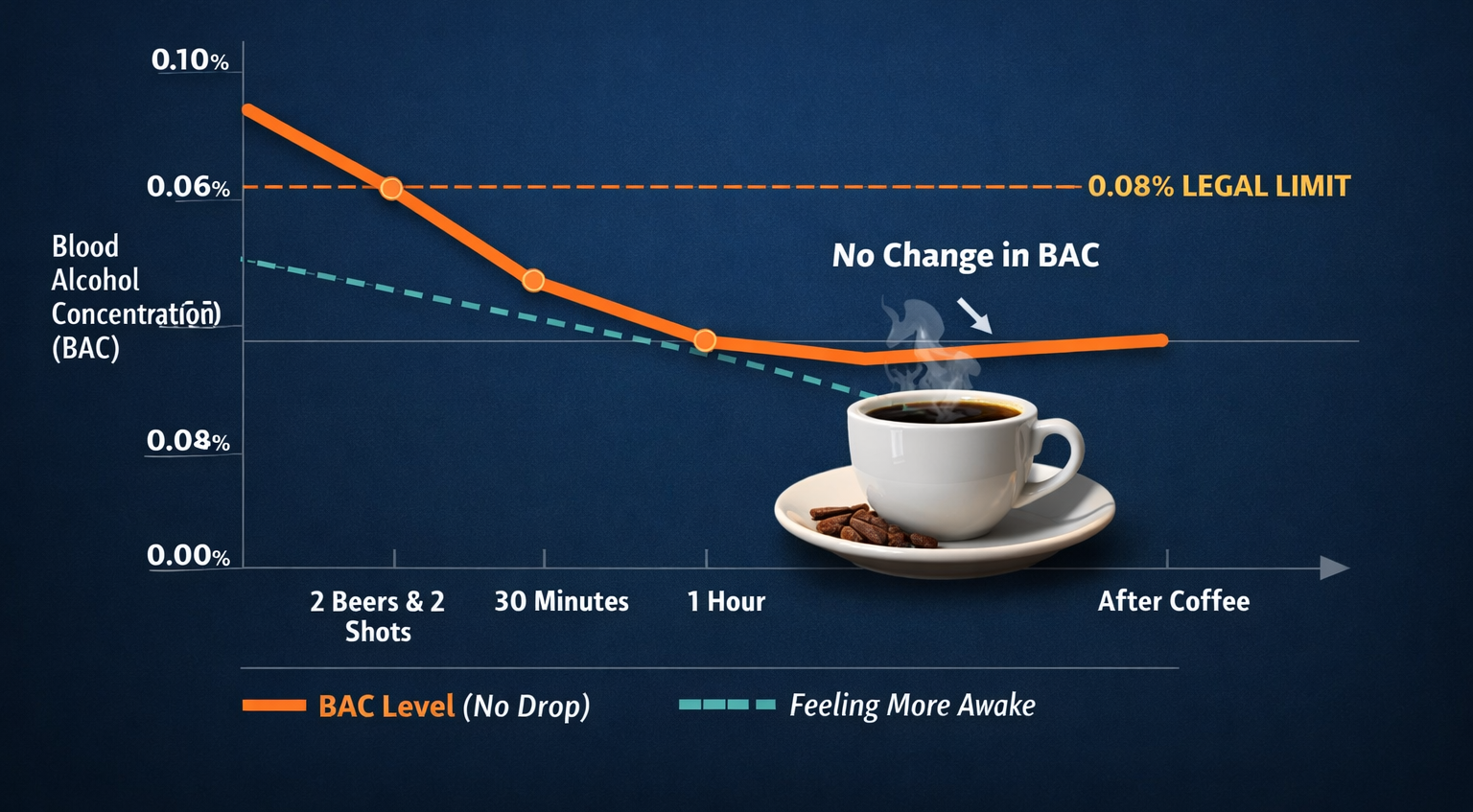
Coffee can make you feel more awake. It does not make alcohol disappear from your bloodstream.
This distinction is extremely important. Imagine someone wakes up groggy after drinking the night before. They drink two strong coffees and suddenly feel alert.
They might conclude -“The coffee sobered me up.” But being more alert isn’t the same thing as having a zero BAC. So coffee may change how you feel, but it doesn’t provide a reliable way to lower your BAC.
What About a Big Breakfast?
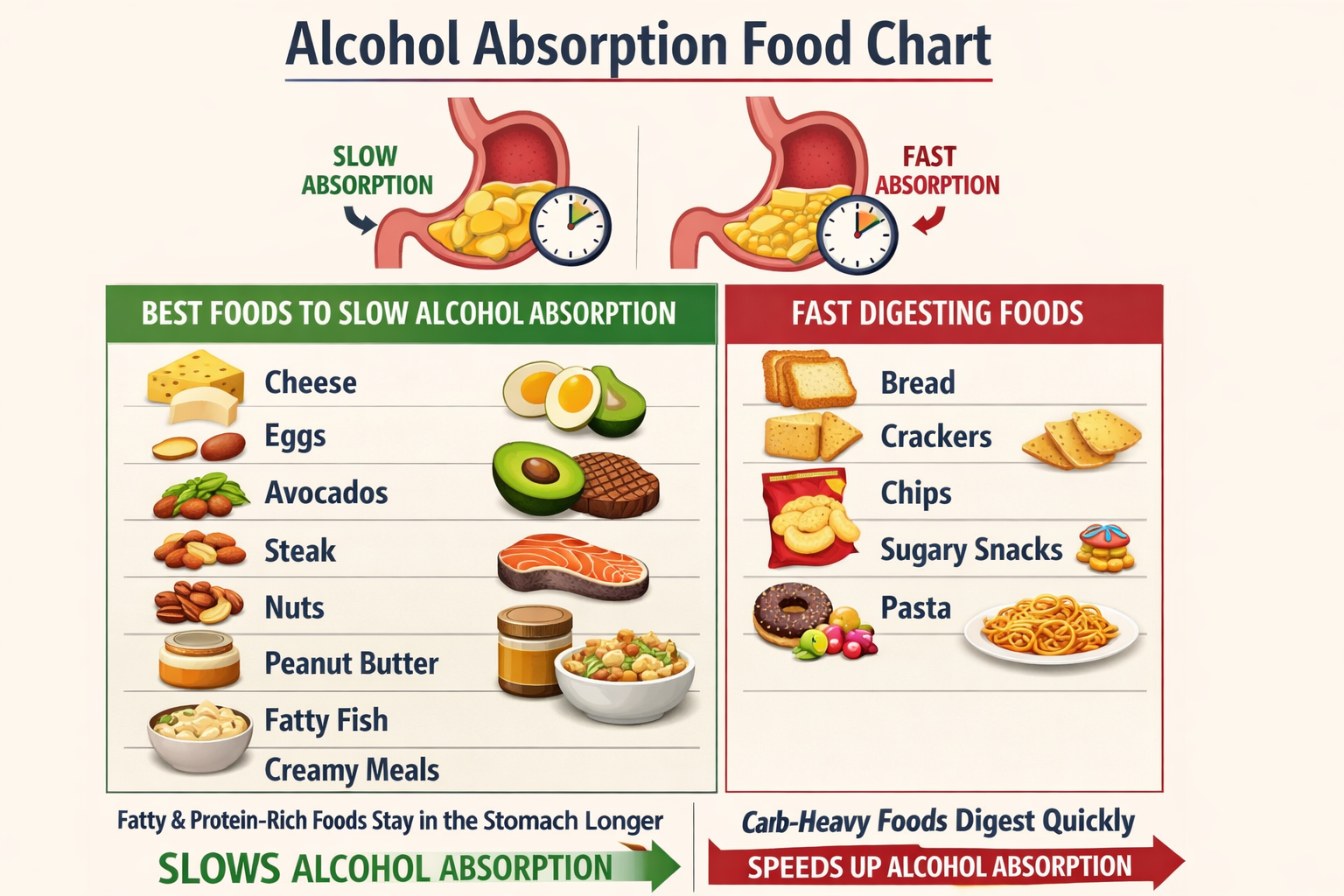
Food can affect alcohol absorption when alcohol is being consumed, but eating breakfast the next morning isn’t a magic way to eliminate alcohol that’s already in your bloodstream.
The same principle applies to:
- Drinking lots of water
- Taking a cold shower
- Exercising
- Drinking coffee
- Sleeping for a few hours
- Eating greasy food
None of these should be considered a guaranteed method for making your BAC zero. Time is what allows your body to process alcohol.
A Morning-After Situation That Can Go Wrong
Consider someone who attends a party on Saturday night and drinks more than usual. Their final drink is at 1:30 AM. They sleep until 8:00 AM. At 8:30 AM, they get into their car. They don’t feel drunk, aren’t slurring their speech. They don’t feel dizzy. But that’s not enough information to conclude that their BAC is zero. If they are stopped and tested, a breath test may detect alcohol that remains in their system.
The problem becomes even more serious if their driving is affected. This is why the safest approach after substantial drinking is not to use your feelings, a BAC calculator, or a BAC chart as permission to drive.
Can a Home Breathalyzer Tell You?
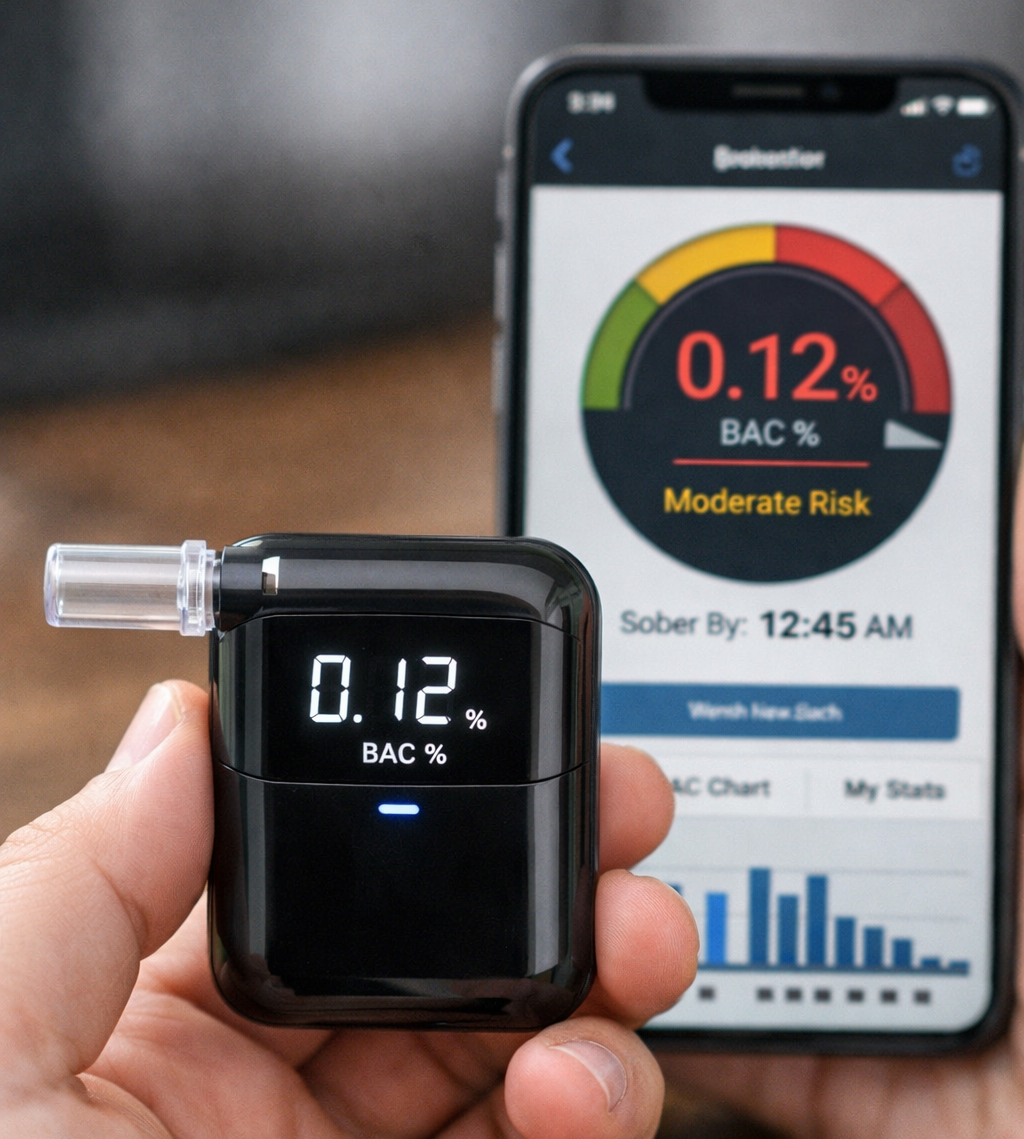
A consumer breathalyzer can provide an indication of alcohol in your breath, but devices differ in quality, calibration, and accuracy. Law-enforcement agencies use approved testing equipment under specific procedures.
So even if a home device displays a number, you shouldn’t treat that number as an official legal determination. And importantly, a reading from a consumer device shouldn’t be used to justify risky driving if you are still tired, hungover, or otherwise impaired.
A hangover and alcohol intoxication aren’t exactly the same thing. You might still feel terrible after most of the alcohol has been metabolized. Or you might feel relatively normal while alcohol is still present. So – feeling hungover doesn’t prove your BAC is high. Feeling fine doesn’t prove your BAC is zero.That’s why symptoms alone aren’t a reliable BAC test.
How Much Should You Trust a BAC Calculator?
A BAC calculator can be helpful if your goal is to understand the basic relationship between drinking and BAC. For example, it can demonstrate why – more drinks + faster drinking + less time = potentially higher morning BAC. It can also show why two people who consume the same number of drinks may not have identical BAC estimates.
But don’t use a calculator to determine – “It’s 7 AM, my estimated BAC is below the legal limit, so I can drive.” That’s too much certainty from an inherently imperfect estimate.
The safest interpretation is – a BAC calculator can educate you. It cannot certify you as sober. Some people believe beer is somehow less relevant to BAC than liquor. But the type of alcoholic beverage isn’t the fundamental issue. What matters is the amount of alcohol consumed. A standard drink contains approximately the same amount of pure alcohol whether it comes from beer, wine, or distilled spirits.
Of course, real drinks can vary dramatically in size and alcohol percentage. A large or strong beer may contain substantially more alcohol than someone assumes when they count it as simply “one beer.”
The Biggest Mistake – Counting Drinks Instead of Alcohol
Imagine someone says -“I only had four drinks.” That statement doesn’t tell the whole story.
Were they:
- Four standard beers?
- Three large beers?
- Two strong craft beers?
- Four glasses of wine?
- Five cocktails containing multiple shots?
The actual alcohol exposure can be very different. That’s another reason a BAC calculator can produce misleading results if the drink information entered into it isn’t accurate.
So, can you fail a BAC test the next morning? If enough alcohol was consumed late enough in the evening, measurable alcohol can remain in the body the following morning.
Whether a particular person will test positive—or what their BAC will be—depends on numerous individual factors. There is no universal rule such as – “Sleep for eight hours and you’ll definitely pass.” Or -“Wait six hours and your BAC will definitely be zero.”
Those statements are unsafe because alcohol metabolism and BAC vary between individuals.
What Should You Do If You’re Unsure?

If you’ve been drinking heavily and aren’t sure whether you’re sober enough to drive, don’t gamble on a BAC calculator or how you feel.
Choose a safer option:
- Wait longer.
- Arrange a ride.
- Use a taxi or rideshare service.
- Have someone who hasn’t been drinking drive.
Stay where you are until you’re confident you’re no longer impaired. The safest choice after drinking is to avoid driving until you are certain you are no longer impaired.
Wrapping Up
The morning after drinking can create a dangerous illusion. You wake up, take shower, drink coffee then eat breakfast. You feel normal and you assume the alcohol is gone.
But BAC doesn’t disappear simply because you feel better. Alcohol takes time to leave the body, and the amount of time varies depending on how much you drank and individual factors. A BAC calculator or BAC chart can help explain the science, but neither can guarantee that you are below the legal limit or safe to drive.
The most important rule is simple – If you drank heavily the night before and you’re unsure whether alcohol is still in your system, don’t drive. Feeling sober isn’t the same thing as having a zero BAC.
How Medications Can Change Your Blood Alcohol Concentration
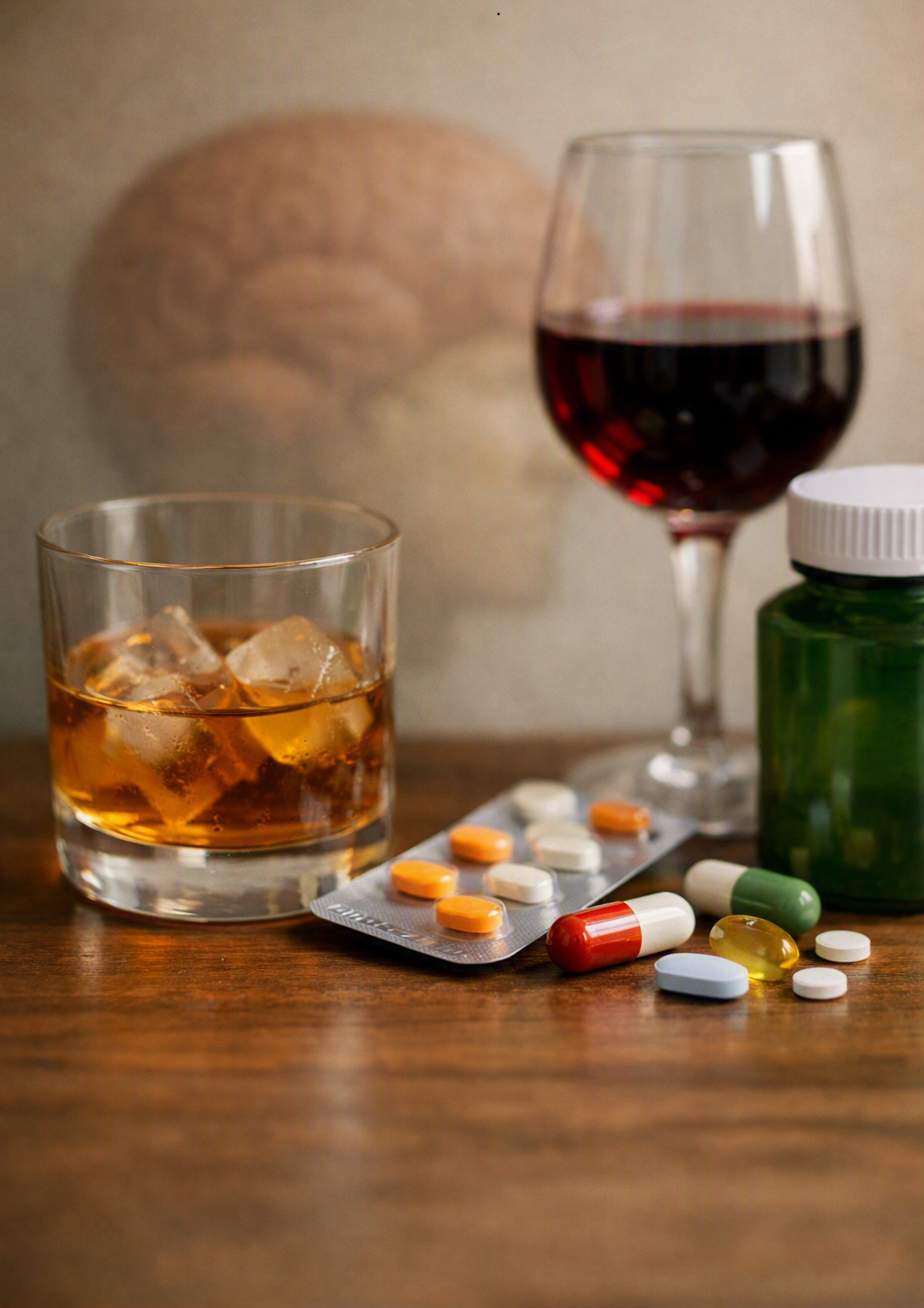
When people think about Blood Alcohol Concentration (BAC), they usually focus on obvious factors like how much they drank, their body weight, or whether they ate before drinking.
Many also rely on a BAC calculator or BAC chart to estimate their alcohol level before deciding whether they’re below the legal limit to drive.
However, there’s another factor that is often overlooked: medications.
While most medications do not directly increase the amount of alcohol in your bloodstream, many can dramatically change how alcohol affects your brain and body.
Understanding how medications interact with alcohol is essential—not only for your safety but also for avoiding dangerous mistakes based on a BAC calculator or estimated Blood Alcohol Concentration.
Do Medications Increase Your BAC?
The answer is usually no—but sometimes indirectly. Your Blood Alcohol Concentration (BAC) represents the amount of alcohol circulating in your bloodstream. It mainly depends on:
- The amount of alcohol consumed
- Time spent drinking
- Body weight
- Biological variability
- Food consumed before or during drinking
- Liver metabolism
A standard BAC calculator uses these variables because they have the greatest impact on alcohol concentration.

Most medications do not add alcohol to your bloodstream or instantly increase your BAC.
However, medications can influence:
- How fast alcohol is absorbed
- How quickly your liver breaks it down
- How intoxicated you feel at a given BAC
- How long alcohol remains active in your body
This means your Blood Alcohol Concentration may remain similar while your level of impairment becomes much greater.
Medications That Slow Alcohol Metabolism
Your liver normally processes about one standard drink per hour on average, although this varies from person to person.
Some medications interfere with liver enzymes responsible for metabolizing alcohol.
Examples include:
- Certain antibiotics
- Antifungal medications
- Some antidepressants
- Medications used to treat heart rhythm disorders
- Drugs prescribed for liver disease
When these medications slow alcohol metabolism, your BAC may remain elevated for a longer period than expected.
This means someone checking a BAC calculator based on normal alcohol elimination rates could underestimate how much alcohol is still present in their bloodstream.
Medications That Increase Alcohol’s Effects Without Raising BAC
Many medications don’t change your Blood Alcohol Concentration, but they significantly increase alcohol’s effects on the central nervous system.
Like:
- Sleeping pills
- Anti-anxiety medications
- Benzodiazepines
- Opioid pain medications
- Muscle relaxants
- Some allergy medications (antihistamines)
These drugs and alcohol both slow brain activity.
Together they can cause:
- Severe drowsiness
- Poor coordination
- Slower reaction times
- Blurred vision
- Difficulty concentrating
- Increased risk of falls and accidents
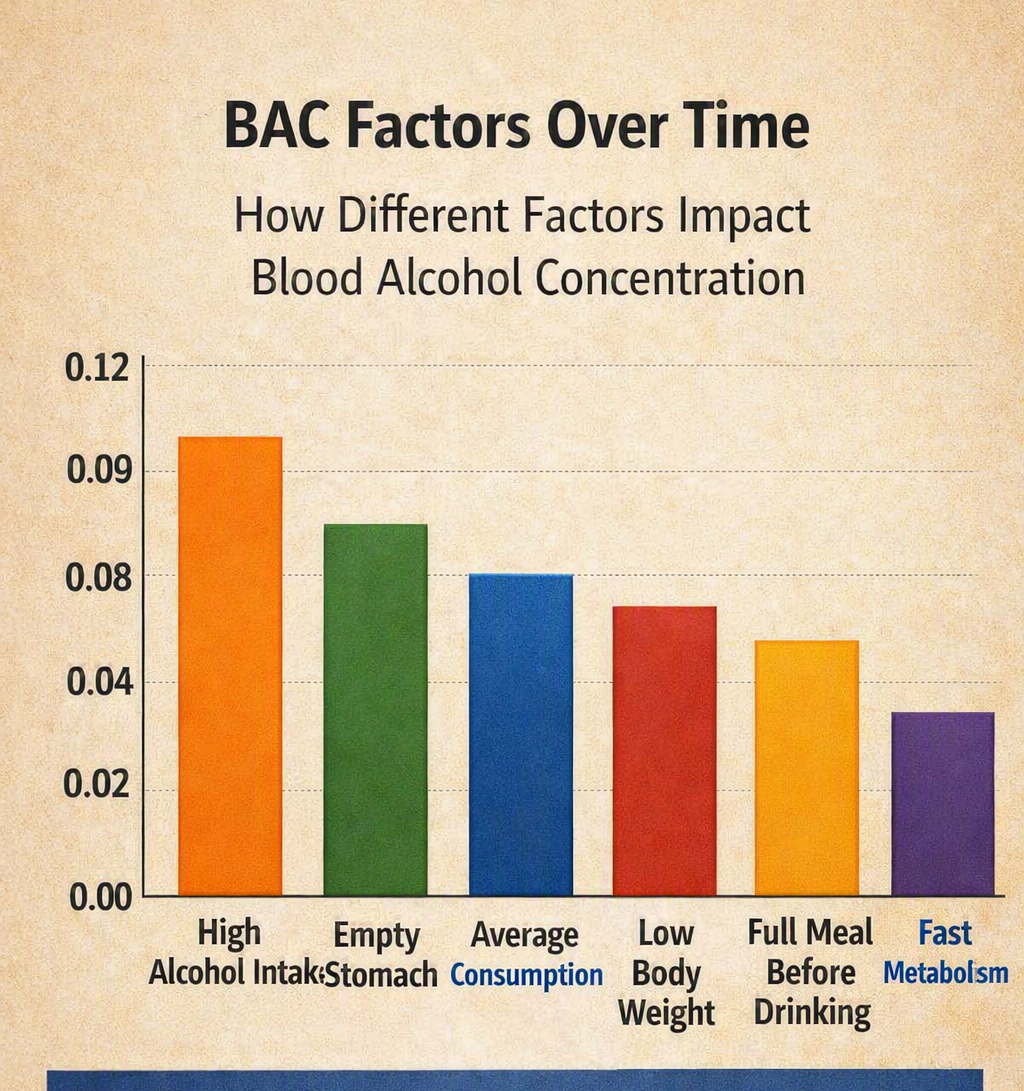
In these situations, your BAC chart or BAC calculator may show a value below the legal limit, yet your ability to drive safely may still be seriously impaired.
Why BAC Doesn’t Always Reflect Impairment
Many people assume that if their Blood Alcohol Concentration is below the legal limit, they’re safe to drive.
Unfortunately, that’s not always true.
The legal limit only measures alcohol concentration—not the combined effects of alcohol and medications.
For example one driver has a BAC of 0.04% and isn’t taking medication another driver B has the same BAC but also takes prescription sleeping medication.
Although both drivers have identical Blood Alcohol Concentration, the second driver may experience significantly slower reflexes, poorer judgment, and greater drowsiness.
A BAC calculator cannot account for these medication effects because it only estimates alcohol concentration—not overall impairment.
Imagine someone takes their prescribed anti-anxiety medication before attending a dinner party. They drink two glasses of wine over two hours.
A BAC calculator estimates their Blood Alcohol Concentration at approximately 0.04%, comfortably below the legal limit in many regions.
However, shortly after leaving, they notice:
- Difficulty focusing
- Heavy eyelids
- Slower reactions
- Poor balance
The medication has amplified alcohol’s effects, making them much more impaired than their BAC alone would suggest.
Although the Blood Alcohol Concentration hasn’t dramatically increased, driving could still be dangerous. Another common situation involves over-the-counter cold medications. Someone recovering from the flu takes a nighttime cold medicine containing sedating antihistamines.
Later that evening, they have two beers while watching a game. Their BAC calculator suggests they’re below the legal driving limit.
However, the combination of alcohol and the medication causes:
- Extreme drowsiness
- Delayed reaction time
- Reduced alertness
Again, the BAC estimate doesn’t fully represent how impaired they actually are.
Medications That Contain Alcohol
Some medications contain small amounts of alcohol themselves, including:
- Certain cough syrups
- Liquid cold medicines
- Some herbal tinctures
- Certain mouth rinses (if swallowed)
For most adults using these products as directed, the alcohol content is too small to meaningfully affect Blood Alcohol Concentration.
However, combining multiple alcohol-containing medications with alcoholic drinks may contribute to overall alcohol intake, especially in children or individuals with liver disease.
Can a BAC Calculator Account for Medications?
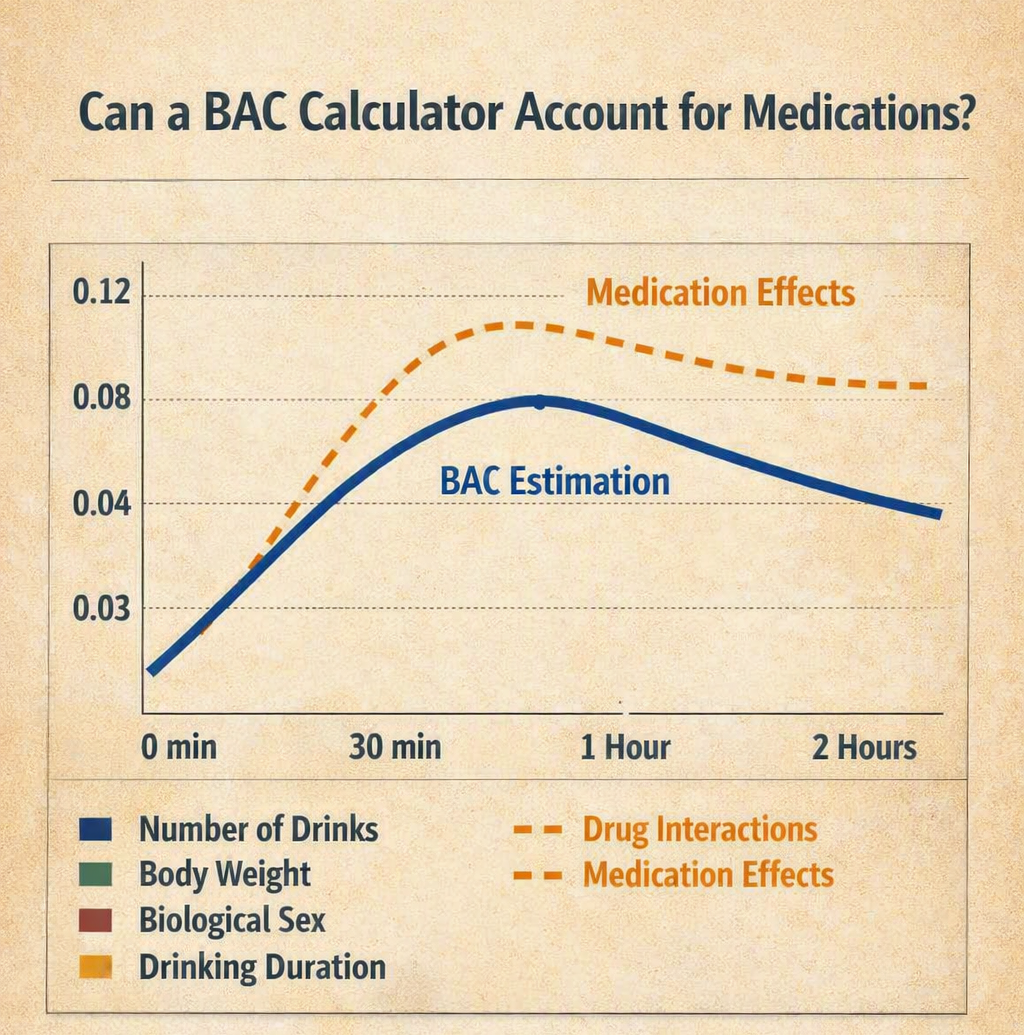
A BAC calculator estimates Blood Alcohol Concentration using factors such as:
- Number of drinks
- Body weight
- Biological sex
- Drinking duration
It cannot calculate:
- Prescription drug interactions
- Sedation caused by medications
- Slower alcohol metabolism
- Increased impairment from drug combinations
That’s why BAC calculators should always be viewed as rough estimates rather than guarantees of safety.
Why the Legal Limit Isn’t Always a Safe Limit
Many countries set a legal limit for Blood Alcohol Concentration to determine when driving becomes illegal.
However, being below the legal limit doesn’t necessarily mean you’re fit to drive. Alcohol combined with medications can produce dangerous impairment even when your BAC appears relatively low.
Healthcare professionals generally advise avoiding alcohol altogether while taking medications that warn against drinking.
Following those warnings is often safer than relying solely on a BAC chart or BAC calculator.
Tips for Staying Safe
If you’re taking prescription or over-the-counter medication:
- Read medication labels carefully for alcohol warnings.
- Ask your doctor or pharmacist whether drinking is safe.
- Never assume a low Blood Alcohol Concentration means you’re safe to drive.
- Remember that BAC calculators estimate alcohol concentration—not medication interactions.
- If you’re unsure, arrange alternative transportation instead of driving.
Wrapping Up
Understanding Blood Alcohol Concentration (BAC) is an important step toward responsible drinking, but it tells only part of the story.
Medications can change how your body responds to alcohol by slowing its metabolism or greatly increasing its effects on the brain—even when your BAC remains below the legal limit. As a result, a BAC calculator or BAC chart may underestimate your actual level of impairment.
Whether you’re taking prescription medicines, over-the-counter cold remedies, or sleep aids, it’s always wise to consider how they interact with alcohol. The safest approach is to avoid mixing alcohol with medications unless a healthcare professional has confirmed it’s safe to do so.
When in doubt, prioritize your health and choose not to drive or operate machinery, regardless of what your estimated Blood Alcohol Concentration may be.
Why Alcohol Can Cause Blackouts Without Making You Pass Out

Have you ever heard someone say, “I don’t remember anything that happened last night,” even though they seemed awake, talking, and walking around?
This phenomenon is called an alcohol blackout, and it’s surprisingly common. Many people assume blacking out means losing consciousness, but that’s not true. You can remain awake, have conversations, drive a car, or even appear completely normal—and still wake up with no memory of those events.
The key reason lies in your Blood Alcohol Concentration (BAC) and how alcohol affects the brain. Let’s explore why blackouts happen, how they’re different from passing out, and how knowing your BAC can help you stay safe.
What Is an Alcohol Blackout?
An alcohol blackout is a period of memory loss caused by drinking too much alcohol. During a blackout, your brain stops creating new long-term memories.
This doesn’t mean you lose consciousness.
Instead, your brain continues to process the world around you, allowing you to:
- Talk to friends
- Dance
- Eat
- Use your phone
- Walk around
- Make decisions
Later, however, you won’t remember any of it. Think of your brain like a camera. During a blackout, the camera is still recording what’s happening in real time, but it’s no longer saving the footage to the memory card.
Blackout vs. Passing Out
Although the terms sound similar, they’re very different.
| Alcohol Blackout |
Passing Out |
| Awake and responsive |
Unconscious |
| Can walk and talk |
Cannot respond |
| Memory formation stops |
Brain activity is heavily depressed |
| May appear normal |
Appears asleep or unconscious |
| Usually happens at high BAC |
Usually happens at extremely high BAC |
Someone who blacks out may seem perfectly fine to everyone around them. Someone who passes out is unconscious and may require immediate medical attention.
Why Does It Happen?
Alcohol primarily affects an area of the brain called the hippocampus, which is responsible for creating new memories.
As your Blood Alcohol Concentration (BAC) rises, alcohol interferes with communication between brain cells. Eventually, your brain reaches a point where it can no longer store new experiences.
You continue living through those moments—but your brain never saves them. The faster your BAC rises, the greater the chance of experiencing a blackout.
It’s Not Just How Much You Drink
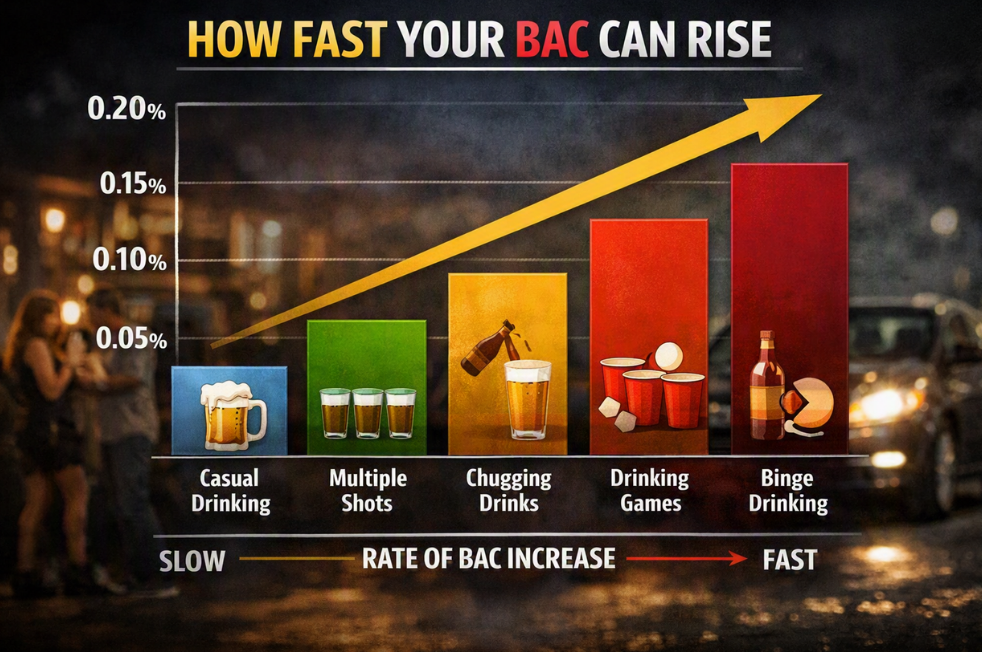
Many people think blackouts only happen after drinking enormous amounts of alcohol.
In reality, how quickly you drink matters just as much as how much you drink. Rapid drinking causes BAC to rise sharply, giving your brain little time to adapt.
Common situations that rapidly increase BAC include:
- Drinking multiple shots in a short period
- Chugging alcoholic beverages
- Drinking games
- Binge drinking
- Drinking on an empty stomach
Two people may consume the same number of drinks, yet only one experiences a blackout because their BAC increased much faster.
At What BAC Do Blackouts Usually Begin?
There isn’t one exact number because everyone processes alcohol differently.
However, research shows blackouts become much more common once BAC reaches around 0.16% or higher, roughly twice the legal driving limit in many countries.
Factors that influence when a blackout occurs include:
- Body weight
- Biological sex
- Drinking speed
- Food consumed before drinking
- Alcohol tolerance
- Medications
- Genetics
This is why one person’s blackout BAC may be different from someone else’s.
What Is the Legal BAC Limit?
The legal BAC limit for driving varies depending on where you live.
Many countries set the legal limit at 0.08% BAC, while others have stricter limits such as 0.05% or even lower.
It’s important to remember that impairment begins well before reaching the legal limit. Even at relatively low BAC levels, alcohol can affect:
- Judgment
- Reaction time
- Coordination
- Vision
- Decision-making
Reaching the legal limit isn’t the point at which alcohol suddenly becomes dangerous—its effects begin much earlier.
Who Is Most Likely to Experience Blackouts?
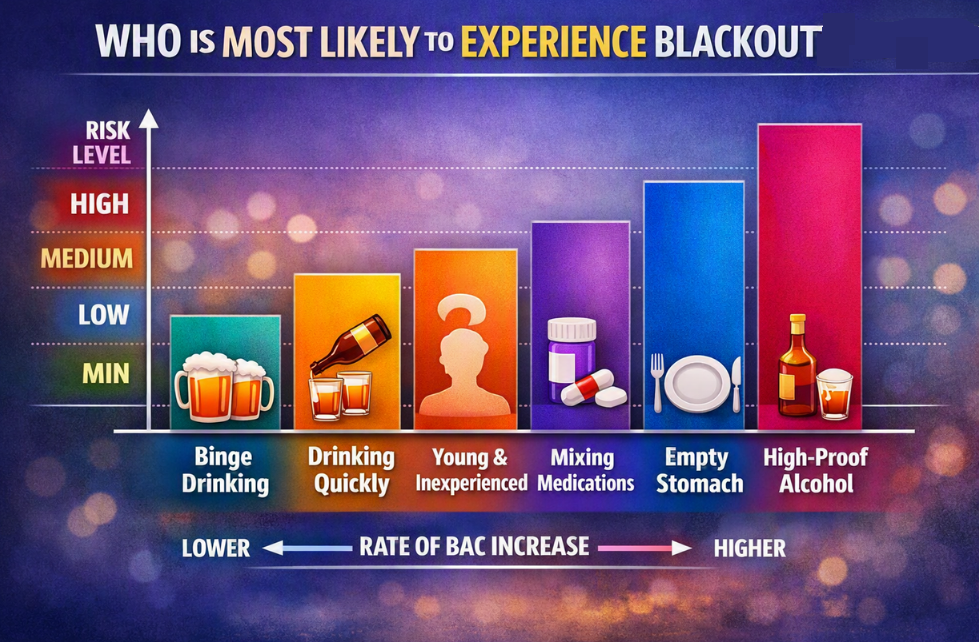
Certain situations increase the likelihood of blackouts.
These include:
- Binge drinking
- Drinking very quickly
- Being younger and inexperienced with alcohol
- Mixing alcohol with certain medications
- Drinking without eating
- Consuming high-proof liquor
People who regularly binge drink are significantly more likely to experience repeated blackouts.
So, can you be walking around during a blackout? The answer is ‘Yes’. This is one of the most surprising aspects of alcohol blackouts.
A person may:
- Hold conversations
- Send text messages
- Post on social media
- Order food
- Make purchases
- Travel from one place to another
Because they appear awake, friends may not realize they’re experiencing a blackout.
The memory loss usually isn’t discovered until the next day.
Why Blackouts Can be Dangerous
Even though someone remains conscious, blackouts dramatically increase the risk of harmful situations.
During a blackout, people may:
- Drive without remembering
- Fall or injure themselves
- Get into arguments
- Engage in risky behavior
- Lose valuables
- Make decisions they later regret
Because judgment is impaired and memories aren’t being formed, people cannot accurately assess risks.
Can Blackouts Cause Permanent Brain Damage?
A single blackout doesn’t necessarily mean permanent brain damage.
However, repeated heavy drinking and frequent blackouts can have long-term effects on brain health.
Research has linked chronic heavy alcohol use with:
- Memory problems
- Difficulty concentrating
- Reduced learning ability
- Increased risk of alcohol dependence
If blackouts become a recurring pattern, it’s a sign that alcohol consumption has reached potentially dangerous levels.
How to Reduce Your Risk
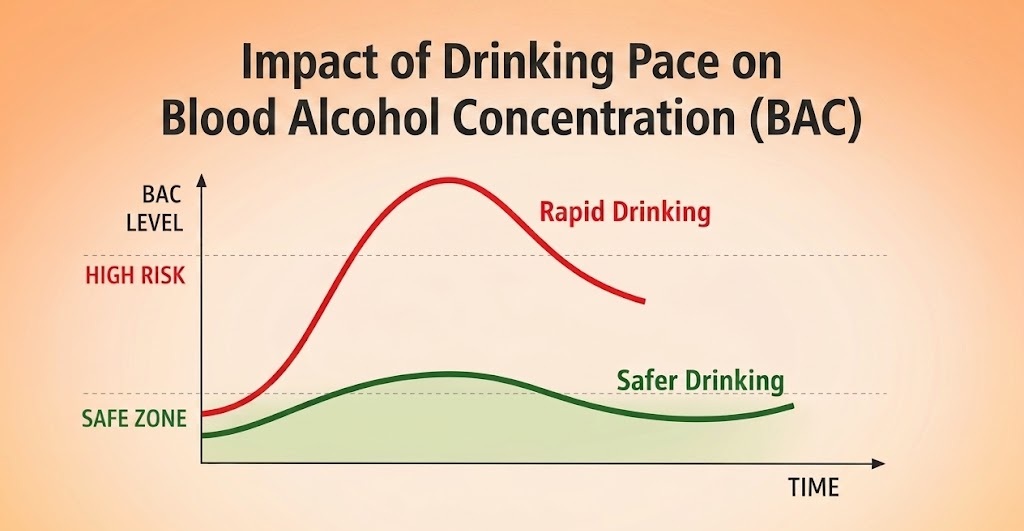
You can’t completely eliminate the effects of alcohol, but you can lower your risk of blacking out.
Some practical strategies include:
- Eat a meal before drinking.
- Pace yourself instead of drinking rapidly.
- Alternate alcoholic drinks with water.
- Avoid drinking games.
- Set a drink limit before you begin.
- Avoid mixing alcohol with medications unless approved by a healthcare professional.
- Know your approximate BAC throughout the night.
The biggest factor is preventing your BAC from rising too quickly.
Know Your BAC Before It Becomes a Problem
Most people can’t accurately judge how intoxicated they are based on how they feel.
That’s why estimating your Blood Alcohol Concentration (BAC) can be a valuable safety tool. Your BAC depends on several factors, including your weight, sex, number of drinks, and the time over which you’ve been drinking.
Check your BAC here using our BAC Calculator to estimate your current Blood Alcohol Concentration before making important decisions like driving or continuing to drink.
A calculator isn’t a substitute for a breathalyzer or medical test, but it can help you better understand how alcohol may be affecting your body.
Wrapping Up
Blacking out without passing out is one of alcohol’s most misunderstood effects. You don’t have to lose consciousness for alcohol to seriously affect your brain. During a blackout, your body may keep functioning, but your brain stops storing new memories.
The risk increases as your BAC rises—especially when drinking happens quickly.
Before getting behind the wheel or having another drink, check your BAC with our BAC Calculator.
Knowing your estimated BAC and understanding your local legal limit could help you avoid dangerous situations and make more informed decisions about alcohol consumption.
How Stress and Anxiety May Influence Alcohol Intoxication
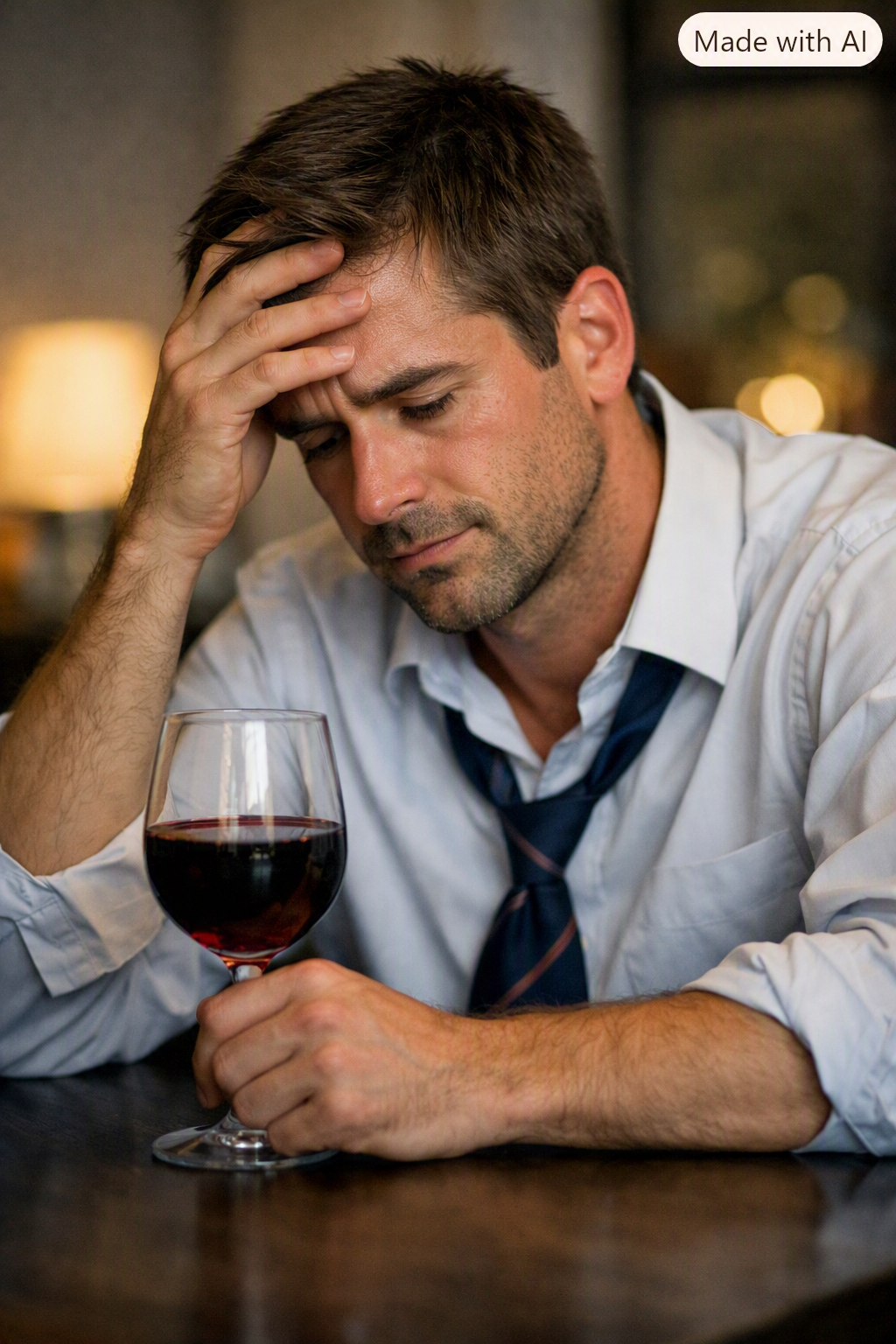
Many people believe that drinking alcohol while feeling stressed or anxious causes them to become intoxicated more quickly. You may have heard someone say, “I only had two drinks, but they hit me much harder than usual because I was stressed.”
Stress and anxiety do not directly increase your Blood Alcohol Concentration (BAC). However, they can significantly influence how alcohol affects your mind, your judgment, and your perception of intoxication.
Understanding this relationship is important for making safer decisions, especially if you’re relying on a BAC calculator, comparing results from different BAC calculators, or wondering whether you’re below the legal limit for driving.
Why Alcohol May Feel Stronger When You’re Stressed
Although stress does not increase your BAC, it can change how you experience alcohol.
When you’re under stress, your body releases hormones such as cortisol and adrenaline. These hormones affect attention, alertness, emotional processing, and decision-making. Alcohol, on the other hand, is a central nervous system depressant that slows brain activity.
When these two opposing states occur together, alcohol’s impairing effects may feel more noticeable. You might feel dizzier, more emotional, less focused, or more fatigued than you normally would after the same number of drinks.
This does not mean your Blood Alcohol Concentration is higher. Instead, your brain is responding differently because of your emotional state.
Stress Often Changes Drinking Behavior
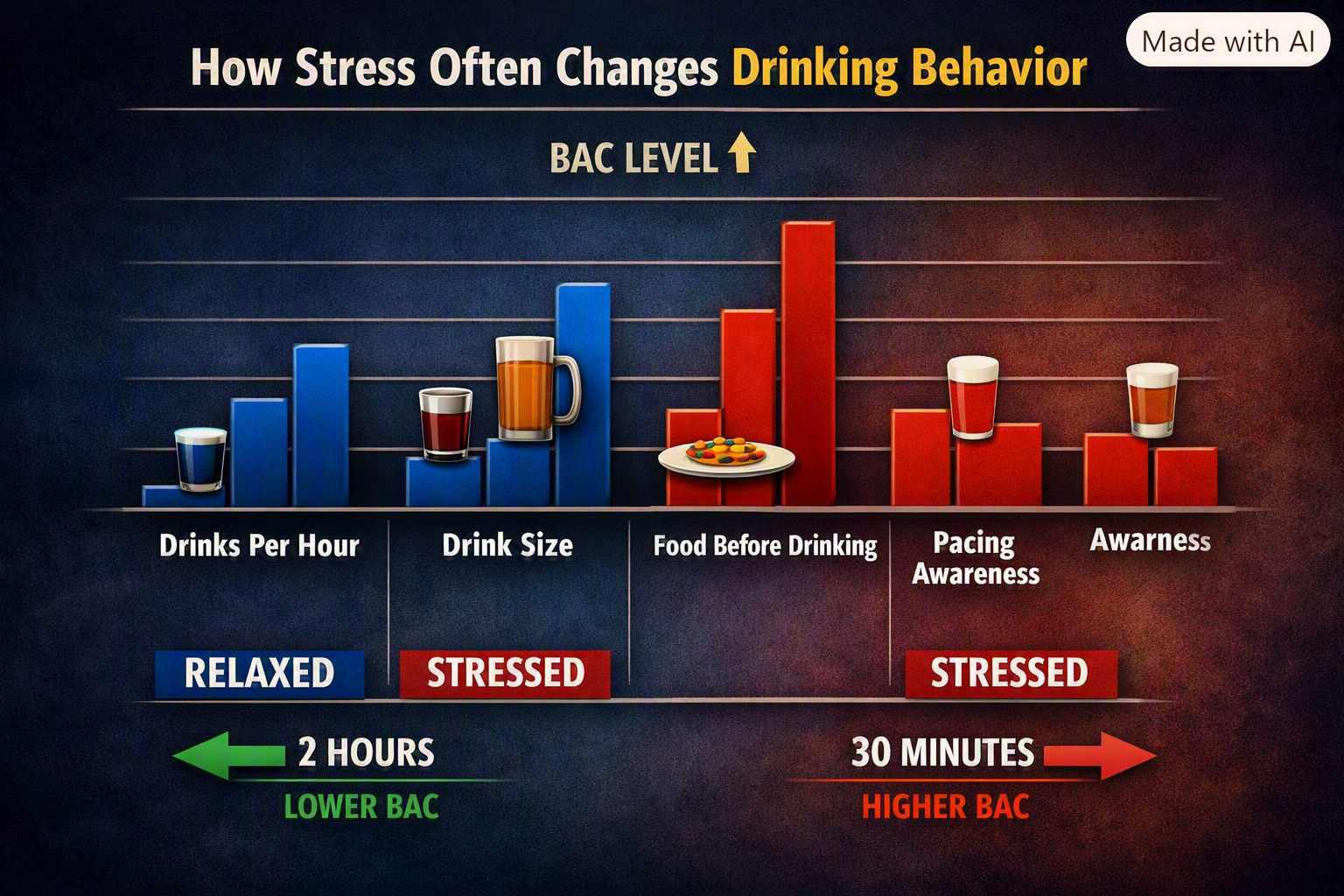
One of the biggest ways stress influences intoxication is by changing how people drink.
Someone experiencing anxiety or emotional stress is often more likely to:
- Drink more quickly
- Consume larger drinks
- Skip meals before drinking
- Continue drinking without realizing how much they’ve consumed
Each of these behaviors can cause your BAC to rise faster than expected. For example, imagine two coworkers finishing work on a Friday evening.
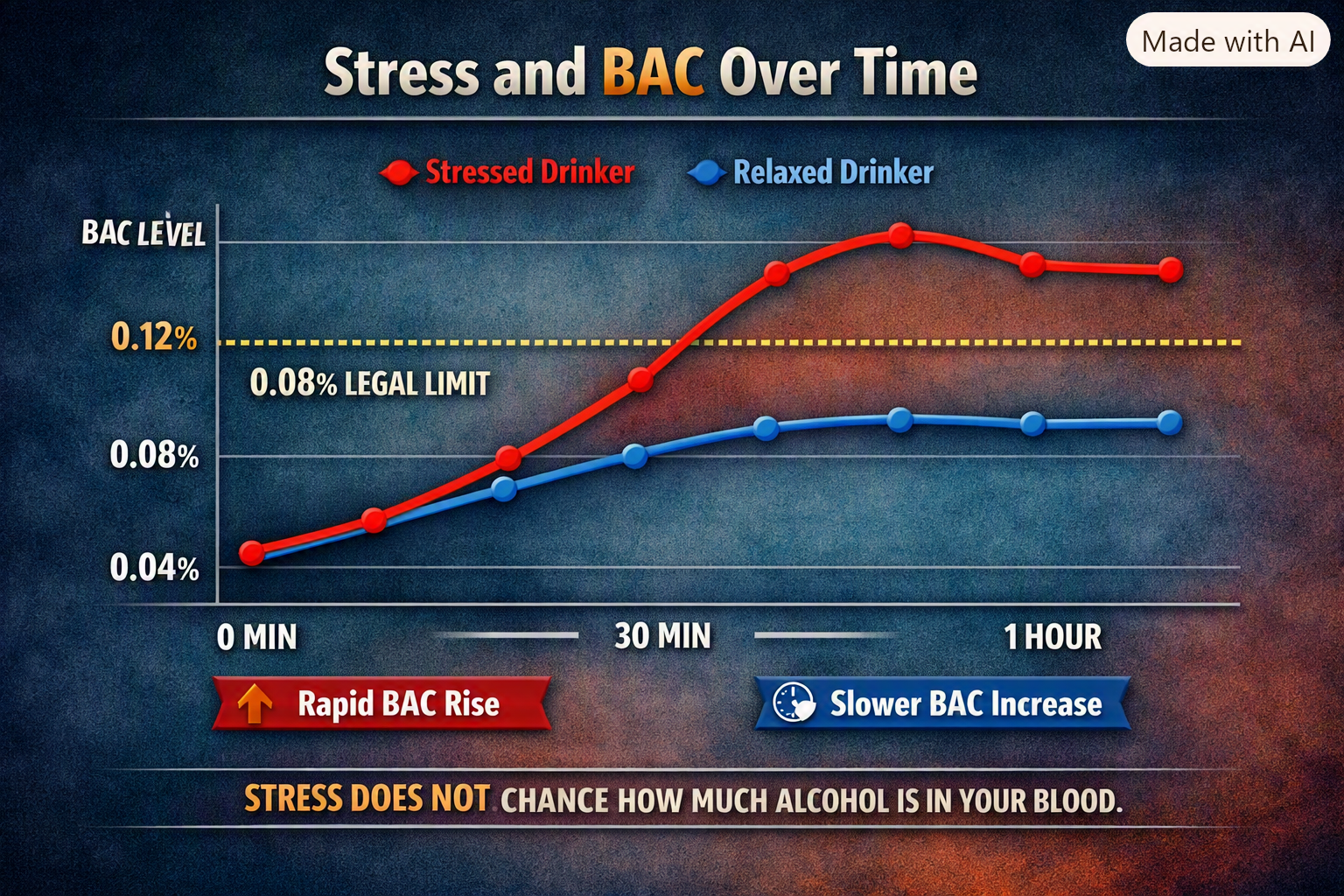
The first person has had a relaxed day and slowly drinks two beers over two hours while eating dinner. The second person has had an extremely stressful day and drinks the same two beers within thirty minutes on an empty stomach.
Although stress itself does not increase Blood Alcohol Concentration, the second person’s drinking pattern is much more likely to produce a higher BAC because alcohol is entering the bloodstream more rapidly.
Does Stress Affect Your BAC?
Many people assume that feeling stressed or anxious causes their Blood Alcohol Concentration (BAC) to rise faster. In reality, that’s not how alcohol works.
Your BAC is determined by measurable physical factors, including:
- The number of alcoholic drinks you consume
- The alcohol content of those drinks
- Your body weight and body composition
- Biological variability
- How quickly you drink
- Whether you’ve eaten before or while drinking
- The amount of time your body has had to metabolize the alcohol
Notice that stress and anxiety are not on this list. They do not directly increase the amount of alcohol in your bloodstream or raise your actual Blood Alcohol Concentration.
However, stress can still play an important role in alcohol intoxication. It can change how quickly you drink, influence your decisions, and make alcohol’s effects feel stronger. This is why two people with a similar BAC may experience intoxication differently, even when a BAC calculator estimates nearly identical Blood Alcohol Concentration levels for both.
Many people drink alcohol to unwind after work. If you’ve had an especially stressful day, you may finish drinks much faster than usual without paying attention to how much you’ve consumed.
Your BAC can increase quickly simply because you’re drinking at a faster pace—not because stress changes alcohol metabolism.
During Social Anxiety
People who feel nervous at parties or large gatherings sometimes drink rapidly to become more comfortable. Instead of sipping one drink over an hour, they may finish several drinks within a short period.
In this situation, stress indirectly contributes to a higher Blood Alcohol Concentration by influencing drinking behavior.
Emotional Situations
Events such as arguments, relationship problems, financial worries, or family conflicts can also affect how people consume alcohol.
Some individuals drink continuously without noticing how much they’ve had, making it easier for their BAC to exceed the legal limit before they realize it.
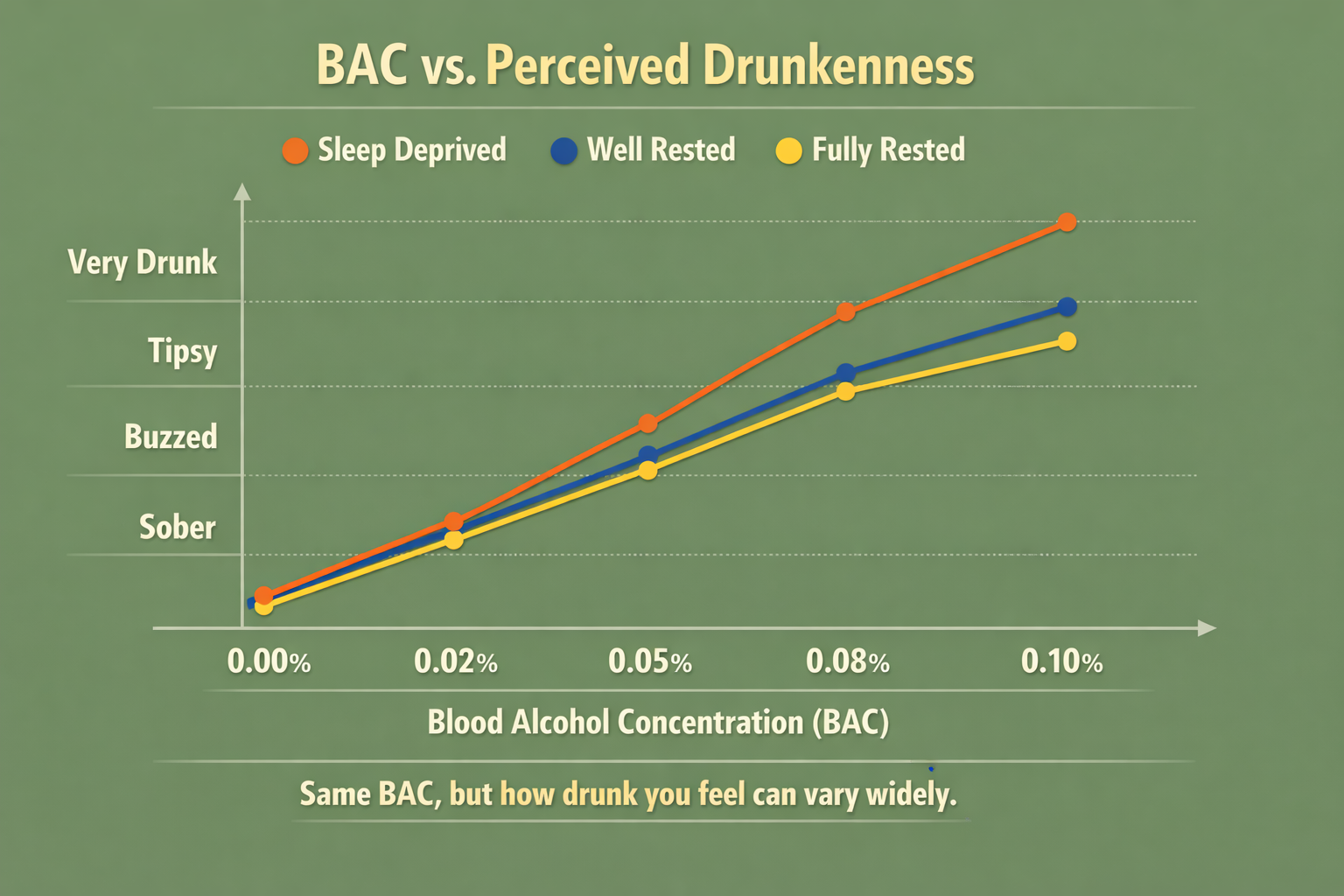
Why Two People Can Feel Different at the Same BAC
One of the most common misconceptions is that everyone experiences alcohol in exactly the same way. In reality, two people with similar Blood Alcohol Concentration levels may perceive intoxication differently.
For example – One person may feel relaxed and only mildly impaired.
Another person may feel dizzy, emotional, anxious, or mentally exhausted.
Stress, anxiety, fatigue, sleep deprivation, medications, and emotional state all influence how alcohol’s effects are perceived—even when the measured BAC is similar.
This is one reason why using a BAC calculator alone cannot predict exactly how intoxicated you will feel.
Can Stress Affect Alcohol Metabolism?
Current scientific evidence suggests that ordinary stress does not significantly change how quickly your liver processes alcohol.
Your liver metabolizes alcohol at a fairly consistent rate, regardless of whether you’re relaxed or anxious.
While severe illness or long-term medical conditions can affect alcohol metabolism, everyday work stress, exam anxiety, or emotional pressure do not directly raise your Blood Alcohol Concentration.
Can a BAC Calculator Account for Stress?
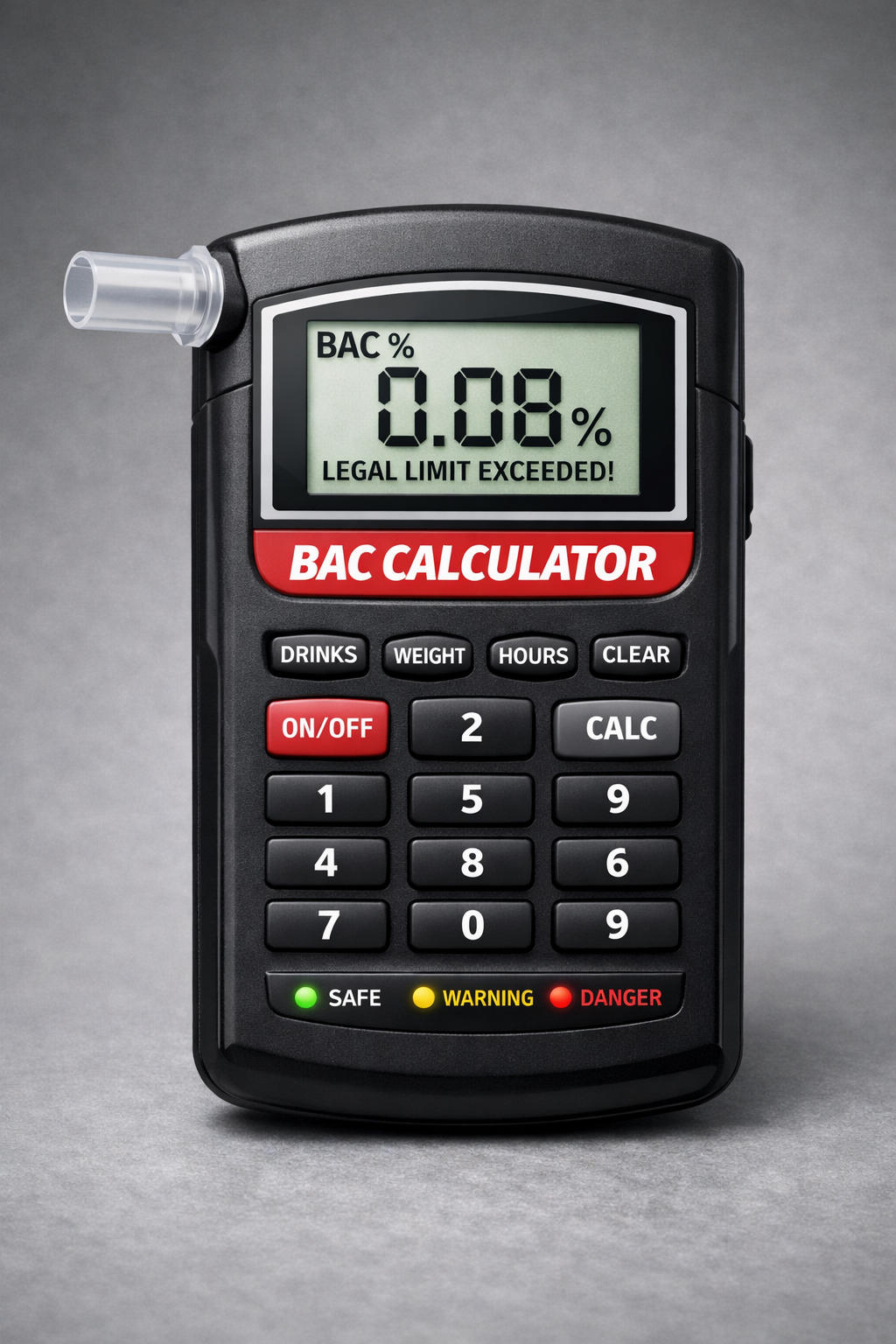
A BAC calculator estimates your Blood Alcohol Concentration using information such as:
- Number of drinks
- Alcohol percentage
- Body weight
- Biological sex
- Time spent drinking
It does not measure emotional stress, anxiety, fatigue, medications, or sleep quality because these factors do not directly determine BAC.
It’s also important to remember that BAC calculators only provide estimates. They cannot determine your exact Blood Alcohol Concentration because every person’s metabolism, health, food intake, and alcohol absorption rate are different.
Practical Tips for Drinking More Safely During Stress
If you choose to drink while feeling stressed or anxious, consider these precautions:
- Eat a proper meal before drinking.
- Pace yourself by drinking slowly.
- Alternate alcoholic drinks with water.
- Avoid using alcohol as your primary stress-management strategy.
Remember that stress may make alcohol feel stronger, even if your BAC has not increased.
Use BAC calculators only as rough estimates—not as proof that you’re safe to drive.
Wrapping Up
Stress and anxiety do not directly increase your BAC, but they can strongly influence how intoxicated you feel and how you behave while drinking.
Stress often leads people to drink faster, consume more alcohol, or pay less attention to their intake, which can indirectly result in a higher BAC.
At the same time, emotional stress can make alcohol’s impairing effects feel more noticeable, even when your Blood Alcohol Concentration remains unchanged.
The safest approach is to drink responsibly, understand your limits, and recognize that how you feel isn’t always the same as what your BAC alone can explain.
Sweating Out the Drinks – The Exercise Sobriety Myth
Most people have heard at least one “quick sober-up” trick. Go for a run. Hit the gym. Take a brisk walk. Sweat it out.
The idea sounds reasonable. Exercise raises your heart rate, increases breathing, and makes you sweat—all signs that your body is working harder. It’s easy to assume that this extra activity burns off alcohol the same way it burns calories.
But alcohol doesn’t work like fat or sugar. In fact, one of the biggest dangers of exercising after drinking isn’t that it fails to lower your Blood Alcohol Concentration (BAC). The real problem is that it can make you feel more sober while your brain and body remain just as impaired.
Understanding why this happens is more important than simply knowing that exercise doesn’t reduce BAC. It helps explain why many people mistakenly believe they’re safe to drive even when they aren’t.
Why Exercise Feels Like It’s Working
People rarely believe exercise lowers BAC because they’ve measured it. They believe it because of how they feel afterward.
A short run, an intense cycling session, or even climbing several flights of stairs causes the body to release adrenaline and other stress hormones. Blood flow increases, your heart pumps faster, and your body becomes more alert.
The result is a temporary sensation of waking up. You may feel less sleepy, more focused, more energetic, more confident, more capable of making decisions.
None of these feelings indicates that alcohol has left your bloodstream. Instead, they’ve simply changed your perception of intoxication.
This difference between feeling sober and being sober is one of the most misunderstood aspects of drinking.
Alcohol Doesn’t Leave Through Your Muscles
Many people subconsciously compare alcohol to calories. Since exercise burns calories, they assume it also burns alcohol. Your body treats these two substances very differently. Calories stored as carbohydrates or fat can be used directly by muscles during exercise.
Alcohol cannot. Instead, alcohol is treated as a toxin. Before your body can get rid of it, it must first be chemically broken down by the liver.
Nearly all of the alcohol you drink follows the same path- Alcohol is absorbed into the bloodstream. It circulates throughout the body, including the brain. The liver converts alcohol into acetaldehyde.
Acetaldehyde is further broken down into acetate. The remaining compounds are eventually converted into water and carbon dioxide. This process depends almost entirely on liver enzymes—not on how physically active you are.
Whether you’re lying on the couch watching television or finishing a 10-kilometer run, your liver continues processing alcohol at roughly the same pace.
Why Sweating Doesn’t “Sweat Out” Alcohol
One reason the myth survives is because people associate sweating with detoxification. It’s true that tiny amounts of alcohol leave the body through sweat.
That’s why certain wearable alcohol monitors can detect alcohol through perspiration. However, the amount is extremely small.
Around 90–98% of alcohol is metabolized by the liver, while only a tiny fraction leaves through sweat, breath, and urine. Even after an hour of intense exercise, the difference in your BAC is practically insignificant.
What exercise removes is water. This can actually leave you more dehydrated, making headaches, dizziness, and fatigue feel worse later.
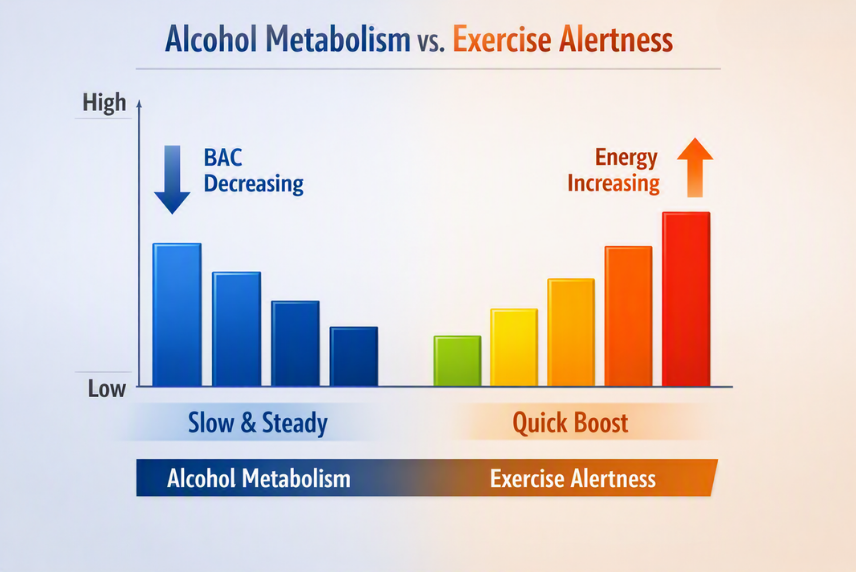
The Hidden Risk: Exercise Can Increase Confidence
One of the less-discussed effects of exercise after drinking is confidence. After physical activity, people often feel mentally sharper, physically stronger, more coordinated, more awake. These sensations can create a false belief that they’re ready to drive.
Unfortunately, alcohol continues affecting the parts of the brain responsible for reaction time, judgment, impulse control, visual tracking, co-ordination.
These functions recover only as alcohol is metabolized. Feeling capable doesn’t mean those abilities have returned. This is why relying on “how sober you feel” is one of the least reliable ways to judge fitness to drive.
Can Exercise Ever Change a Breathalyzer Reading?
Some people wonder whether working out immediately before taking a breathalyzer could produce a lower reading. In normal circumstances, no.
Breath alcohol measurements reflect the concentration of alcohol in your bloodstream through your lungs. Since exercise doesn’t significantly reduce the amount of alcohol circulating in the blood, it won’t meaningfully lower your BAC.
If anything, strenuous activity can temporarily alter breathing patterns, but it doesn’t eliminate alcohol from the body or make a failed test become a passing one.
Why the Liver Has a Speed Limit
Many biological processes speed up when your body works harder. Heart rate increases. Breathing accelerates. Calories burn faster.
Alcohol metabolism is different. The liver contains a limited amount of enzymes—primarily alcohol dehydrogenase (ADH) and aldehyde dehydrogenase (ALDH)—that process alcohol step-by-step.
Once those enzymes are working at capacity, adding more physical activity doesn’t make them work significantly faster.
It’s similar to cars passing through a toll booth. If only a certain number of lanes are open, making the cars drive faster toward the booth doesn’t increase how many pass through each minute. The bottleneck remains the liver.
So What Actually Lowers BAC?
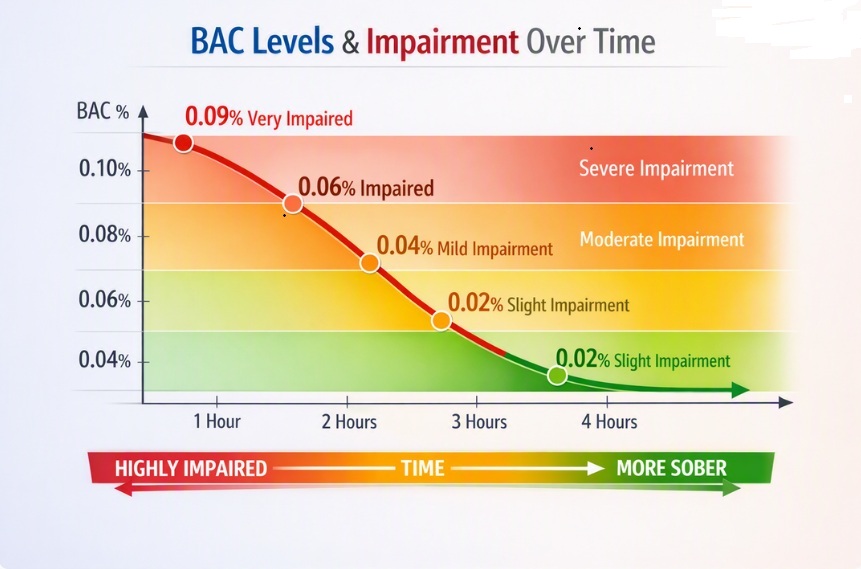
Despite countless internet tips, only one thing consistently lowers Blood Alcohol Concentration – Time. On average, BAC falls by about 0.015% per hour, although this varies between individuals. If you want to measure your BAC you can measure it here.
Several factors influence how high your BAC becomes, including:
- body weight
- biological variability
- number of drinks
- alcohol strength (ABV)
- drinking speed
- food consumed before drinking
- liver health
Once alcohol has entered your bloodstream, however, there is no proven way to dramatically accelerate its removal. Not exercise. Not coffee. Not cold showers. Not energy drinks. Not fresh air.
A Better Way to Estimate Impairment
Because alertness can be misleading, estimating BAC based on objective information is far more reliable than relying on how you feel.
A BAC calculator uses factors such as:
- number of drinks
- drink size
- alcohol percentage (ABV)
- body weight
- biological sex
- time spent drinking
While no calculator can perfectly predict an individual’s BAC, it provides a much more realistic estimate than personal judgment alone.
Pairing that estimate with a BAC chart also helps illustrate how impairment increases as BAC rises—from subtle reductions in reaction time at lower levels to significant losses of coordination and judgment at higher concentrations.
Why High Alcohol Tolerance Doesn’t Help
People with a high alcohol tolerance often appear less intoxicated than occasional drinkers. They may speak clearly. Walk normally. Carry on conversations. But tolerance changes outward behaviour—not the amount of alcohol circulating in the bloodstream.
Two people with identical BAC levels can appear very different while experiencing similar reductions in driving ability. That’s why “I feel fine” is never a reliable indicator of safety.
Exercise is one of the healthiest things you can do for your body, but it isn’t a shortcut to sobriety. A workout may leave you feeling more alert, more energetic, and more confident, yet none of those sensations mean your Blood Alcohol Concentration has fallen.
Your liver—not your muscles—is responsible for removing alcohol, and it works at a pace that physical activity cannot meaningfully speed up.
Wrapping Up
If you’ve been drinking, don’t judge your ability to drive by how awake you feel after a run or a gym session.
Instead, give your body the time it needs to metabolize the alcohol, use a BAC calculator as a rough educational estimate, understand what a BAC chart tells you about impairment, and choose the safer option whenever there’s uncertainty.
The safest way to lower your BAC has never been exercise—it has always been time.
Alcohol and Your Heart Rate: What’s Really Happening
It’s Saturday night. You meet a few friends for dinner. You have one drink while waiting for your food. Then another during dinner. You don’t feel particularly drunk. You’re walking or talking normally. But then you notice something unexpected.
Your heart feels like it’s beating faster than usual. Maybe you can actually feel it pounding in your chest. You wonder -“Is this normal?”The answer is—yes, it can be.
Long before alcohol causes obvious signs like slurred speech or poor balance, it has already started affecting your cardiovascular system. One of the earliest changes many people experience is an increase in heart rate.
Understanding what happens inside your body as your BAC rises can help you make safer decisions—not just about driving, but also about exercising, working, or even recognizing when your body is telling you something isn’t right.
Why Does Alcohol Make Your Heart Beat Faster?
Your heart doesn’t simply react to alcohol itself. Instead, alcohol changes several body systems at the same time. Shortly after drinking, alcohol relaxes and widens your blood vessels—a process called vasodilation. Normally, your blood vessels help maintain blood pressure. When they suddenly widen, blood pressure can begin to fall.
Your body notices this immediately. To compensate, your nervous system tells your heart -“Pump faster.” As a result, your heart rate increases. At the same time, alcohol also stimulates stress hormones like adrenaline. These hormones further increase your heartbeat. So, although many people describe alcohol as a “relaxant,” your heart may actually be working harder.
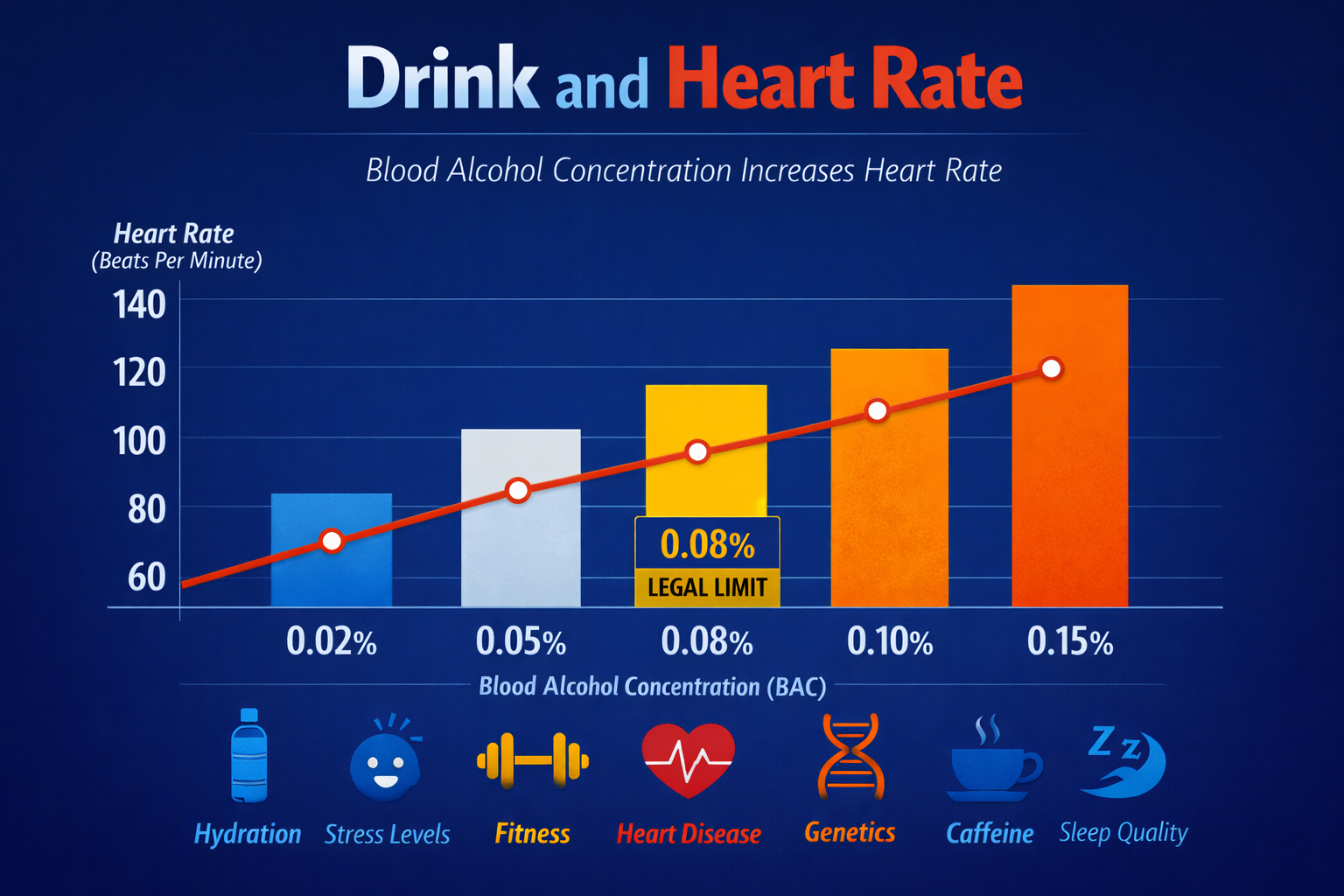
What Happens to Your Heart as BAC Increases?
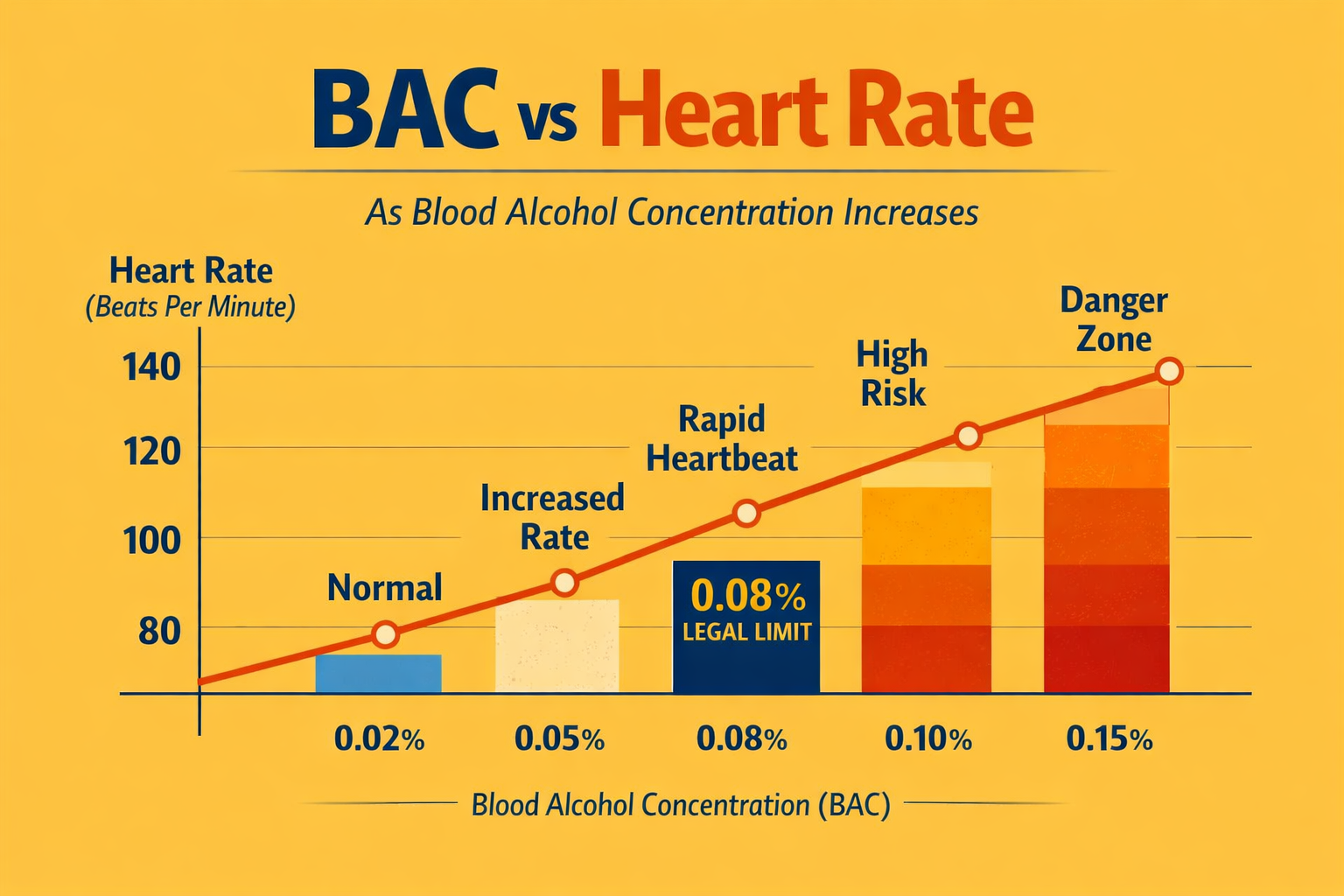
Think of BAC as climbing a staircase. Each step affects your body a little more. At around 0.02% BAC, you may feel relaxed. Your heart rate may rise only slightly. Most people don’t even notice it. By 0.05% BAC, your heartbeat may become noticeably faster.
Some people begin feeling warm because widened blood vessels allow more heat to escape through the skin. Many mistakenly think alcohol is warming them up, when it’s actually causing heat loss. At 0.08% BAC—the legal driving limit in many regions—your reaction time, concentration, judgment, and coordination have already declined.
Meanwhile, your heart is often beating significantly faster than normal. As BAC continues climbing beyond 0.10%, cardiovascular strain becomes much greater. Blood pressure fluctuates. The heart works harder. Electrical signals inside the heart become less stable. This is when irregular heartbeats become more likely.
At very high BAC levels, alcohol starts slowing many of the body’s critical systems. Breathing slows. Blood pressure drops.Heart rhythm becomes increasingly unstable. Medical emergencies become much more likely.
Numbers alone can be difficult to picture. That’s why doctors, driving instructors, and alcohol education programs often use BAC charts.
Instead of memorizing percentages, a BAC chart visually shows how increasing alcohol levels affect the body.
A good BAC chart typically illustrates:
- Judgment
- Reaction time
- Vision
- Coordination
- Heart rate
- Driving ability
When viewed together, these changes make it much easier to understand why someone who “doesn’t feel drunk” may already be impaired.
Why Do Some People Feel Their Heart Racing?
Have you ever been lying in bed after a night out and suddenly noticed your heart pounding? Many people experience exactly this.
Alcohol can trigger:
- Rapid heartbeat
- Heart palpitations
- Fluttering sensations
- Skipped beats
For some people, this lasts only a few minutes. For others, it may continue for several hours. This doesn’t always mean something serious is happening. But it should never be ignored—especially if it’s accompanied by chest pain, dizziness, or shortness of breath.
Holiday Heart Syndrome – When One Night of Drinking Affects the Heart
Doctors have even given this phenomenon a name – Holiday Heart Syndrome. Imagine someone who rarely drinks. Then comes a wedding. Or New Year’s Eve. Or a holiday celebration. They consume much more alcohol than usual. The next morning, their heart suddenly feels like it’s racing or fluttering.
They may even end up in the emergency department. This temporary irregular heartbeat is often linked to binge drinking. Fortunately, many people recover once the alcohol leaves their system. However, repeated episodes can increase the risk of future heart problems.
Does Every Drink Raise Heart Rate?
Everyone responds differently. Some people notice almost no change after one drink. Others feel their heartbeat increase within 20 or 30 minutes. Several factors influence your body’s response:
This is one reason alcohol affects people so differently.
Can Alcohol Actually Slow the Heart?
Surprisingly, yes. Most people think alcohol always speeds up the heart. That’s only true during the earlier stages of drinking. As BAC reaches dangerously high levels, alcohol begins depressing the central nervous system. Instead of stimulating the heart, it starts slowing vital body functions.
Heart rate may decrease. Breathing becomes slower. Blood pressure falls. Consciousness may be lost. These are signs of severe alcohol poisoning and require immediate medical attention.
Many drivers focus only on one number – The legal BAC limit. But here’s the problem. Your body doesn’t wait until you reach the legal limit before alcohol starts affecting you.
Reaction time may already be slower. Judgment may already be impaired. Your heart may already be working harder. Your confidence often increases even while your actual driving ability decreases. That’s one reason many safety experts say – Being below the legal BAC limit does not necessarily mean you’re safe to drive.
Can a BAC Calculator Help?
A BAC calculator estimates your blood alcohol level using information like:
- Weight
- Biological sex
- Number of drinks
- Drinking duration
These calculators can be useful educational tools. They help demonstrate how quickly BAC can rise. However, they cannot measure your actual BAC.
No calculator can perfectly account for metabolism, medications, hydration, food, or individual biology. For that reason, BAC calculators should never be used to decide whether it’s safe to drive.
Wrapping Up
Alcohol affects much more than your mood. Even before you feel obviously intoxicated, your heart, brain, and nervous system may already be responding to rising BAC levels. A faster heartbeat can be one of the earliest physical signs that alcohol is affecting your body.
Understanding BAC charts, BAC calculators, and the legal BAC limit can help you appreciate how alcohol influences your body—but no chart or calculator can replace good judgment.If you’ve been drinking, the safest choice is always to avoid driving and give your body enough time to recover. That’s because the effects of alcohol begin long before many people realize they’re impaired.
How Alcohol Affects Decision-Making Before You Feel Drunk
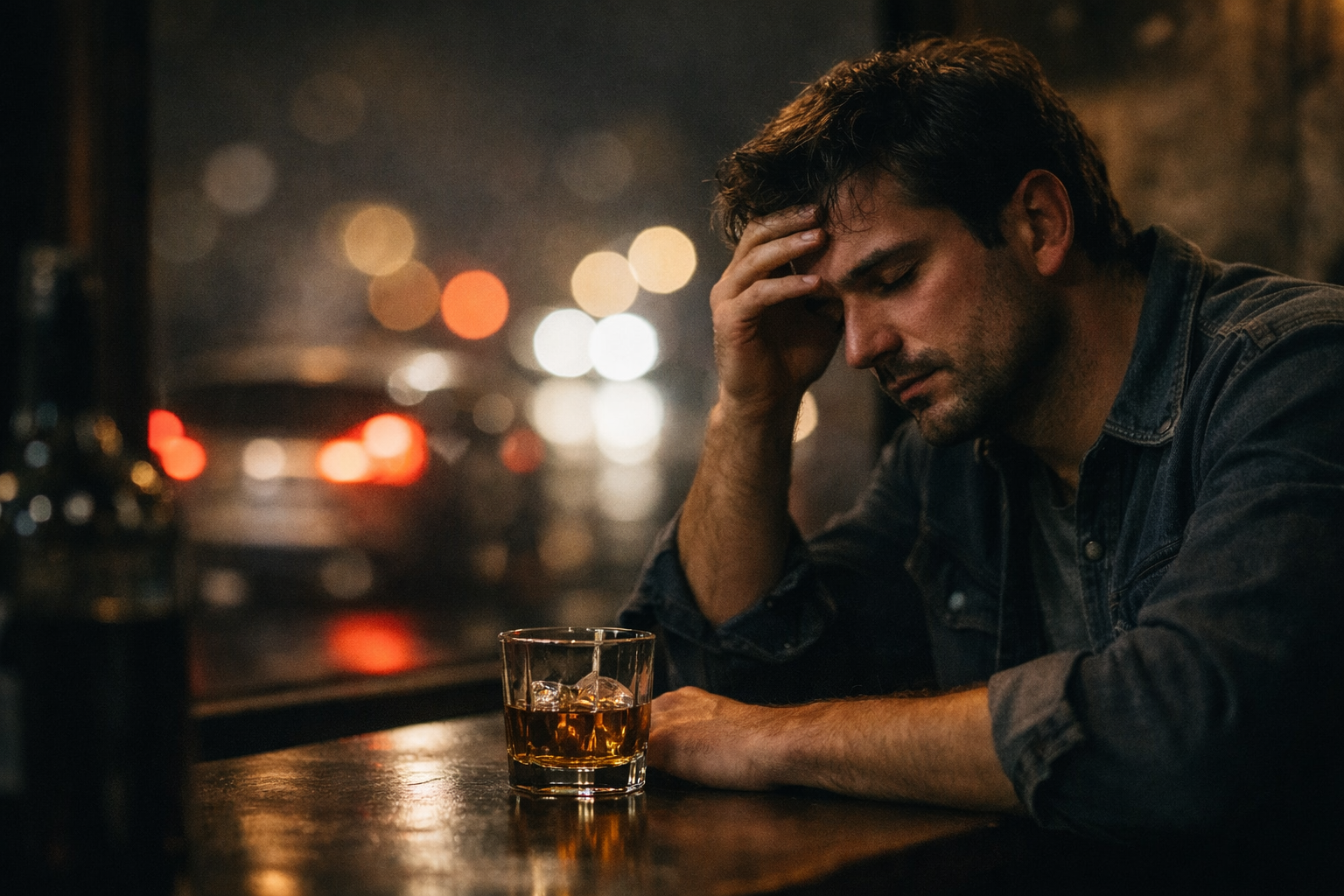
Imagine this. You’ve just met a few friends after work. Someone orders the first round of drinks, and you join in. After one or two drinks, you feel completely normal. You’re talking, laughing, checking your phone, and you don’t feel drunk at all.
So, when someone suggests driving to another restaurant across town, you think, “I’m fine. I barely feel anything.” The problem is that your brain doesn’t always wait for you to feel drunk before alcohol begins affecting it.
One of the biggest misconceptions about drinking is that intoxication starts when you feel dizzy or struggle to walk. In reality, alcohol begins interfering with your judgment, reaction time, and decision-making much earlier—even while you still feel perfectly capable.
This is why many people make poor choices long before reaching the legal BAC limit or feeling obviously intoxicated. Understanding how Blood Alcohol Concentration (BAC) affects the brain can help you make safer decisions and better interpret BAC charts and BAC calculators.
Alcohol Starts Affecting the Brain Almost Immediately
After your first drink, alcohol enters your bloodstream and begins traveling to your brain. As your BAC starts to rise, alcohol slows communication between brain cells.
The first part of the brain affected isn’t the one responsible for balance or speech. Instead, alcohol initially impacts the prefrontal cortex—the area responsible for:
- Judgment
- Decision-making
- Self-control
- Planning
- Risk assessment
Ironically, these are the very abilities you rely on to decide whether you’re safe to continue drinking or drive home.
Why You May Not Feel Drunk
Many people assume intoxication and impairment happen at the same time. They don’t. Your brain starts losing efficiency before obvious physical symptoms appear.
You may still:
- Walk normally.
- Hold a conversation.
- Remember names.
- Feel completely alert.
But behind the scenes, alcohol is already reducing your ability to evaluate risk accurately. This explains why someone can confidently say, “I’m perfectly fine to drive,” while already making poorer decisions than they realize.
Consider two coworkers attending a company dinner. Both have a couple of drinks over the course of an hour. Neither appears intoxicated. One decides to call a taxi. The other insists they’re perfectly capable of driving because they “don’t even feel buzzed.”
Objectively, both may have similar BAC levels. The difference isn’t alcohol itself—it’s judgment. Alcohol often reduces the ability to recognize its own effects.
Confidence Increases While Judgment Declines
One of alcohol’s most deceptive effects is that it often increases confidence while reducing sound judgment.
As BAC rises, people frequently become:
- More optimistic.
- Less cautious.
- More willing to take risks.
- More likely to underestimate danger.
This creates a dangerous combination. You may genuinely believe you’re making good decisions even as your brain becomes less capable of doing so.
Decision-Making Changes Before Coordination
People often watch for obvious signs such as:
- Slurred speech
- Poor balance
- Difficulty walking
But these usually appear later. Long before that happens, alcohol can already affect:
- Reaction time
- Attention span
- Concentration
- Divided attention
- Hazard recognition
- Impulse control
For drivers, these changes are especially important because safe driving depends more on decision-making than simply steering a vehicle.
The Role of BAC
Your Blood Alcohol Concentration (BAC) measures how much alcohol is present in your bloodstream. As BAC increases, the likelihood of impaired judgment also rises. However, impairment doesn’t suddenly begin at one specific number.
Even relatively low BAC levels may reduce:
- Mental processing speed.
- Visual tracking.
- Decision-making.
- Multitasking ability.
This is why experts emphasize that impairment exists on a spectrum rather than beginning only at the legal threshold.
Can BAC Charts Predict Decision-Making?
Many people search for BAC charts after drinking. These charts estimate BAC based on:
While BAC charts are useful educational tools, they cannot predict exactly how alcohol will affect your judgment. Two people with identical BAC values may behave very differently depending on:
- Sleep quality and deviation
- Fatigue
- Stress
- Medications
- Food intake
- Alcohol tolerance
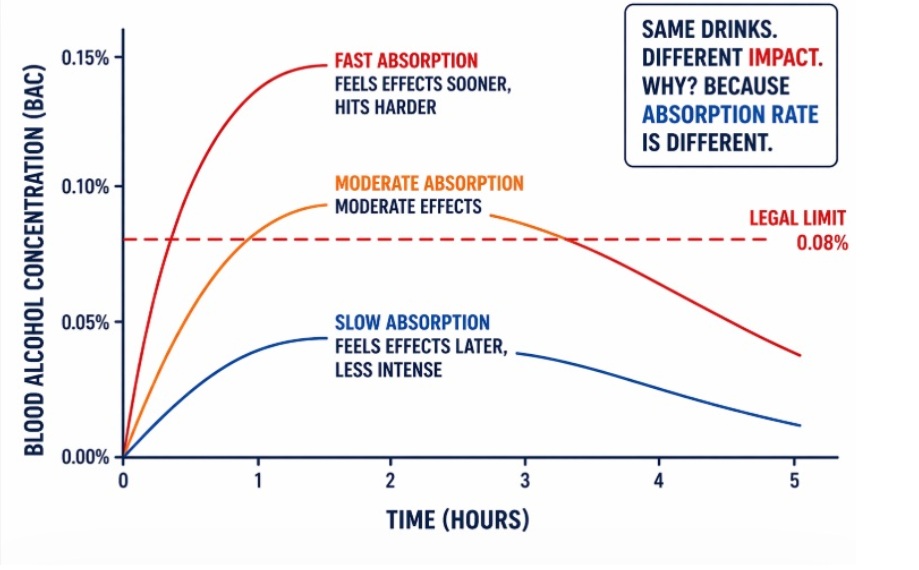
A BAC chart estimates alcohol concentration—not decision-making ability. You may have same drinks however different impacts because of the absorption rate.
What About BAC Calculators?
Online BAC calculators use similar information to estimate Blood Alcohol Concentration. They’re helpful for understanding how alcohol generally affects the body.
However, they cannot determine:
- Whether you’re thinking clearly.
- Whether your reaction time is impaired.
- Whether you’re safe to drive.
BAC calculators estimate numbers—not your ability to make good decisions. Many people rely on how they feel. Unfortunately, feelings aren’t reliable indicators of impairment.
Alcohol changes the very part of the brain responsible for evaluating your own condition. In other words, the more alcohol affects your judgment, the less likely you are to recognize it. That’s why relying on personal confidence can be misleading.
Legal BAC Limits Aren’t Safety Guarantees
Every country sets legal BAC limits to reduce impaired driving. However, reaching or staying below the legal limit doesn’t automatically mean you’re unaffected by alcohol.
Research has consistently shown that reaction time and judgment can begin declining before many people feel intoxicated.
Legal BAC limits represent legal thresholds—not guarantees of safe performance. The safest decision is always to avoid driving after drinking.
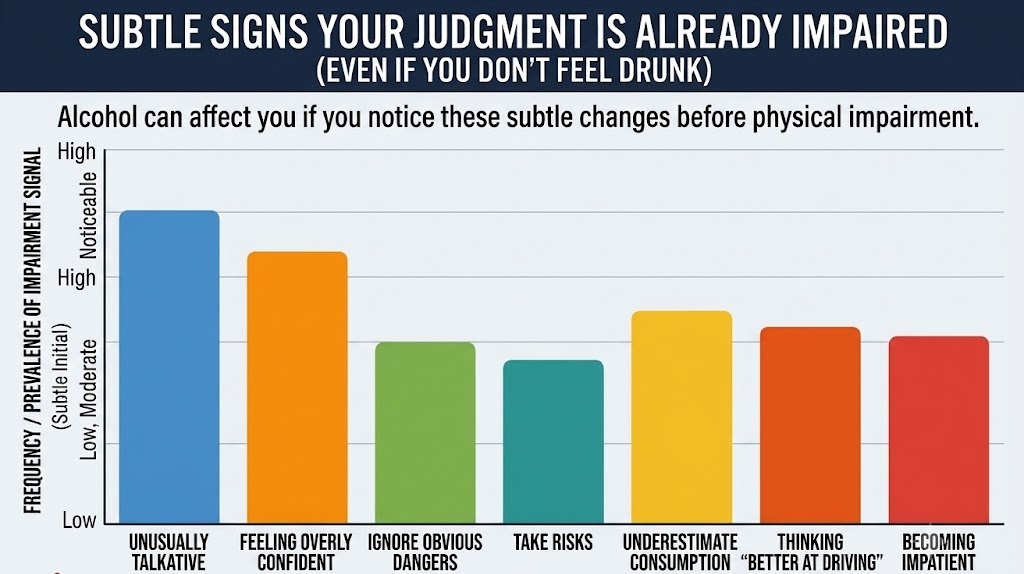
Signs Your Judgment May Already Be Impaired
Even if you don’t feel drunk, alcohol may already be affecting you if you notice:
- Becoming unusually talkative
- Feeling overly confident
- Taking risks you normally wouldn’t
- Ignoring obvious dangers
- Becoming impatient
- Underestimating how much you’ve consumed
- Thinking you’re “better at driving after a drink”
These subtle changes often appear before noticeable physical impairment.
Tips to Make Better Decisions
If you choose to drink:
- Eat before drinking.
- Pace your drinks.
- Alternate alcohol with water.
- Decide on transportation before the first drink.
- Don’t rely solely on how you feel.
- Use BAC charts and BAC calculators as educational guides—not driving tests.
- If you’re uncertain, don’t drive.
Planning ahead removes the need to make important decisions after alcohol has already affected your judgment.
Wrapping Up
One of alcohol’s greatest dangers is that it changes how you think before it changes how you feel.
Long before you experience slurred speech or poor balance, your BAC may already be affecting your judgment, reaction time, and ability to assess risk. That’s why relying on confidence or “feeling okay” isn’t a dependable way to judge impairment.
Whether you’re looking at BAC charts, using BAC calculators, or trying to stay within legal BAC limits, remember that alcohol’s effects begin well before obvious intoxication.
The smartest decision is the one you make before your first drink: plan ahead, know your limits, and never assume that feeling fine means you’re thinking clearly.
The Truth About “Sobering Up” Hacks – What Happens to Your Body Every Hour After Your Last Drink
It was around midnight when a friend looked at the clock and realized something. The party was ending. He had been drinking with friends for a few hours, and now the first thought that came into his mind was -“Am I okay to drive home?”
One of his friends immediately said -“Don’t worry. Drink some coffee. Take a cold shower. You’ll be fine.” It sounds familiar because many people have heard these so-called tricks. Some people believe coffee can instantly remove alcohol.
Others believe eating a heavy meal, exercising, or sleeping for a short time can make alcohol disappear faster. But the truth is very different.
These “sobering up” hacks may make you feel more awake, but they do not actually remove alcohol from your body.
Your body needs time. And the only thing that truly lowers your BAC (Blood Alcohol Concentration) is your liver processing the alcohol naturally.
Understanding What Happens After Your Last Drink
When you finish your last drink, many people assume the alcohol immediately starts disappearing. But that is not exactly how it works.
After drinking, alcohol enters your bloodstream and affects your brain and nervous system. Your BAC can continue changing for a while depending on:
- How much alcohol you consumed
- How quickly you drank
- Whether you ate food
- Your body size and weight
- Your metabolism
This is why someone may feel completely fine but still have alcohol affecting their body. A person’s feeling does not always match their actual BAC level.
The First Hour After Your Last Drink
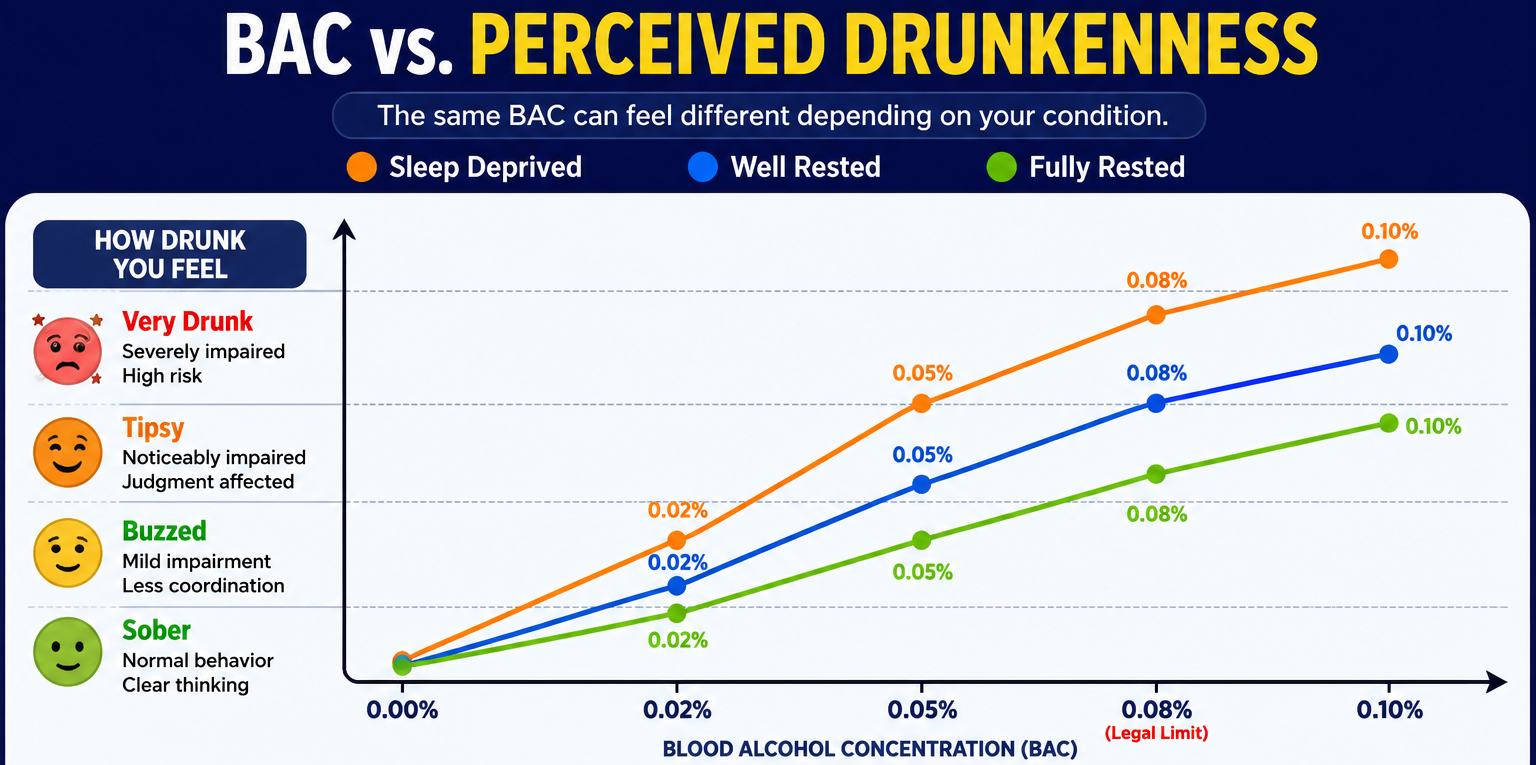
Imagine a person. She is at a dinner with friends. She finishes her last drink and thinks – “I feel normal now. I should be okay.”
But inside her body, the process is still happening. During the first hour:
Many people make the mistake of thinking: “I stopped drinking, so I’m getting sober now.” But stopping alcohol consumption and becoming sober are two different things.
Why You May Feel Better But Still Have Alcohol in Your System
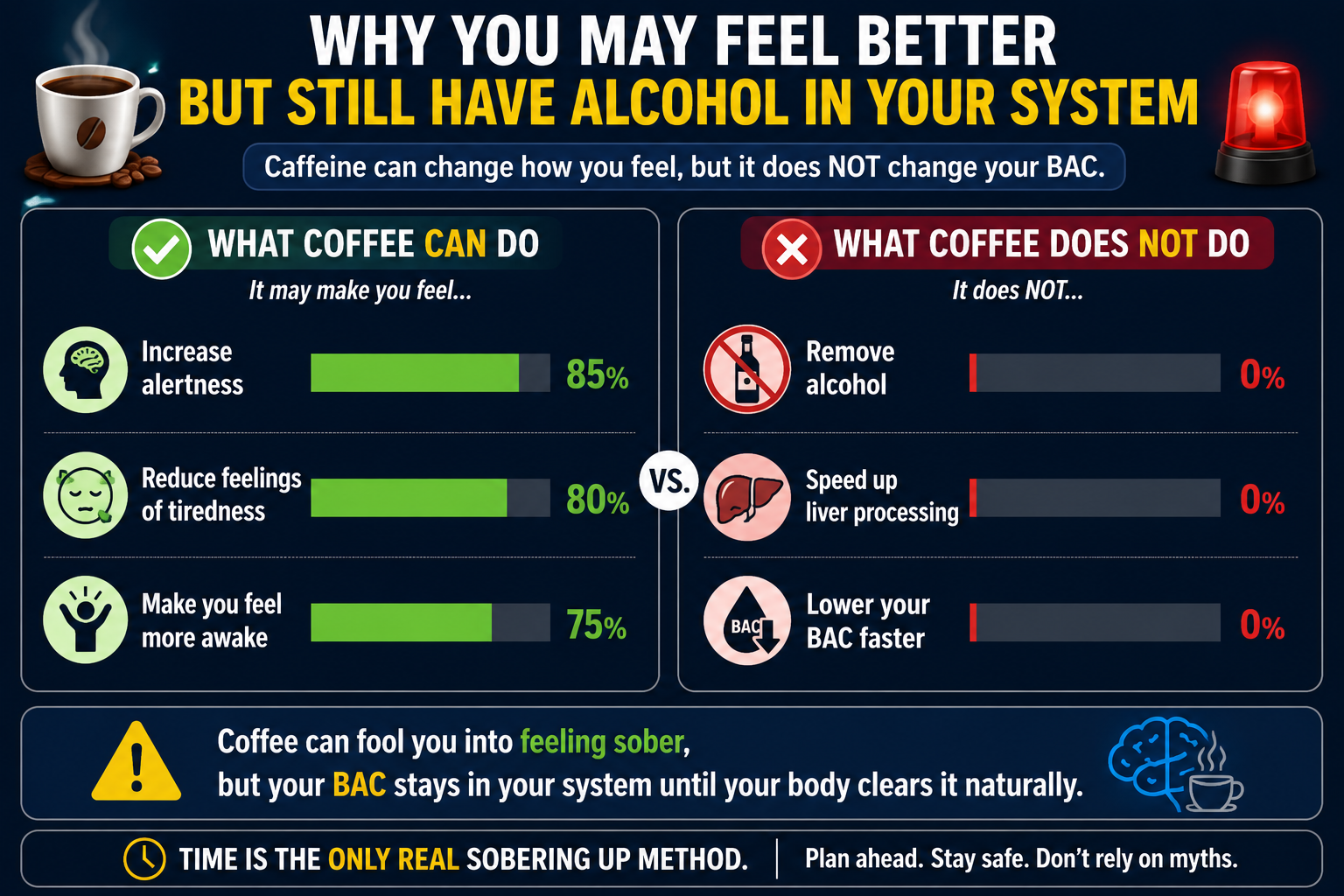
A couple of hours later, the person feels different. He is less tired. He drinks coffee. Suddenly, he feels more alert. This creates the illusion that he is sober. But caffeine does not lower BAC.
Coffee can:
- Increase alertness
- Reduce feelings of tiredness
- Make you feel more awake
However, it does not:
- Remove alcohol
- Speed up liver processing
- Lower your BAC faster
This is why using coffee as a “sobering up method” can be misleading.
Hour 3 and Beyond – Your Liver Is Doing the Real Work
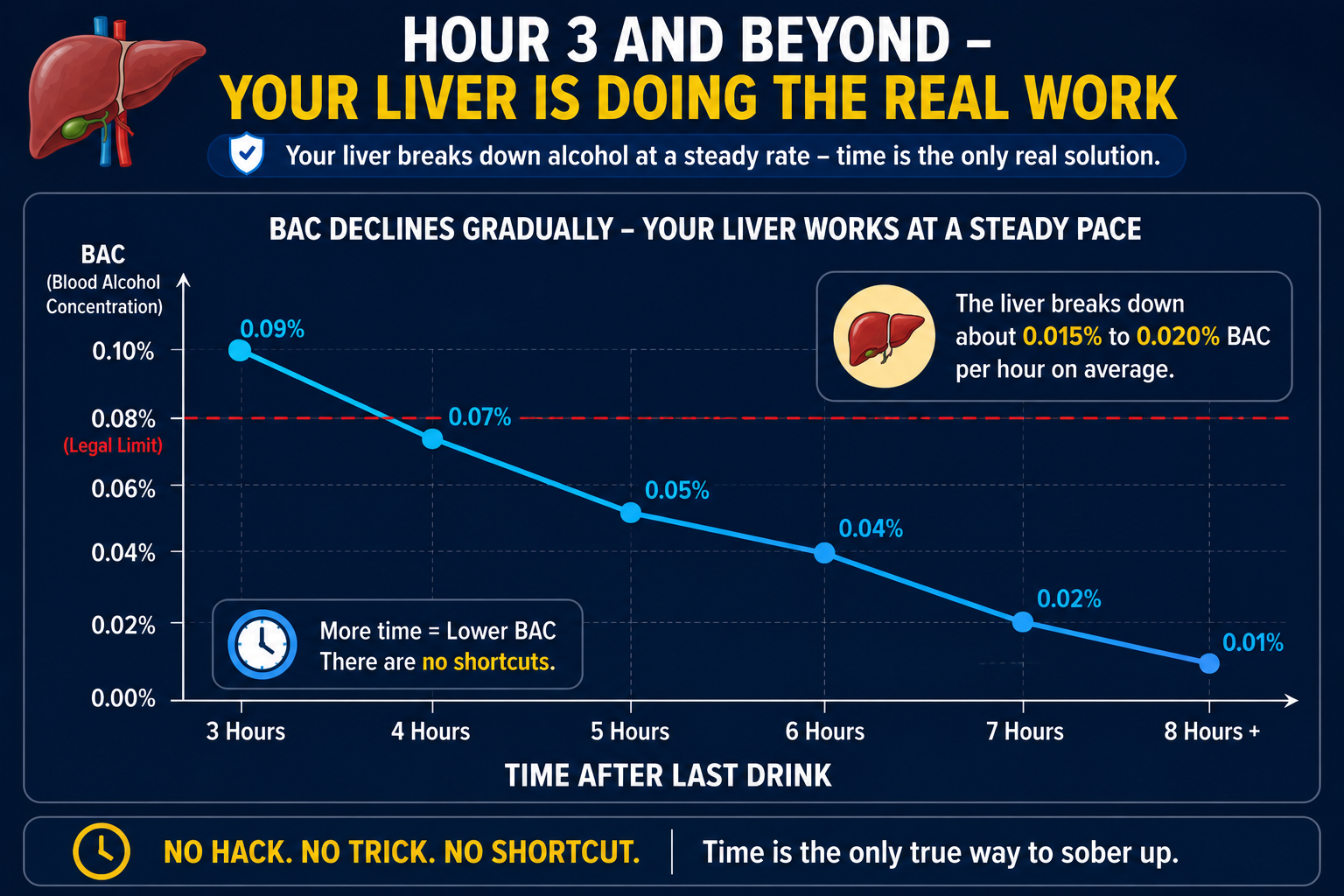
Your liver is the main system responsible for breaking down aIt processes alcohol at a fairly steady rate.
You cannot force it to work faster by using tricks. Things people commonly try include:
- Drinking coffee
- Taking cold showers
- Eating greasy food
- Drinking lots of water
- Exercising
These may change how you feel, but your BAC still depends mainly on time.
A Common Myth – Cold Showers Make You Sober
Imagine another person. After drinking at a party, he takes a freezing cold shower because someone told him -“This will wake you up.”
And it works. He feels refreshed. His eyes are open. He feels more energetic. But here is the problem.
Feeling refreshed does not mean his BAC has dropped. A cold shower changes your body sensation. It does not change how quickly alcohol leaves your bloodstream.
The BAC Calculator Problem
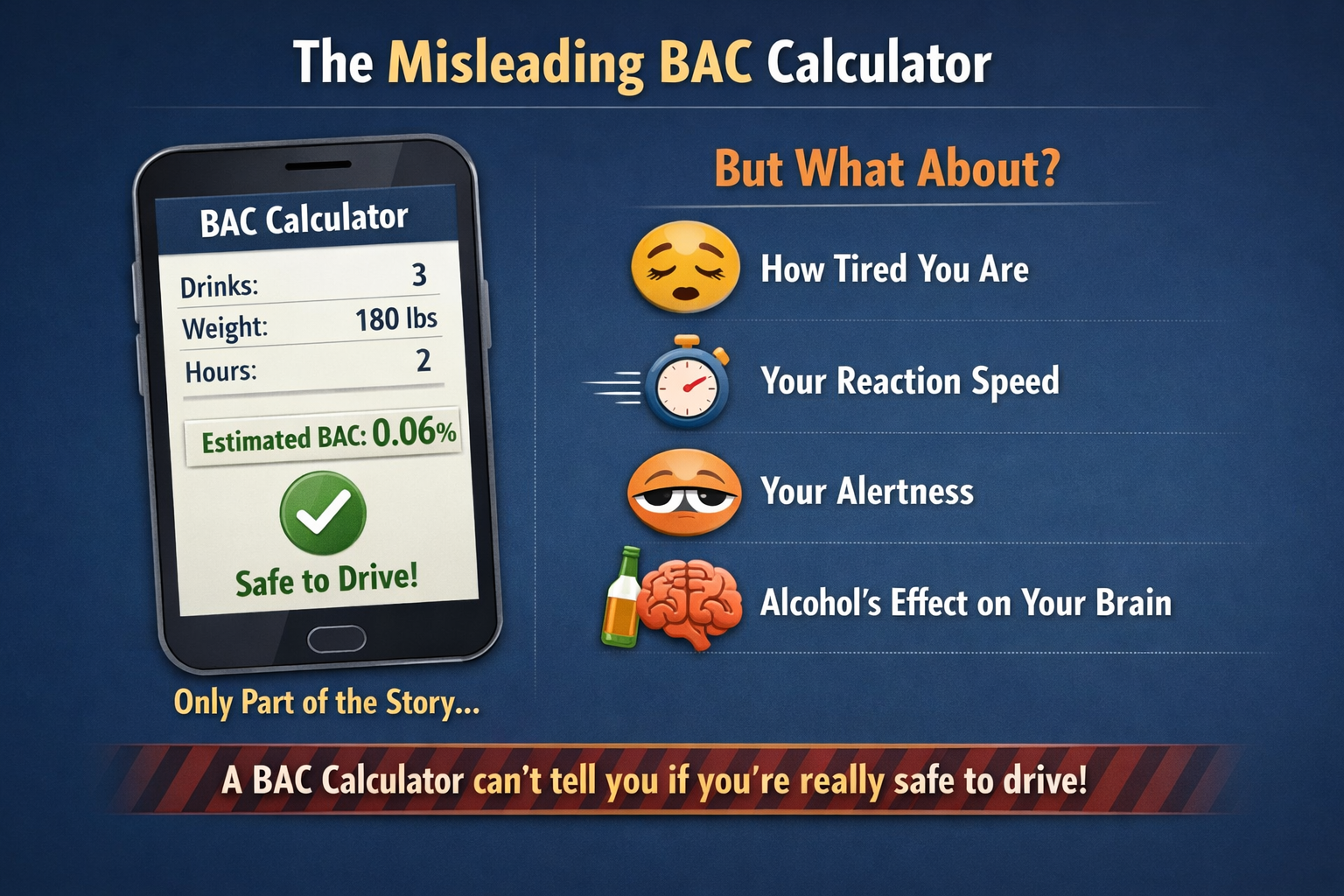
Many people use a BAC calculator to estimate whether they are safe after drinking. A BAC calculator can be useful because it gives an estimate based on information like:
- Number of drinks
- Alcohol percentage
- Body weight
- Time since drinking
However, a BAC calculator has limitations.
It cannot fully know:
- Your exact metabolism
- Your health condition
- How tired you are
- Your actual reaction ability
A BAC calculator is only an estimate. It should not be treated as a guarantee that someone is safe to drive.
Understanding the Legal Limit
Many people focus only on the legal limit. For example, in many places, the legal limit for driving is around 0.08% BAC, although the exact rule depends on location.
But there is something important to understand. Being below the legal limit does not automatically mean someone is performing perfectly.
Alcohol can affect:
- Focus
- Judgment
- Coordination
- Reaction time
Even small amounts can affect some people differently.
What Happens Hour by Hour – Simple Chart
| Time After Last Drink |
What Happens Inside Your Body |
| First hour |
Alcohol continues entering the bloodstream and BAC may still rise |
| 2 hours |
You may feel more normal, but alcohol effects can remain |
| 3–4 hours |
The liver continues processing alcohol slowly |
| Several hours later |
BAC gradually decreases as your body removes alcohol |
| Next day |
Effects may still remain depending on amount consumed |
Why Sleeping Does Not Instantly Fix Everything
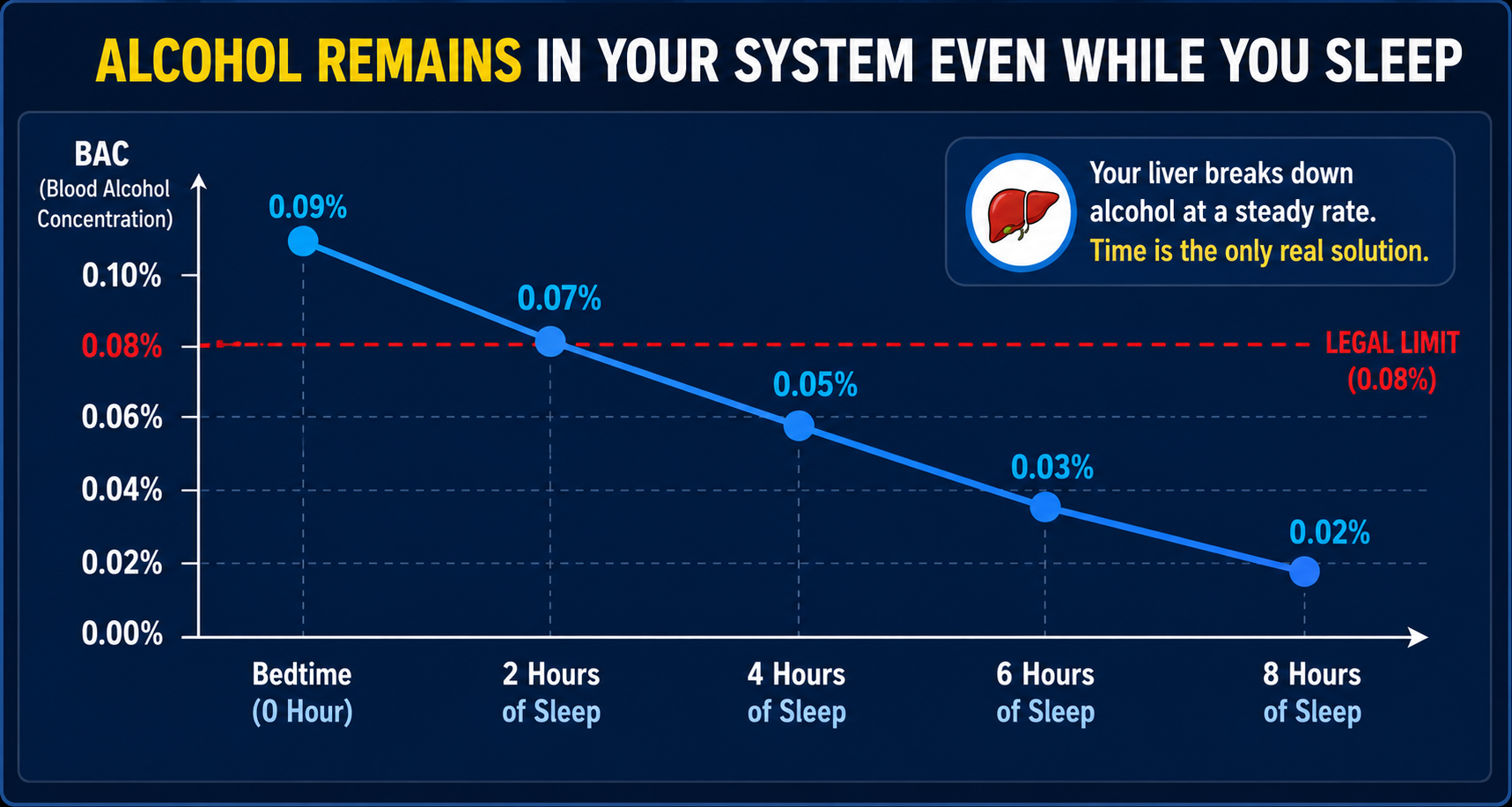
Another common belief -“I’ll just sleep for a few hours and wake up sober.” Sleep helps your body recover.
But sleep itself does not remove alcohol instantly. Your liver still needs time. Someone who drinks heavily before sleeping may wake up feeling better but still have alcohol remaining in their system.
The most dangerous part of these myths is not the coffee or the shower. It is the confidence they create.
A person may think -“I feel fine, so I must be fine.” But alcohol affects areas of the brain responsible for judgment. This can make people underestimate their impairment.
The Real Way to Become Sober
There is no magic trick. No drink. No food. No shower. No shortcut.
The real solution is – Time.
Your body needs time to process alcohol naturally. If you are unsure whether alcohol is still affecting you, the safest decision is to avoid driving or activities that require full attention.
Wrapping Up
The idea of “sobering up quickly” has existed for years. People have tried coffee, cold showers, exercise, and countless other methods.
But the science is simple – You can change how awake you feel, but you cannot trick your body into removing alcohol faster.
Your BAC decreases with time.A BAC calculator can estimate your level. The legal limit provides a guideline. But your body still needs time to recover.
So the next time someone says: “Just drink coffee. You’ll be fine.” Remember – Feeling awake is not the same as being sober.