Digital Evidence vs. The Analog Courtroom
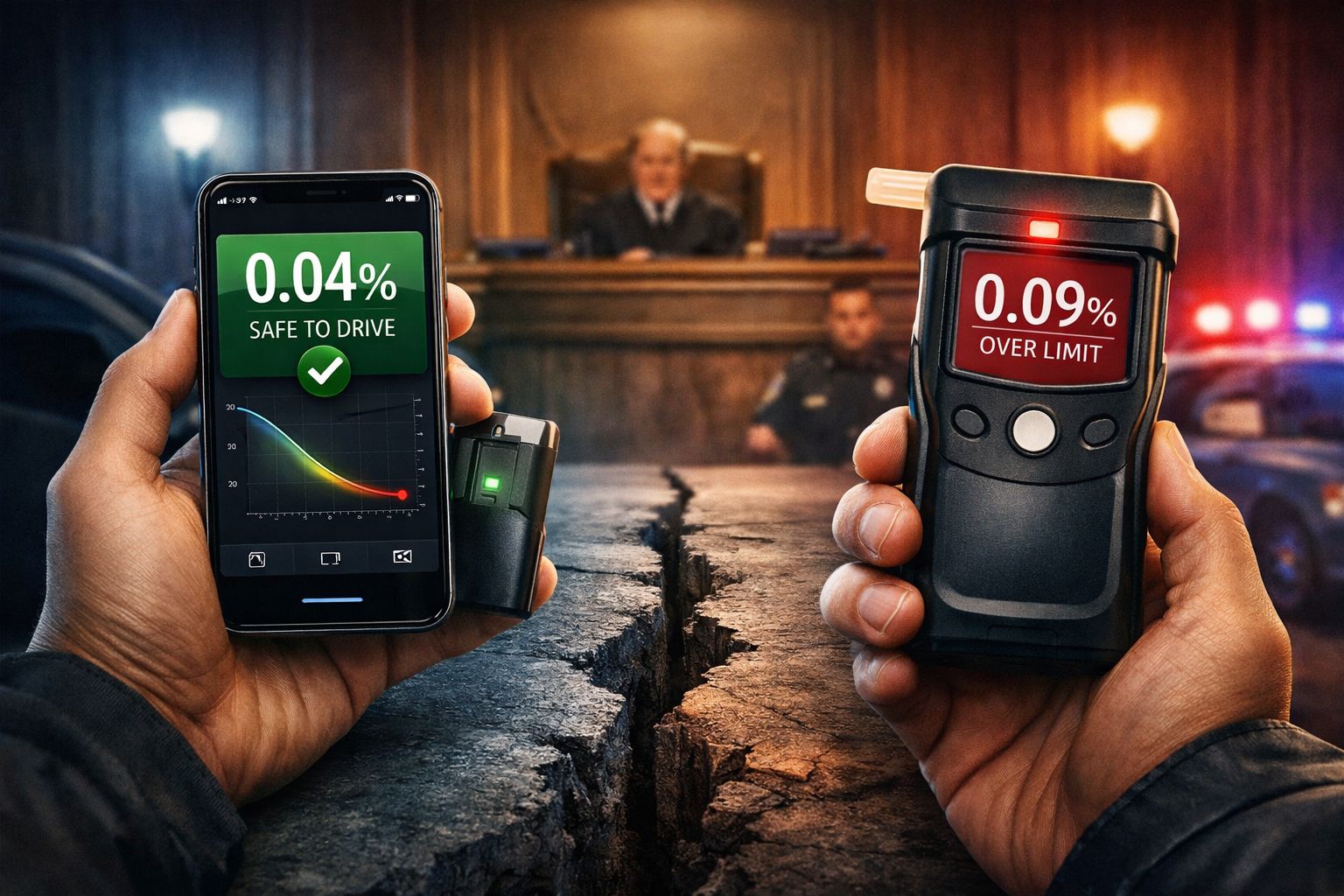
Picture this – you’re sitting in your car, checking a sleek little app connected to your Bluetooth breathalyzer. It flashes green—BAC 0.04%, under the legal limit.
You feel reassured. Ten minutes later, blue lights fill your mirror. The officer’s certified device reads 0.09%.
Suddenly, your phone says one thing, the state says another. And in that moment, the question becomes brutally clear – which number matters in court? This is where modern technology collides with an old legal reality.
Because while your device may track data, generate charts, and predict impairment, in the courtroom it often means nothing. That gap—the admissibility gap—is the dangerous space where digital confidence meets analog law.
The Rise of the Pocket Breathalyzer
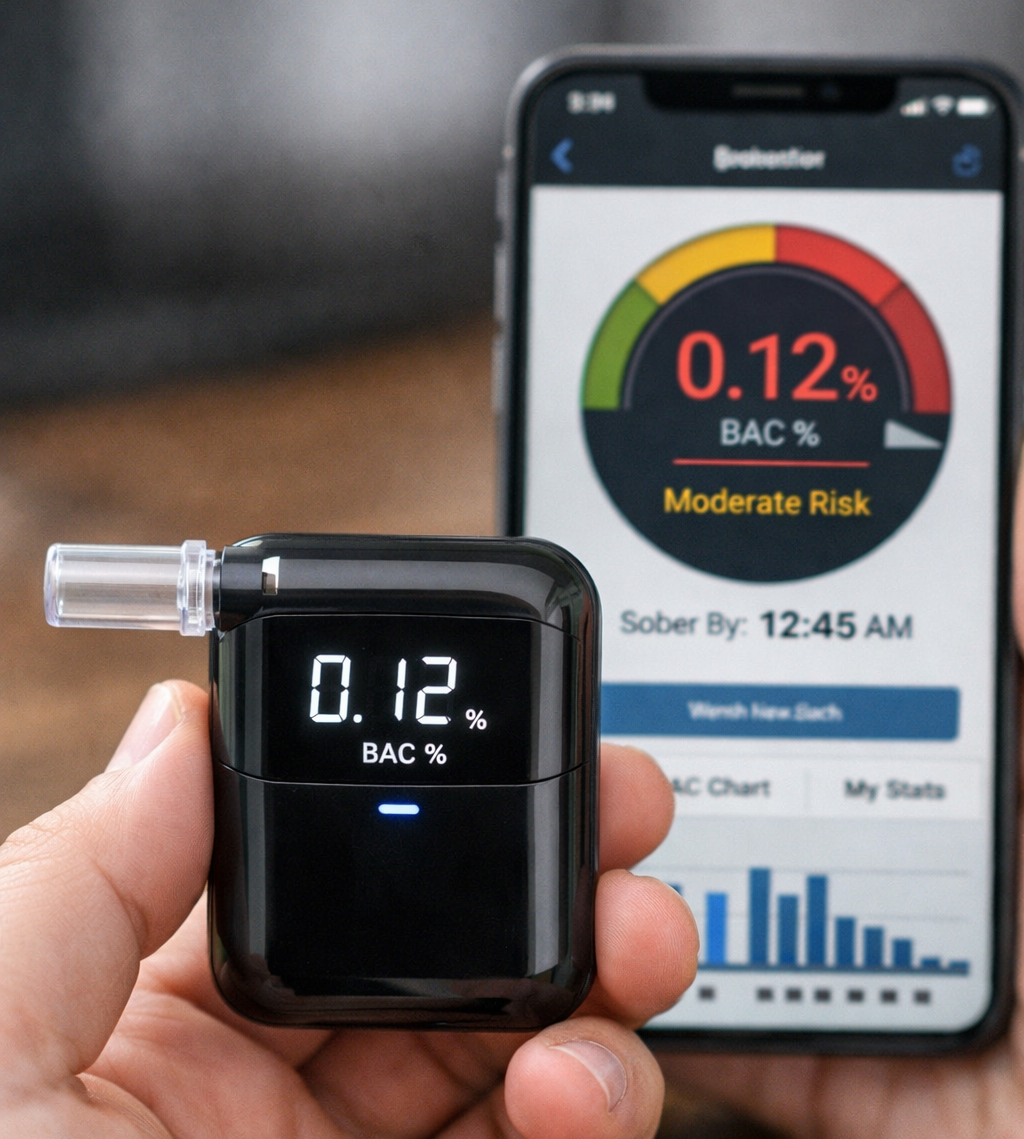
Over the last few years, personal breathalyzers exploded in popularity. Tiny Bluetooth analysers now connect directly to smartphones.
Some devices promise:
- Police-grade accuracy
- AI tracking
- BAC charts
- Real-time alcohol monitoring
- Driving recommendations
- Metabolism estimates
- Smart notifications
- Built‑in BAC calculators that estimate your level based on drinks, weight, and time elapsed
And honestly, the technology feels convincing. The apps look professional. The graphs look scientific. Some even tell users exactly when they’ll supposedly fall below the legal limit.
That creates a dangerous illusion – That personal alcohol tech equals legal certainty. But those are two very different things.
The Moment Technology Creates False Confidence
Now imagine someone leaves a party after two glasses of wine. Before driving, she checks her personal breathalyzer.
The app estimates BAC – 0.05%. The chart inside the app even predicts she’ll drop lower within 20 minutes. So she waits. Checks again. 0.04%. Under the legal limit.
Everything looks safe. But what if the person doesn’t realize is that consumer breathalyzers often operate under completely different standards than evidentiary police analysers. We often cannot outsmart the law with personal breathalyzers. And this difference matters enormously. Because roadside analysers are built around:
- Certified calibration
- Chain-of-custody requirements
- Legal certification standards
- Mandatory maintenance schedules
- Regulatory compliance testing
Meanwhile, many consumer devices prioritize:
- Convenience
- Portability
- Affordability
- App integration
- User experience
Not courtroom admissibility and that gap between digital convenience and legal recognition is where people get blindsided.
The Admissibility Gap – Why Your Device May Mean Nothing in Court
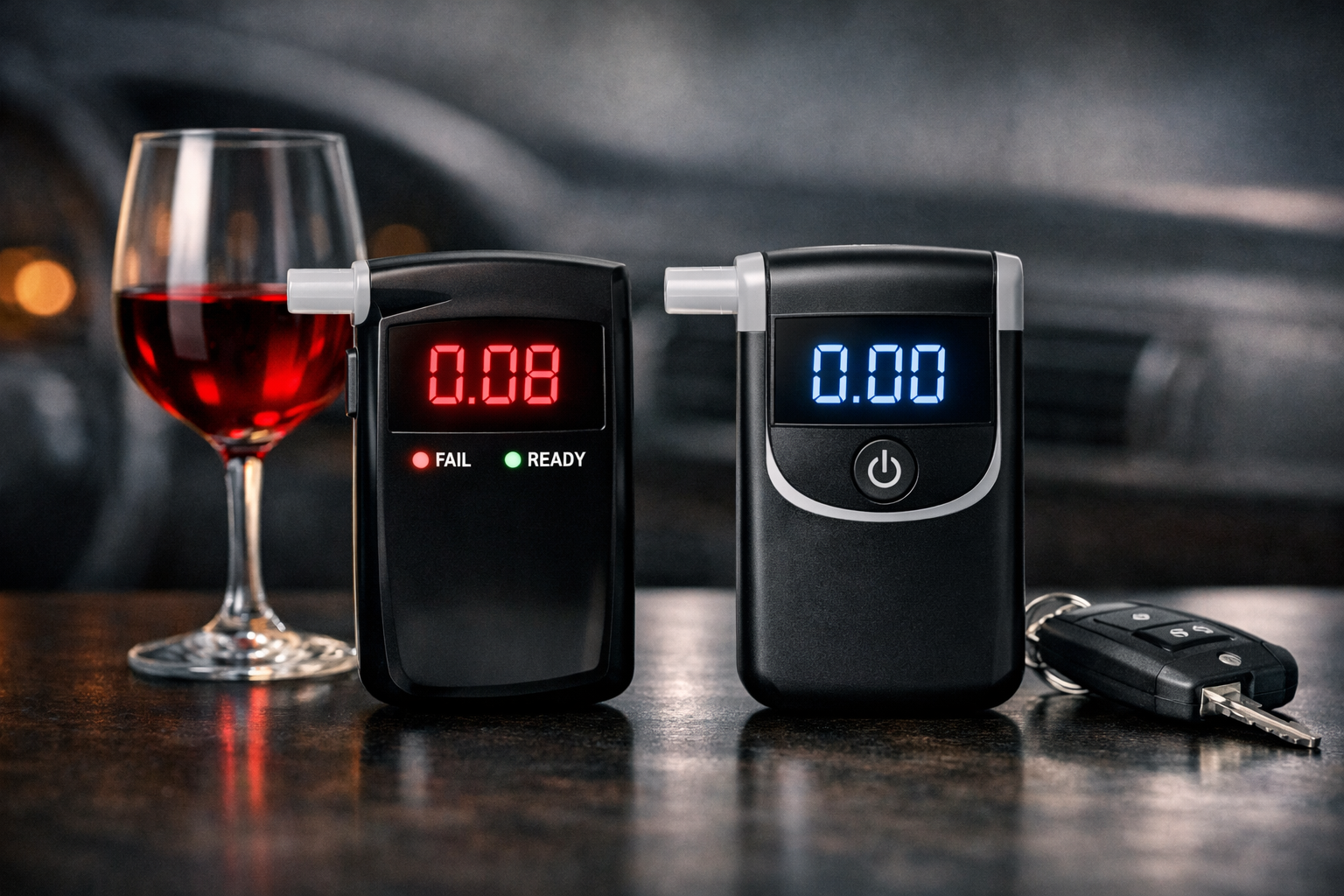
This is the core issue. Your personal breathalyzer data may feel scientific. But courts often care less about consumer technology and more about Evidentiary standards.
This creates what many legal experts describe as an Admissibility Gap. Meaning a device can generate data. Without generating legally accepted evidence. That distinction changes everything.
Because in court, judges typically ask questions like – Was the analyser certified?
Was it calibrated properly? Was the testing procedure standardized? Is the device approved under state law? Can calibration records be verified? Was the operator trained? and so, on…
Most consumer breathalyzers fail several of these requirements immediately. Even expensive ones. And suddenly your smartphone chart becomes legally weak compared to the state’s certified analyser.
Digital Evidence Meets the Analog Courtroom
Now this is where things become almost surreal. Modern life revolves around digital evidence. Phones track location. Watches monitor heart rate. Cars record driving behavior. Apps estimate BAC levels using sophisticated BAC calculators.
Yet many courtrooms still operate through older evidentiary frameworks designed long before consumer digital diagnostics existed.
So while your breathalyzer app may produce:
- Charts
- Timestamps
- Historical BAC logs
- Alcohol consumption estimates
The courtroom may still treat it as little more than personal consumer data. Not forensic evidence.
And this creates a strange conflict between technology and law. Because, consumers increasingly trust digital systems emotionally. Even when the legal system does not trust them formally.
The Problem With BAC Calculators
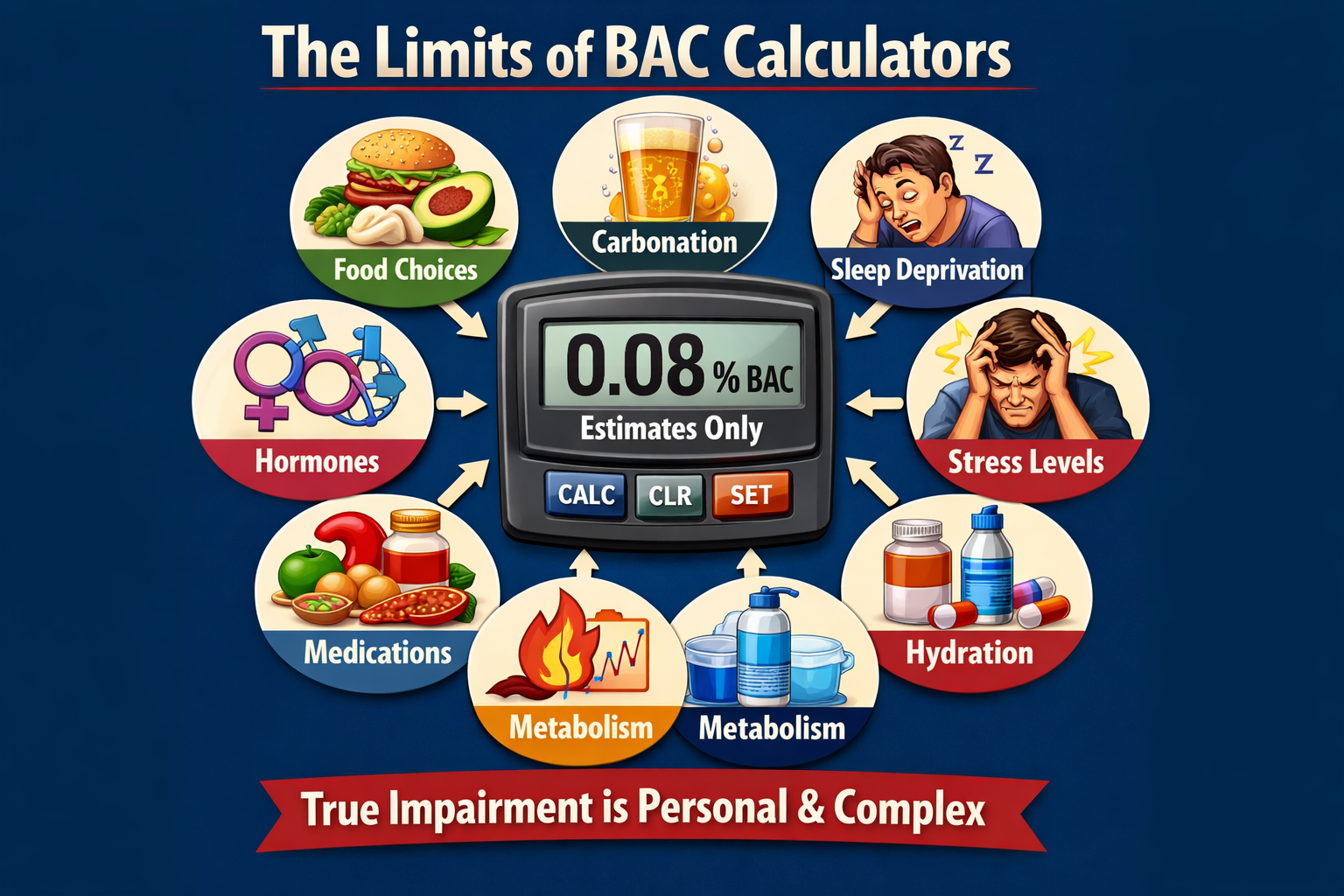
Now, let’s talk about BAC calculators specifically. Because millions of people use them. Apps ask for:
- Weight
- Gender
- Drink count
- Time elapsed
Then they generate estimated BAC values and charts. The problem? These systems rely on generalized mathematical assumptions. They cannot perfectly account for:
So, while BAC calculators may provide rough estimates. They are not reliable enough for high-stakes legal decisions. And relying on them can create a false sense of security. Especially near the legal limit.
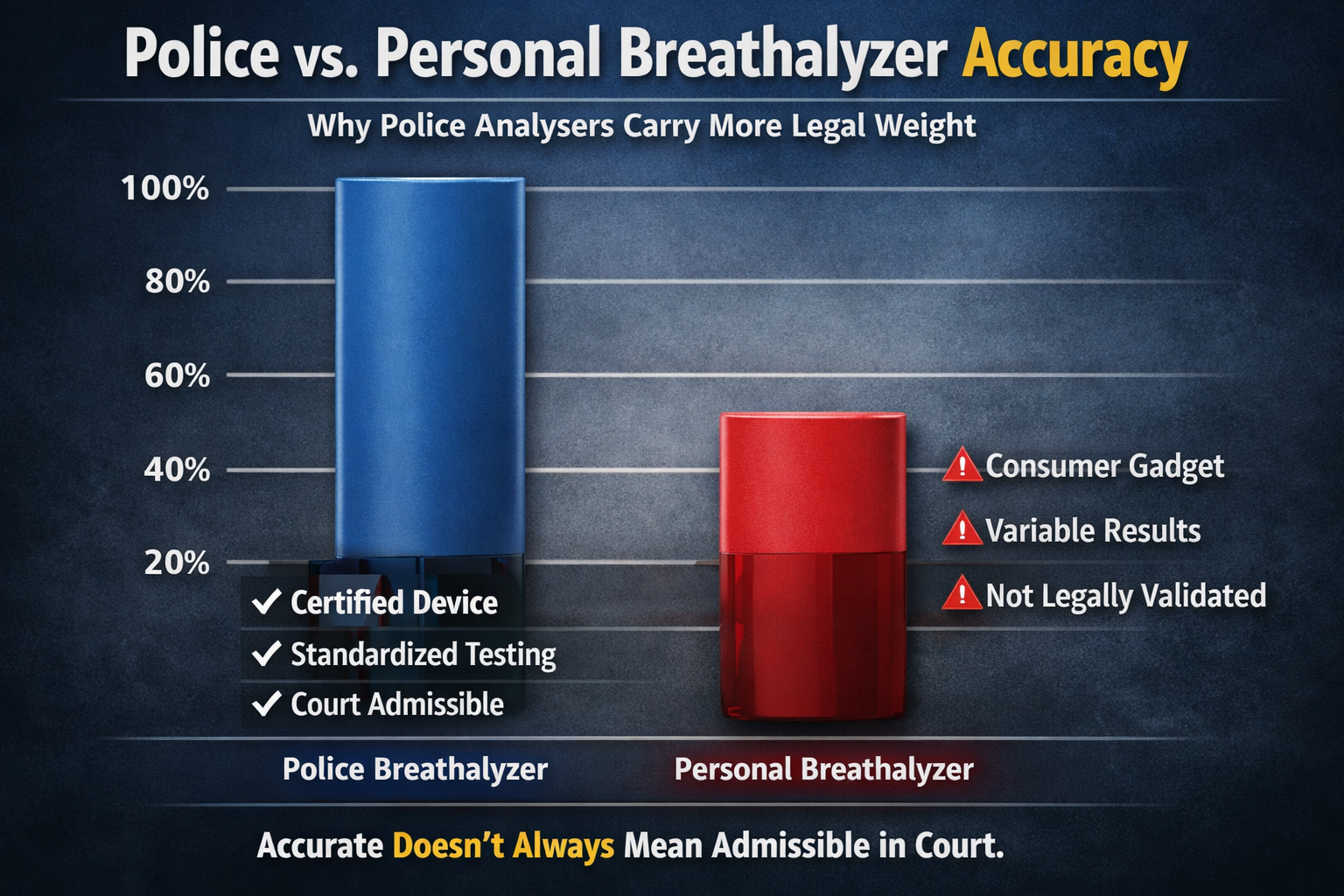
Why Police Analysers Carry More Legal Weight
Now, to be fair, police breath testing isn’t flawless either. Breathalyser science itself contains known biological variability issues. But legally, evidentiary analysers have one massive advantage – Institutional trust.
The legal system recognizes them because they operate inside regulated frameworks.
That includes:
- Approved hardware
- Standardized procedures
- Certification requirements
- Audit records
- Maintenance documentation
Your personal analyser might technically be accurate on a good day. But accuracy alone does not automatically create admissibility. And that’s the part many consumers never realize until it’s too late.
The Dangerous Psychology of “Safe Enough”
This is where the real danger appears. Consumer alcohol tech often changes behavior psychologically. People stop asking – “Should I drive?” And start asking “What does the number say?”
That shift matters enormously. Because once someone sees a BAC reading below the legal limit, they may feel officially cleared to drive.
Even though:
- The device could be inaccurate
- Alcohol absorption may still be rising
- The analyser may be uncalibrated
- Impairment can still exist below legal thresholds
And this becomes especially risky when users treat apps and charts as legal authority rather than rough estimation tools.
The Courtroom Problem Nobody Thinks About
Now imagine Jake from earlier standing in court. His lawyer presents the app screenshots. The BAC chart. The timestamp. The Bluetooth analyser log. And the prosecution responds – That device is not certified for evidentiary use.
Suddenly, all the digital sophistication collapses into one brutal legal reality – Consumer technology is not automatically courtroom technology.
And courts generally prioritize certified state-approved analysers over privately generated consumer data. That doesn’t mean personal devices are useless. But it does mean they may not protect someone legally the way users assume they will.
When Personal Breathalyzers Can Still Be Useful
Now, despite all these limitations, personal breathalyzers are not meaningless. They can still serve valuable purposes.
For example:
- Encouraging safer decisions
- Raising alcohol awareness
- Showing rising BAC trends
- Preventing obviously dangerous driving situations
A decent analyser may help someone recognize – “I’m absolutely not okay to drive.” That alone has value. The problem begins when users mistake – Consumer estimation for legal certainty because those are not the same thing.
The Bigger Conflict Between Technology and Law
This entire issue reflects a broader modern problem. Technology evolves faster than legal systems. Consumers now carry sophisticated diagnostic devices in their pockets.
But legal standards still depend heavily on institutional certification and controlled evidence procedures. So we end up in this strange world where your phone can monitor your heartbeat continuously.
But your BAC app may still be treated as legally irrelevant during a DUI case. That tension between digital evidence and the analog courtroom is only going to grow larger in the future.
Especially as consumer analysers become smarter, cheaper, and more widespread.
Wrapping Up
The scariest part about personal breathalyzer technology isn’t necessarily inaccuracy. It’s confidence. Alcohol absorption changes over time. And legally your analyser may carry almost no authority compared to a state-certified device.
That’s the admissibility gap. A world where technology can feel scientifically convincing. While remaining legally invisible.
So maybe the real lesson isn’t whether personal breathalyzers are good or bad. Maybe it’s understanding what they actually are useful awareness tools, not courtroom shields.
Biological Variability – Why One Number Doesn’t Fit All
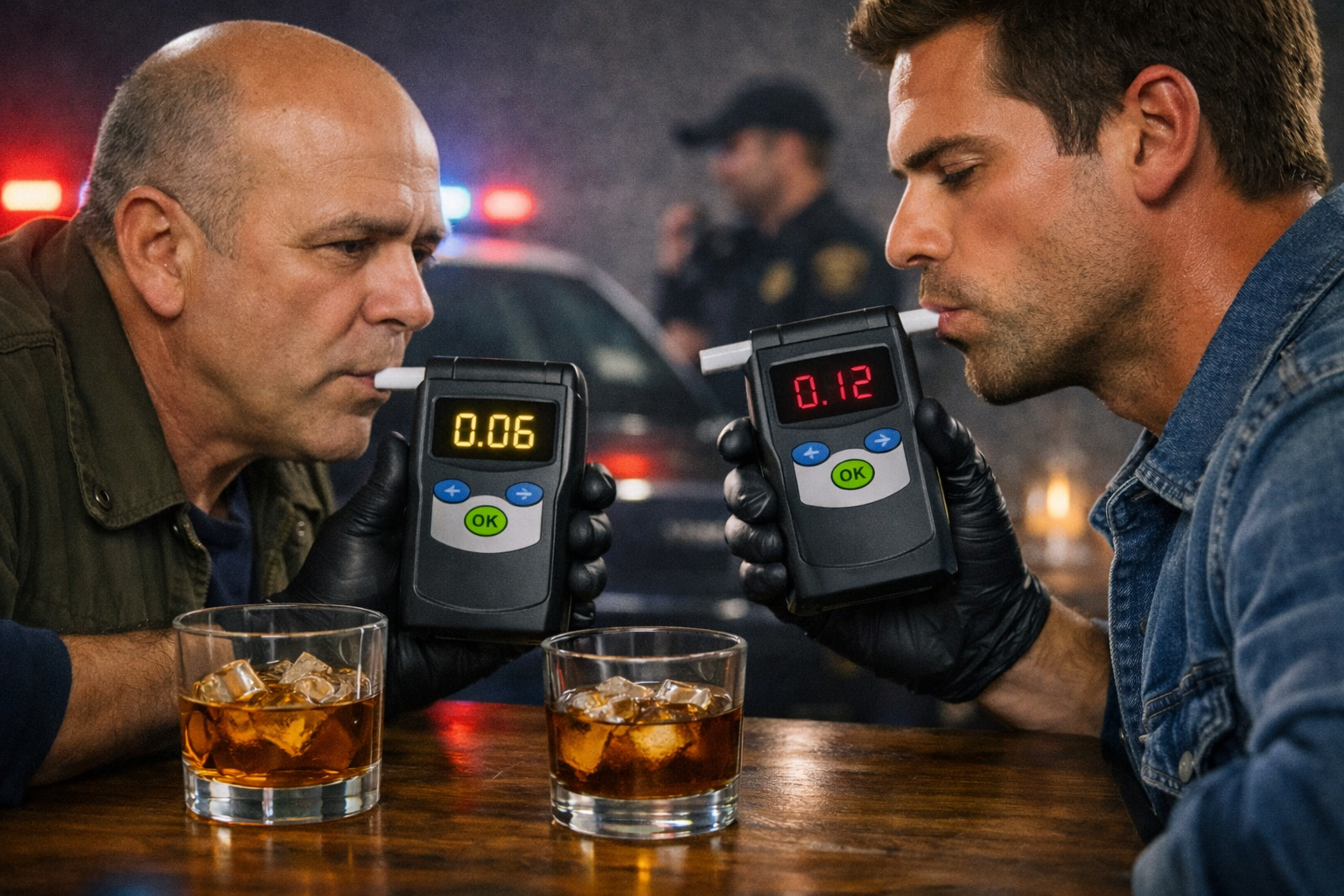
A breathalyser can estimate intoxication accurately enough to determine whether someone is above the legal limit.
Simple in theory. Blow into a device. Get a number. Compare it to a chart. Determine whether someone is legally impaired.
But buried underneath modern breath testing is a scientific shortcut that many people never hear about. Because the human body is not standardized.
And that creates a serious problem for every BAC calculator, roadside analyser, and legal breath-testing system used today.
The issue is called Biological variability. And once you understand it, the idea that one universal formula can apply equally to every person starts falling apart very quickly.
The Formula That Built Modern Breath Testing
Every modern breathalyser relies on a mathematical assumption called the 2100-to-1 partition ratio.
This ratio assumes that 2100 milliliters of breath contains the same amount of alcohol as 1 milliliter of blood. The analyser uses this conversion to estimate Blood Alcohol Content (BAC) from breath alcohol concentration (BrAC).
This became the foundation of modern DUI enforcement because breath testing is:
- Fast
- Portable
- Cheap
- Non-invasive
Compared to blood testing and for large populations, the system works reasonably well statistically.
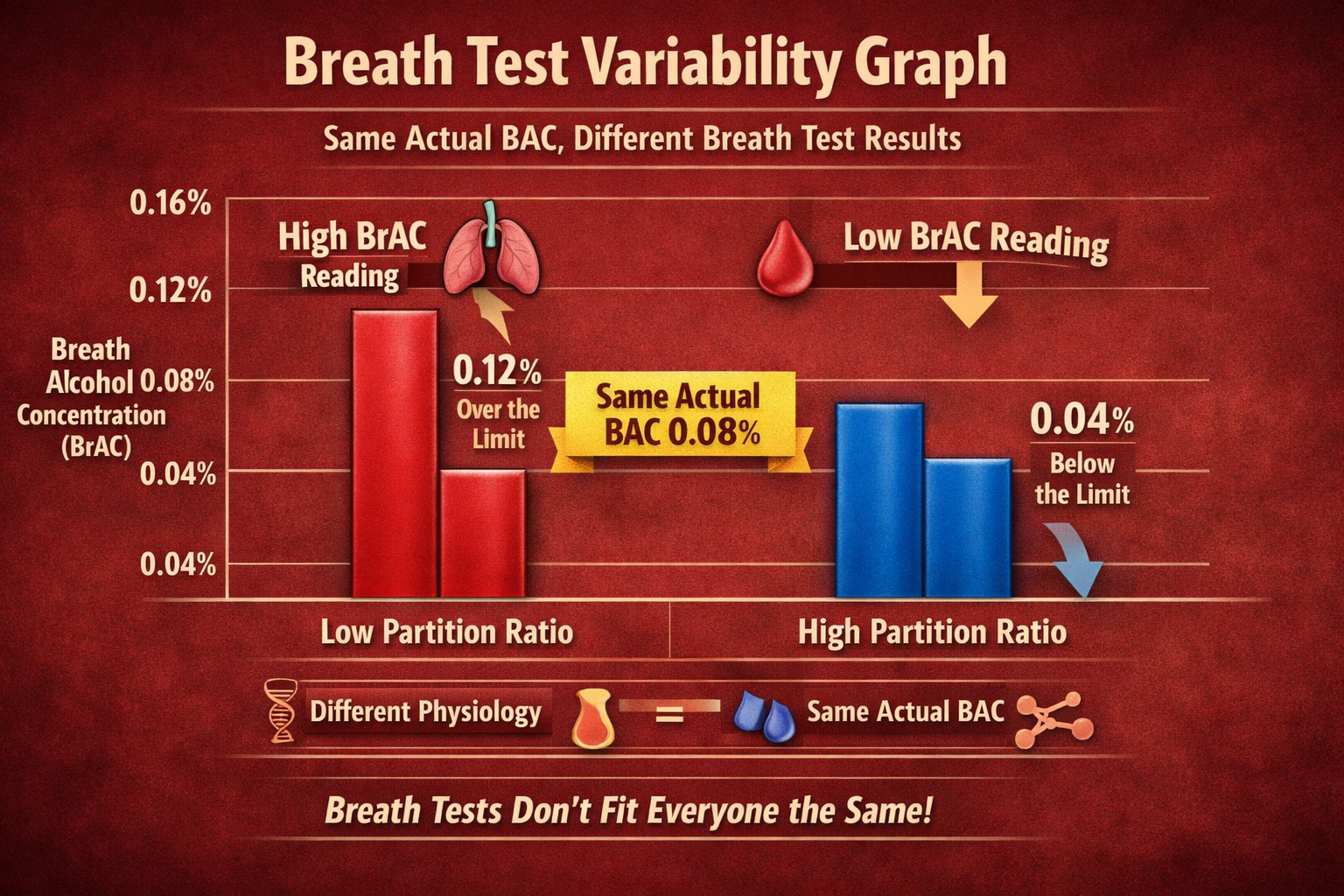
But there’s one major flaw the 2100-to-1 ratio is only an average. Not a biological constant and averages do not perfectly represent individuals.
Why the “Average Human” Doesn’t Exist
The biggest misconception about breathalyser science is that everyone processes alcohol identically. They don’t.
Two people with the exact same BAC can produce completely different breath test results. Not because the analyser is broken. Not because one person cheated the test.
But, because human physiology varies enormously from person to person. This is where biological variability becomes critical.
The breathalyser assumes every human body behaves close enough to the same standard. But real-world biology refuses to cooperate with neat mathematical formulas.
And this creates uncertainty around every BAC calculator and legal limit threshold currently used.
Body Temperature Can Change Breathalyser Results
One of the biggest physiological variables is body temperature. Alcohol evaporates more easily at higher temperatures. That means warmer lungs produce more alcohol vapor in exhaled breath.
So if someone has:
- A fever
- Elevated stress
- Anxiety
- Recently exercised
- Been exposed to heat
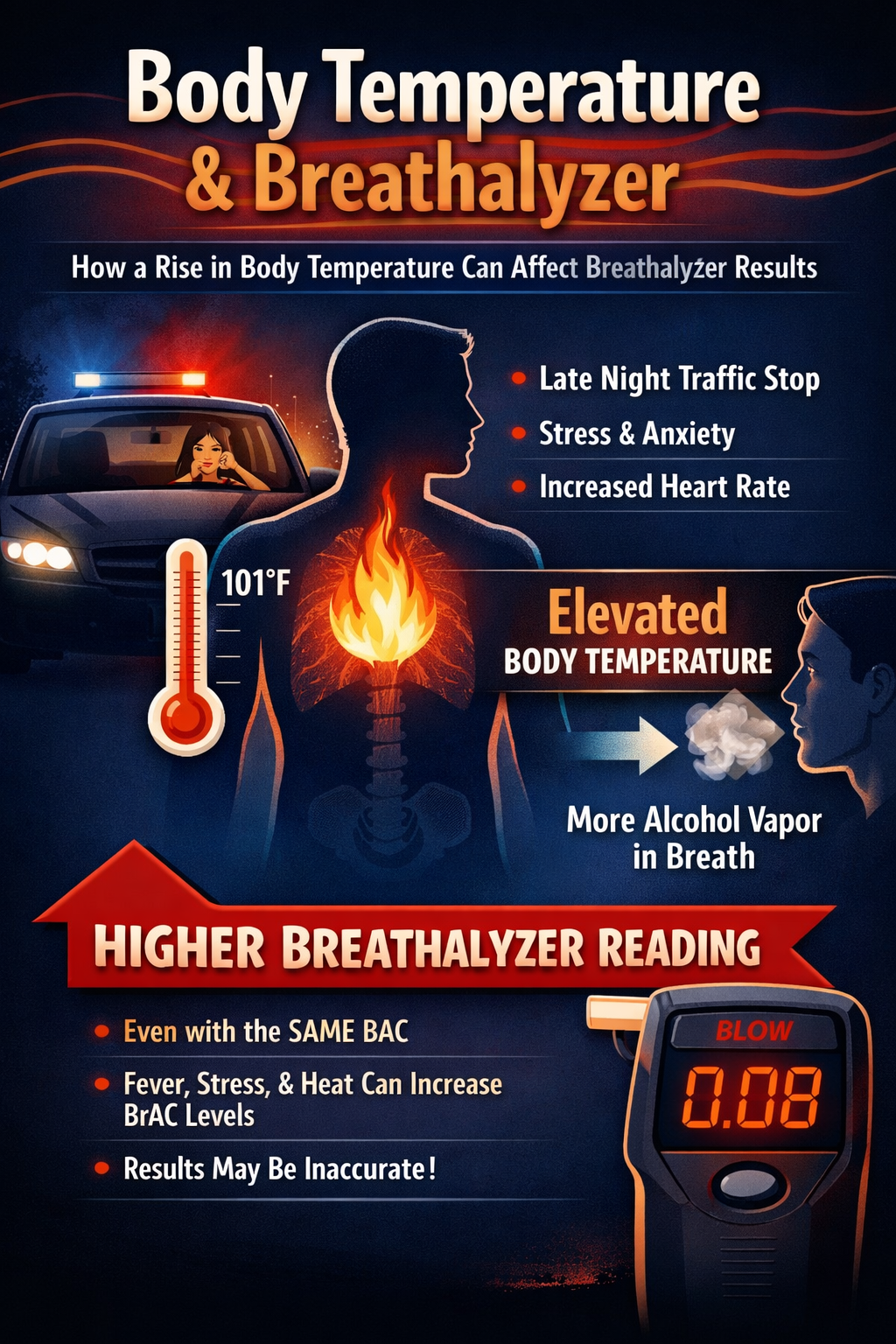
Their breathalyser result may rise even if their actual BAC remains unchanged. Scientific studies have shown that even small increases in body temperature can significantly elevate BrAC readings.
Now think about roadside testing conditions – Someone gets pulled over late at night. Their heart rate spikes. They panic. They breathe harder. Their body temperature rises.
And suddenly the analyser may detect higher alcohol concentration levels than expected. The legal limit remains fixed.
But the biology underneath the reading has already changed.
Hematocrit Levels Create Another Problem
Now things become even more complicated. Alcohol distributes primarily through water in the bloodstream. Not through red blood cells themselves.
This means a person’s hematocrit level — the percentage of red blood cells in blood — can affect alcohol distribution inside the body.
People naturally vary in hematocrit levels based on:
- Genetics
- Sex
- Hydration
- Fitness levels
- Altitude adaptation
- Certain medical conditions
And this affects how alcohol partitions between blood and breath. Yet the analyser still applies the same fixed ratio to everyone.
The chart stays identical. The BAC calculator stays identical. The legal limit stays identical. But the bodies being tested are not identical at all.
Breathing Patterns Can Alter the Reading
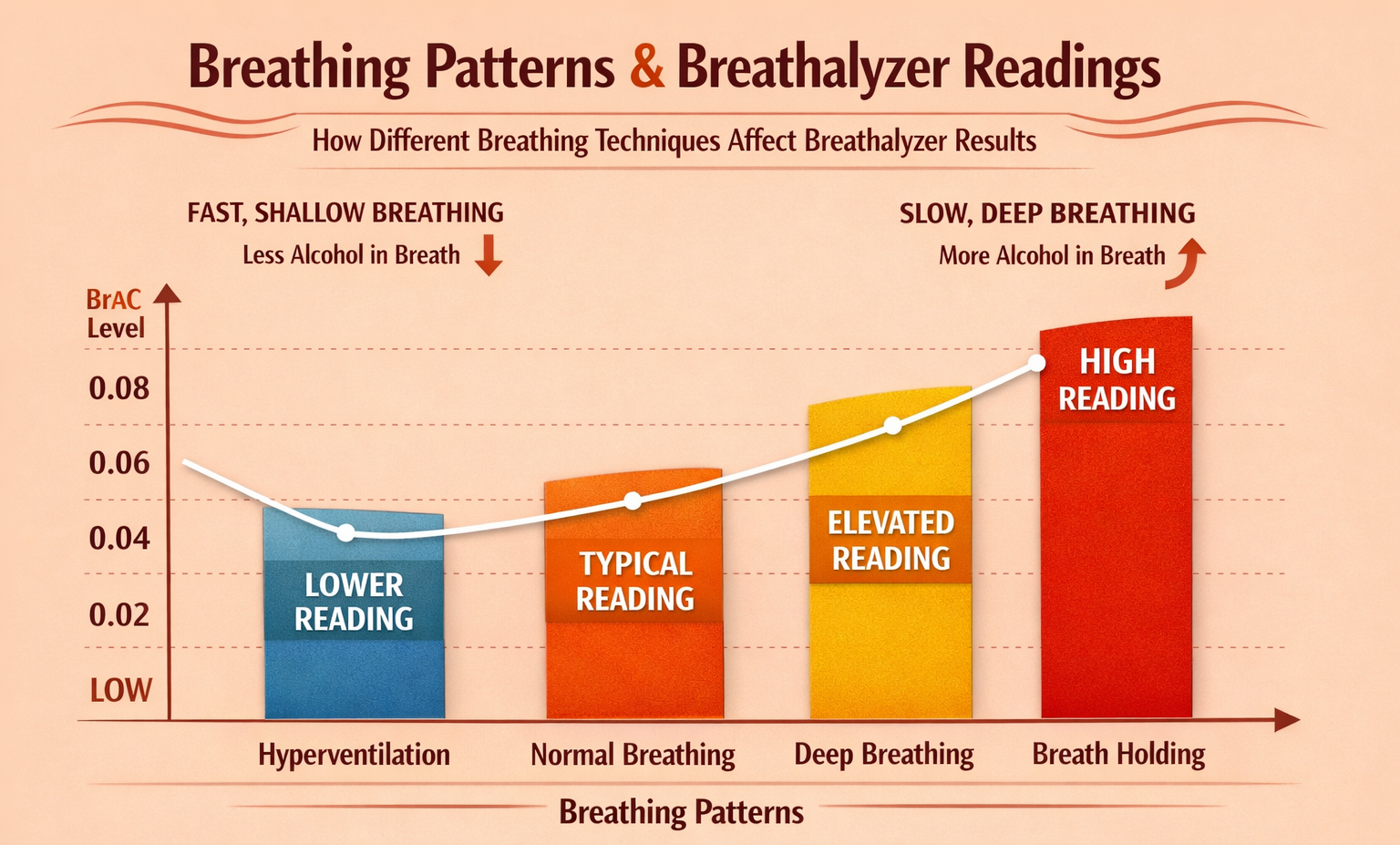
Now this is where breath testing starts sounding almost absurd. The way someone breathes before taking the test can influence the result. Yes — breathing itself can alter the outcome. For example:
Hyperventilation can temporarily lower breath alcohol readings. Meanwhile holding your breath can raise them. Why?
Because breath alcohol concentration depends heavily on gas exchange inside the lungs.
The longer air remains in the lungs, the more alcohol diffuses into it.
This means:
- Fast breathing
- Deep breathing
- Nervous breathing
- Breath holding
Can all influence the analyser reading. Now imagine someone during a traffic stop. They’re stressed. Sweating. Breathing rapidly. Trying not to panic. That person’s physiology is no longer stable.
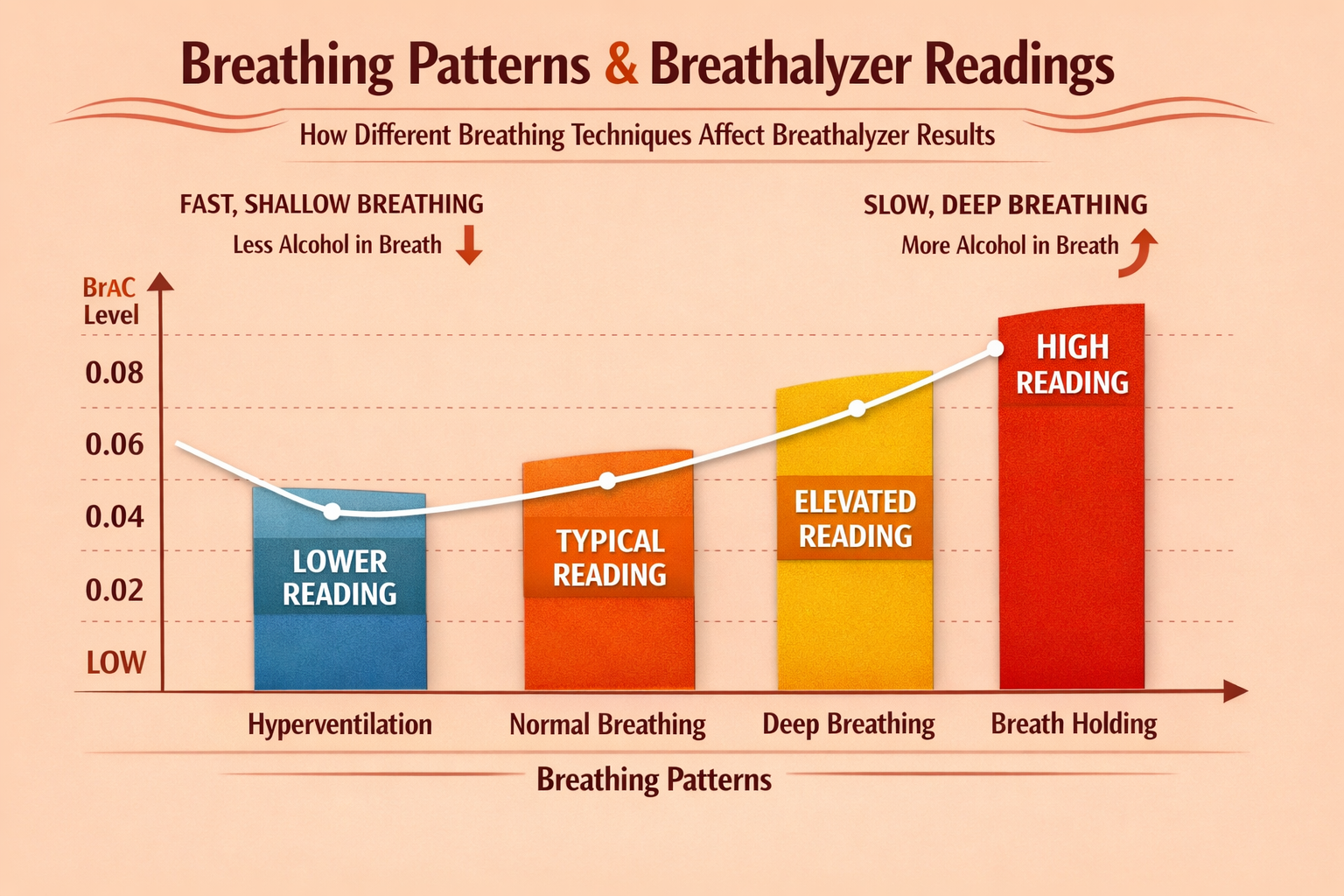
Yet the breathalyser still assumes standardized conditions. This is one of the biggest weaknesses in modern breath-testing science.
The Entire System Depends on Deep Lung Air
Breathalysers are designed to sample what’s called Alveolar air.
This is deep lung air where gas exchange occurs between blood and breath.
The analyser assumes this air reflects the actual blood alcohol concentration accurately. But, obtaining perfect alveolar air consistently is extremely difficult. Human lungs vary dramatically between individuals.
Factors include:
- Lung capacity
- Age
- Smoking history
- Respiratory conditions
- Breathing strength
- Exhalation duration
Even how hard someone blows into the analyser can affect sampling characteristics. And because alcohol concentration rises during exhalation, timing becomes incredibly important. This is why many modern analysers require prolonged blowing.
The machine is attempting to reach deeper lung-air. But even then, biological variability remains unavoidable.
The Problem with BAC Charts and Legal Thresholds
One of the biggest issues with modern DUI law is the assumption that impairment can be reduced to one universal number.
BAC charts create the illusion of precision – 0.05 – 0.08- 0.10 But real impairment is far more complicated, it begins much earlier.
Some individuals may experience serious impairment below the legal limit. Others may appear less impaired above it.
Factors influencing impairment include:
- Tolerance
- Sleep deprivation
- Medication
- Body composition
- Metabolism
- Neurological differences
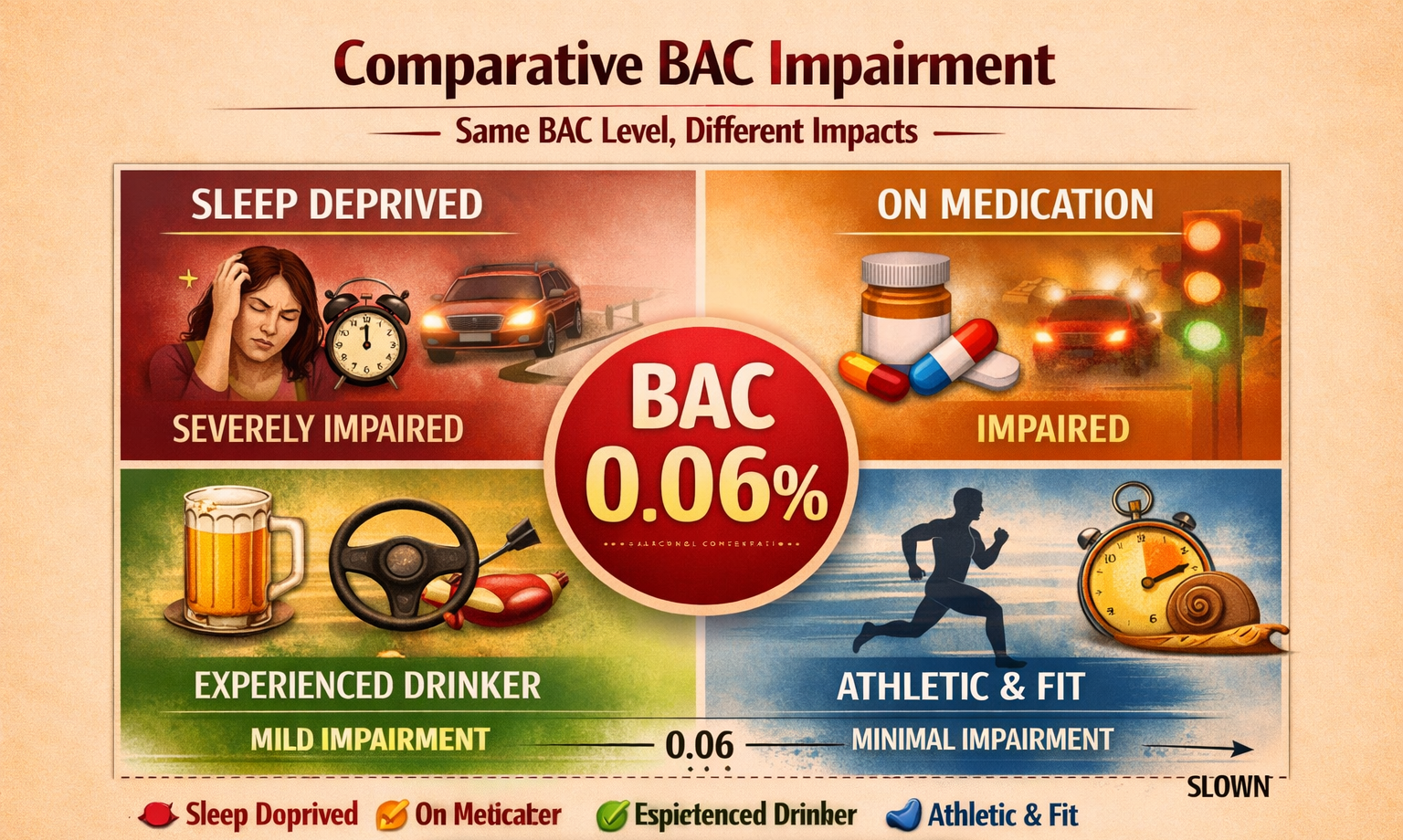
And yet modern systems still rely heavily on standardized BAC calculator models and fixed legal thresholds. The analyser generates a number. The chart determines legality. But biology itself remains highly individual.
Why Breathalysers Still Exist
Now this raises an obvious question – If biological variability creates so many problems. Why are breathalysers still widely accepted?
The answer is practicality. Blood testing is slower, more expensive, more invasive, harder to administer roadside. Breath testing provides immediate results and statistically, across large populations, it works “well enough” operationally.
That’s the key distinction. Operational efficiency is not the same thing as physiological perfection. The legal system values consistency and practicality. Science deals with variability. And those two goals do not always align perfectly.
The Illusion of Precision
One of the most fascinating psychological aspects of breath testing is how precise the numbers appear.
The analyser prints – 0.081 and people instinctively interpret that as scientific certainty. But hidden behind that number are layers of assumptions:
- Average lung function
- Average breathing behavior
- Average body temperature
- Average blood chemistry
- Average alcohol partitioning
The machine itself may be mathematically precise. But the human body is biologically inconsistent. And that distinction matters enormously. Because precision is not always accuracy.
Cheap Breathalysers vs Professional Analysers
Now this biological variability becomes even more problematic when comparing consumer breathalysers to professional analysers used by law enforcement.
Cheap consumer devices often suffer from:
- Poor sensor quality
- Calibration drift
- Environmental sensitivity
- Inconsistent sampling
Meanwhile, professional analysers attempt to compensate using:
- Temperature correction
- Deep lung sampling
- Calibration standards
- Multiple sample verification
But even expensive analysers cannot eliminate biological variability itself. Because the problem isn’t only the machine.
The problem is the assumption that all humans behave similarly enough for one conversion formula to apply universally. And biology simply doesn’t cooperate perfectly with that model.
The Real Scientific Debate
The real debate around breath testing isn’t whether breathalysers work at all. They clearly do measure alcohol presence. The deeper issue is this – How accurately can one universal formula represent millions of biologically different individuals?
That’s where physiological variability becomes impossible to ignore also alcohol absorption in human bodies differs. Because no BAC calculator can perfectly account for:
- Body temperature changes
- Lung variability
- Hematocrit differences
- Breathing behavior
- Metabolic differences
And no legal limit fully captures individual impairment either.
Wrapping Up
Modern breath testing was designed to create certainty. But biology introduces uncertainty everywhere. The famous 2100-to-1 ratio is not fake science.
It’s a statistical approximation. And while that model may work reasonably well for a large population it can fail individuals.
That’s the uncomfortable reality behind every breathalyser reading, BAC chart, and roadside analyser currently used around the world.
Because behind every printed number is a human body and no two human bodies process alcohol exactly the same way.
Semiconductors vs. The Law: The Industrial Reality of Handheld Alcohol Detection
It started in a parking lot outside a wedding reception. Two friends. Same number of drinks, roughly same body weight and, with same confidence.
A friend blew into a cheap handheld breathalyzer and smiled.“0.05. I’m fine.” An hour later, a police-grade fuel cell test showed 0.09 BAC — above the legal limit.
That was the moment I realized something most people never think about – Not all breathalyzers measure alcohol the same way.
And the difference between a cheap semiconductor sensor and a professional fuel cell device can completely change the result.
Two people can drink the same amount yet show different BACs — because alcohol absorbs differently depending on food, hydration, stress, and metabolism. Now, here is Semiconductors vs. The Law – The Industrial Reality of Handheld Alcohol Detection.
The Great Lie of “Good Enough” BAC Testing
The handheld alcohol detection market exploded because people wanted convenience.
Apps started offering BAC calculators. Websites published BAC chart estimates. Cheap devices flooded online marketplaces promising accuracy.
But here’s the industrial reality – Not all alcohol sensors are designed to measure alcohol accurately. Some are designed simply to detect something that resembles alcohol. And that distinction matters more than most people realize
At the center of the industry are two competing technologies:
- Semiconductor sensors
- Fuel cell sensors
Most consumers never learn the difference. But law enforcement absolutely does.
The Semiconductor Sensor – Cheap, Fast, and Easily Confused
Semi-conductor sensors dominate the low-cost market because they’re inexpensive to manufacture.
You’ll find them in:
- Budget breathalyzers
- Keychain alcohol testers
- Promotional “smart” alcohol detectors
- Cheap online BAC calculators paired with hardware devices
They work using heated metal oxide sensors that react when certain gases are present. The problemis alcohol isn’t the only thing they react to.
The Hidden Dangers of Cheap Breathalyzers
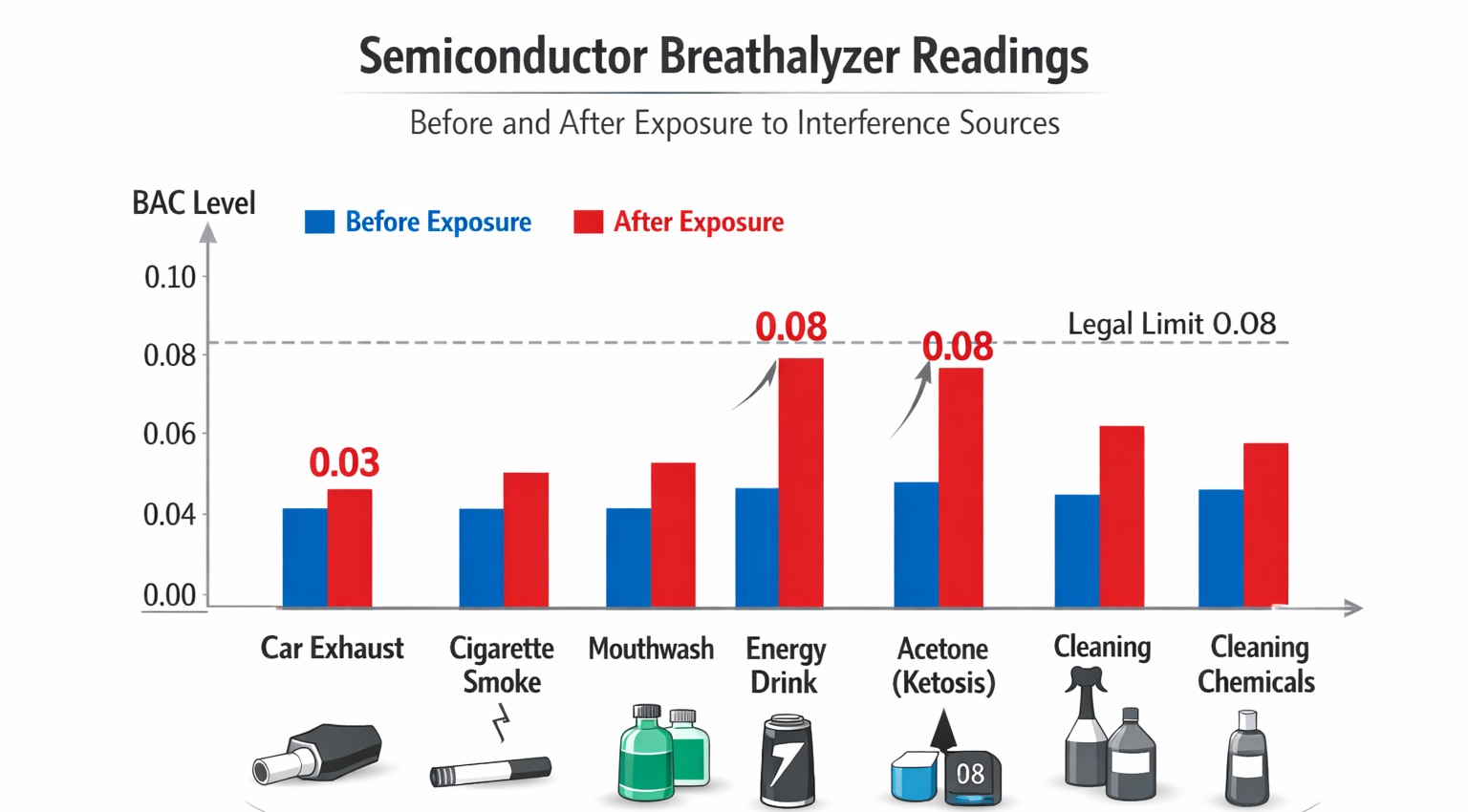
Suppose you set up a handful of low‑cost semiconductor breathalyzers inside a sealed parking garage, expecting them to quietly track alcohol levels.
At first, the numbers look steady, but then you introduce car exhaust, cigarette smoke, a splash of mouthwash, even, the vapors from an energy drink. Suddenly, the readings swing wildly.
One device leaps from 0.03 to the legal limit 0.08 in under two minutes—without a single extra sip of alcohol. Add in acetone from a ketogenic diet, cleaning chemicals lingering in the air, or shifts in temperature and humidity, and the sensors become even more erratic.
Factor in calibration drift and individual metabolic differences, and you realize these cheap devices can be dangerously misleading. What feels like a simple test quickly turns into a chilling reminder – in real‑world conditions, a breathalyzer can declare you legally drunk when you haven’t touched another drop.
Why Semiconductor Sensors Struggle
Semiconductor alcohol sensors are sensitive to multiple volatile organic compounds.
That means they can mistake other substances for ethanol. According to the National Highway Traffic Safety Administration (NHTSA), semiconductor sensors generally show:
- Lower specificity
- Higher calibration drift
- Reduced long-term stability compared to fuel cell technology
- Professional environments rarely trust them for evidential testing. And there’s a reason for that.
The Fuel Cell Revolution
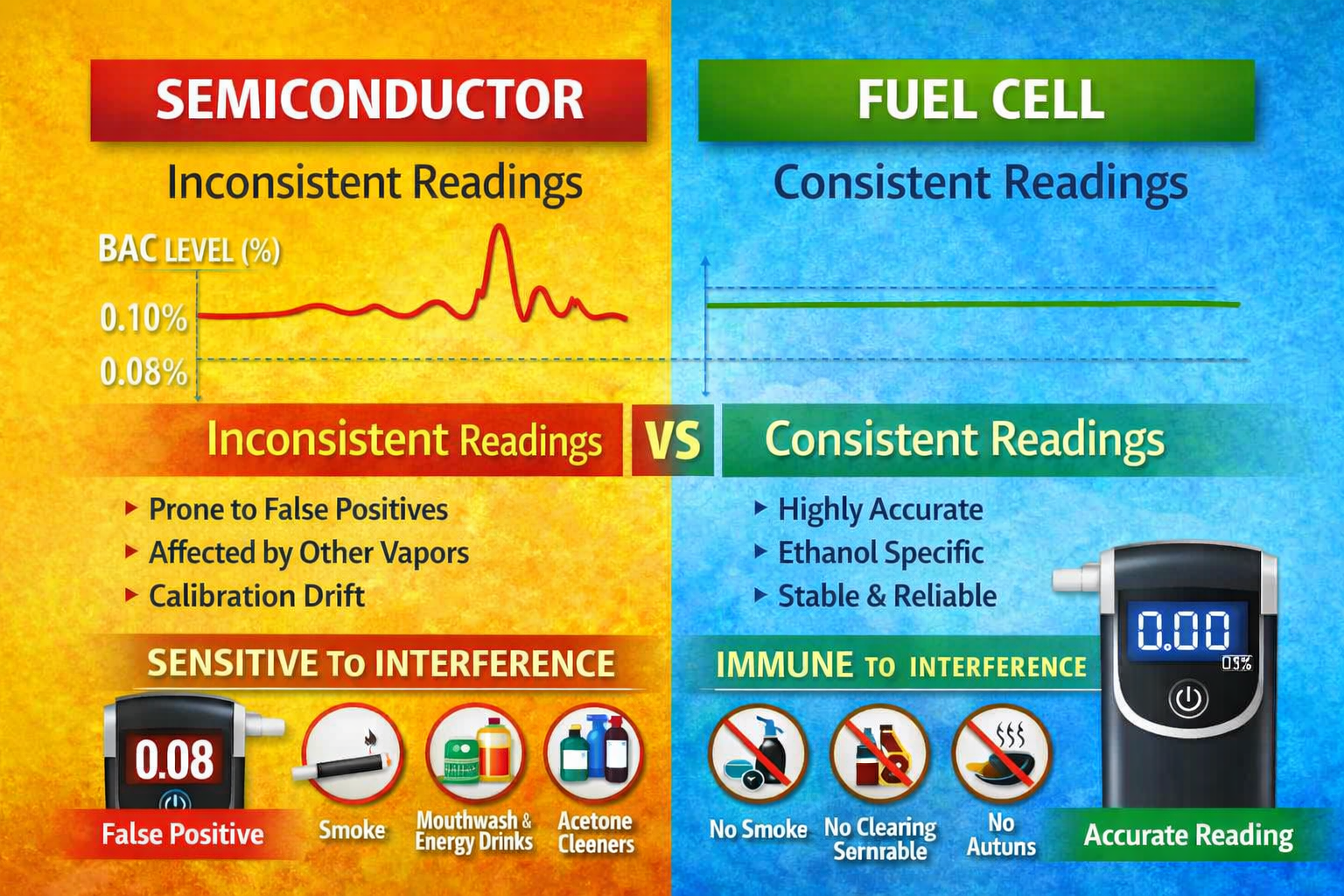
Fuel cell breathalyzers operate completely differently. Instead of broadly reacting to gases, they chemically oxidize ethanol molecules specifically.
This creates:
- Higher accuracy
- Better selectivity
- Lower false positives
- Greater long-term consistency
That’s why professional systems used by:
- Police departments
- Industrial safety teams
- Transportation companies
DOT compliance programs almost always rely on fuel cell technology.
Inside a fuel cell sensor, ethanol creates an electrochemical reaction that generates an electrical current proportional to alcohol concentration.
The key advantage of this is that fuel cell sensors largely ignore substances that confuse semiconductor devices.
That includes:
- Perfumes
- Cleaning chemicals
- Smoke
- Acetone
- Food vapors
This is why professional-grade devices maintain accuracy closer to evidential standards.
The Industrial Reality Most People Ignore
Industrial compliance centers don’t rely on consumer-grade breathalyzers. Every testing station is equipped with calibrated fuel cell systems — the same technology trusted in law enforcement and professional transportation.
Here’s why that matters:
Accuracy over convenience – Fuel cell sensors are far more precise than semiconductor devices, which can be thrown off by temperature, humidity, or even mouthwash.
Legal reliability – A reading of “0.05” on a cheap device when the actual BAC is “0.09” isn’t just a small error — it’s a legal disaster.
Safety culture – Industrial environments recognize that false confidence is more dangerous than uncertainty. A driver who believes they’re safe when they’re impaired poses a catastrophic risk.
In short, professional settings demand instruments that eliminate doubt, because when heavy machinery and human lives are involved, precision isn’t optional — it’s mandatory
BAC Calculators vs. Reality
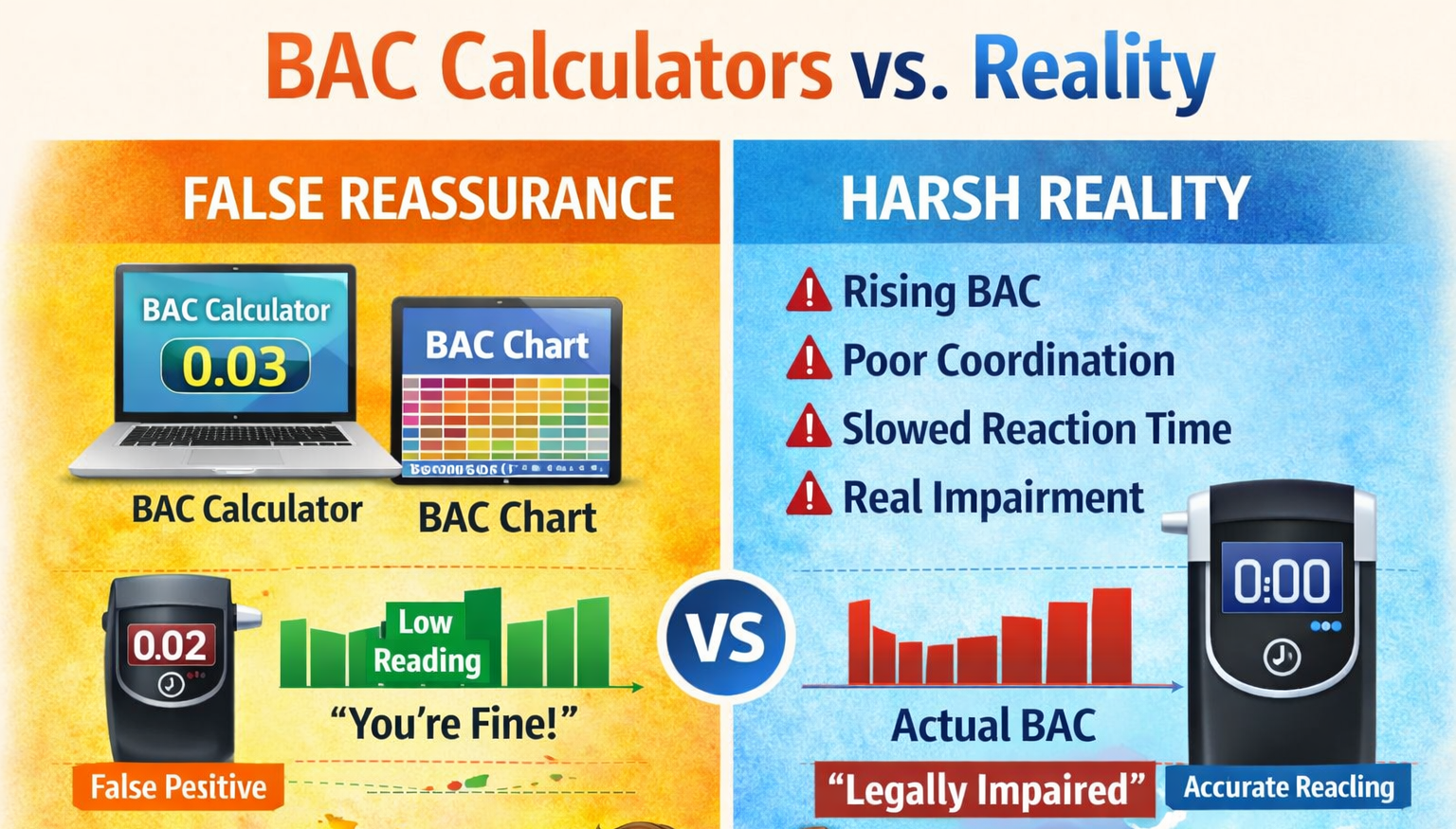
This is where things become even more dangerous. People combine:
- Cheap semiconductor breathalyzers
- Online BAC calculators
- Generic BAC chart estimates and assume they have scientific certainty.
They don’t. A BAC calculator is only an estimate.
A BAC chart is only a rough statistical model. Even professional-grade devices require:
- Calibration
- Controlled testing conditions
- Proper waiting periods
- Correct breathing samples
You can check your BAC here using a professionally designed BAC calculator, however, calculators estimate probability — they do not replace evidential testing.
The human brain becomes worse at judging impairment as impairment increases. Which means the more impaired someone becomes, the more likely they are to trust inaccurate readings – especially if those readings confirm what they want to believe.
This creates a dangerous psychological loop:
- Use cheap tester
- Get low reading
- Feel reassured
- Ignore actual impairment
That’s how bad decisions happen.
The Calibration Problem Nobody Talks About
Semiconductor devices drift badly over time. Even slight sensor degradation changes accuracy.
- Many low-end devices:
- Are never recalibrated
- Lose reliability within months
- Become temperature-sensitive
- Produce unstable readings
Fuel cell systems also require calibration, but they maintain stability significantly longer. That’s one reason police departments maintain strict calibration schedules.
Semiconductor breathalyzers can produce inaccurate BAC readings in cold weather because environmental temperature affects sensor performance. Professional fuel-cell evidential breath analyzers are generally more reliable and are the standard technology used in law enforcement testing.
A discrepancy between a consumer semiconductor device and a professional fuel-cell device can significantly affect the reported BAC level. Even when both readings remain below the general legal limit, the difference may still matter under commercial driving regulations, workplace alcohol policies, or jurisdiction-specific thresholds.
The Legal Limit Is Not a Safety Guarantee
Most countries define a legal limit around 0.08 BAC or, lower depending on region. But impairment begins well before that point.
According to research from the CDC and NHTSA:
- Reaction time slows at low BAC levels
- Visual tracking degrades early
- Decision-making deteriorates before obvious intoxication appears
- The legal limit is a legal threshold — not a biological safety line. That distinction matters.
Why Professional Testing Looks So Strict
If you’ve ever seen official alcohol testing procedures, they seem obsessive. That’s intentional.
- Professional operators:
- Wait before testing
- Avoid mouth alcohol contamination
- Use calibrated fuel cell systems
- Control environmental variables
- Perform repeated sampling
Because accurate alcohol detection is incredibly sensitive. Consumer culture treats BAC testing casually while Industrial safety culture does not.
The Reality Behind Alcohol Detection and Breathalyzer Accuracy
The alcohol detection industry is rapidly evolving with advanced technologies such as multi-sensor verification, AI-assisted correction models, smartphone-connected calibration systems, and passive alcohol detection technologies. These innovations aim to improve the reliability and convenience of alcohol testing.
However, despite technological progress, one fact remains unchanged – accuracy requires high-quality components, proper calibration, and strict testing standards — all of which increase cost.
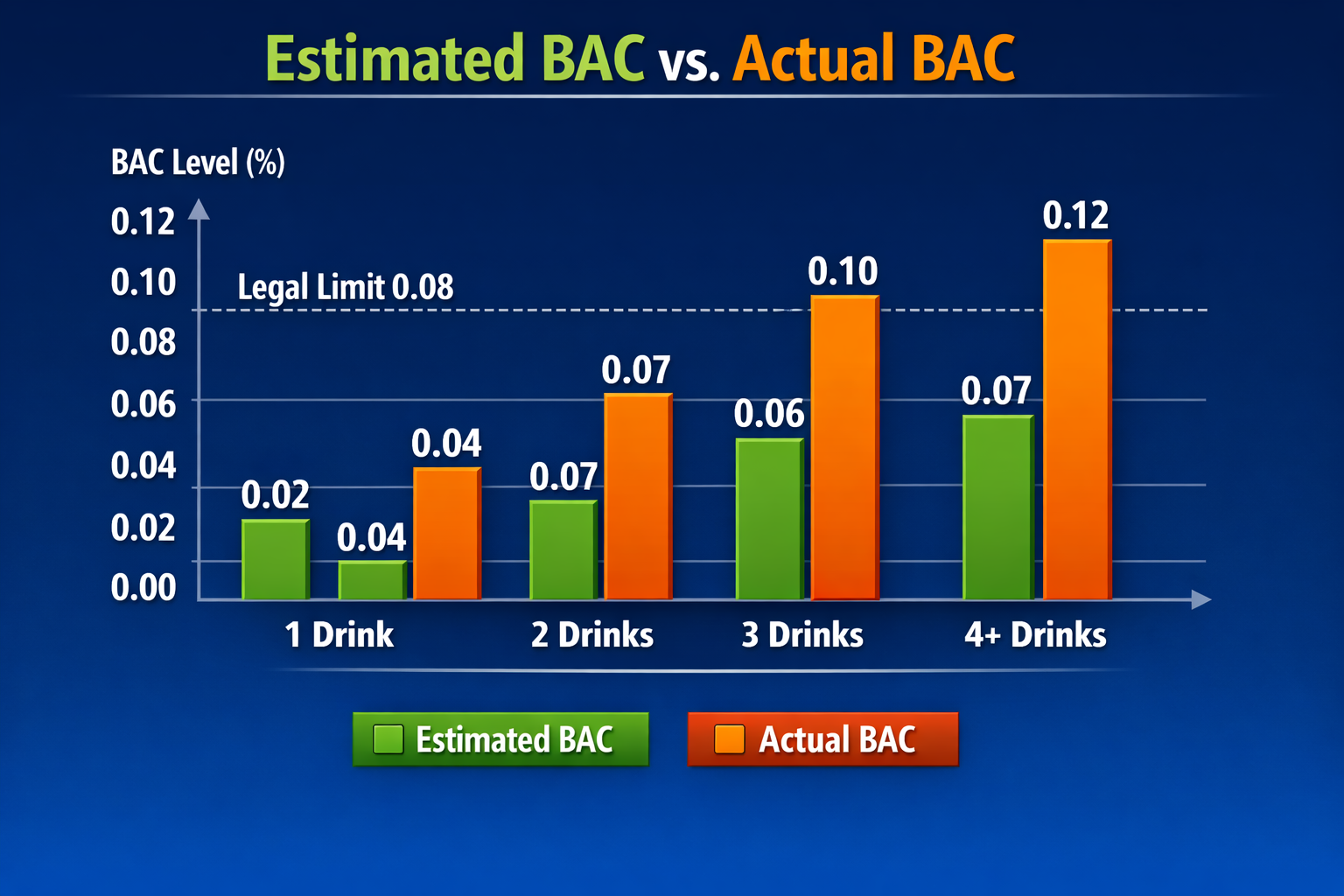
Many inexpensive breathalyzers compromise on these factors, leading to inconsistent or unreliable readings. Research has shown that some consumer-grade devices may underestimate Blood Alcohol Concentration (BAC), creating a false sense of safety for users.
The biggest misconception about alcohol detection is psychological rather than technological. People often purchase cheap breathalyzers not because they expect laboratory-level precision, but because they seek reassurance.
A low reading may increase confidence even when the device itself is inaccurate. However, alcohol absorption and impairment depend on several biological factors, including metabolism, body weight, hydration, food intake, and individual tolerance.
Neither confidence nor convenience can change the scientific reality of impairment. The law also does not consider whether a device was inexpensive or appeared convincing — legal systems rely on certified testing methods and measurable evidence.
Modern alcohol detection technology includes:
- Multi-sensor verification
- AI-assisted correction systems
- Smartphone-connected calibration
- Passive alcohol detection
- Accurate breathalyzers require:
- High-quality sensors
- Regular calibration
- Controlled testing conditions
- Advanced processing systems
Cheap breathalyzers may:
- Produce inaccurate BAC readings
- Underestimate intoxication levels
- Create false reassurance
Alcohol impairment is affected by:
- Metabolism
- Body weight
- Hydration
- Food consumption
- Individual tolerance
The law and human biology are based on measurable reality, not user confidence or convenience. Because when it comes to alcohol absorption, impairment, and the legal limit, reality always wins.
Wrapping Up
The story of handheld alcohol detection is about trust. Cheap semiconductor breathalyzers may offer convenience, but they’re easily misled by fumes, chemicals, and calibration drift.
Fuel cell technology delivers the accuracy and reliability that safety, legality, and human lives demand — because in this perspective, good enough is never enough.
How I Found Out People Weighing 180 lbs Will Reach $0.08 at Different Speeds
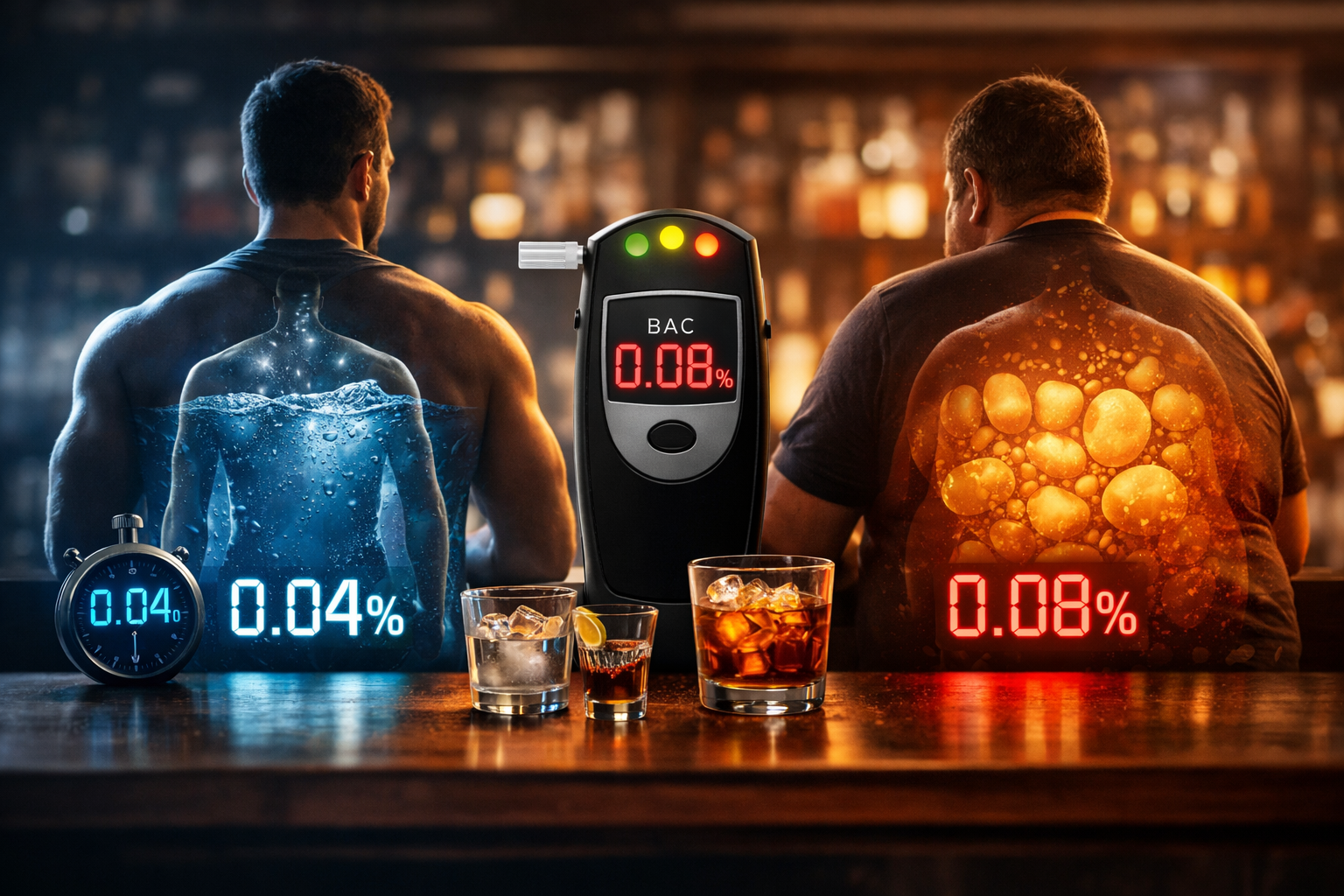
It started as one of those ordinary nights—the kind you barely remember the next morning. Three friends, same bar, same laughter, same weight on the scale, and nearly the same drinks lined up on the table.
By every chart and calculator, they should have been on the same track. But as the rounds went on, the illusion cracked. One friend stayed sharp, steady, almost untouched. The other began to stumble—not dramatically, but in those subtle ways you only notice when you’re watching closely – slower words, softer focus, a faint flush creeping across his face.
That moment—two people, same weight, same drinks, but wildly different reactions—was the spark. It was the night I realized that alcohol doesn’t play by the simple rules we’ve been taught.
And that realization sent me digging into the science—into body composition, metabolism, and the hidden variables that BAC charts never show. Here’s how I found out people weighing 180 lbs will reach $0.08 at different speeds.
The Problem With Most BAC Calculators
Most BAC calculators are built around simplified averages.
They usually ask for weight, gender, number of drinks, time elapsed. And then they estimate your Blood Alcohol Concentration.
But, here’s the problem – The human body is not an average. And that means two people using the same BAC calculator can receive nearly identical estimates while their actual impairment levels differ significantly.
According to the National Institute on Alcohol Abuse and Alcoholism (NIAAA), alcohol distribution depends heavily on body water composition, metabolism, enzyme activity, and biological differences.
That means body fat matters, muscle mass matters, hydration matters, food matters, carbonation matters and suddenly those neat little BAC charts start looking far less reliable in real-world situations.
Why two 180 lb people can reach the legal limit differently? This is where things become fascinating. Alcohol is water-soluble.
It distributes through body water — not simply body weight and, this is the part most BAC calculators barely explain.
Muscle vs. Fat – The Hidden Difference
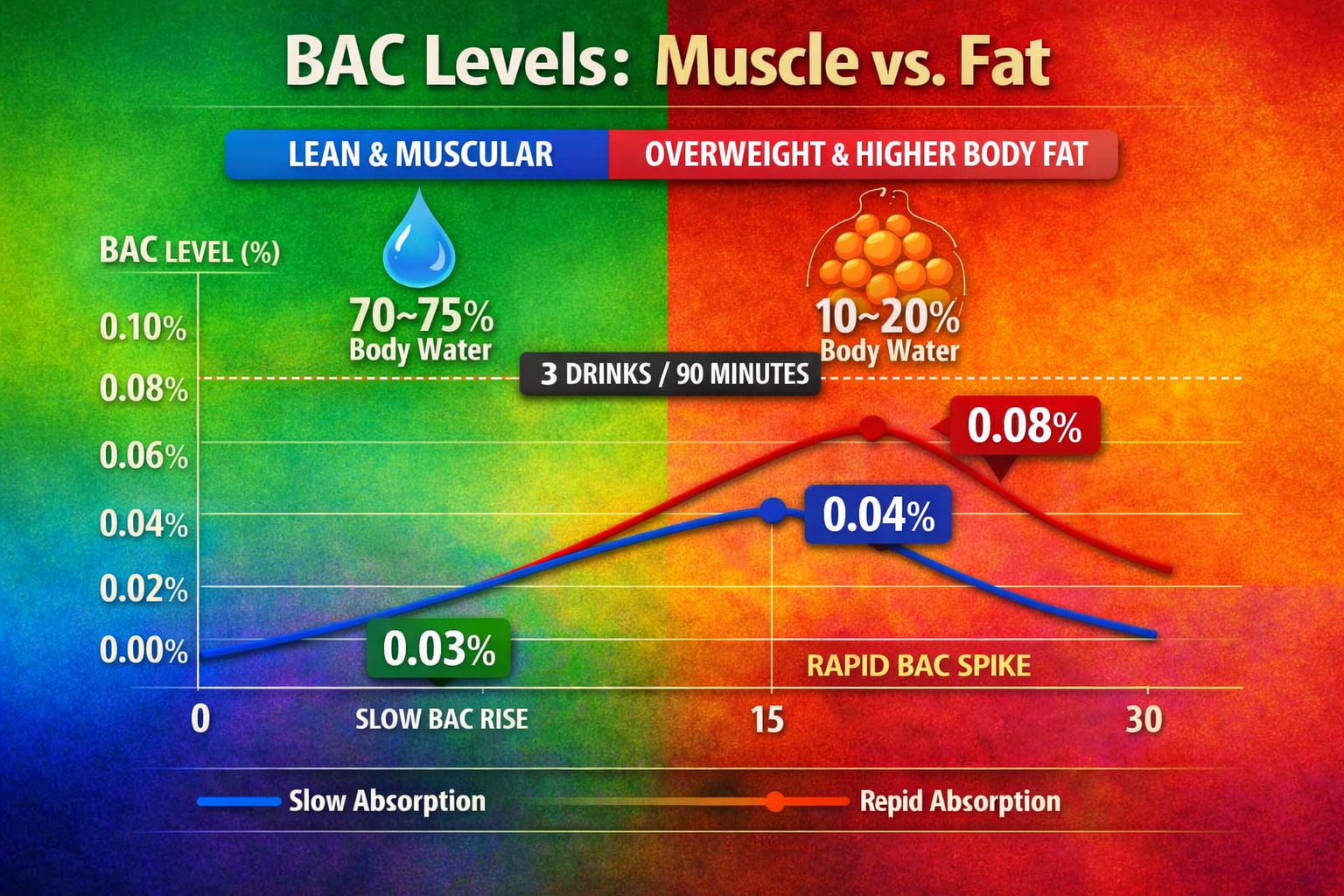
Muscle tissue holds far more water than fat—about 70 to 75 percent compared to just 10 to 20 percent. That difference matters when alcohol enters the body. A leaner person, with more muscle and therefore more total body water, can dilute alcohol more effectively, slowing the rise of their Blood Alcohol Concentration.
Meanwhile, someone with higher body fat absorbs alcohol into a smaller water volume, which means their BAC climbs faster and they reach the legal limit sooner—even if both individuals weigh exactly 180 pounds.
Imagine this – a person weighing 180 lbs, athletic build, low body fat, hydrated after training. Another person weighing 180 lbs, leading a sedentary lifestyle with a higher body fat percentage and, mildly dehydrated after work.
Now both consume – 3 cocktails, over 90 minutes. A BAC chart may estimate similar Blood Alcohol Concentration levels. But biologically, Person B may approach 0.08 BAC significantly faster. Why? Because alcohol has less body water available for dilution.
This is exactly why simplified BAC calculators can become misleading when people treat them like precise scientific tools instead of rough estimates.
The Carbonation Trap Most People Never Notice
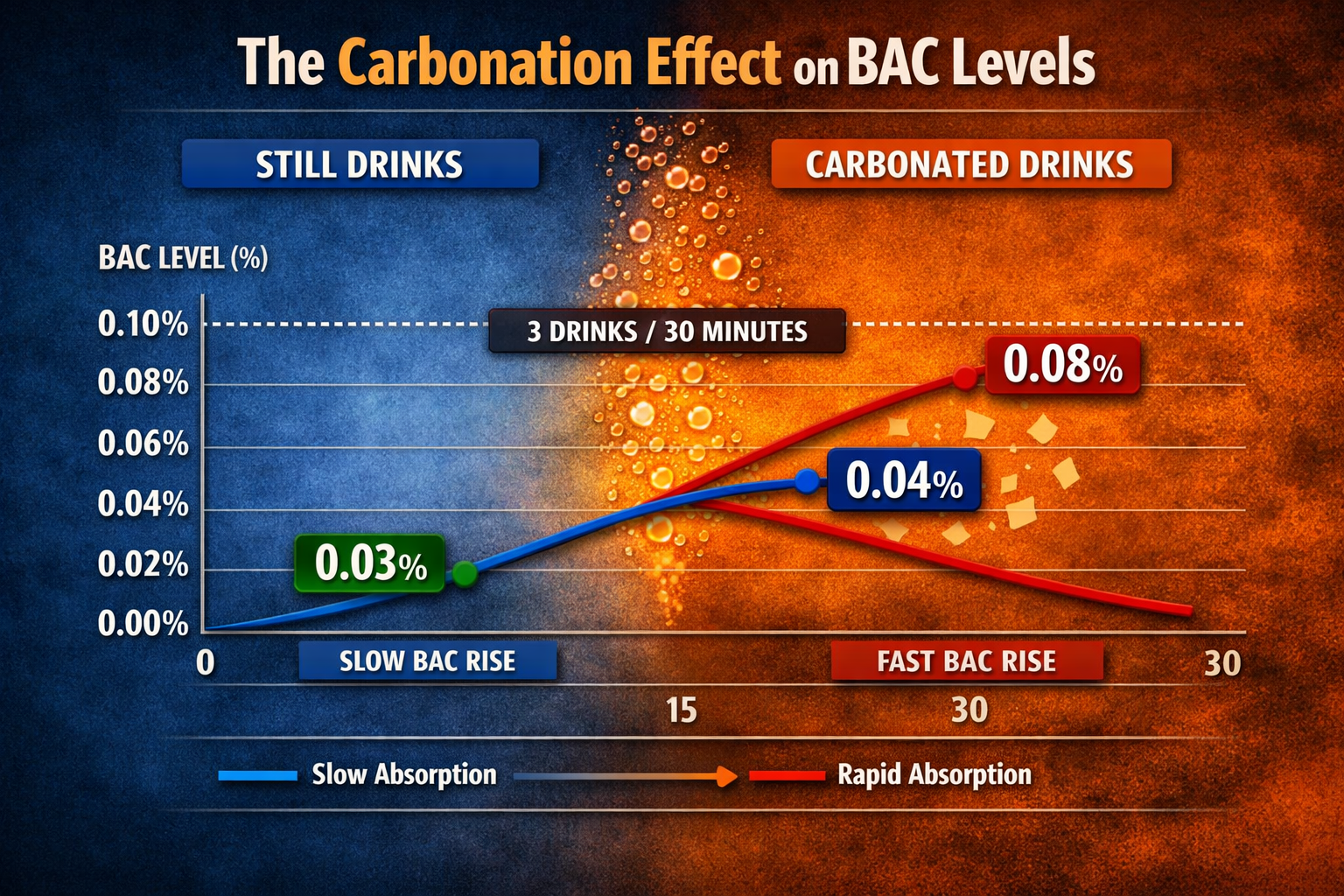
This was the part that honestly surprised me most during my research. Carbonated mixers can increase alcohol absorption speed.
And most people accidentally experience this every weekend without realizing it.
Now, picture two friends at a party. One drinks – whiskey on ice and the other drinks vodka soda. Same alcohol content. Completely different absorption speed.
Studies found that carbonated mixers accelerated alcohol absorption in many participants.
Researchers observed that carbonation may speed up gastric emptying — meaning alcohol reaches the small intestine faster.
And that matters because most alcohol absorption occurs in the small intestine. In practical terms? Carbonation can push someone toward the legal limit faster than expected.
Which means vodka soda, rum and coke, champagne, prosecco may hit harder and faster than people assume.
Even when BAC calculators estimate similar outcomes. Why Champagne Feels “Sneaky”. Almost everyone has heard someone say – “Champagne hits differently.”
That feeling isn’t imaginary. Carbonation changes the delivery system.
Some research and medical discussions have shown higher alcohol absorption rates with sparkling alcoholic beverages compared to still drinks.
So while BAC charts may only count “standard drinks,” the body may process those drinks very differently depending on carbonation. Same alcohol. Different absorption mechanics.
The Empty Stomach Myth Is Only Half True
People love saying – “Just eat before drinking.” But the reality is more complicated than that. The type of food matters enormously.
Imagine two people drinking the same amount. Person A eats pizza, fries, burgers. Person B eats salad, bread. Both technically ate food.
But high-fat meals slow gastric emptying far longer than high-carb meals. That delays alcohol entering the small intestine and delayed absorption means slower BAC increase.
This is another reason why real-world intoxication rarely matches the clean predictions of BAC calculators.
Why Drinking on an Empty Stomach Feels Aggressive
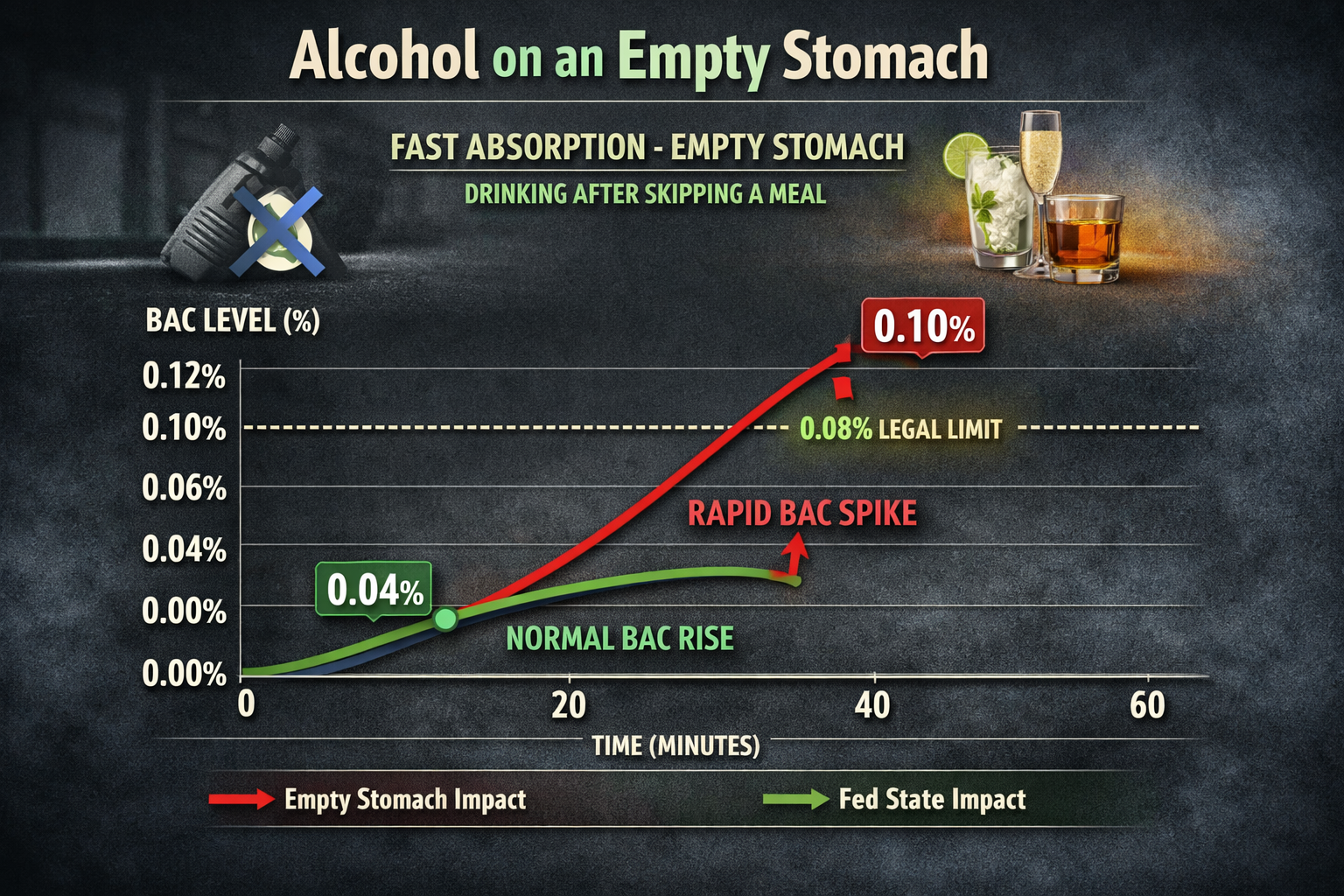
Now imagine someone drinking cocktails, shots, champagne after skipping dinner entirely.
There’s very little digestive resistance. Alcohol reaches the intestine quickly. Absorption accelerates rapidly. Blood Alcohol Concentration spikes harder.
And suddenly someone reaches the legal limit far earlier than expected.
This is why fasting, dieting, dehydration, lack of sleep can dramatically alter how alcohol feels. Even when BAC charts suggest you “should” be fine.
Alcohol is also a diuretic. That means hydration status changes everything. This happens constantly. Someone finishes intense cardio, heavy lifting, a long run, sports practice.
Then goes drinking afterward but now the body is already dehydrated. And because alcohol distributes through body water – BAC may rise faster than normal – same drinks, same person, different biological conditions. Completely different result.
Why “I know my limit” is dangerous? The biggest problem with relying on BAC charts alone is psychological confidence.
People build personal rules like:
“I can handle six drinks.”
“I’m bigger than him.”
“I never get drunk quickly.”
“The BAC calculator says I’m okay.”
But alcohol absorption changes constantly. According to the NIAAA alcohol metabolism research, metabolism varies due to genetics, enzyme activity, nutrition, environmental factors, health status.
Which means your intoxication curve can change from night to night and that’s exactly why relying blindly on BAC calculators can create false confidence.
You Can Check Your BAC — But Understand the Limits
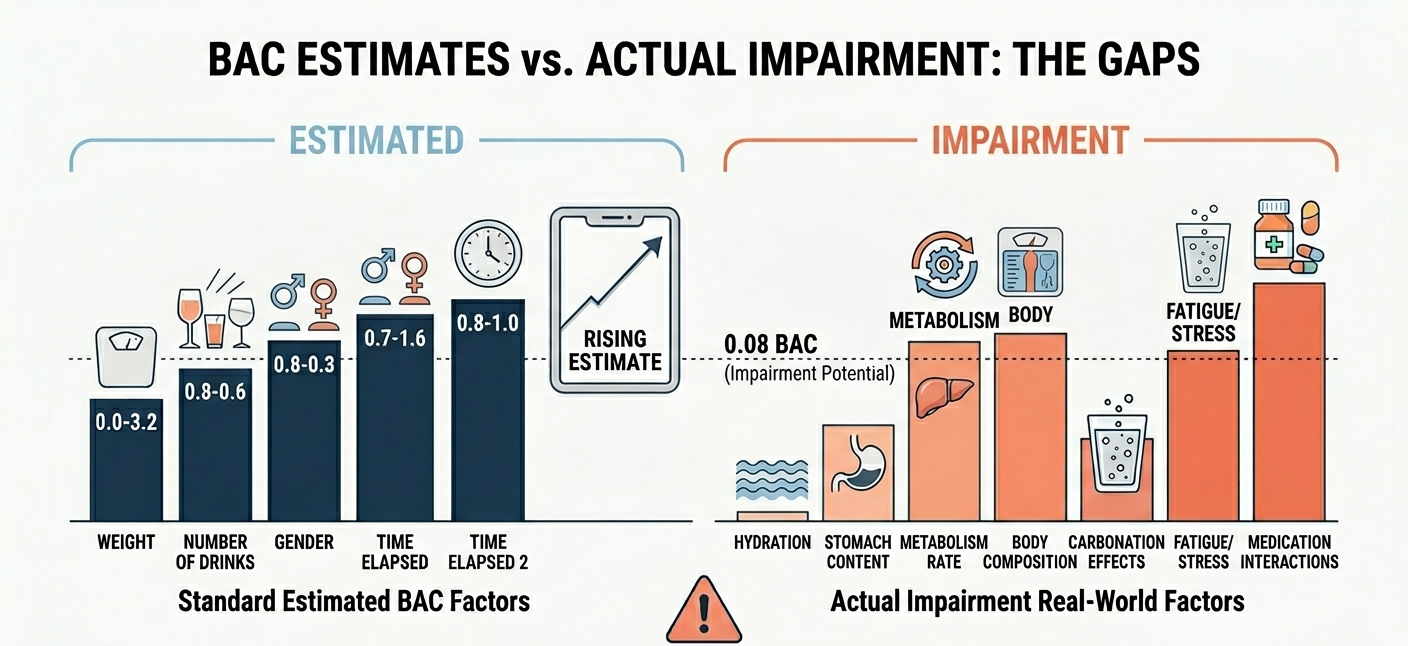
Today, there are countless, BAC calculators, BAC charts, legal limit estimators, alcohol tracking apps, available online and yes, they can be useful as rough educational tools.
You can check your BAC here using trusted alcohol education resources or certified BAC calculators online.
But the keyword is estimate. No BAC calculator can fully account for your hydration, body composition, stomach contents, metabolism, carbonation effects – fatigue, stress, medication interactions.
That’s why estimated BAC and actual impairment are not always the same thing.
That night completely changed how I think about alcohol. Because I realized most people don’t actually understand intoxication.
We simplify it into weight, drink count, BAC charts, legal limit numbers but the human body is far more dynamic than that.
Two people can weigh the same, drink the same, appear similar and still reach 0.08 BAC at very different speeds.
Not because one person is weak not because the other “handles alcohol better.” Because biology is unpredictable.
Wrapping Up
So, that’s how I found out people weighing 180 lbs will reach $0.08 at different speeds. The biggest myth about alcohol is the belief that intoxication follows clean mathematical rules.
It doesn’t. The body is biological, adaptive, and constantly changing. Alcohol absorption depends on body water, muscle mass, body fat, hydration, food composition, carbonation, metabolism, digestion speed and once you understand that – you stop blindly trusting BAC calculators and generic BAC charts as perfect measurements.
Because the legal limit may arrive much faster than you think. Especially when your body processes alcohol differently than the averages those charts were built around.
Reality Vs Myth – In Alcohol Absorption of Body
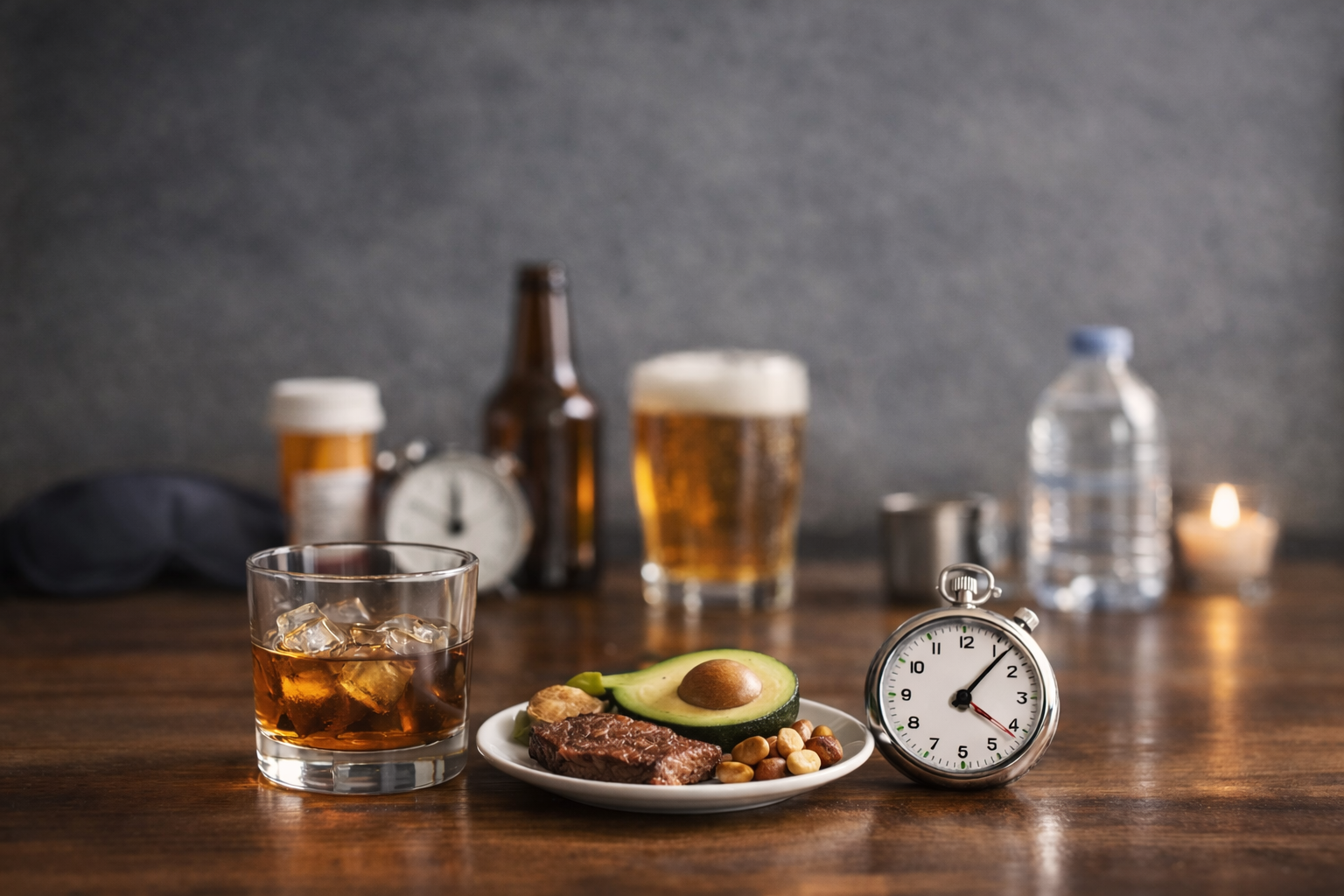
Alcohol affects millions of people worldwide every day, yet most individuals still misunderstand how the body actually absorbs it.
From social drinking habits to online BAC charts and intoxication calculator tools, many people rely on simplified assumptions that ignore real biological complexity.
The truth is that alcohol absorption is influenced by far more than just body weight and the number of drinks consumed.
Here is the real science behind how alcohol enters the bloodstream, why carbonation changes intoxication speed, how different foods affect absorption, and why legal limit charts and automated calculators often fail to predict real-world impairment accurately – the reality vs myth – in alcohol absorption of body.
Understanding the difference between myth and reality is essential not only for personal health but also for making safer decisions about drinking, driving, and alcohol consumption in social environments.
How Alcohol Is Actually Absorbed in the Body
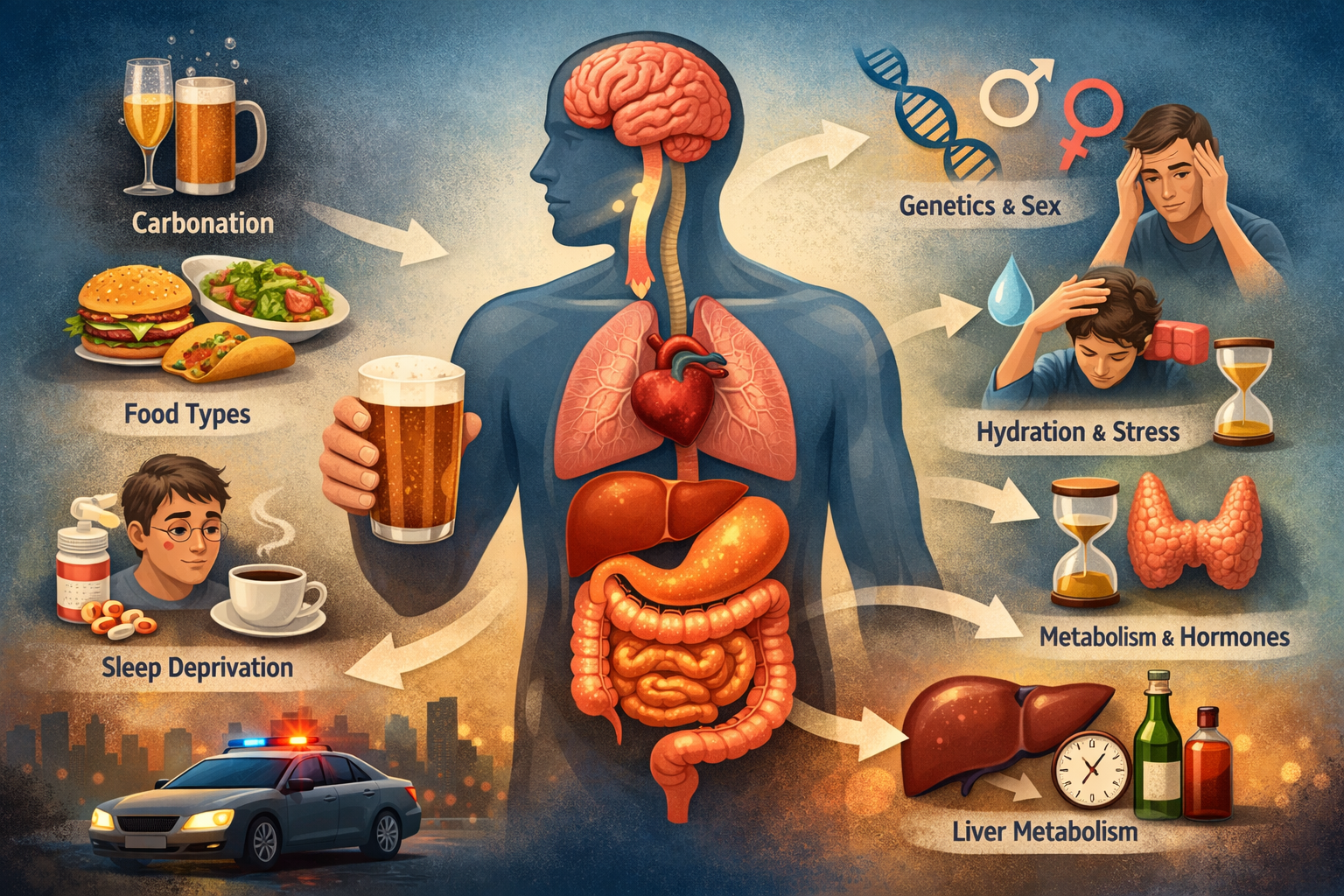
Picture this – you’re at a wedding reception, champagne flutes clinking all around. You’ve only had two glasses, but the carbonation pushes alcohol into your bloodstream faster than you expect. Within minutes, you feel lightheaded, even though a calculator might still place your BAC under the legal limit.
Now imagine a different scene—late-night street food after a party. You grab a greasy burger and fries before heading home. That heavy meal slows alcohol absorption, keeping your BAC rise delayed. On paper, you might already be close to the legal threshold, but in reality, you feel steadier than someone who skipped dinner.
Or think about the exhausted student pulling an all-nighter. One beer after hours of sleep deprivation hits like three. Stress hormones and fatigue magnify impairment, even though the BAC chart says otherwise.
Here’s the science behind it:
- Approximately 20% of alcohol is absorbed through the stomach lining and 80% is absorbed through the small intestine.
- The small intestine works much faster, so the speed at which alcohol leaves the stomach is the real gatekeeper of intoxication.
- Once in the bloodstream, alcohol races to the brain, liver, heart, and nervous system.
- The liver metabolizes alcohol with enzymes, but it can only process a limited amount per hour. Drinking faster than the liver can keep up means intoxication builds quickly.
This is why BAC calculators and intoxication charts often fail—they don’t account for food, carbonation, sleep, stress, hydration, medications, hormones, metabolism, or digestive disorders.
If you want to calculate your Blood Alcohol Concentration (BAC), you can try a calculator here.
Reality vs. Myth in Alcohol Absorption is clear – calculators provide estimates, not guarantees of sobriety. Impairment is personal, unpredictable, and often invisible until it’s too late.
Myth – Eating Anything Before Drinking Prevents Intoxication
One of the biggest misconceptions surrounding alcohol is the belief that any type of meal offers equal protection against intoxication. This is scientifically inaccurate.
The Empty Stomach Fallacy
In Reality Vs Myth – In Alcohol Absorption of Body, one of the most important truths is that the type of food matters more than many people realize.
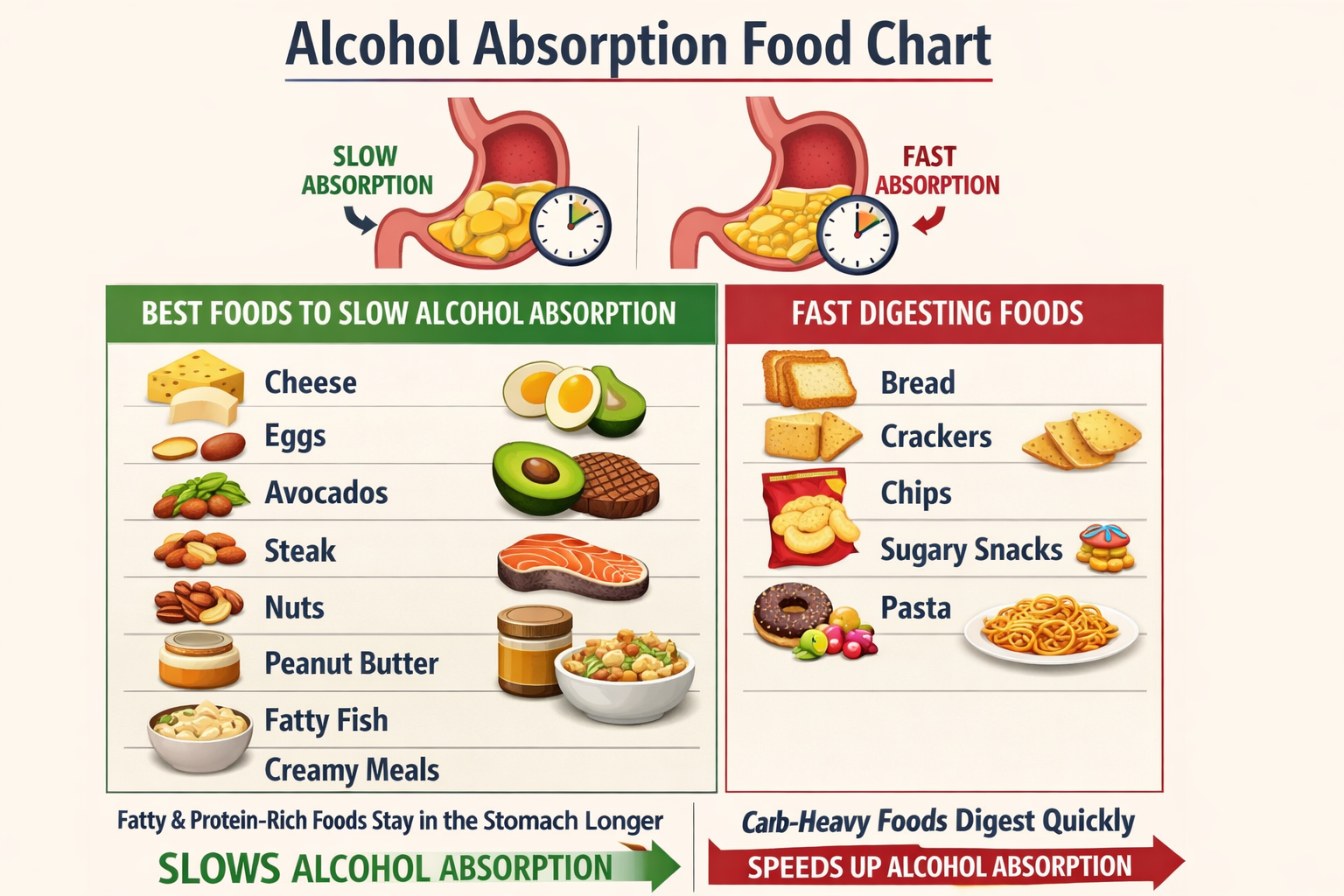
High-fat meals slow gastric emptying far longer than high-carbohydrate meals. Gastric emptying refers to how quickly the stomach passes contents into the small intestine — where most alcohol absorption occurs.
Foods That Slow Alcohol Absorption More Effectively
- Cheese
- Eggs
- Avocados
- Nuts
- Steak
- Fatty fish
- Peanut butter
- Cream-based meals
These foods stay in the stomach longer, delaying alcohol from reaching the small intestine quickly. By contrast, carbohydrate-heavy foods such as:
- Bread
- Crackers
- Chips
- Sugary snacks
- Pasta
may temporarily fill the stomach but digest rapidly. As a result, alcohol can still move into the bloodstream relatively fast.
This explains why two people drinking the same amount may experience very different levels of intoxication depending on what they ate beforehand.
The Carbonation Trap – Why Fizzy Drinks Hit Faster
Many people assume carbonated drinks are lighter and therefore safer. In reality, carbonation may accelerate alcohol absorption.
How Carbonation Changes Alcohol Absorption
Carbonated mixers such as:
- Soda water
- Tonic water
- Cola
- Sparkling beverages
- Hard seltzers
can increase stomach pressure and speed gastric emptying. This pushes alcohol into the small intestine faster, where absorption becomes significantly more rapid.
This phenomenon is sometimes called the Carbonation Trap.
Drinks such as:
- Gin and tonic
- Rum and cola
- Whiskey and soda
- Champagne cocktails
may cause intoxication to occur faster than non-carbonated alternatives.
Champagne is a classic example. Many people report feeling drunk quickly after drinking champagne because carbonation accelerates alcohol delivery into the bloodstream.
Most alcohol absorption charts and online calculator tools do not account for carbonation effects, even though they can noticeably influence intoxication speed.
Why Alcohol Calculators Are Often Misleading
Online BAC calculators have become popular tools for estimating intoxication levels. They usually rely on:
- Body weight
- Gender
- Number of drinks
- Time elapsed
However, these systems use generalized averages and cannot accurately predict real biological responses.
What Most Calculators Ignore
Most BAC calculators give the illusion of precision, but they’re really just rough estimates. They don’t account for the countless variables that shape how alcohol actually affects the body.
- Food composition – A heavy, fatty meal slows absorption, while light or carb-heavy meals speed it up.
- Carbonation – Bubbles accelerate alcohol entering the bloodstream.
- Sleep deprivation – Even small amounts of alcohol hit harder when you’re exhausted.
- Stress levels – Stress hormones alter how alcohol is metabolized.
- Medication use – Interactions can intensify impairment.
- Hydration – Dehydration makes alcohol effects sharper.
- Hormonal fluctuations – Cyclical changes can shift tolerance.
- Metabolic rate – Faster or slower metabolism changes how quickly BAC rises and falls.
- Digestive disorders – Conditions affecting the stomach or intestines can radically change absorption.
That’s why two people can drink the same amount and end up in completely different states – one may remain under the legal limit on paper yet feel severely impaired, while another might feel relatively normal despite already exceeding the threshold.
In Reality vs. Myth – Alcohol Absorption in the Body, this distinction is critical—calculators can’t measure sobriety, they can only estimate. The real story is that impairment is personal, variable, and often invisible until it’s too late.
The Legal Limit Myth
Many people mistakenly believe staying under the legal limit automatically means they are safe to drive. This is dangerous thinking.
Legal blood alcohol concentration limits vary by country and region, but impairment often begins before someone reaches the official legal threshold.
Even small amounts of alcohol can affect:
- Reaction time
- Coordination
- Judgment
- Focus
- Peripheral vision
Sleep deprivation, dehydration, stress, and medications can intensify these impairments further. A person under the legal limit may still be unsafe behind the wheel.
This is one reason law enforcement officers rely not only on BAC readings but also on behavioral observations and field sobriety tests.
Environmental Factors That Alcohol Charts Cannot Predict
One of the most overlooked aspects of alcohol absorption is the environment itself. Automated intoxication charts cannot measure real-world surroundings that influence how alcohol feels and behaves inside the body.
Heat and Outdoor Drinking
Warm environments increase dehydration and circulation. Combined with alcohol’s natural dehydrating effects, heat can intensify dizziness and fatigue.
Beach parties, concerts, clubs, and crowded venues often amplify intoxication more than people expect.
Emotional State and Stress
Stress hormones affect digestion and metabolism. Anxiety may alter stomach emptying rates, while excitement can temporarily mask feelings of intoxication.
This creates situations where people believe they are “fine” until alcohol suddenly affects them more intensely later.
Sleep Deprivation
Fatigue magnifies alcohol impairment dramatically. Someone who is exhausted may become impaired faster than someone who is fully rested, even after consuming the same amount of alcohol.
Again, no standard alcohol calculator or legal limit chart can fully account for these environmental realities.
Myth: Coffee and Cold Showers Sober You Up
This myth continues to persist despite decades of medical evidence proving otherwise.
Coffee may increase alertness temporarily, but it does not lower blood alcohol concentration. Cold showers may make someone feel awake, but they do not remove alcohol from the bloodstream. Only time allows the liver to metabolize alcohol.
The danger is that people may feel more awake while remaining heavily impaired. This false confidence contributes to poor decisions, especially driving under the influence.
Why Two People React Differently to Alcohol
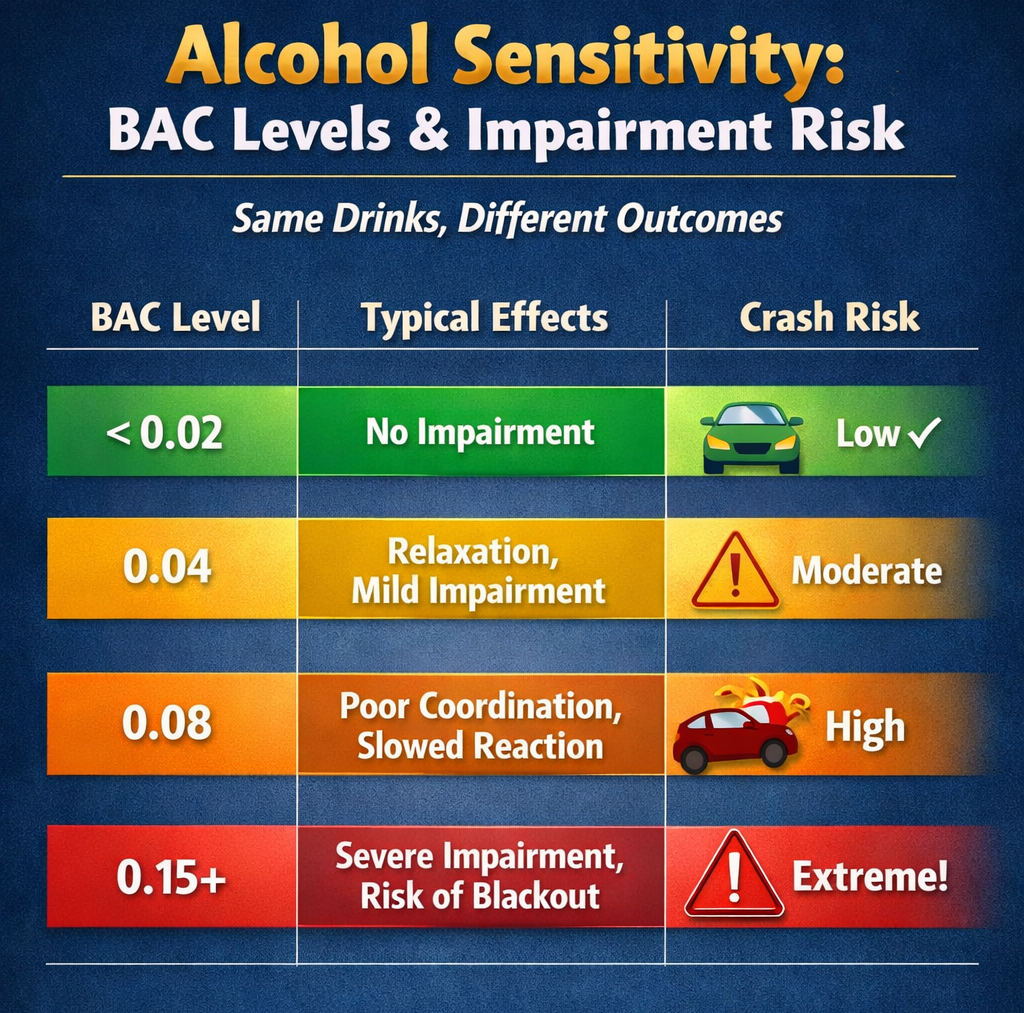
At a family dinner, two siblings share a bottle of wine. One feels flushed and dizzy after a single glass, while the other seems unaffected. The difference isn’t just the drink—it’s biology.
- Genetics – Some people naturally produce fewer alcohol-processing enzymes, making them more sensitive.
- Muscle-to-fat ratio – Alcohol disperses differently in lean tissue versus fat, changing how quickly intoxication builds.
- Biological sex – Women often experience stronger effects at lower amounts due to body composition and hormonal factors.
- Age –Older adults metabolize alcohol more slowly, amplifying impairment.
- Liver health – A compromised liver struggles to process alcohol, intensifying its impact.
- Hormones – Fluctuations can shift tolerance from one day to the next.
- Hydration – Dehydration sharpens alcohol’s effects.
- Medications – Interactions can magnify impairment unexpectedly.
Picture a young athlete with high muscle mass and good hydration—he may handle a beer more smoothly than his friend who is stressed, dehydrated, and on medication. Identical drinks, identical pace, yet completely different outcomes.
This is why standard BAC charts and online calculators should never be treated as exact science. They provide estimates, but the reality is personal, unpredictable, and often invisible until it’s too late.
Reality Vs Myth – In Alcohol Absorption of Body — The Real Truth
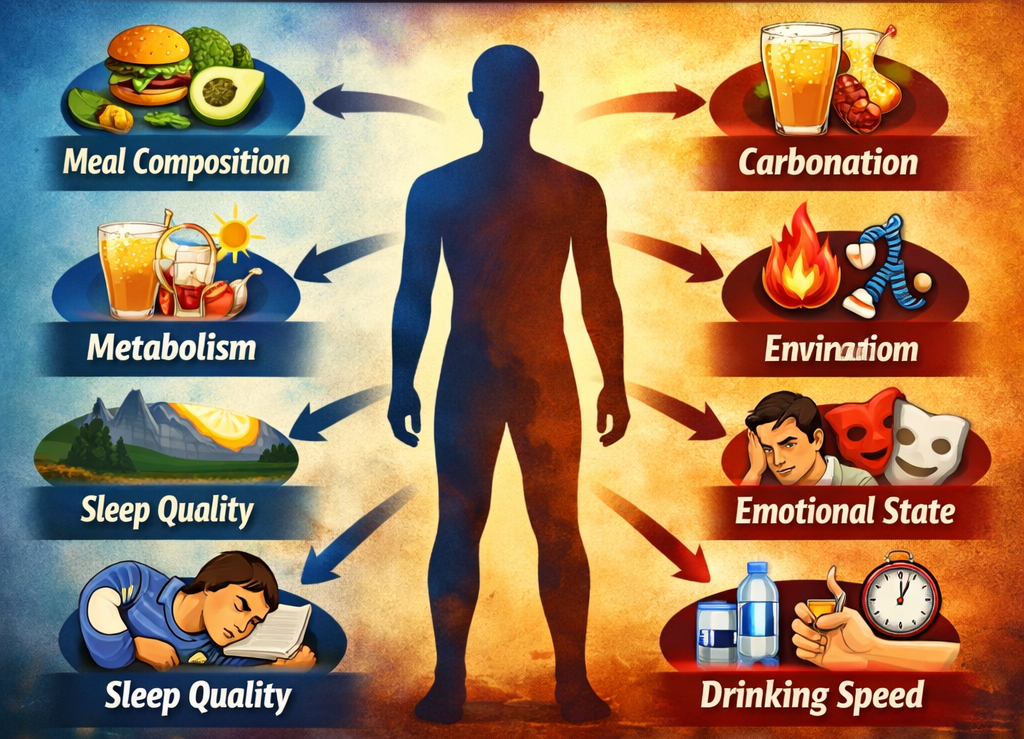
The real science of alcohol absorption is far more complex than popular myths suggest.
The body is influenced by:
- Meal composition
- Carbonation
- Metabolism
- Environment
- Emotional state
- Sleep quality
- Hydration
- Drinking speed
A greasy meal slows alcohol absorption differently than a carb-heavy snack. A carbonated mixer may increase intoxication speed. A tired or dehydrated person may become impaired faster than expected.
No chart, calculator, or legal limit estimate can perfectly predict how alcohol will affect every individual in every situation.
That is the central lesson behind Reality Vs Myth: In Alcohol Absorbtion of Body — the human body does not follow simple formulas.
Wrapping Up
Alcohol absorption is shaped by biology, digestion, environment, and behavior in ways most people underestimate. Common myths often oversimplify the process and create a false sense of control. Understanding the realities helps people make more informed and responsible decisions about drinking.
Ultimately, alcohol absorption of body is about recognizing that alcohol affects everyone differently — and that true awareness comes from understanding the science rather than trusting myths.