
Have you ever heard someone say, “I don’t remember anything that happened last night,” even though they seemed awake, talking, and walking around?
This phenomenon is called an alcohol blackout, and it’s surprisingly common. Many people assume blacking out means losing consciousness, but that’s not true. You can remain awake, have conversations, drive a car, or even appear completely normal—and still wake up with no memory of those events.
The key reason lies in your Blood Alcohol Concentration (BAC) and how alcohol affects the brain. Let’s explore why blackouts happen, how they’re different from passing out, and how knowing your BAC can help you stay safe.
What Is an Alcohol Blackout?
An alcohol blackout is a period of memory loss caused by drinking too much alcohol. During a blackout, your brain stops creating new long-term memories.
This doesn’t mean you lose consciousness.
Instead, your brain continues to process the world around you, allowing you to:
- Talk to friends
- Dance
- Eat
- Use your phone
- Walk around
- Make decisions
Later, however, you won’t remember any of it. Think of your brain like a camera. During a blackout, the camera is still recording what’s happening in real time, but it’s no longer saving the footage to the memory card.
Blackout vs. Passing Out
Although the terms sound similar, they’re very different.
| Alcohol Blackout | Passing Out |
| Awake and responsive | Unconscious |
| Can walk and talk | Cannot respond |
| Memory formation stops | Brain activity is heavily depressed |
| May appear normal | Appears asleep or unconscious |
| Usually happens at high BAC | Usually happens at extremely high BAC |
Someone who blacks out may seem perfectly fine to everyone around them. Someone who passes out is unconscious and may require immediate medical attention.
Why Does It Happen?
Alcohol primarily affects an area of the brain called the hippocampus, which is responsible for creating new memories.
As your Blood Alcohol Concentration (BAC) rises, alcohol interferes with communication between brain cells. Eventually, your brain reaches a point where it can no longer store new experiences.
You continue living through those moments—but your brain never saves them. The faster your BAC rises, the greater the chance of experiencing a blackout.
It’s Not Just How Much You Drink
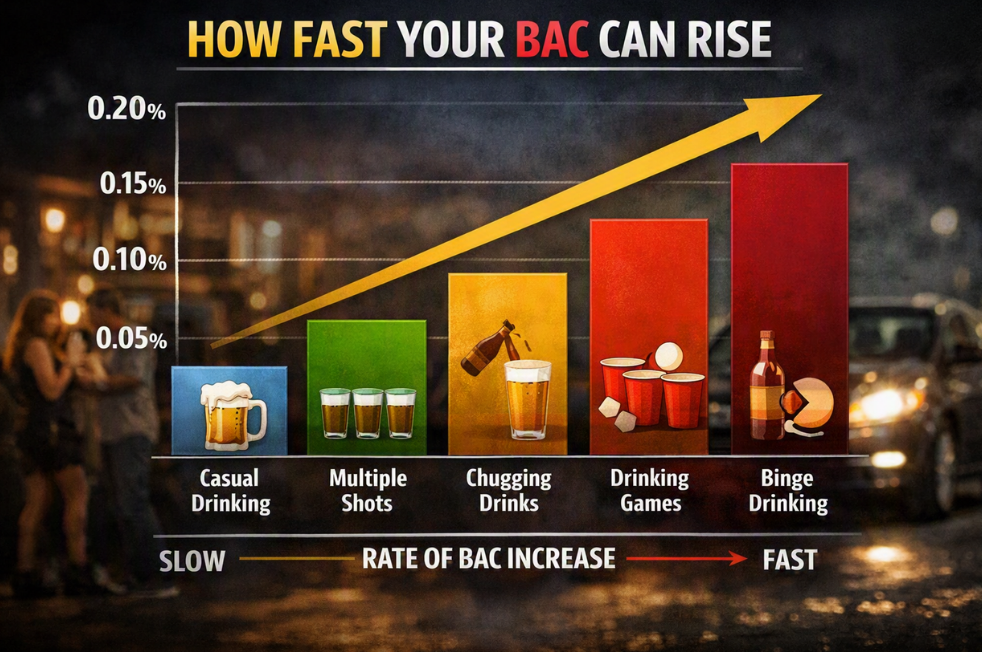
Many people think blackouts only happen after drinking enormous amounts of alcohol.
In reality, how quickly you drink matters just as much as how much you drink. Rapid drinking causes BAC to rise sharply, giving your brain little time to adapt.
Common situations that rapidly increase BAC include:
- Drinking multiple shots in a short period
- Chugging alcoholic beverages
- Drinking games
- Binge drinking
- Drinking on an empty stomach
Two people may consume the same number of drinks, yet only one experiences a blackout because their BAC increased much faster.
At What BAC Do Blackouts Usually Begin?
There isn’t one exact number because everyone processes alcohol differently.
However, research shows blackouts become much more common once BAC reaches around 0.16% or higher, roughly twice the legal driving limit in many countries.
Factors that influence when a blackout occurs include:
- Body weight
- Biological sex
- Drinking speed
- Food consumed before drinking
- Alcohol tolerance
- Medications
- Genetics
This is why one person’s blackout BAC may be different from someone else’s.
What Is the Legal BAC Limit?
The legal BAC limit for driving varies depending on where you live.
Many countries set the legal limit at 0.08% BAC, while others have stricter limits such as 0.05% or even lower.
It’s important to remember that impairment begins well before reaching the legal limit. Even at relatively low BAC levels, alcohol can affect:
- Judgment
- Reaction time
- Coordination
- Vision
- Decision-making
Reaching the legal limit isn’t the point at which alcohol suddenly becomes dangerous—its effects begin much earlier.
Who Is Most Likely to Experience Blackouts?
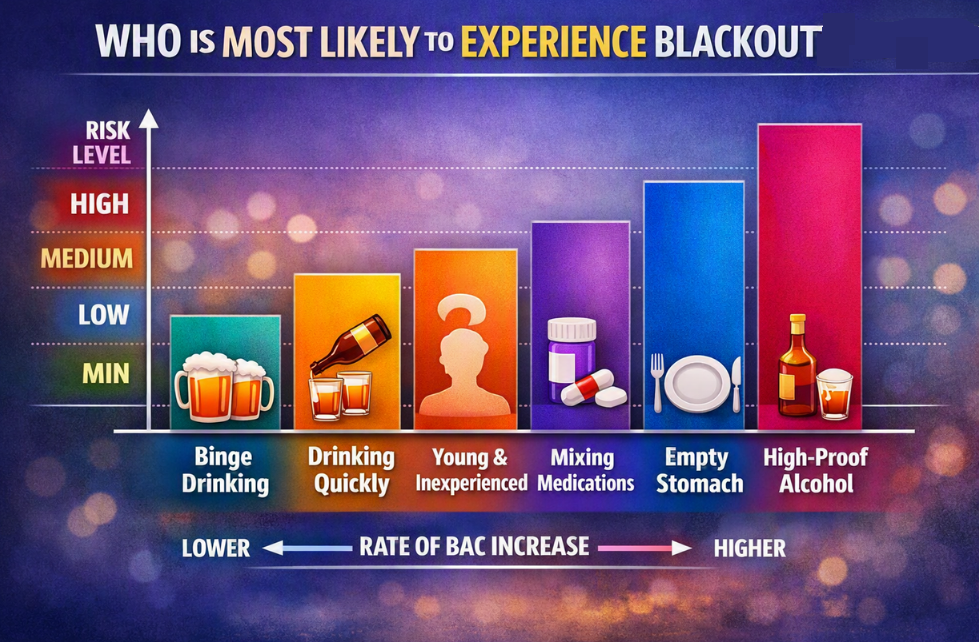
Certain situations increase the likelihood of blackouts.
These include:
- Binge drinking
- Drinking very quickly
- Being younger and inexperienced with alcohol
- Mixing alcohol with certain medications
- Drinking without eating
- Consuming high-proof liquor
People who regularly binge drink are significantly more likely to experience repeated blackouts.
So, can you be walking around during a blackout? The answer is ‘Yes’. This is one of the most surprising aspects of alcohol blackouts.
A person may:
- Hold conversations
- Send text messages
- Post on social media
- Order food
- Make purchases
- Travel from one place to another
Because they appear awake, friends may not realize they’re experiencing a blackout.
The memory loss usually isn’t discovered until the next day.
Why Blackouts Can be Dangerous
Even though someone remains conscious, blackouts dramatically increase the risk of harmful situations.
During a blackout, people may:
- Drive without remembering
- Fall or injure themselves
- Get into arguments
- Engage in risky behavior
- Lose valuables
- Make decisions they later regret
Because judgment is impaired and memories aren’t being formed, people cannot accurately assess risks.
Can Blackouts Cause Permanent Brain Damage?
A single blackout doesn’t necessarily mean permanent brain damage.
However, repeated heavy drinking and frequent blackouts can have long-term effects on brain health.
Research has linked chronic heavy alcohol use with:
- Memory problems
- Difficulty concentrating
- Reduced learning ability
- Increased risk of alcohol dependence
If blackouts become a recurring pattern, it’s a sign that alcohol consumption has reached potentially dangerous levels.
How to Reduce Your Risk
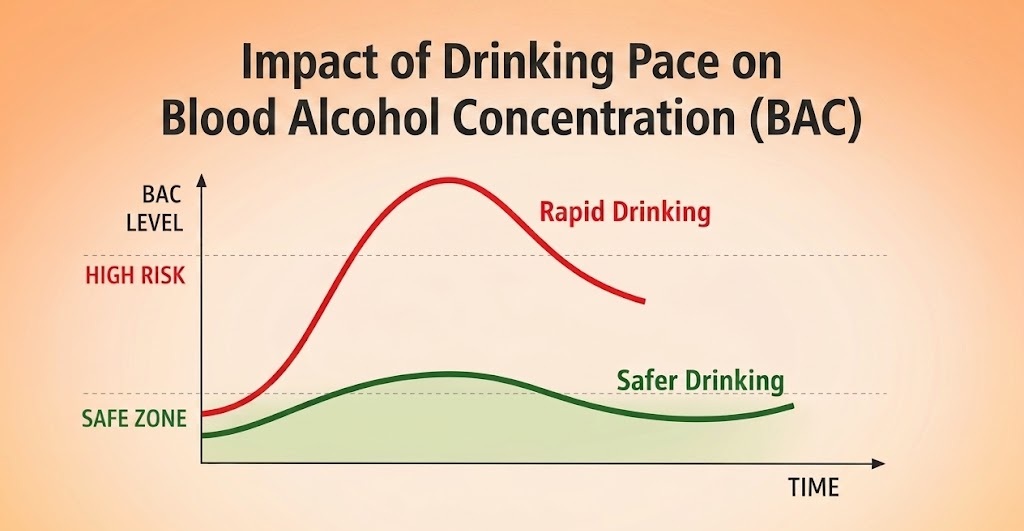
You can’t completely eliminate the effects of alcohol, but you can lower your risk of blacking out.
Some practical strategies include:
- Eat a meal before drinking.
- Pace yourself instead of drinking rapidly.
- Alternate alcoholic drinks with water.
- Avoid drinking games.
- Set a drink limit before you begin.
- Avoid mixing alcohol with medications unless approved by a healthcare professional.
- Know your approximate BAC throughout the night.
The biggest factor is preventing your BAC from rising too quickly.
Know Your BAC Before It Becomes a Problem
Most people can’t accurately judge how intoxicated they are based on how they feel.
That’s why estimating your Blood Alcohol Concentration (BAC) can be a valuable safety tool. Your BAC depends on several factors, including your weight, sex, number of drinks, and the time over which you’ve been drinking.
Check your BAC here using our BAC Calculator to estimate your current Blood Alcohol Concentration before making important decisions like driving or continuing to drink.
A calculator isn’t a substitute for a breathalyzer or medical test, but it can help you better understand how alcohol may be affecting your body.
Wrapping Up
Blacking out without passing out is one of alcohol’s most misunderstood effects. You don’t have to lose consciousness for alcohol to seriously affect your brain. During a blackout, your body may keep functioning, but your brain stops storing new memories.
The risk increases as your BAC rises—especially when drinking happens quickly.
Before getting behind the wheel or having another drink, check your BAC with our BAC Calculator.
Knowing your estimated BAC and understanding your local legal limit could help you avoid dangerous situations and make more informed decisions about alcohol consumption.
