
When people think about blood alcohol concentration (BAC), body weight is often the first thing they consider. It seems logical – if two people drink the same amount of alcohol, the person who weighs more should have a lower BAC.
While body weight does play a role, it is far from the only factor that matters. How quickly you drink, whether you’ve eaten, the strength of the drink, your body composition, metabolism, medications, and even genetics can all influence how alcohol affects your body.
This is why two people who weigh the same can consume the same amount of alcohol and still experience very different BAC levels.
Here are ten surprising factors that can influence your BAC more than you might expect.
What Determines Your BAC?
BAC is influenced by much more than just your body weight. The amount of alcohol you drink, how quickly you drink it, how much alcohol is absorbed into your bloodstream, how it is distributed throughout your body, and how quickly your body metabolizes alcohol can all affect your BAC.
As BAC rises, alcohol can increasingly impair reaction time, coordination, judgment, concentration, and decision-making.
This is why a simple BAC chart based only on body weight cannot provide a complete picture. Two people who weigh the same and consume the same number of drinks can still have different BAC levels depending on factors such as drinking speed, food intake, metabolism, and individual differences. Now, if you want to measure your BAC, you can measure it here.
How Quickly You Drink
One of the biggest factors influencing BAC is how quickly you consume alcohol. Consider two people who consume the same total amount of alcohol. One drinks slowly over several hours. The other drinks the same amount within a short period.
Their BAC levels can be very different because alcohol may enter the bloodstream faster than the body can process it. When several drinks are consumed close together, BAC can rise rapidly. This is one reason binge drinking carries particularly serious risks.
So when looking at BAC estimates, the number of drinks alone doesn’t tell the whole story. Time matters too.
Whether You Have Food in Your Stomach
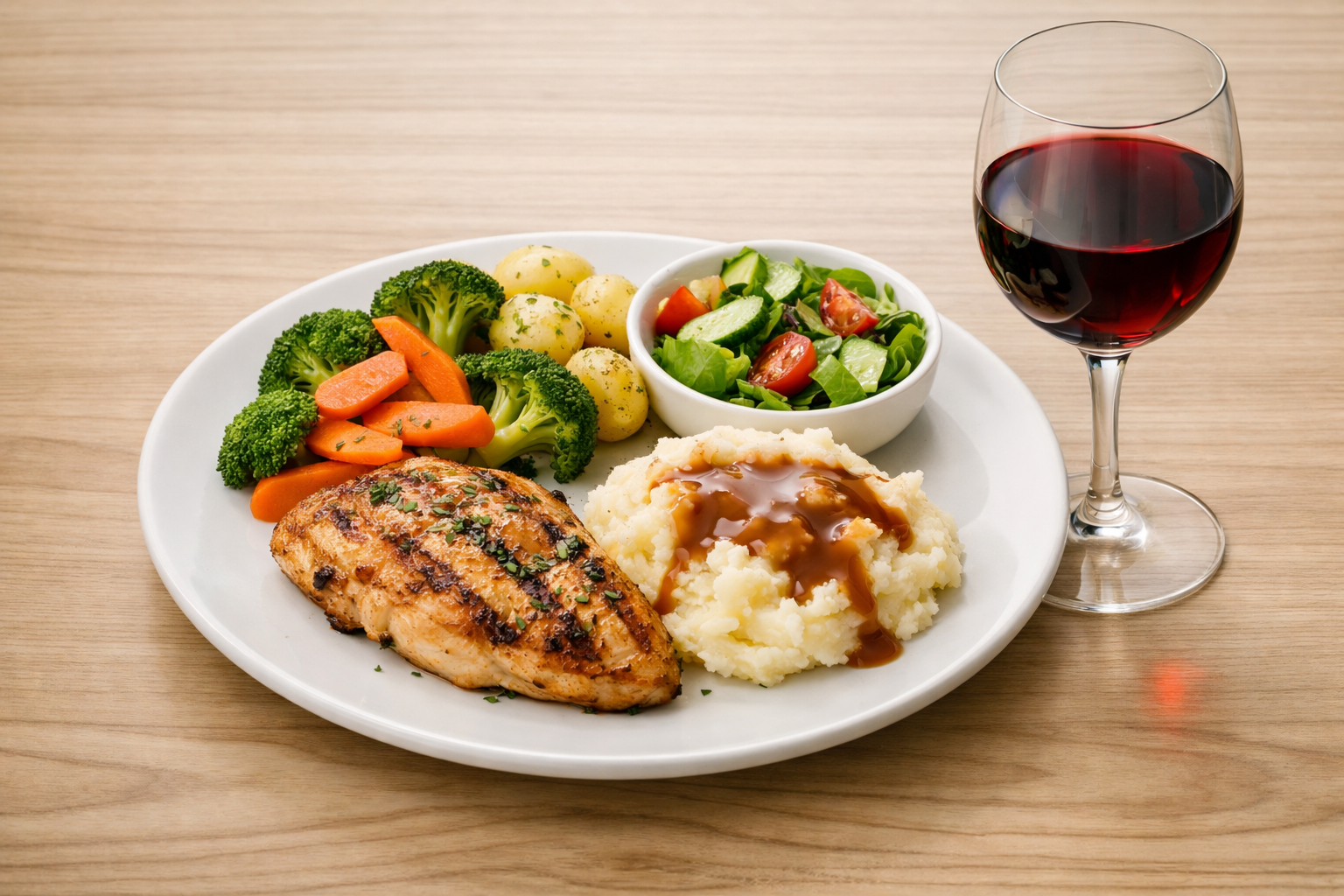
Food can significantly affect how quickly alcohol is absorbed. Alcohol consumed on an empty stomach generally reaches the bloodstream faster than alcohol consumed after eating.
Food can slow the movement of alcohol into the small intestine, where much of the alcohol is absorbed. This doesn’t mean that eating eliminates alcohol or prevents intoxication. Instead, it can slow the rate at which alcohol enters the bloodstream.
That means two people with identical body weights can experience different BAC patterns after consuming the same amount of alcohol depending on whether they have recently eaten.
The Actual Amount of Alcohol in Your Drink
The phrase “one drink” can be misleading. A beer, glass of wine, or cocktail isn’t automatically equivalent to one standard drink.
Serving sizes and alcohol concentrations can vary considerably. A large glass of wine may contain more alcohol than a standard serving. A cocktail can contain multiple servings of alcohol depending on its ingredients and preparation.
This is particularly important when estimating BAC because people often count beverages rather than the actual amount of alcohol they contain.
For example, someone might say -“I only had two drinks.” But if both drinks contained significantly more alcohol than a standard serving, their actual alcohol intake could be much higher than expected.
Biological Variability and Body Composition
Biological variability can influence BAC because alcohol is distributed primarily through body water.
On average, women have less body water per pound of body weight than men. As a result, consuming the same amount of alcohol can produce a higher BAC in a woman than in a man of the same weight.
But body weight itself doesn’t tell you how much body water someone has. Two people can weigh exactly the same while having different proportions of muscle, fat, and lean tissue. Since alcohol doesn’t distribute equally into body fat, body composition can affect the relationship between alcohol consumption and BAC. This is another reason why weight-based BAC charts should only be treated as estimates.
Genetics
Your genetics can influence how your body processes alcohol. Alcohol is primarily broken down through enzymes including alcohol dehydrogenase and aldehyde dehydrogenase. Genetic variations can affect how efficiently these pathways process alcohol and its byproducts.
Some people have genetic variants that can cause acetaldehyde to accumulate more readily, resulting in reactions such as facial flushing, nausea, dizziness, or a rapid heartbeat. Genetics don’t mean that someone can simply “handle alcohol better.” Instead, they can influence how the body responds to and processes alcohol.
Age
Age can also affect how alcohol interacts with the body. Changes in body composition and physiology can alter how alcohol is distributed and experienced. Older adults may also be more likely to take medications that interact with alcohol.
This means that two people with similar weights and similar BAC levels can potentially experience alcohol very differently. BAC is therefore only one part of the overall picture.
Medications

Certain medications can interact with alcohol and change the effects of drinking. Some medications may affect alcohol absorption or metabolism, while others can make alcohol’s effects considerably stronger. Alcohol can also interact with medications used for conditions involving sleep, anxiety, pain, allergies, and other health concerns.
In some cases, the problem isn’t necessarily that the medication dramatically changes BAC.
The bigger concern may be that combining alcohol with the medication increases drowsiness, dizziness, impaired coordination, or breathing problems. If you take medication, checking for alcohol interactions is important.
Your Alcohol Metabolism
After alcohol enters your bloodstream, your body begins breaking it down. Most alcohol metabolism takes place in the liver through enzymatic processes.
However, alcohol metabolism isn’t identical in everyone. Genetics, body composition, liver health, nutrition, and other biological factors can influence how an individual processes alcohol.
This is also why common “sobering up” tricks don’t work the way people often believe. Coffee may make you feel more awake, but it doesn’t instantly remove alcohol from your bloodstream. Your body still needs time to metabolize the alcohol.
Hydration and Body Water
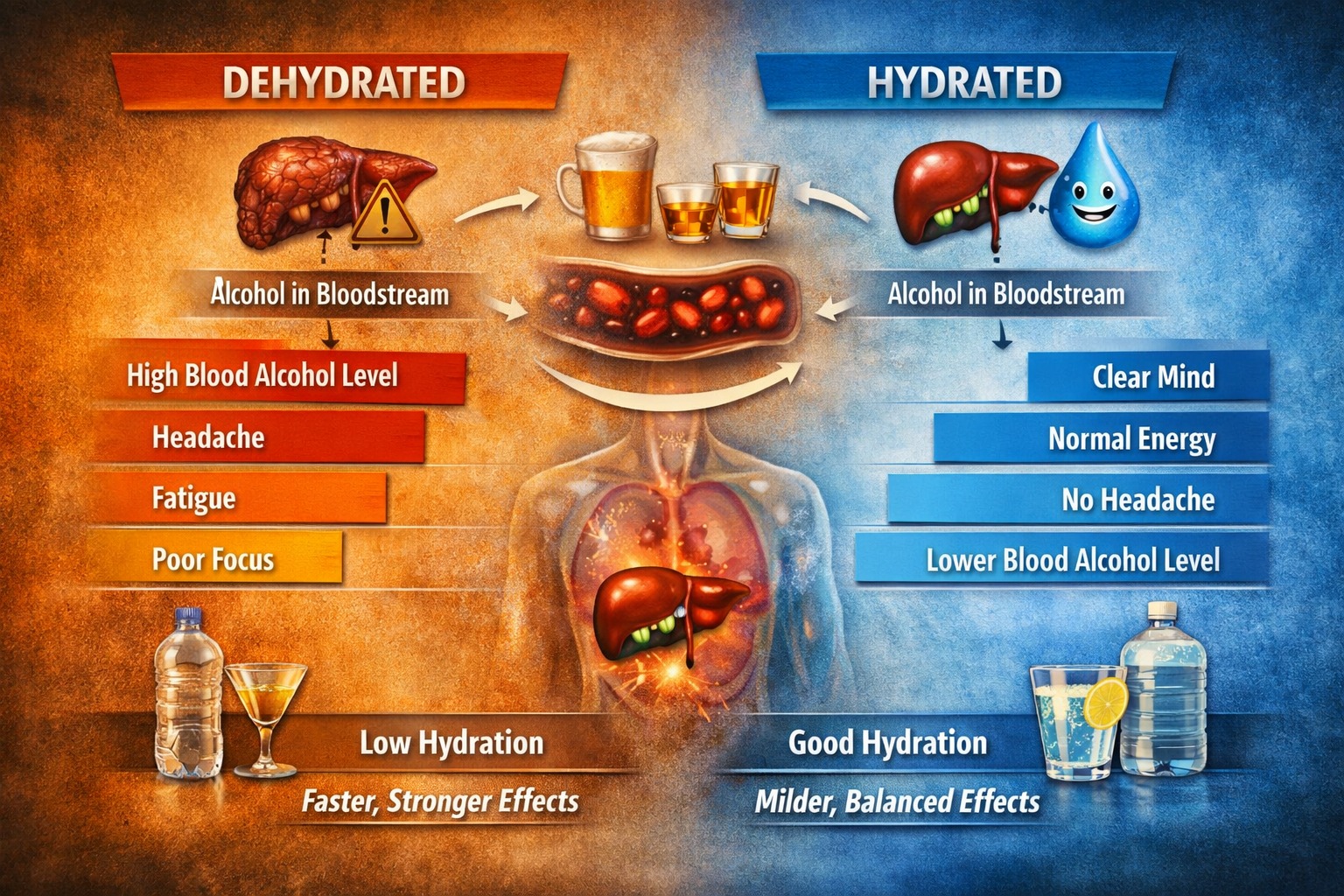
Hydration and body water can affect how alcohol is distributed throughout the body. Alcohol is distributed primarily through water-containing tissues rather than body fat. This means that two people with identical body weights can have different amounts of body water and therefore potentially different BAC responses.
However, drinking water after consuming alcohol does not rapidly lower BAC. Water can help with hydration, but it doesn’t remove alcohol from the bloodstream.
Your Overall Drinking Pattern
Finally, your overall drinking pattern can make a major difference. It’s not simply about how many drinks you have. It’s about how much you drink, how quickly you drink, and how those drinks are spread over time.
Consuming the same total amount of alcohol over a longer period can produce a different BAC pattern from consuming it rapidly. This is why looking only at the total number of drinks can be misleading.
Why the Same Number of Drinks Can Produce Different BAC Levels
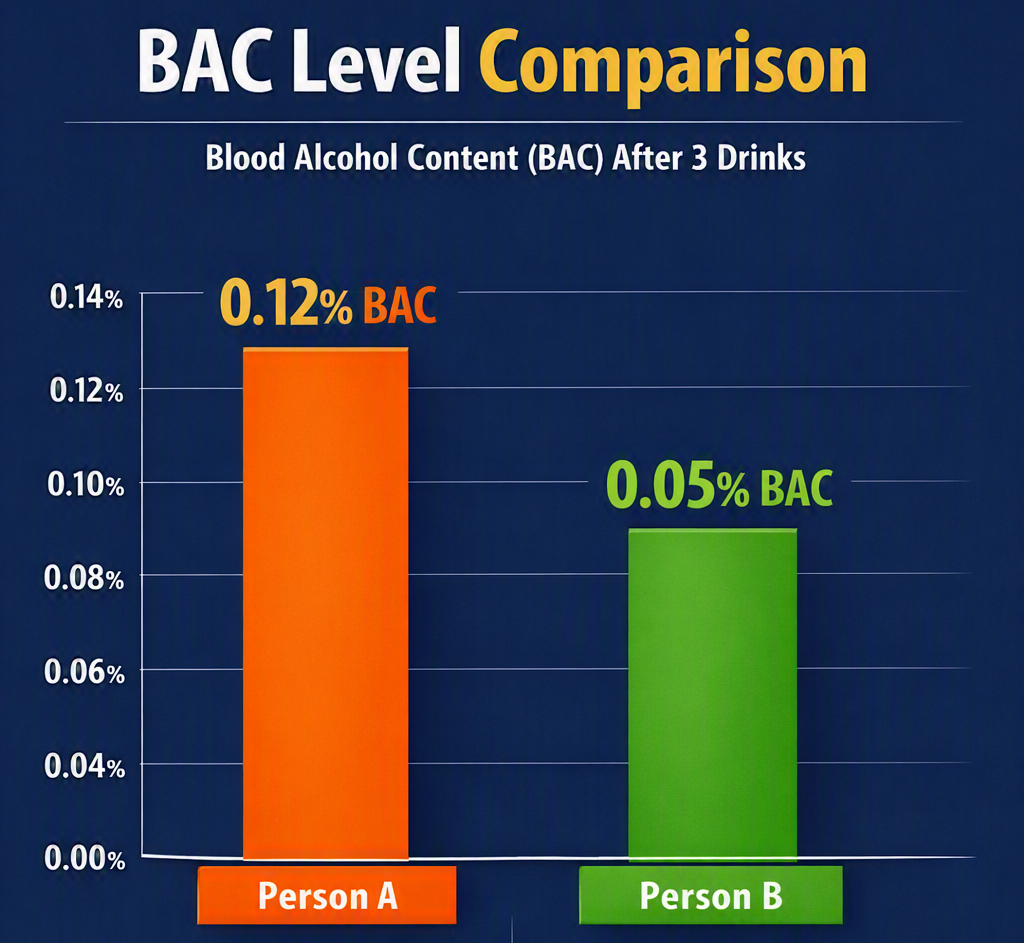
Imagine two people who each consume three alcoholic beverages.
They might still end up with different BAC levels because of differences in:
- Body composition
- Sex
- Drinking speed
- Food intake
- Alcohol concentration
- Age
- Genetics
- Medications
- Metabolism
- Amount of body water
This is why there isn’t a single universal formula that can perfectly predict everyone’s BAC.
A BAC calculator can provide an estimate based on available information, but real-world BAC can be more complicated.
Why Body Weight Isn’t the Whole Story
Body weight is useful when estimating BAC, but treating it as the most important factor can create a misleading picture.
A more complete way to think about BAC is – Amount of alcohol + drinking speed + absorption + body composition + body water + metabolism + individual differences = BAC
That’s why two people who weigh the same can have different BAC levels after drinking the same amount of alcohol.
Wrapping Up
Body weight matters when it comes to BAC, but it is only one piece of the puzzle. Drinking speed, food, drink strength, body composition, sex, genetics, age, medications, hydration, and alcohol metabolism can all influence how alcohol affects your body.
BAC charts and BAC calculators can help explain these relationships, but they provide estimates rather than direct measurements. And while knowing the legal limit is useful, it shouldn’t be treated as a target for drinking and driving. If you’ve been drinking, don’t rely on how you feel, a BAC calculator, or a BAC chart to decide whether you can drive. The safest BAC for driving is zero.
