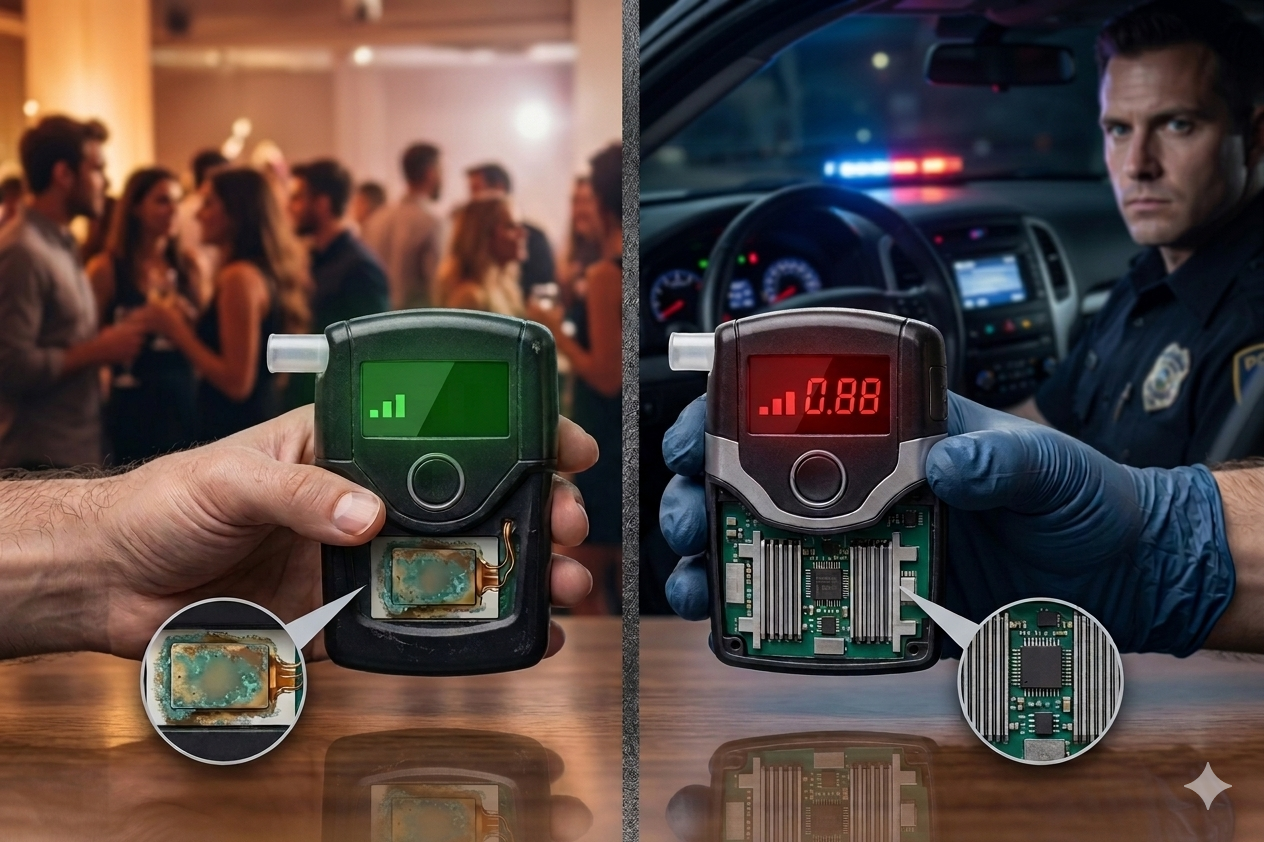
There’s something strangely comforting about a personal breathalyzer. You leave a party, blow into a handheld device, and a number flashes on the screen. Instantly, anxiety turns into confidence. If the reading looks low enough, the mind relaxes and says – I’m fine. I can drive.
But here’s the uncomfortable reality – not all breathalyzers are built to tell the truth equally well. Some are designed for rough awareness. Others are designed for legal and professional accuracy. Yet many people treat both as if they are equally reliable.
That’s where the danger begins. Because when alcohol, driving, workplace safety, or legal consequences are involved, a small error is not a small problem.
Why BAC Numbers Feel More Scientific Than They Really Are
Before talking about breathalyzers themselves, it’s important to understand how people already estimate intoxication.
Most people rely on three things:
- BAC charts
- Online BAC calculators
- Personal experience
BAC charts use averages based on body weight, number of drinks, and time elapsed. BAC calculators rely on formulas like the Widmark equation to estimate blood alcohol concentration.
The problem is that alcohol does not behave mathematically inside every human body.
Metabolism differs, sleep affects absorption, food changes alcohol processing. Stress, medication, hydration, and even fatigue can alter BAC readings.
Two people can drink the exact same amount and still test very differently. The truth is that alcohol absorption in the body differs from one person to another.
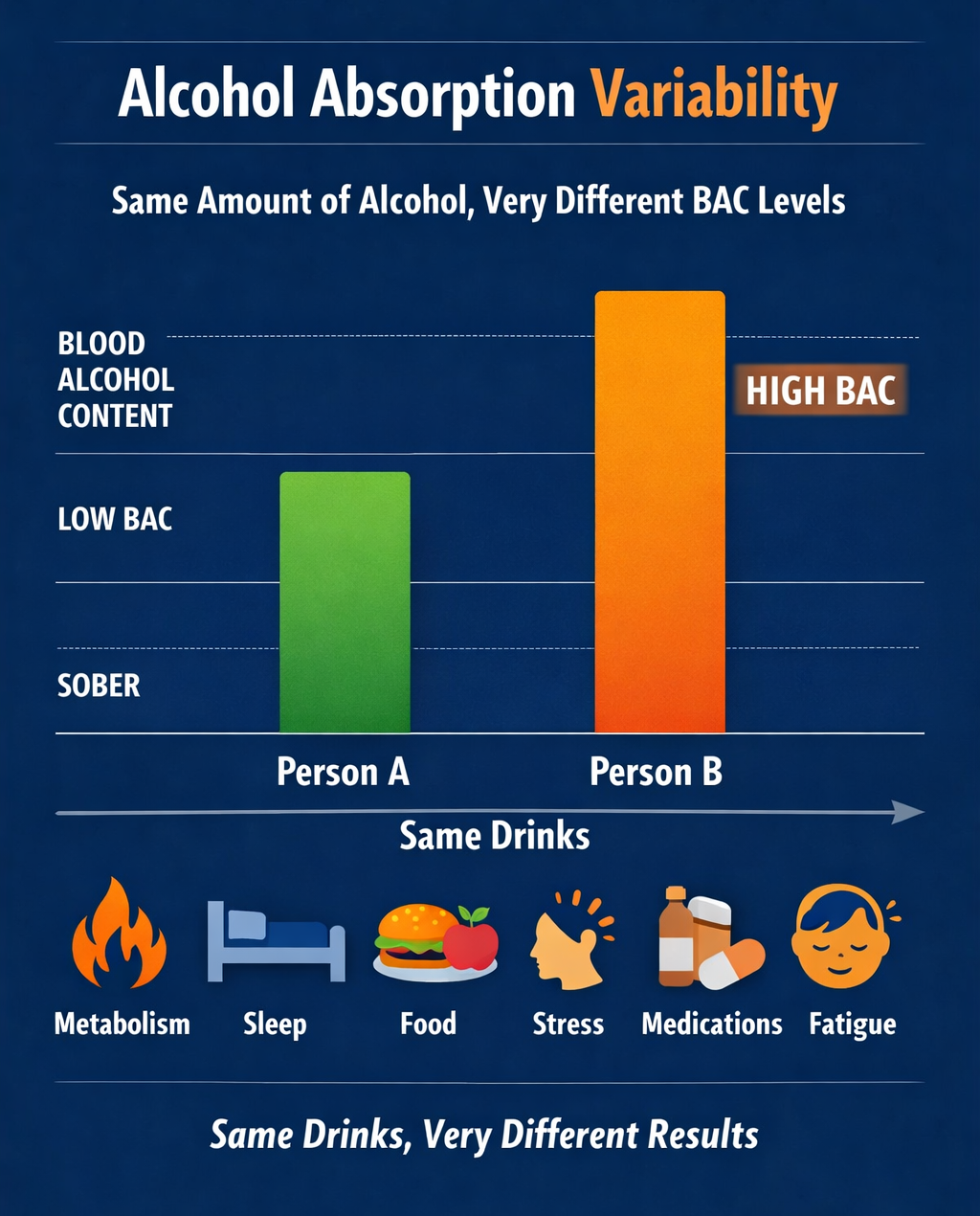
Most calculators can be wrong. The margins may sound small on paper, but near legal limits it becomes enormous. And even more importantly, impairment begins much earlier than people think.
At just 0.02–0.05 BAC, reaction time slows, attention weakens, and judgment becomes less reliable. Ironically, people often become more confident precisely when their decision-making is becoming worse.
That psychological trap is what makes personal breathalyzers so powerful — and sometimes so dangerous.
The Two Completely Different Worlds of Breathalyzers
Most consumers assume all breathalyzers work the same way. They don’t. There are actually two very different technologies hiding behind those digital screens.
Semiconductor Breathalyzers – Cheap, Popular, and Often Misleading
These are the breathalyzers most people buy online.
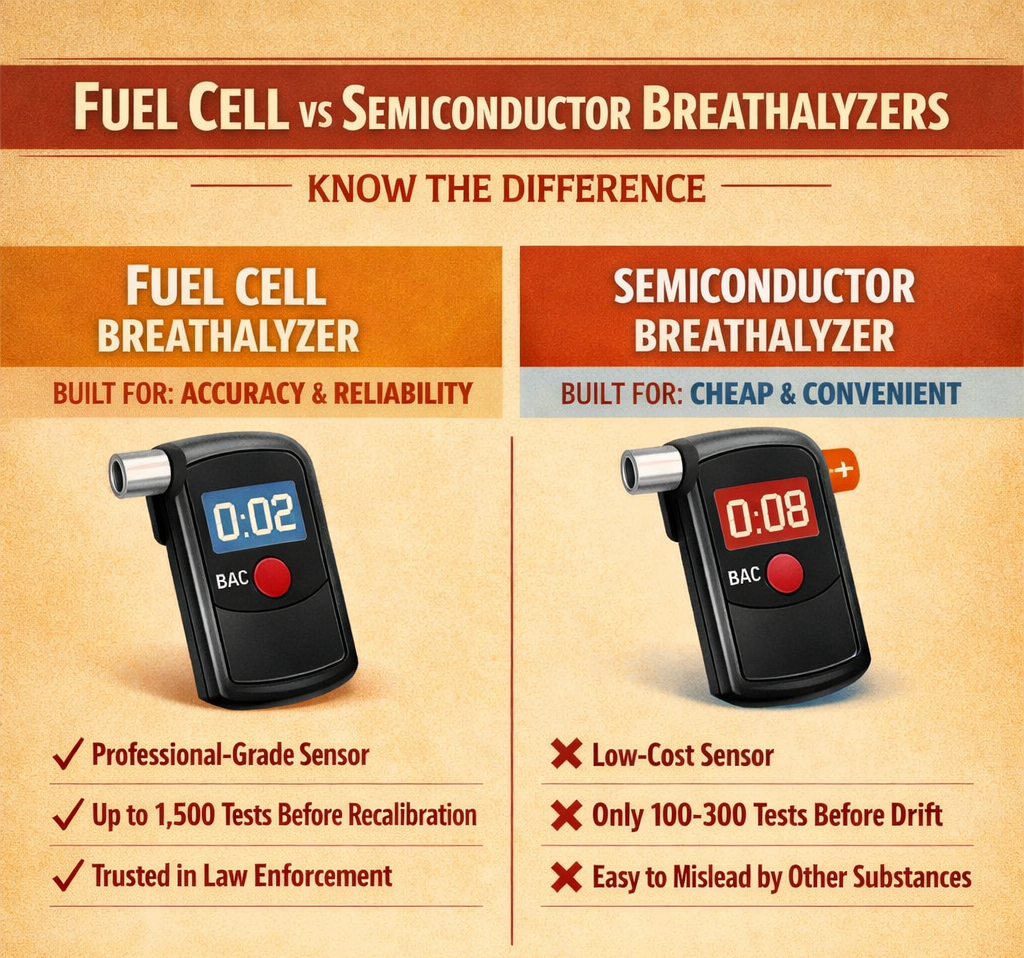
They are affordable, portable, and heavily marketed toward casual consumers. Prices usually range between $50 and $150, making them attractive for parties, social gatherings, or “just to check.”
But low cost comes with major compromises. Semiconductor sensors react broadly to chemicals in the air. Alcohol affects them, but so do many other substances, including:
- cigarette smoke
- mouthwash
- paint fumes
- cleaning chemicals
- acetone from dieting or diabetes
That means the device can become confused by the environment around you.
The accuracy issue becomes even more serious over time. Semiconductor sensors drift relatively quickly and often become unreliable after only a few hundred tests unless professionally recalibrated.
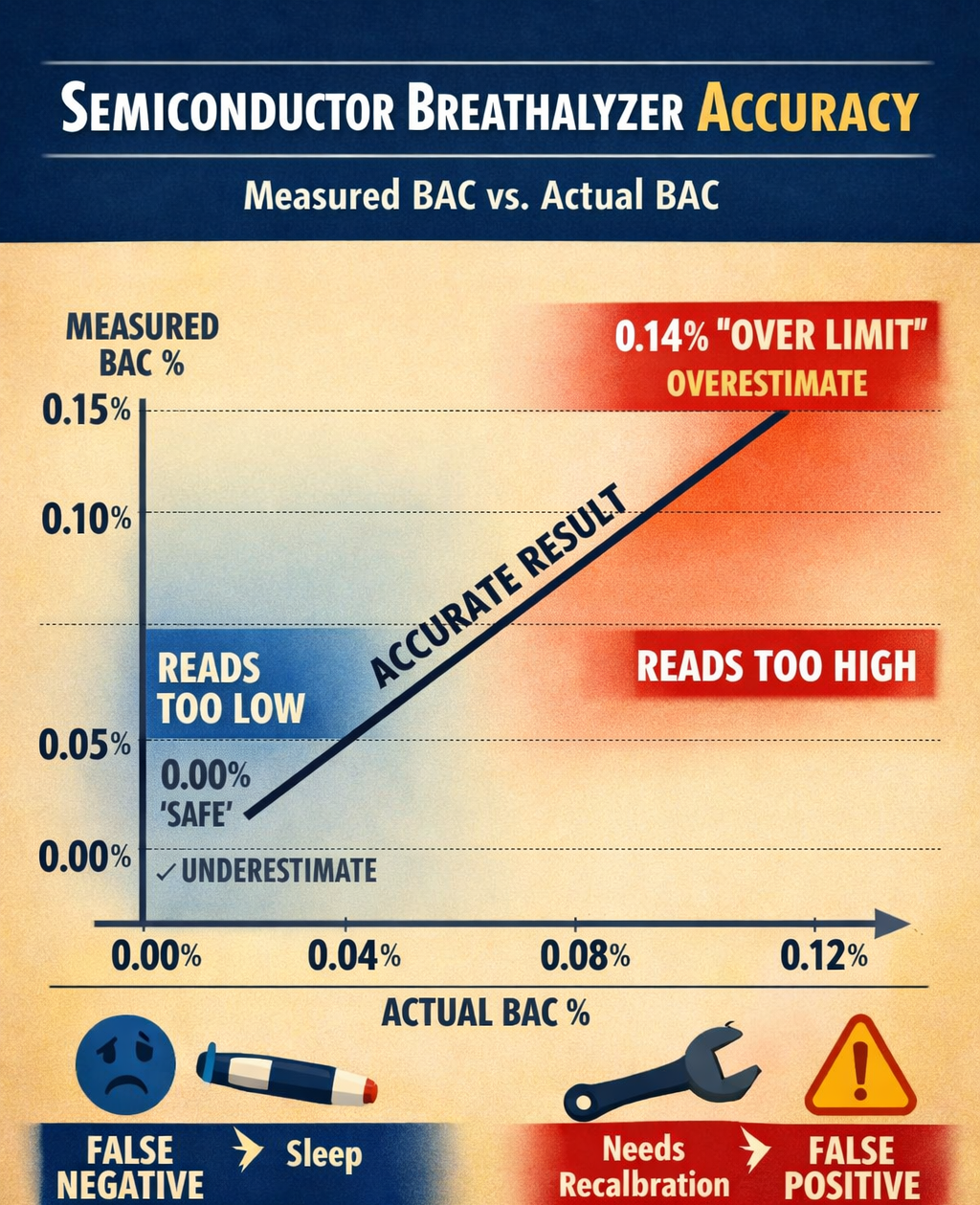
At legal BAC levels, their error margins can be surprisingly large. A reading that appears “safe” may not actually be safe at all and that creates the real problem: false reassurance.
Fuel Cell Breathalyzers: The Technology Police Actually Trust
Fuel cell breathalyzers exist in an entirely different category.
These are the devices commonly used by:
- law enforcement agencies
- transportation departments
- industrial safety programs
- rehabilitation monitoring systems
Unlike semiconductor models, fuel cell sensors are highly selective for ethanol itself. They ignore many substances that interfere with cheaper devices.
That difference dramatically improves accuracy. Fuel cell devices also maintain calibration stability far longer — often around 1,500 tests or roughly a year before recalibration becomes necessary.
Their error margins are significantly smaller, which is why they are trusted in professional and legal environments.
In simple terms – cell devices and cheap breathanalysers
- Cheap breathalyzers are built for affordability.
- Fuel cell devices are built for accountability.
That distinction matters more than most consumers realize.
Why Cheap Breathalyzers Still Feel “Good Enough”
Despite their flaws, semiconductor breathalyzers remain extremely popular. And it’s easy to understand why – They create awareness.
At parties or social events, they remind people that alcohol is measurable rather than invisible.
What most people don’t realize is that the pyloric valve— that can suddenly change how fast alcohol enters the bloodstream, meaning two people with the same drinks may show very different BAC readings.
They encourage conversations around drinking and driving. They can even reduce reckless overconfidence in some situations.
For casual curiosity, they may serve a purpose. But awareness tools become dangerous the moment people mistake them for precision instruments. That’s the line many users accidentally cross.
Where Cheap Devices Fail Catastrophically
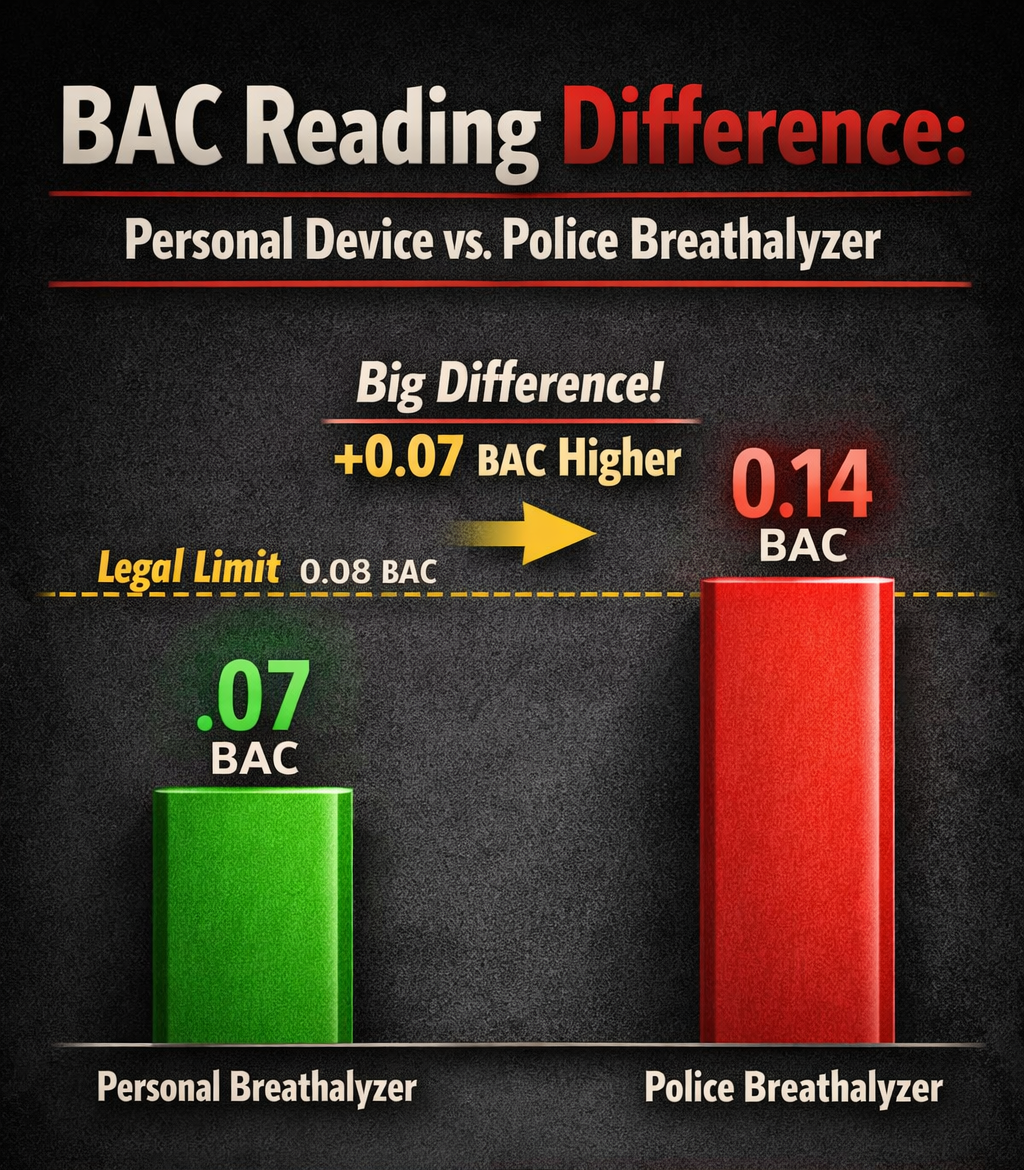
The real danger appears when stakes become serious. Imagine someone checking their BAC before driving home. The device shows a reading just below the legal limit. Feeling reassured, they drive.
Minutes later, a police-grade fuel cell device produces a much higher reading. Now the consequences are no longer theoretical.
Or, consider workplace environments involving machinery, scaffolding, or industrial equipment. A falsely low reading can create a level of confidence completely disconnected from actual impairment.
And legally, consumer-grade devices provide almost no protection. In courtrooms, official evidential systems matter. Consumer gadgets do not.
That’s because professional systems are standardized, calibrated, and maintained under strict procedures. A cheap personal tester cannot compete with that level of reliability.
The Most Dangerous Part Isn’t Technical — It’s Psychological
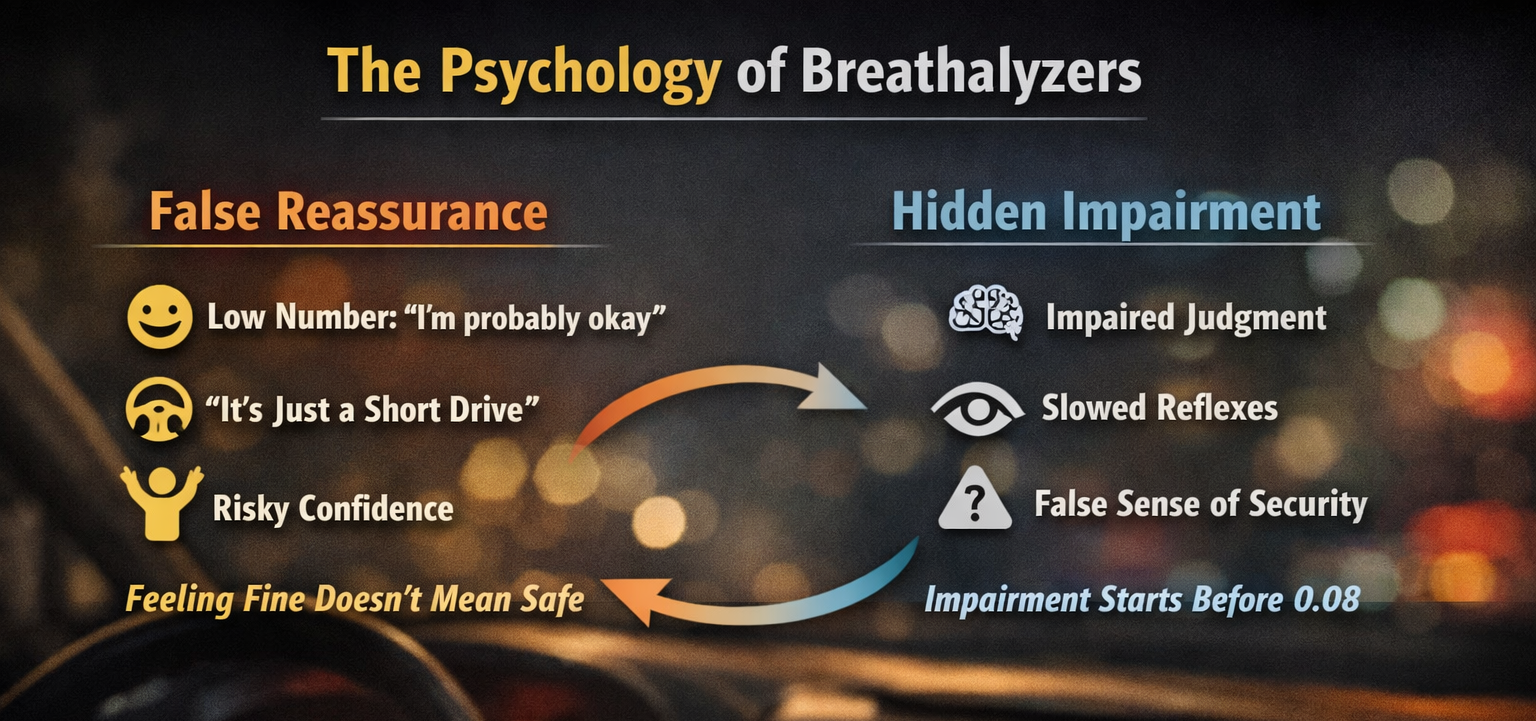
The biggest risk may not even be the technology itself. It’s human psychology. People rarely buy personal breathalyzers because they want uncertainty.
They buy them because they want reassurance. A low number confirms what they already hope is true – like – “I’m probably okay.” “I don’t feel drunk.” or, “It’s only a short drive.”
That emotional comfort can become more dangerous than not testing at all. Someone uncertain about their sobriety may choose caution.
Someone falsely reassured may take risks they otherwise wouldn’t take. And alcohol itself makes this even worse because confidence tends to rise before impairment becomes obvious.
That combination — impaired judgment mixed with technological overconfidence — is where real danger lives.
And it’s exactly why the so‑called 0.08 limit is misleading – it’s a legal line, not a biological safety guarantee. Impairment starts much earlier, often invisibly, long before the law says you’ve crossed the threshold.
So, can personal breathalyzers outsmart the law? Not really. Because the law is only responding to biology and physics.
Alcohol impairs human performance whether someone feels fine or not. A device cannot magically remove that reality.
What personal breathalyzers can do is help people make more informed decisions — but only if users understand their limitations. Semiconductor devices are rough screening tools at best.
Fuel cell devices are far closer to professional instruments. Neither should be treated as absolute proof of safety, but one is undeniably more trustworthy than the other.
Wrapping Up
Personal breathalyzers are often marketed as digital witnesses you can carry in your pocket. Cheap semiconductor devices may provide comfort, convenience, and a sense of control, but they can also create dangerous illusions of safety.
Fuel cell devices come much closer to the truth because they are designed for precision rather than reassurance.
And when the consequences involve lives, accidents, licenses, careers, or criminal charges, the difference between those two things becomes enormous.
Because the most dangerous thought after drinking has never been – “I’m drunk”. It has always been – “I’m probably fine”.
