It is easy to assume that a night of drinking is finished once you wake up the next morning. The headache may be fading, you may feel completely sober, and the last drink might have been several hours ago.
But your body does not measure sobriety by how you feel. You can still have alcohol in your bloodstream the morning after drinking, which means you may still register a measurable BAC (Blood Alcohol Concentration) on a breath or blood test.
In some circumstances, that BAC can be high enough to create legal problems or make driving unsafe. The important point is simple – feeling sober does not necessarily mean your BAC is zero. According to the National Highway Traffic Safety Administration (NHTSA), alcohol affects driving ability even at BAC levels below the commonly discussed 0.08 g/dL threshold.
Why Can Your BAC Still Be Positive in the Morning?
BAC describes the amount of alcohol present in your bloodstream. Alcohol is absorbed through the stomach and small intestine and then enters the bloodstream. Your liver gradually metabolizes it, but that process takes time. If you want to measure your BAC, you can measure it here.
A breathalyzer does not directly draw blood from you. Instead, it measures alcohol in your breath and uses that measurement to estimate the alcohol concentration in your body. Blood tests can directly measure alcohol concentration in a blood sample.
This creates an important distinction – You can wake up feeling normal while alcohol is still present in your system. That is one reason morning-after drinking can be deceptive. The biggest factor is how much alcohol you consumed and how late you continued drinking. Consider two situations. One person stops drinking at 9 PM after having two drinks.
Another person stops drinking at 2 AM after consuming several drinks throughout the evening. Both wake up at 8 AM, but they have had very different amounts of time since their last drink. The first person has had around 11 hours since drinking stopped, while the second has had only about six hours.
Their morning BAC can therefore be very different. This is why simply saying “I stopped drinking last night” doesn’t tell you whether you will pass a BAC test in the morning.
Your Last Drink Matters More Than Your Bedtime
One common mistake is calculating alcohol clearance from the time you went to bed. That’s not necessarily the right starting point. The next morning when you wake upSuppose someone drinks until 2:00 AM and sleeps from 2:30 AM until 8:00 AM.
They might say – “I slept for almost six hours.” But their body has only had roughly six hours since the drinking ended. Depending on when the alcohol was consumed and absorbed, their BAC may still be measurable. Now imagine someone who stopped drinking at 10:00 PM and woke up at 8:00 AM.
They have had around ten hours since their final drink. Those situations are very different.
How Fast Does Alcohol Leave Your Body?
There is no universal number of hours that guarantees a BAC of zero for everyone. Alcohol metabolism varies from person to person, and BAC depends on factors such as:
- Number of drinks consumed
- How quickly the drinks were consumed
- Body size
- Biological Variability
- Food consumed
- Individual metabolism
- How long drinking continued
- The strength and size of the drinks.

Some educational materials use rough alcohol-clearance estimates, but these should not be treated as a personal guarantee that you will pass a breath test.
Can a BAC Calculator Tell You If You’ll Pass?
A BAC calculator can be useful for understanding how factors such as the number of drinks, body weight, and time may influence estimated BAC. But there is a major catch.
A BAC calculator is an estimation tool—not a legal test and not a guarantee of sobriety.
For example, imagine someone enters:
- 75 kg body weight
- Six drinks
- Drinking period of five hours
- Last drink at midnight
The calculator may produce an estimated BAC curve. But that number should not be interpreted as – “The calculator says I’m below the legal limit, so I’m safe to drive.” Real-world BAC can differ from an estimate.
A calculator is best used for education and awareness, not for making a go/no-go driving decision.
What About the BAC Chart?
A BAC chart can help explain what different BAC levels generally mean.
| BAC | Possible effects |
| 0.02 | Some loss of judgment and changes in visual tracking |
| 0.05 | Reduced coordination, lowered alertness and impaired judgment |
| 0.08 | Significant impairment involving coordination, reaction time, judgment and perception |
| 0.10 | Further deterioration in reaction time and vehicle control |
| 0.15 | Major loss of balance and substantial impairment |
These are general effects, not guarantees that every individual will experience exactly the same symptoms. The important lesson from a BAC chart is that impairment can begin before someone reaches the commonly discussed 0.08 level.
Imagine someone goes to a wedding reception and has several drinks throughout the evening. The final drink is around midnight. At 7:30 AM, they wake up. There is no headache. They aren’t dizzy. They can walk normally, drink coffee, take a shower, and get ready for work. Then they have the thought -“I’m completely fine now.”
But there’s a difference between feeling recovered and having no alcohol remaining in your system. The subjective feeling of being sober isn’t a reliable BAC measurement.
Does sleeping remove alcohol from your system? No—not directly. Sleep gives your body time to continue metabolizing alcohol, but sleep does not make the liver suddenly process alcohol faster. Think of it like a clock continuing to run.
If you stop drinking at midnight and sleep for seven hours, your body has had seven hours without additional alcohol entering the system. But that doesn’t mean seven hours automatically equals a BAC of zero. And if you drank heavily late into the night, you could still have measurable alcohol when you wake up.
What About Coffee?
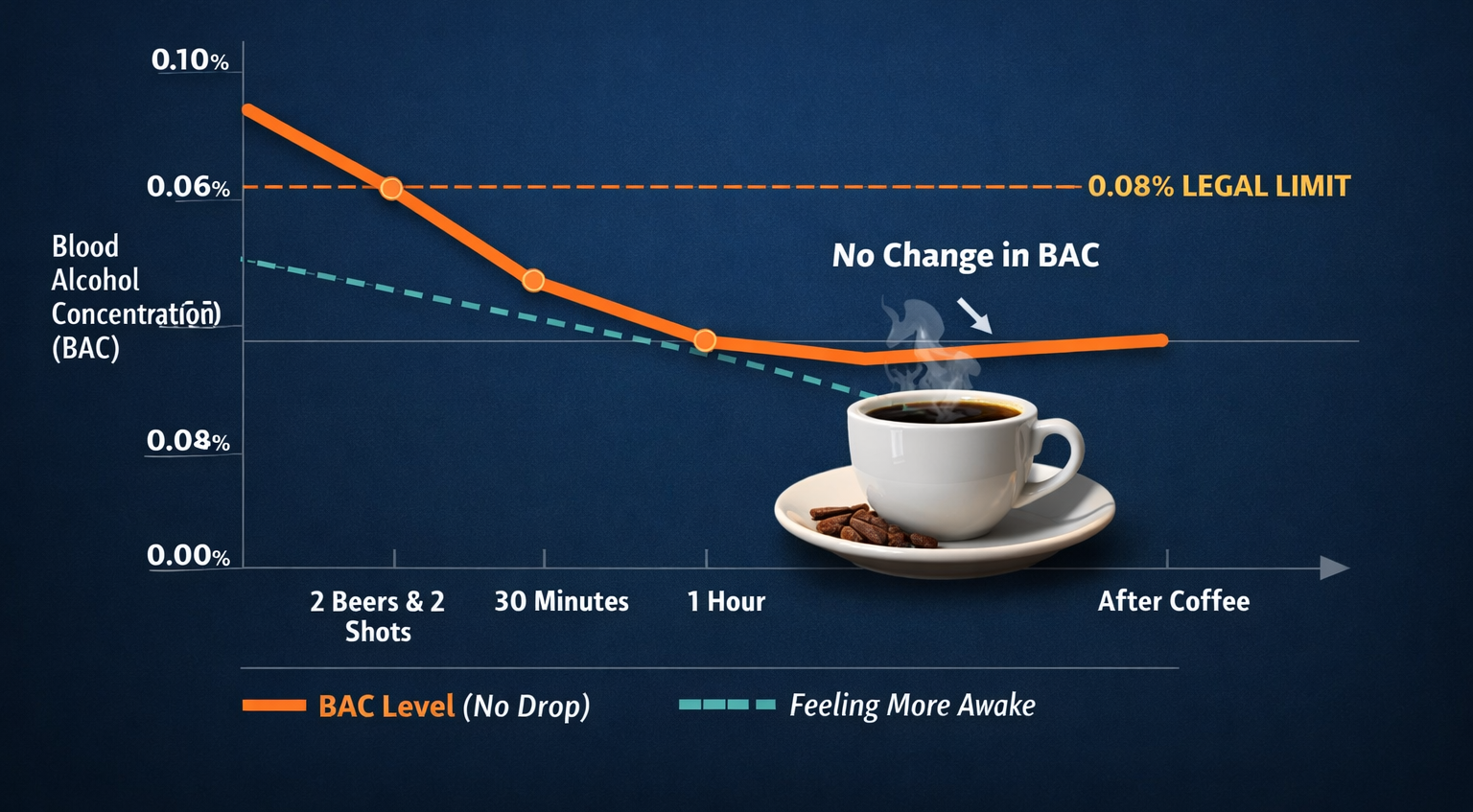
Coffee can make you feel more awake. It does not make alcohol disappear from your bloodstream.
This distinction is extremely important. Imagine someone wakes up groggy after drinking the night before. They drink two strong coffees and suddenly feel alert.
They might conclude -“The coffee sobered me up.” But being more alert isn’t the same thing as having a zero BAC. So coffee may change how you feel, but it doesn’t provide a reliable way to lower your BAC.
What About a Big Breakfast?
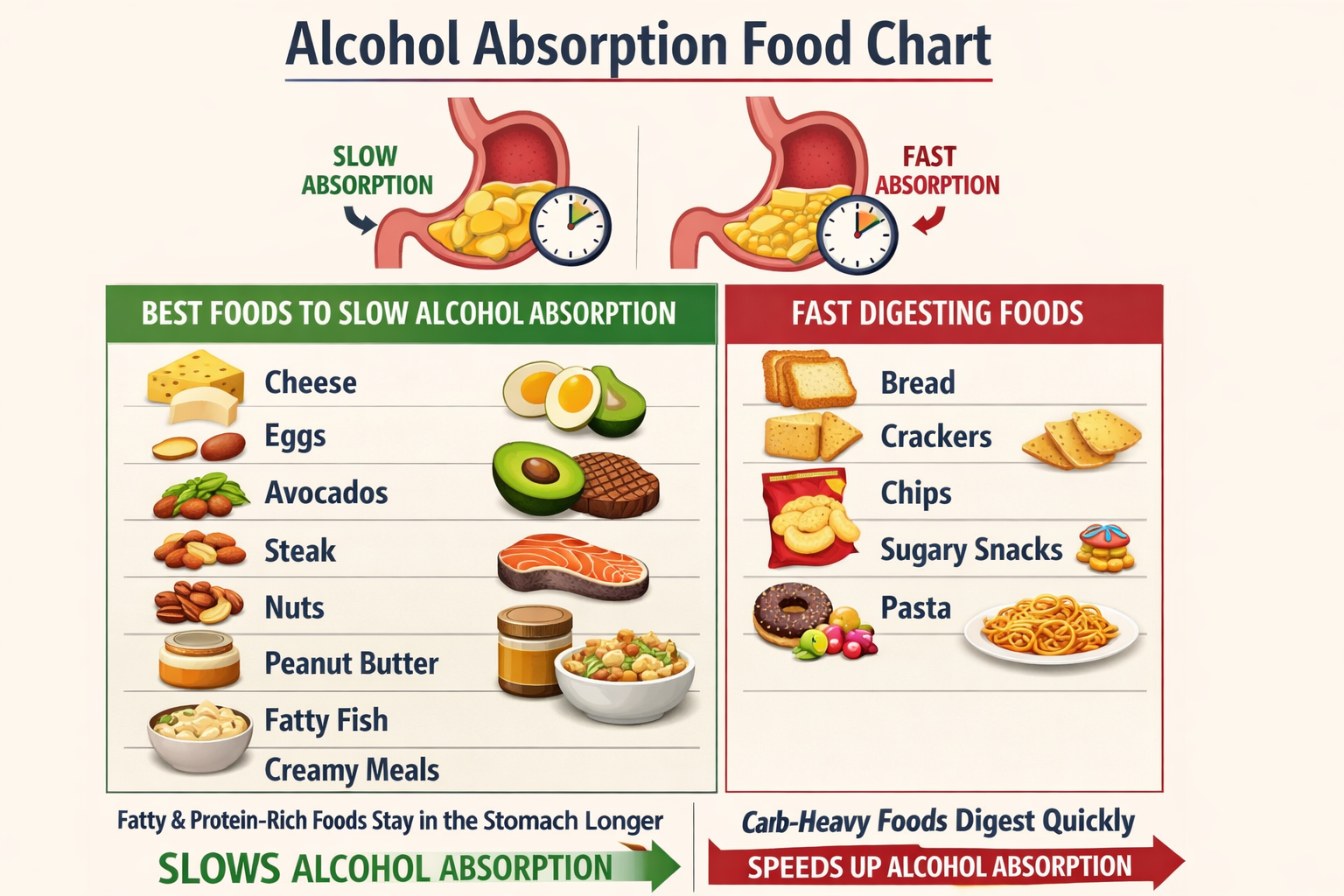
Food can affect alcohol absorption when alcohol is being consumed, but eating breakfast the next morning isn’t a magic way to eliminate alcohol that’s already in your bloodstream.
The same principle applies to:
- Drinking lots of water
- Taking a cold shower
- Exercising
- Drinking coffee
- Sleeping for a few hours
- Eating greasy food
None of these should be considered a guaranteed method for making your BAC zero. Time is what allows your body to process alcohol.
A Morning-After Situation That Can Go Wrong
Consider someone who attends a party on Saturday night and drinks more than usual. Their final drink is at 1:30 AM. They sleep until 8:00 AM. At 8:30 AM, they get into their car. They don’t feel drunk, aren’t slurring their speech. They don’t feel dizzy. But that’s not enough information to conclude that their BAC is zero. If they are stopped and tested, a breath test may detect alcohol that remains in their system.
The problem becomes even more serious if their driving is affected. This is why the safest approach after substantial drinking is not to use your feelings, a BAC calculator, or a BAC chart as permission to drive.
Can a Home Breathalyzer Tell You?
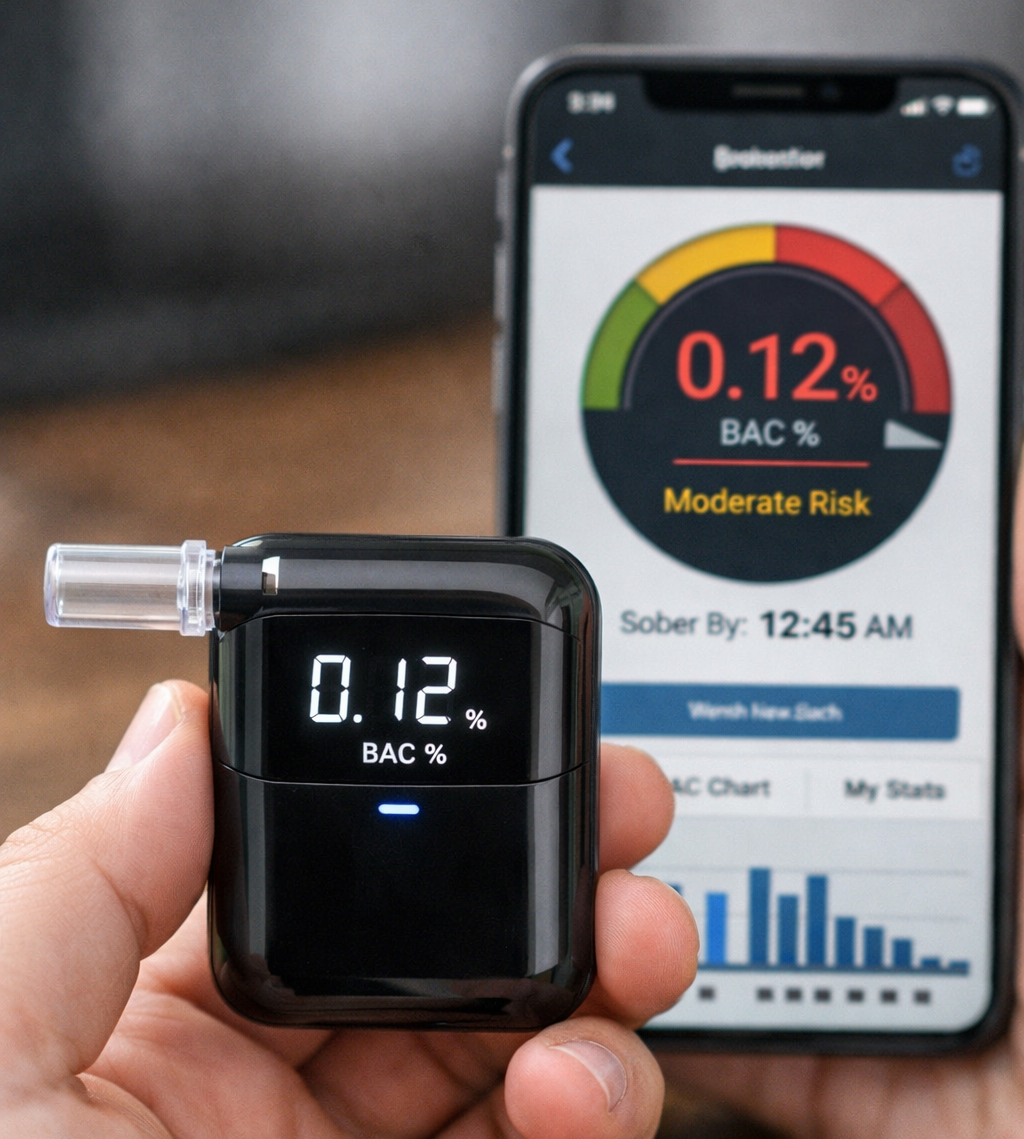
A consumer breathalyzer can provide an indication of alcohol in your breath, but devices differ in quality, calibration, and accuracy. Law-enforcement agencies use approved testing equipment under specific procedures.
So even if a home device displays a number, you shouldn’t treat that number as an official legal determination. And importantly, a reading from a consumer device shouldn’t be used to justify risky driving if you are still tired, hungover, or otherwise impaired.
A hangover and alcohol intoxication aren’t exactly the same thing. You might still feel terrible after most of the alcohol has been metabolized. Or you might feel relatively normal while alcohol is still present. So – feeling hungover doesn’t prove your BAC is high. Feeling fine doesn’t prove your BAC is zero.That’s why symptoms alone aren’t a reliable BAC test.
How Much Should You Trust a BAC Calculator?
A BAC calculator can be helpful if your goal is to understand the basic relationship between drinking and BAC. For example, it can demonstrate why – more drinks + faster drinking + less time = potentially higher morning BAC. It can also show why two people who consume the same number of drinks may not have identical BAC estimates.
But don’t use a calculator to determine – “It’s 7 AM, my estimated BAC is below the legal limit, so I can drive.” That’s too much certainty from an inherently imperfect estimate.
The safest interpretation is – a BAC calculator can educate you. It cannot certify you as sober. Some people believe beer is somehow less relevant to BAC than liquor. But the type of alcoholic beverage isn’t the fundamental issue. What matters is the amount of alcohol consumed. A standard drink contains approximately the same amount of pure alcohol whether it comes from beer, wine, or distilled spirits.
Of course, real drinks can vary dramatically in size and alcohol percentage. A large or strong beer may contain substantially more alcohol than someone assumes when they count it as simply “one beer.”
The Biggest Mistake – Counting Drinks Instead of Alcohol
Imagine someone says -“I only had four drinks.” That statement doesn’t tell the whole story.
Were they:
- Four standard beers?
- Three large beers?
- Two strong craft beers?
- Four glasses of wine?
- Five cocktails containing multiple shots?
The actual alcohol exposure can be very different. That’s another reason a BAC calculator can produce misleading results if the drink information entered into it isn’t accurate.
So, can you fail a BAC test the next morning? If enough alcohol was consumed late enough in the evening, measurable alcohol can remain in the body the following morning.
Whether a particular person will test positive—or what their BAC will be—depends on numerous individual factors. There is no universal rule such as – “Sleep for eight hours and you’ll definitely pass.” Or -“Wait six hours and your BAC will definitely be zero.”
Those statements are unsafe because alcohol metabolism and BAC vary between individuals.
What Should You Do If You’re Unsure?

If you’ve been drinking heavily and aren’t sure whether you’re sober enough to drive, don’t gamble on a BAC calculator or how you feel.
Choose a safer option:
- Wait longer.
- Arrange a ride.
- Use a taxi or rideshare service.
- Have someone who hasn’t been drinking drive.
Stay where you are until you’re confident you’re no longer impaired. The safest choice after drinking is to avoid driving until you are certain you are no longer impaired.
Wrapping Up
The morning after drinking can create a dangerous illusion. You wake up, take shower, drink coffee then eat breakfast. You feel normal and you assume the alcohol is gone.
But BAC doesn’t disappear simply because you feel better. Alcohol takes time to leave the body, and the amount of time varies depending on how much you drank and individual factors. A BAC calculator or BAC chart can help explain the science, but neither can guarantee that you are below the legal limit or safe to drive.
The most important rule is simple – If you drank heavily the night before and you’re unsure whether alcohol is still in your system, don’t drive. Feeling sober isn’t the same thing as having a zero BAC.
