Common Myths About DUI Testing Debunked: What Every Driver Should Know About BAC
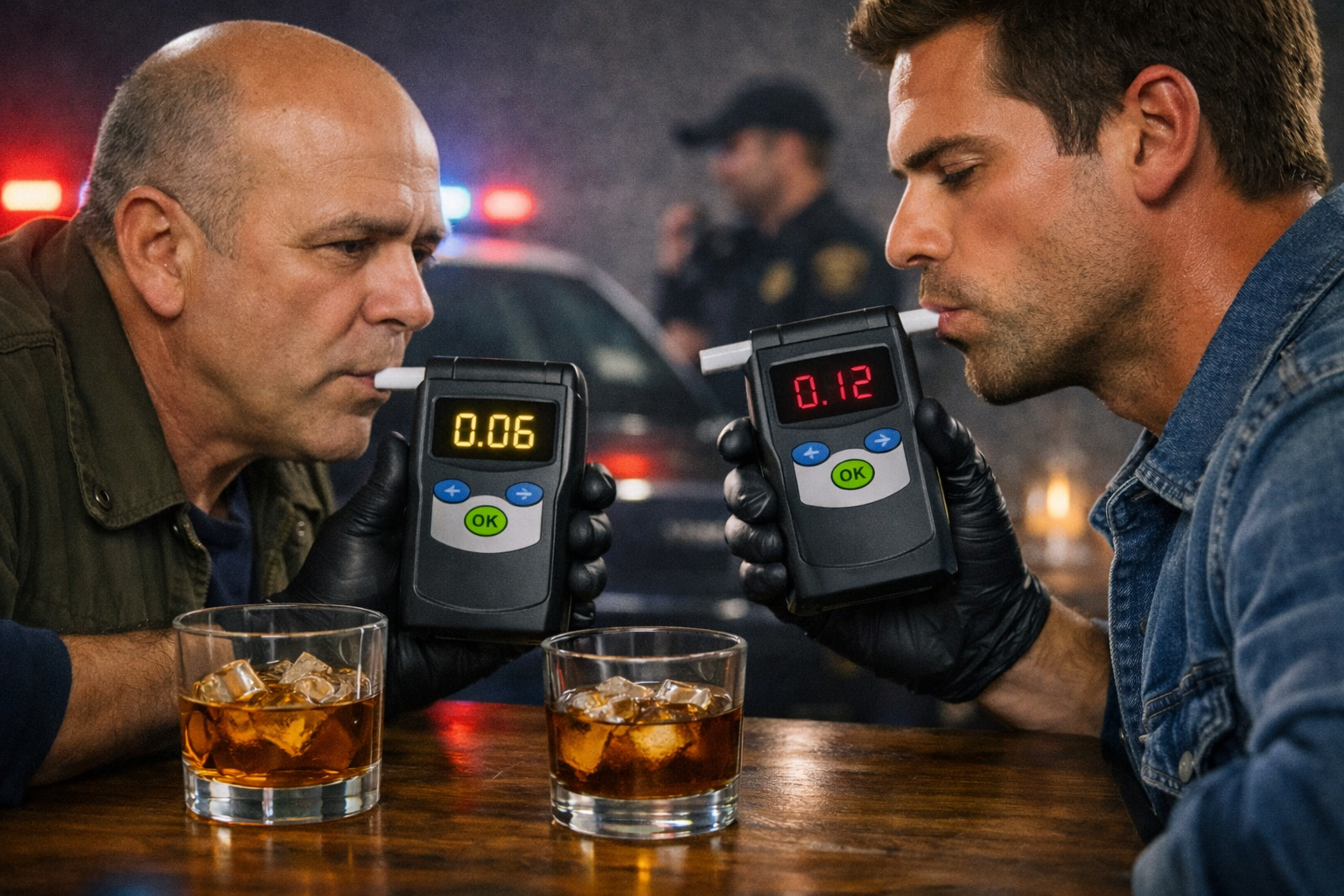
Every weekend, the same story plays out somewhere. A driver leaves a restaurant after “just two drinks.” On the way home, flashing blue lights appear in the rearview mirror.
The officer asks a few questions, requests a breath test, and suddenly the driver starts remembering advice they’ve heard for years.”Chew some gum,””Drink lots of water,””Coffee sobers you up,””Take a few deep breaths before blowing.”
Unfortunately, many of these tips are nothing more than myths. Understanding how BAC (Blood Alcohol Concentration) works, how DUI tests are performed, and what the actual legal limit means can help you make safer decisions.
In this guide, we’ll separate fact from fiction while also showing how a BAC calculator, BAC charts, and scientific evidence can help you better understand alcohol impairment.
Why DUI Myths Continue to Spread
Many DUI myths come from stories passed between friends or social media videos claiming to reveal “secret tricks” to beat a breathalyzer.
The problem? Modern breathalyzers and DUI investigations are based on decades of scientific research. Police officers also look beyond a single number. They consider driving behavior, physical signs of impairment, field sobriety tests, and chemical testing.
Knowing the truth about BAC is far more useful than believing internet rumors.
Coffee Will Lower Your BAC
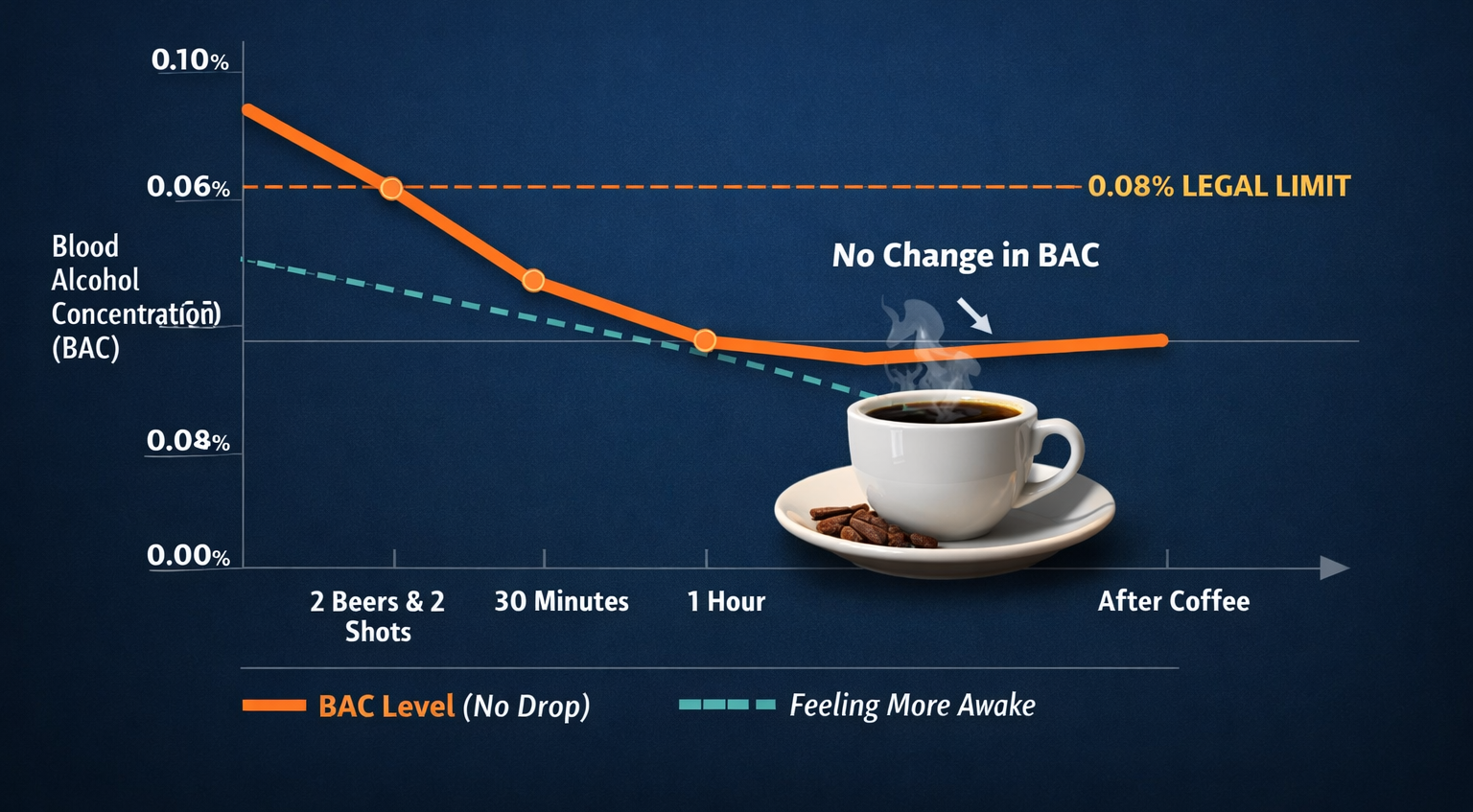
This is probably the most common misconception. Imagine you’ve spent an evening at a party. Before driving home, someone hands you a strong cup of coffee and says,”You’ll be fine now.” Coffee may help you feel more awake. It does not reduce your BAC.
Alcohol is processed almost entirely by your liver at a relatively constant rate. Caffeine has no effect on how quickly alcohol leaves your bloodstream. You may feel more alert after coffee, but your BAC remains essentially unchanged.
Taking a Cold Shower Will Sober You Up
Cold showers can certainly wake you up. They cannot lower your BAC.
Your body still needs time to metabolize alcohol. Whether you’re sitting on the couch or standing under freezing water, your liver processes alcohol at approximately the same speed.
Feeling refreshed doesn’t mean you’re legally safe to drive.
Eating Food After Drinking Instantly Reduces BAC
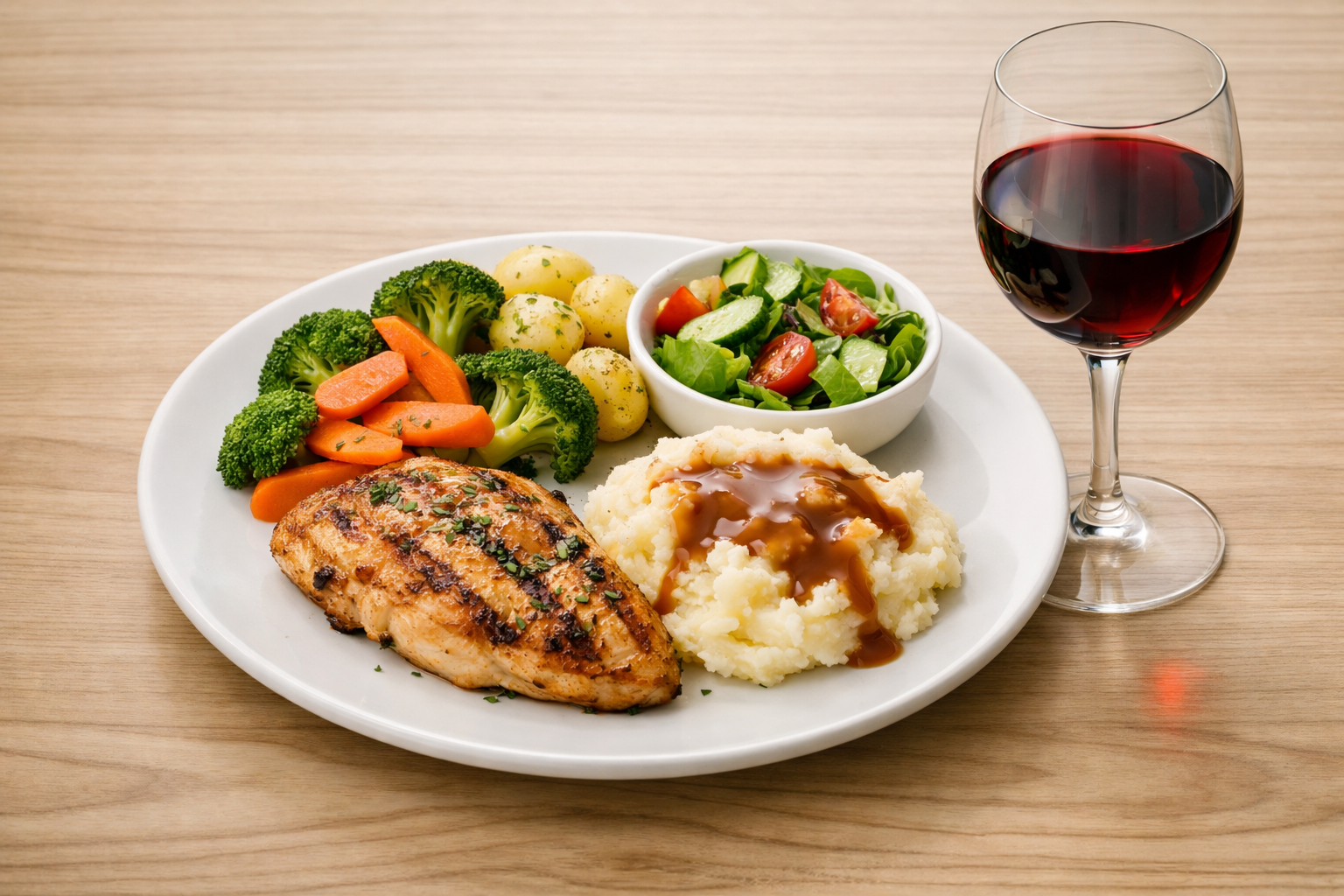
This myth contains a small amount of truth—but it’s often misunderstood. Eating before or while drinking can slow alcohol absorption.
However, once alcohol has entered your bloodstream, eating a large meal afterward won’t magically lower your BAC.
Instead, food may simply help prevent your BAC from rising as quickly if consumed earlier.
Breathalyzers Are Always Wrong
Some drivers assume breathalyzers are wildly inaccurate. In reality, modern evidential breath-testing devices undergo regular calibration and maintenance.
While no testing device is perfect, law enforcement typically follows strict procedures to improve accuracy, including:
- Observation periods before testing
- Device calibration
- Multiple breath samples
- Confirmation testing when required
If a reading appears questionable, additional testing methods may be available depending on local laws.
Mouthwash Can Fool—or Trigger—a Breathalyzer
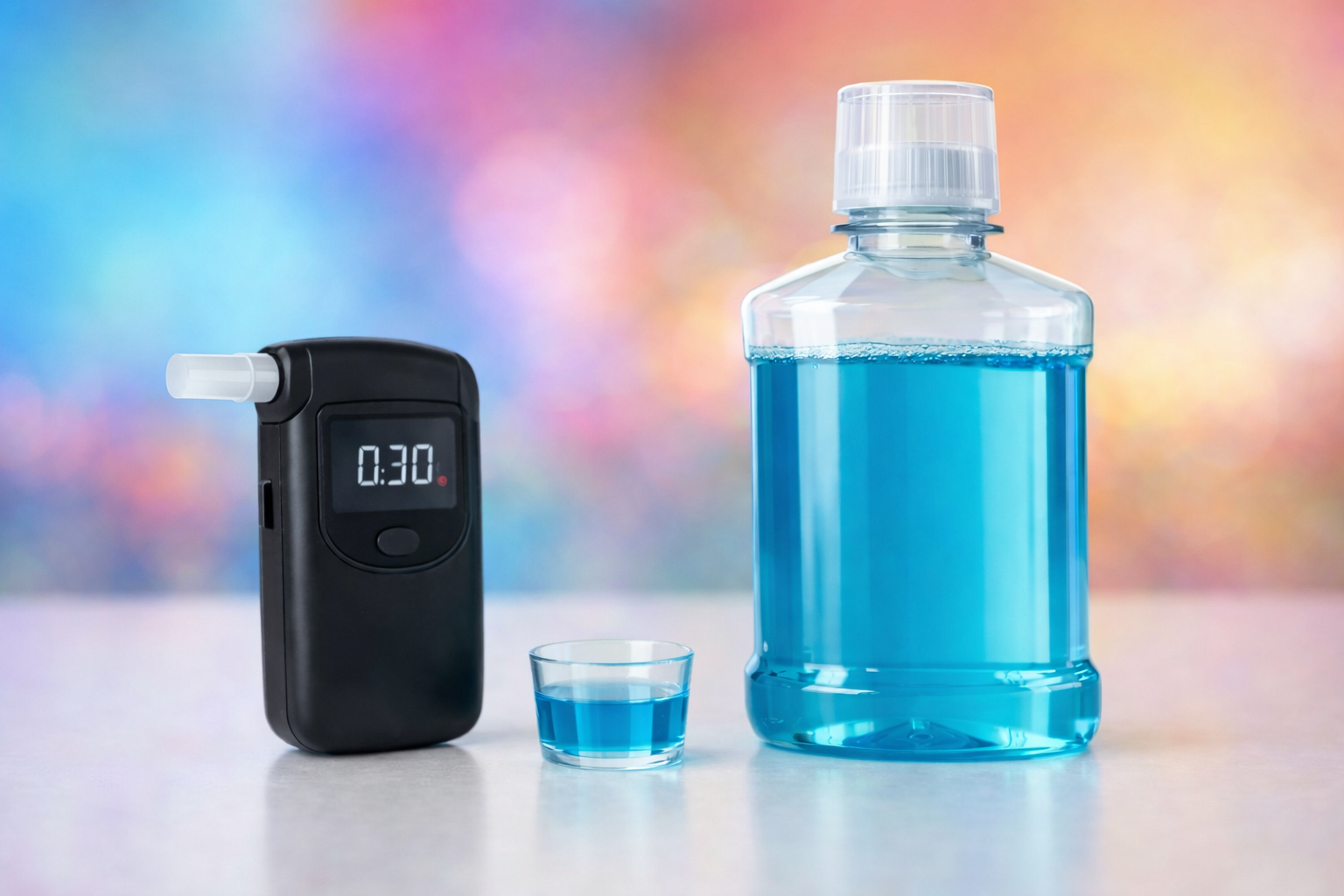
This myth has two parts. Some believe mouthwash helps hide alcohol. Others worry it automatically causes DUI charges.
Alcohol-based mouthwash can temporarily increase alcohol detected in your mouth. However, officers usually wait before administering the official breath test or repeat the test after a short observation period.
The temporary mouth alcohol quickly disappears. Mouthwash doesn’t permanently increase your BAC, nor is it an effective way to fool a breathalyzer.
You Can Calculate Your BAC Exactly
Many people use an online BAC calculator before deciding whether they’re safe to drive.
A BAC calculator can be helpful for estimating alcohol levels. However, it should never be considered an exact measurement. Most BAC calculators estimate BAC using factors like:
- Body weight
- Biological variability
- Number of drinks
- Time spent drinking
- But they cannot account for:
- Food consumption
- Medications
- Individual metabolism
- Health conditions
- Drink strength
- Serving size variations
Think of a BAC calculator as an educational tool—not permission to drive.
If You’re Below the Legal Limit, You’re Safe to Drive
This is one of the most dangerous misconceptions. The legal limit for BAC varies by country and state.
Many places use 0.08% BAC as the legal limit for most adult drivers, while commercial drivers and younger drivers often face much lower thresholds. However, impairment begins well before reaching the legal limit.
Reaction time, judgment, coordination, and vision may all decline at lower BAC levels. Even if you’re technically below the legal limit, you may still be unsafe to drive.
Understanding BAC Charts
Many drivers use BAC charts to estimate impairment.
Here’s a simplified overview.
| Estimated BAC |
Possible Effects |
| 0.02% |
Mild relaxation |
| 0.05% |
Reduced coordination and judgment |
| 0.08% |
Significant impairment; common legal limit in many regions |
| 0.10% |
Slower reaction time and poor vehicle control |
| 0.15% |
Severe impairment and greatly increased crash risk |
Remember that BAC charts provide estimates only.
Two people consuming the same amount of alcohol may have completely different BAC levels due to body composition, metabolism, age, and other factors.
Why Time Is the Only Reliable Solution
Despite countless myths, only one thing consistently lowers BAC. Time.
On average, the liver processes roughly one standard drink per hour, though this varies by individual.
Nothing speeds up alcohol metabolism—not coffee, exercise, cold showers, energy drinks, or fresh air.
Waiting is the only scientifically supported method for reducing BAC.
How a BAC Calculator Can Help You Plan Ahead
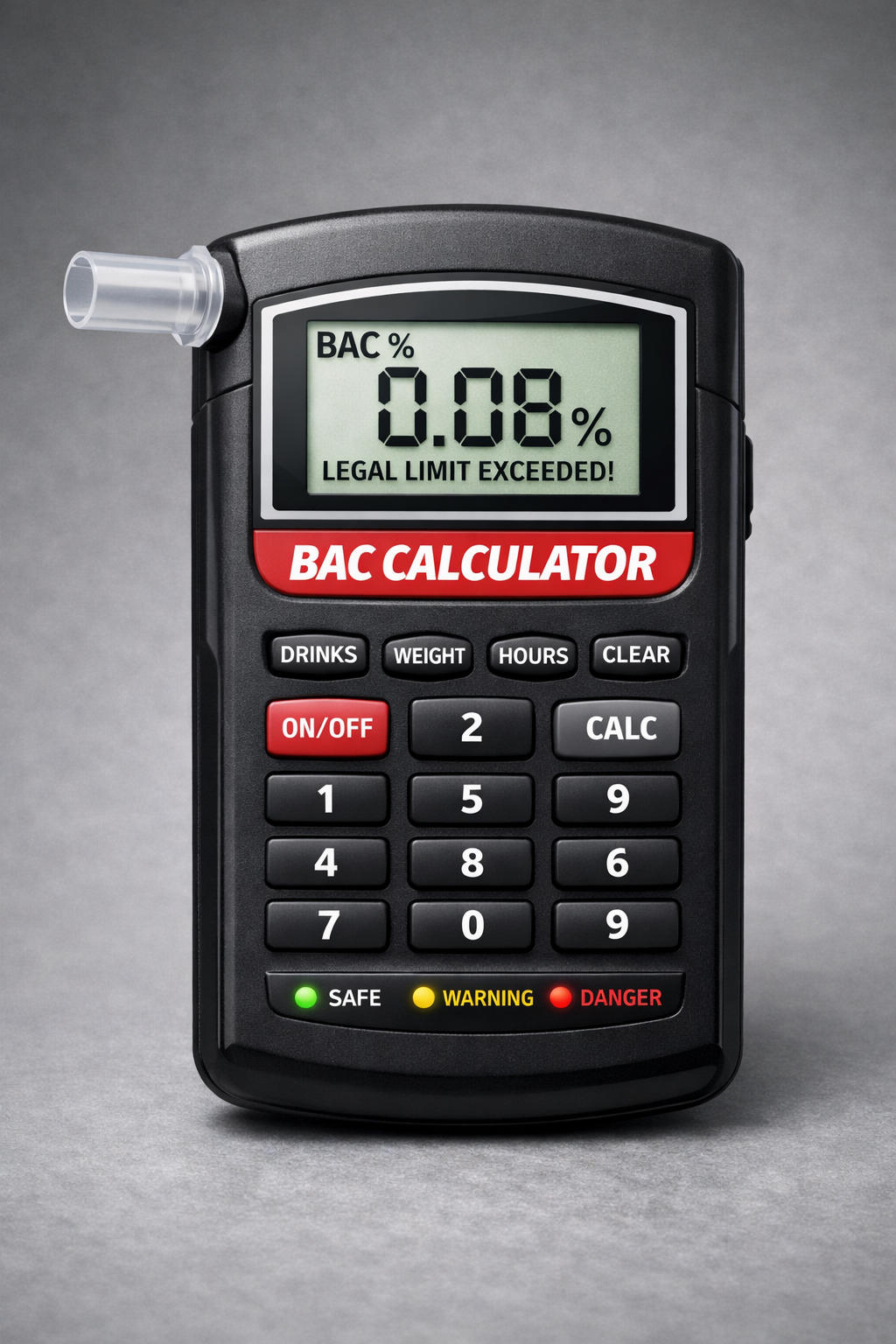
Although a BAC calculator shouldn’t determine whether you drive, it can be useful for planning.
For example, you can estimate:
- When your BAC might return to zero
- How different drink quantities affect impairment
- How drinking over several hours changes estimated BAC
- Whether you should arrange alternate transportation
Combining a BAC calculator with BAC charts provides a better understanding of how alcohol affects the body.
The Importance of Knowing the Legal Limit
Knowing the legal limit isn’t just about avoiding fines. It’s about recognizing that alcohol affects everyone differently.
Some drivers may feel impaired below the legal limit, while others may mistakenly feel perfectly capable above it. That’s why many safety experts recommend a simple rule – If you’ve been drinking, don’t drive. Using rideshare services, public transportation, or choosing a designated driver is always safer than trying to estimate your BAC.
Wrapping Up
DUI myths have survived for decades because they’re easy to repeat—but science tells a different story.
Coffee doesn’t lower BAC. Cold showers don’t sober you up. Breathalyzers aren’t easily fooled, and being below the legal limit doesn’t automatically make driving safe.
Instead of relying on rumors, use trusted resources like BAC charts and a reputable BAC calculator to better understand alcohol’s effects. Most importantly, remember that no estimate can replace good judgment.
When in doubt, leave the car parked. Understanding your BAC, respecting the legal limit, and making informed decisions can protect not only your license but also your life and the lives of everyone else on the road
Can Mouthwash Trigger a Breathalyzer? What Really Happens
It is Friday evening, and a person is at a friend’s birthday dinner. He enjoys a few drinks, laughs with friends, and later decides it is time to go home.
The next morning, he wakes up early for work. He feels fine. No headache. No dizziness. He takes a shower, brushes his teeth, and uses a strong mint mouthwash because he wants to feel fresh.
A few minutes later, he remembers something he saw online – “Can mouthwash make a breathalyzer show alcohol?”
Suddenly, he starts wondering. Could something as simple as mouthwash affect his BAC? Could it make a breath test show a false result? And how does this compare with the actual alcohol still inside his body?
This question is more complicated than many people think. Understanding how mouthwash, breath tests, and checking BAC work can help separate internet myths from reality.
What Does a Breathalyzer Actually Measure?
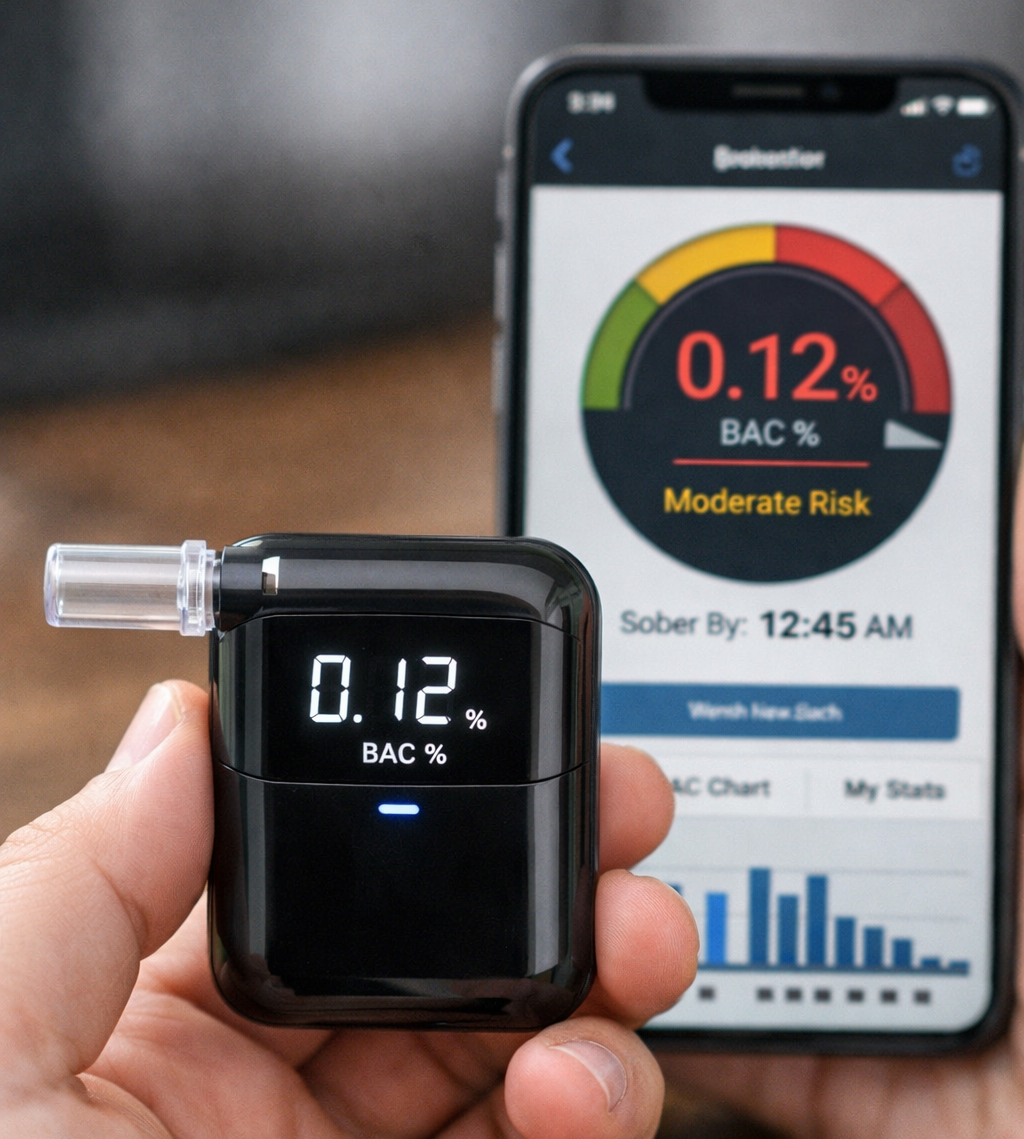
Many people believe a breathalyzer directly measures the alcohol sitting in your mouth. That is not exactly how it works.
A breathalyzer measures alcohol in the air you breathe out from your lungs.
When alcohol enters your bloodstream, it travels through your body. As blood passes through the lungs, some alcohol moves into the air inside the lungs.
A breathalyzer analyzes that air and estimates your BAC. Your BAC represents the amount of alcohol present in your bloodstream.
For example:
- A lower BAC generally means less alcohol in your system.
- A higher BAC means more alcohol is affecting your body.
This is why law enforcement uses breath tests — because they are designed to estimate alcohol levels in the body, not simply detect something you recently put in your mouth.
The Mouthwash Myth – Can It Really Change BAC Results?
Now let’s return to the person. After using mouthwash, he takes a breathalyzer test at home. The reading is higher than expected. Does this mean mouthwash increased his BAC? No.
Mouthwash does not increase the alcohol inside your bloodstream. However, some mouthwashes contain alcohol. When you rinse your mouth, a small amount of alcohol may temporarily remain inside your mouth.
This is called mouth alcohol. A breathalyzer may detect this leftover alcohol if the test is taken immediately after using mouthwash. This can create a temporary reading that does not accurately represent your true BAC.
The Fresh Breath Mistake
Now another person has a morning meeting. The night before, she attended a celebration and had drinks with friends. She wakes up and believes enough time has passed. Before leaving, she uses a strong alcohol-based mouthwash. A few minutes later, she gets stopped at a checkpoint.
The breath test shows alcohol. She is confused because she does not feel drunk. The reason? The test may have detected alcohol residue from the mouthwash rather than only alcohol coming from her lungs.
This is why professionals usually allow time between eating, drinking, smoking, or using mouthwash and performing a breath test.
BAC Does Not Depend on How Fresh You Feel
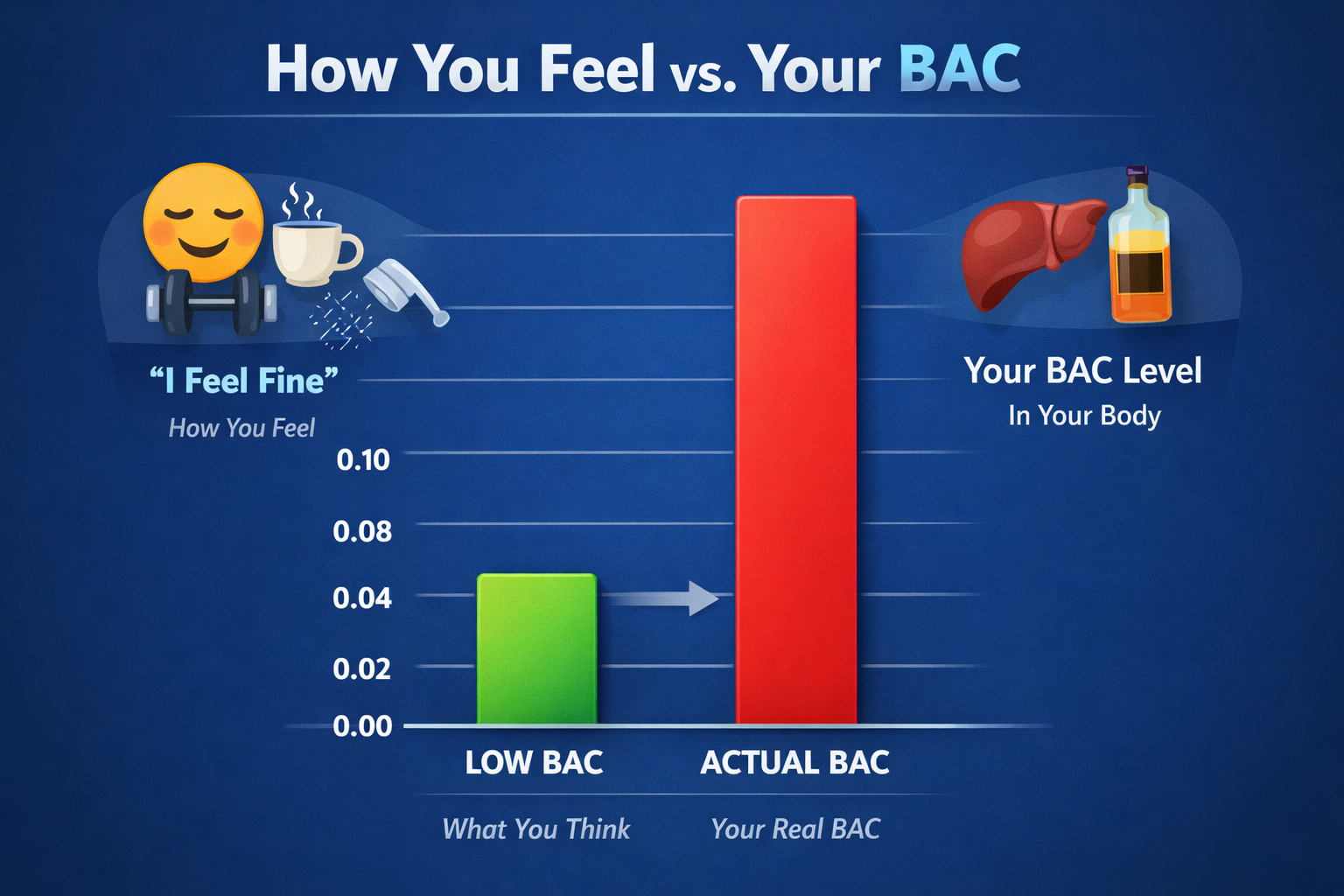
One of the biggest mistakes people make is judging their alcohol level based on feelings. Someone may think: “I feel normal, so my BAC must be low.”
But BAC does not work that way. Alcohol leaves the body gradually.
Your liver processes alcohol at a fairly steady rate. Things that do not quickly lower BAC:
- Coffee
- Cold showers
- Exercise
- Food after drinking
- Mouthwash
They may make you feel more awake, but they do not instantly remove alcohol from your bloodstream.
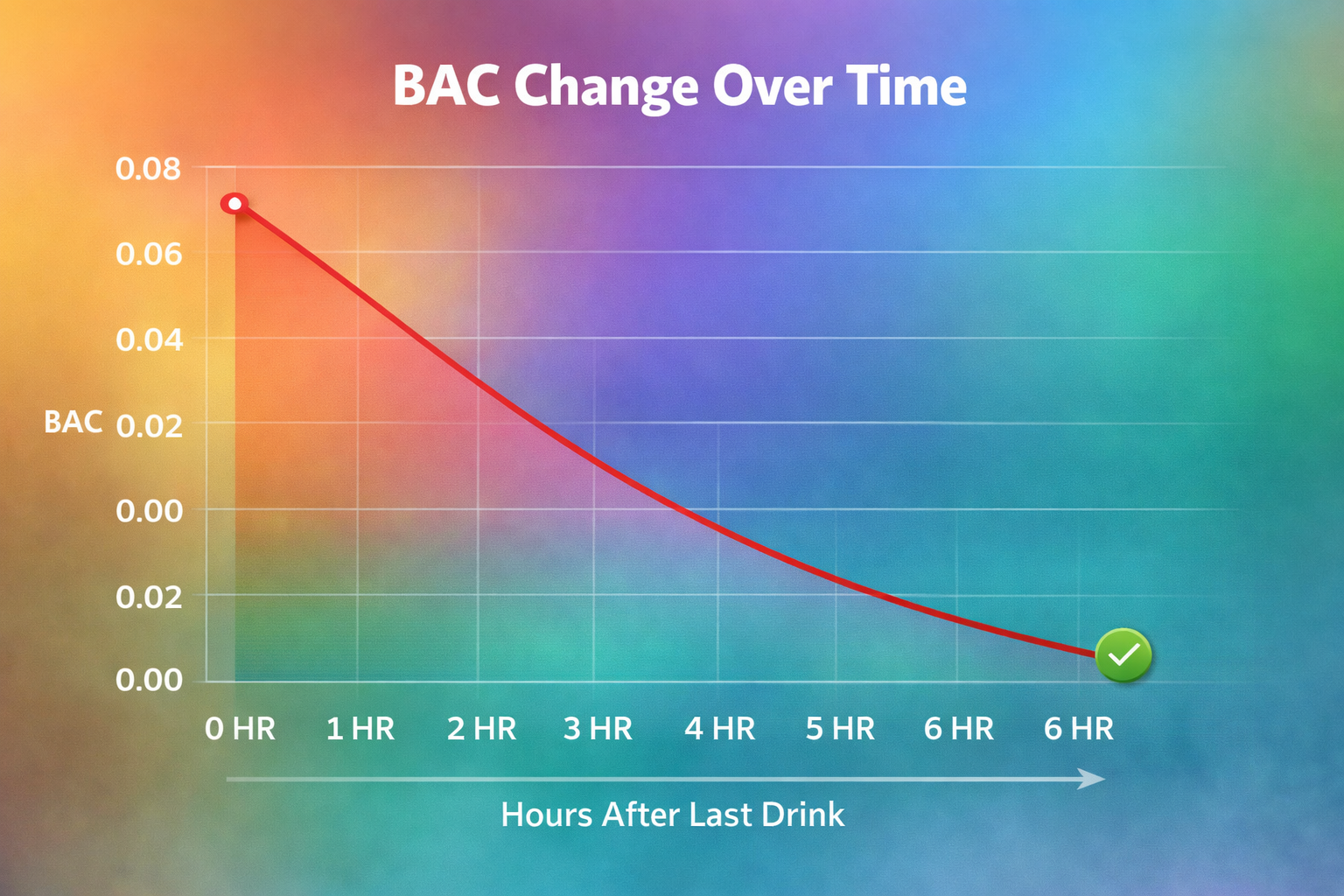
A simple chart can help explain how alcohol levels change over time. This chart is only an example because real BAC depends on many factors:
Why BAC Calculators Can Be Helpful But Not Perfect
Many people use BAC calculators online. A BAC calculator can estimate alcohol levels based on details like:
- Number of drinks
- Time spent drinking
- Body weight
- Gender
However, a BAC calculator is only an estimate. It cannot replace:
- A professional alcohol test
- A medical evaluation
- An official breath test
Two people can drink the same amount and have different BAC results.
Understanding Legal Limits
Another reason this topic matters is legal limits. In many places, driving laws are based on a specific BAC level.
For example, many countries set a legal limit around a BAC level where driving ability may be affected. However, being below the legal limit does not always mean someone is completely unaffected.
Alcohol can influence:
- Reaction time
- Decision-making
- Attention
Even small amounts can affect some people differently.
Can Alcohol-Free Mouthwash Still Cause Problems?
Many people switch to alcohol-free mouthwash because of concerns about breath tests. Alcohol-free mouthwash does not contain the same alcohol ingredients that can create mouth alcohol issues.
However, the bigger point remains – Mouthwash does not change your actual BAC.
It does not:
- Remove alcohol from your body
- Speed up your liver
- Make you sober faster
The Bigger Problem – Confusing Feeling Better With Being Sober
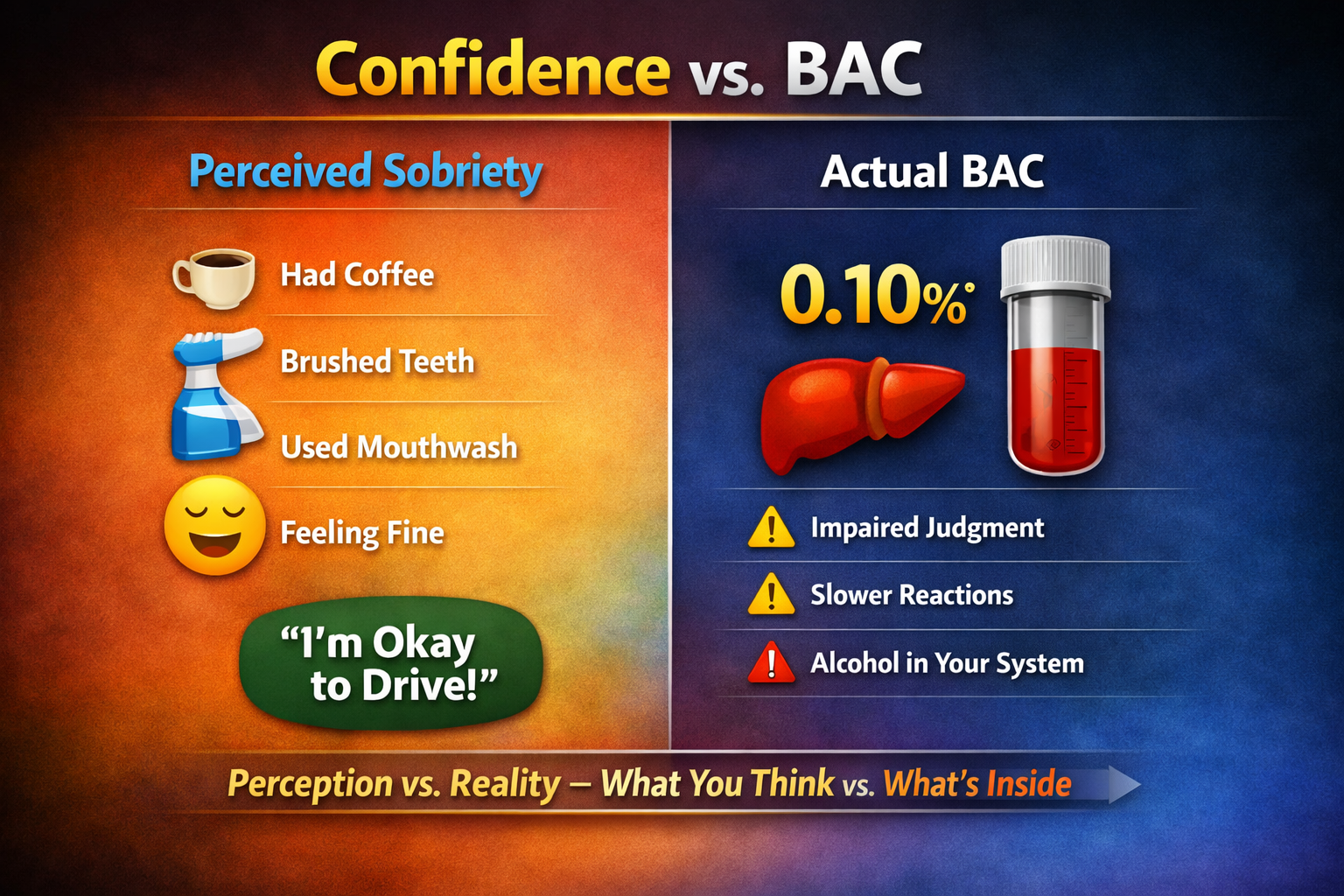
The most dangerous misunderstanding is not always the breathalyzer. It is confidence. Someone wakes up after drinking. They feel okay. They drink coffee. They brush their teeth. They use mouthwash.
They think – “I’m completely fine now.” But BAC is about what is happening inside your body, not how refreshed you feel.
Wrapping Up
So, can mouthwash trigger a breathalyzer? The answer is – It can temporarily affect a breath test if alcohol-based mouthwash leaves alcohol in your mouth immediately before testing.
But mouthwash does not increase your real BAC. Your BAC is controlled by the alcohol in your bloodstream and the time your body needs to process it.
Charts, BAC calculators, and alcohol education tools can help people understand how alcohol behaves, but the safest approach is always to give your body enough time.
When it comes to driving, confidence is not a measurement. Only time and accurate testing can tell the real story.
The Digital Witness in Your Pocket: Can We Outsmart the Law with Personal Breath Analyzers
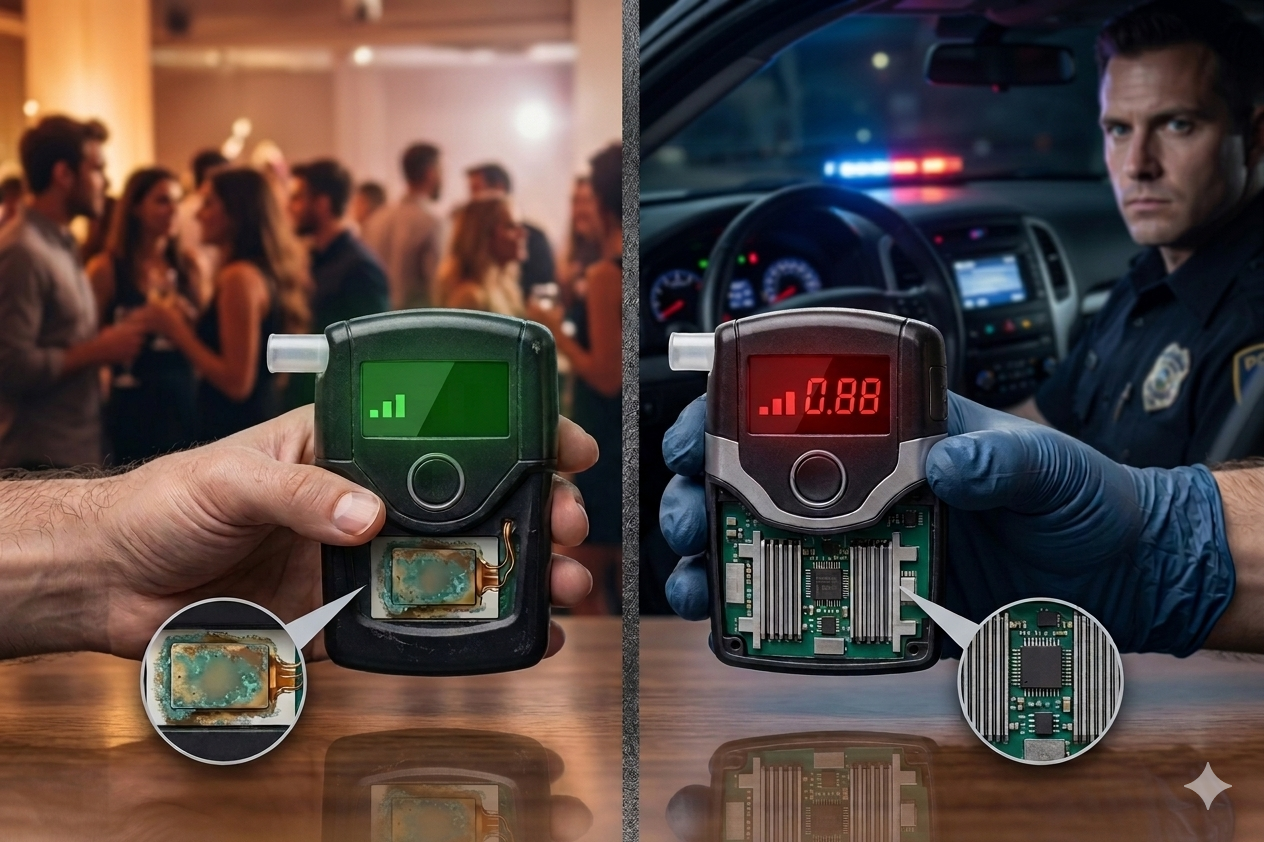
There’s something strangely comforting about a personal breathalyzer. You leave a party, blow into a handheld device, and a number flashes on the screen. Instantly, anxiety turns into confidence. If the reading looks low enough, the mind relaxes and says – I’m fine. I can drive.
But here’s the uncomfortable reality – not all breathalyzers are built to tell the truth equally well. Some are designed for rough awareness. Others are designed for legal and professional accuracy. Yet many people treat both as if they are equally reliable.
That’s where the danger begins. Because when alcohol, driving, workplace safety, or legal consequences are involved, a small error is not a small problem.
Why BAC Numbers Feel More Scientific Than They Really Are
Before talking about breathalyzers themselves, it’s important to understand how people already estimate intoxication.
Most people rely on three things:
- BAC charts
- Online BAC calculators
- Personal experience
BAC charts use averages based on body weight, number of drinks, and time elapsed. BAC calculators rely on formulas like the Widmark equation to estimate blood alcohol concentration.
The problem is that alcohol does not behave mathematically inside every human body.
Metabolism differs, sleep affects absorption, food changes alcohol processing. Stress, medication, hydration, and even fatigue can alter BAC readings.
Two people can drink the exact same amount and still test very differently. The truth is that alcohol absorption in the body differs from one person to another.
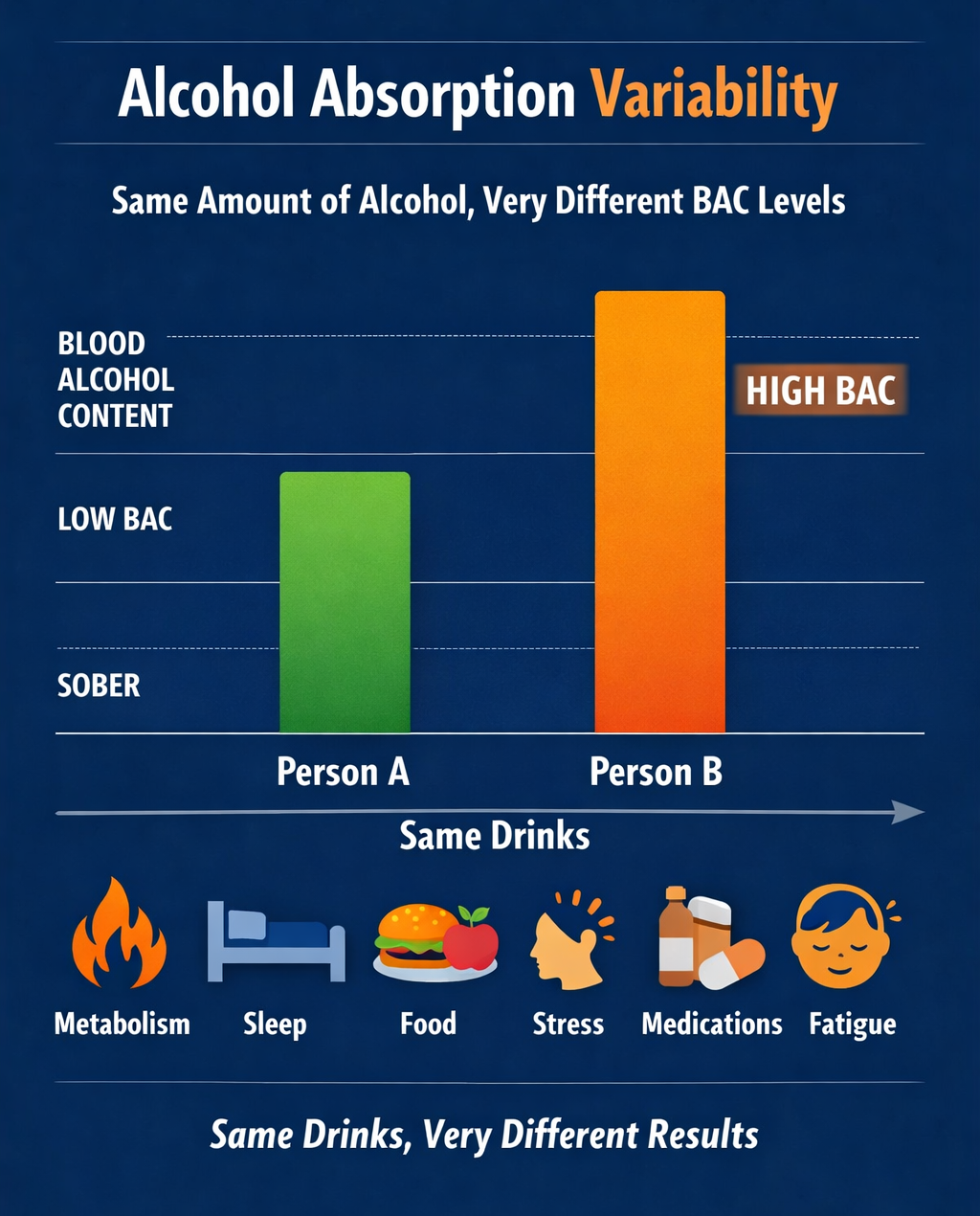
Most calculators can be wrong. The margins may sound small on paper, but near legal limits it becomes enormous. And even more importantly, impairment begins much earlier than people think.
At just 0.02–0.05 BAC, reaction time slows, attention weakens, and judgment becomes less reliable. Ironically, people often become more confident precisely when their decision-making is becoming worse.
That psychological trap is what makes personal breathalyzers so powerful — and sometimes so dangerous.
The Two Completely Different Worlds of Breathalyzers
Most consumers assume all breathalyzers work the same way. They don’t. There are actually two very different technologies hiding behind those digital screens.
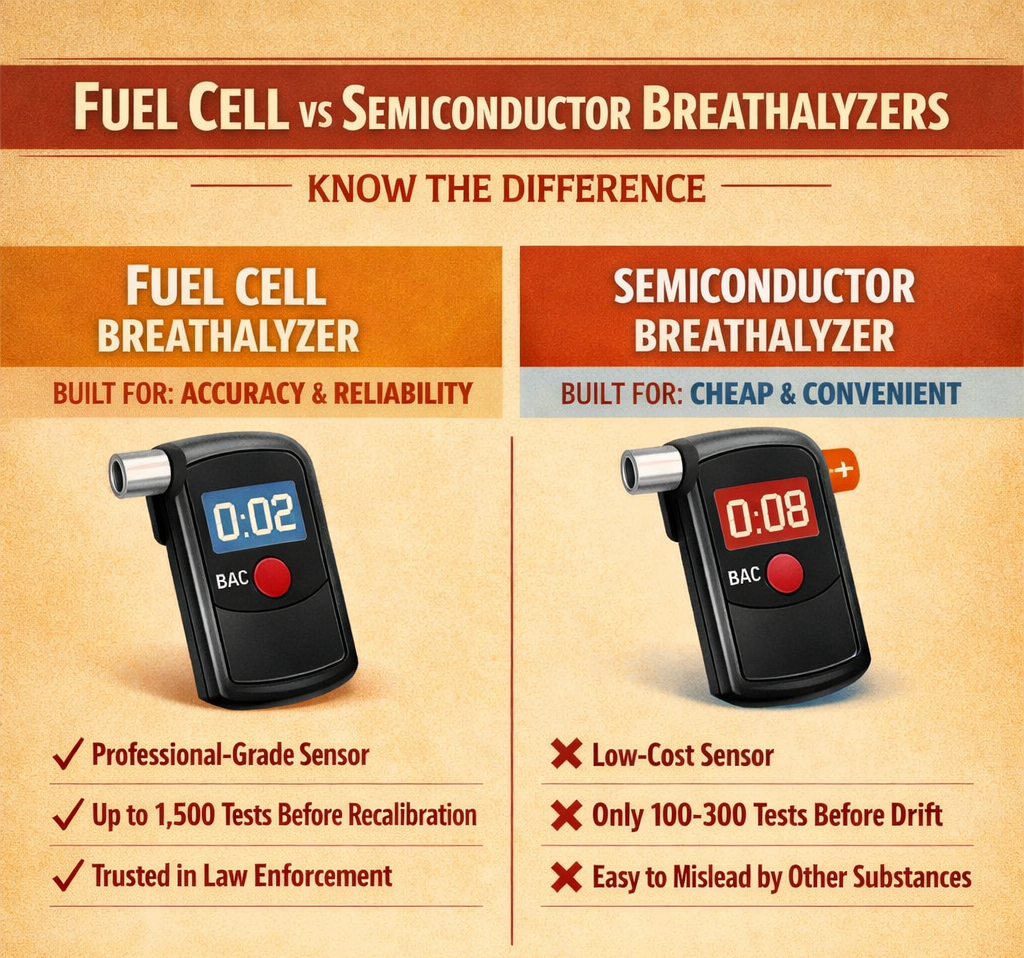
Semiconductor Breathalyzers – Cheap, Popular, and Often Misleading
These are the breathalyzers most people buy online.
They are affordable, portable, and heavily marketed toward casual consumers. Prices usually range between $50 and $150, making them attractive for parties, social gatherings, or “just to check.”
But low cost comes with major compromises. Semiconductor sensors react broadly to chemicals in the air. Alcohol affects them, but so do many other substances, including:
- cigarette smoke
- mouthwash
- paint fumes
- cleaning chemicals
- acetone from dieting or diabetes
That means the device can become confused by the environment around you.
The accuracy issue becomes even more serious over time. Semiconductor sensors drift relatively quickly and often become unreliable after only a few hundred tests unless professionally recalibrated.
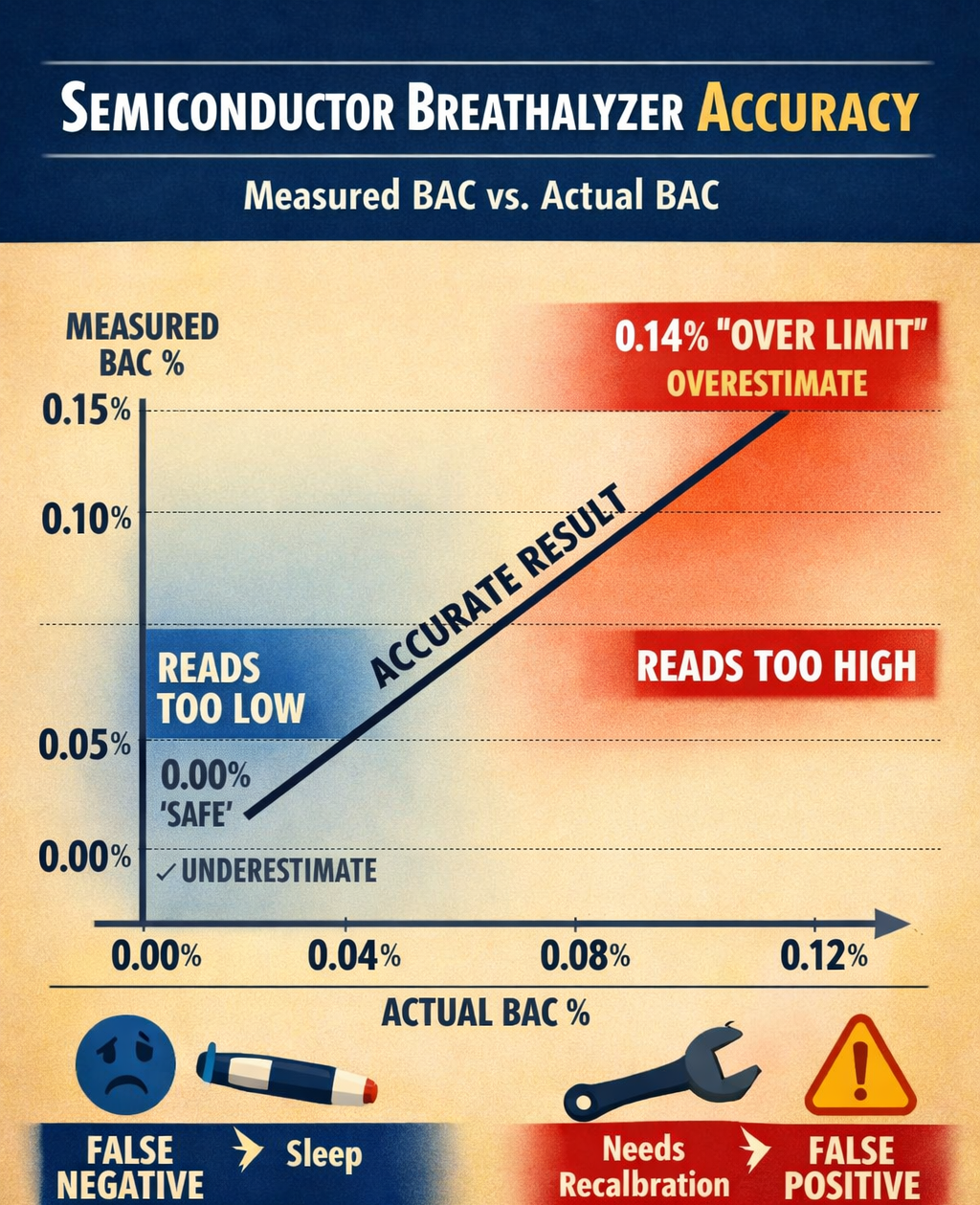
At legal BAC levels, their error margins can be surprisingly large. A reading that appears “safe” may not actually be safe at all and that creates the real problem: false reassurance.
Fuel Cell Breathalyzers: The Technology Police Actually Trust
Fuel cell breathalyzers exist in an entirely different category.
These are the devices commonly used by:
- law enforcement agencies
- transportation departments
- industrial safety programs
- rehabilitation monitoring systems
Unlike semiconductor models, fuel cell sensors are highly selective for ethanol itself. They ignore many substances that interfere with cheaper devices.
That difference dramatically improves accuracy. Fuel cell devices also maintain calibration stability far longer — often around 1,500 tests or roughly a year before recalibration becomes necessary.
Their error margins are significantly smaller, which is why they are trusted in professional and legal environments.
In simple terms – cell devices and cheap breathanalysers
- Cheap breathalyzers are built for affordability.
- Fuel cell devices are built for accountability.
That distinction matters more than most consumers realize.
Why Cheap Breathalyzers Still Feel “Good Enough”
Despite their flaws, semiconductor breathalyzers remain extremely popular. And it’s easy to understand why – They create awareness.
At parties or social events, they remind people that alcohol is measurable rather than invisible.
What most people don’t realize is that the pyloric valve— that can suddenly change how fast alcohol enters the bloodstream, meaning two people with the same drinks may show very different BAC readings.
They encourage conversations around drinking and driving. They can even reduce reckless overconfidence in some situations.
For casual curiosity, they may serve a purpose. But awareness tools become dangerous the moment people mistake them for precision instruments. That’s the line many users accidentally cross.
Where Cheap Devices Fail Catastrophically
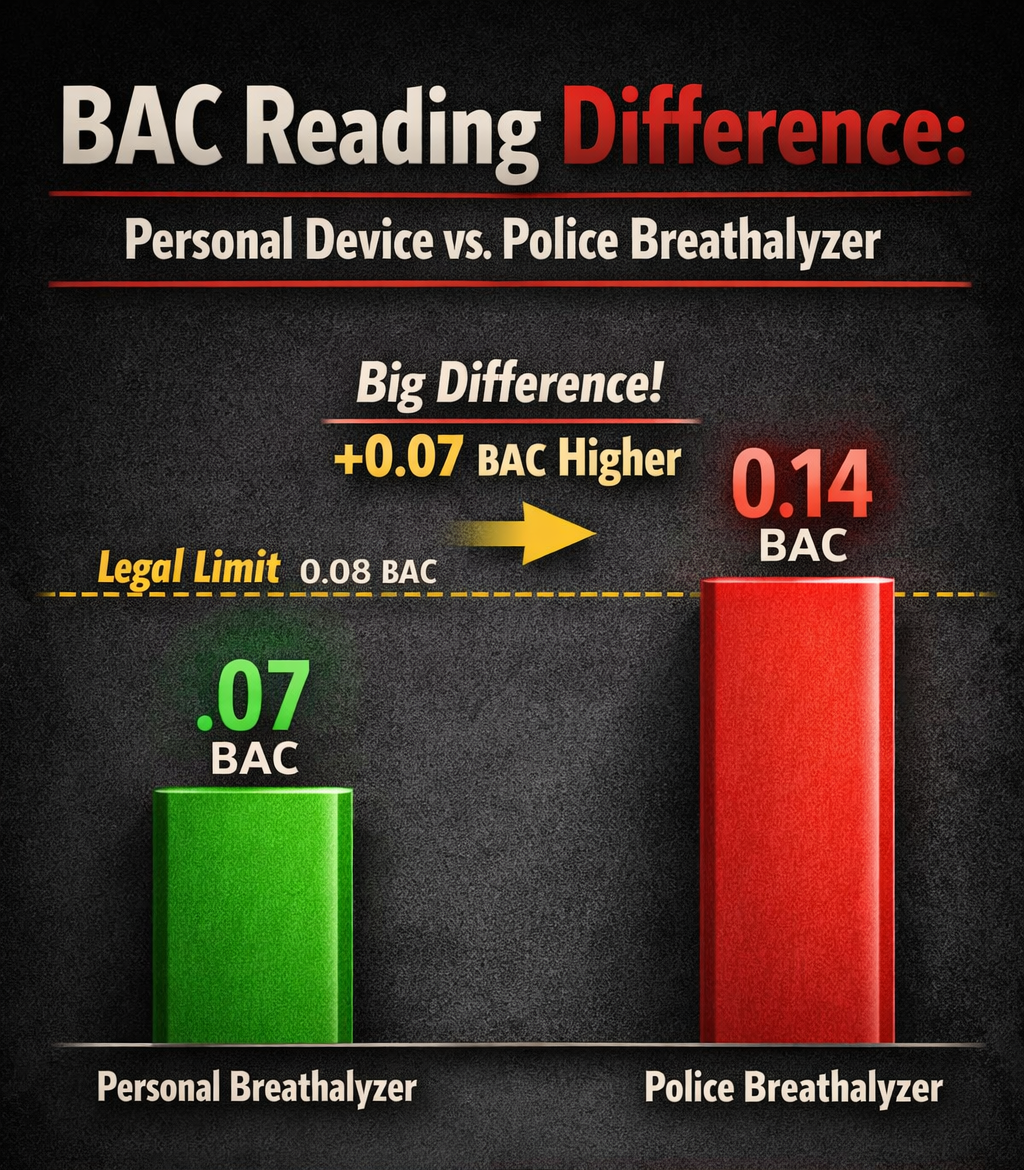
The real danger appears when stakes become serious. Imagine someone checking their BAC before driving home. The device shows a reading just below the legal limit. Feeling reassured, they drive.
Minutes later, a police-grade fuel cell device produces a much higher reading. Now the consequences are no longer theoretical.
Or, consider workplace environments involving machinery, scaffolding, or industrial equipment. A falsely low reading can create a level of confidence completely disconnected from actual impairment.
And legally, consumer-grade devices provide almost no protection. In courtrooms, official evidential systems matter. Consumer gadgets do not.
That’s because professional systems are standardized, calibrated, and maintained under strict procedures. A cheap personal tester cannot compete with that level of reliability.
The Most Dangerous Part Isn’t Technical — It’s Psychological
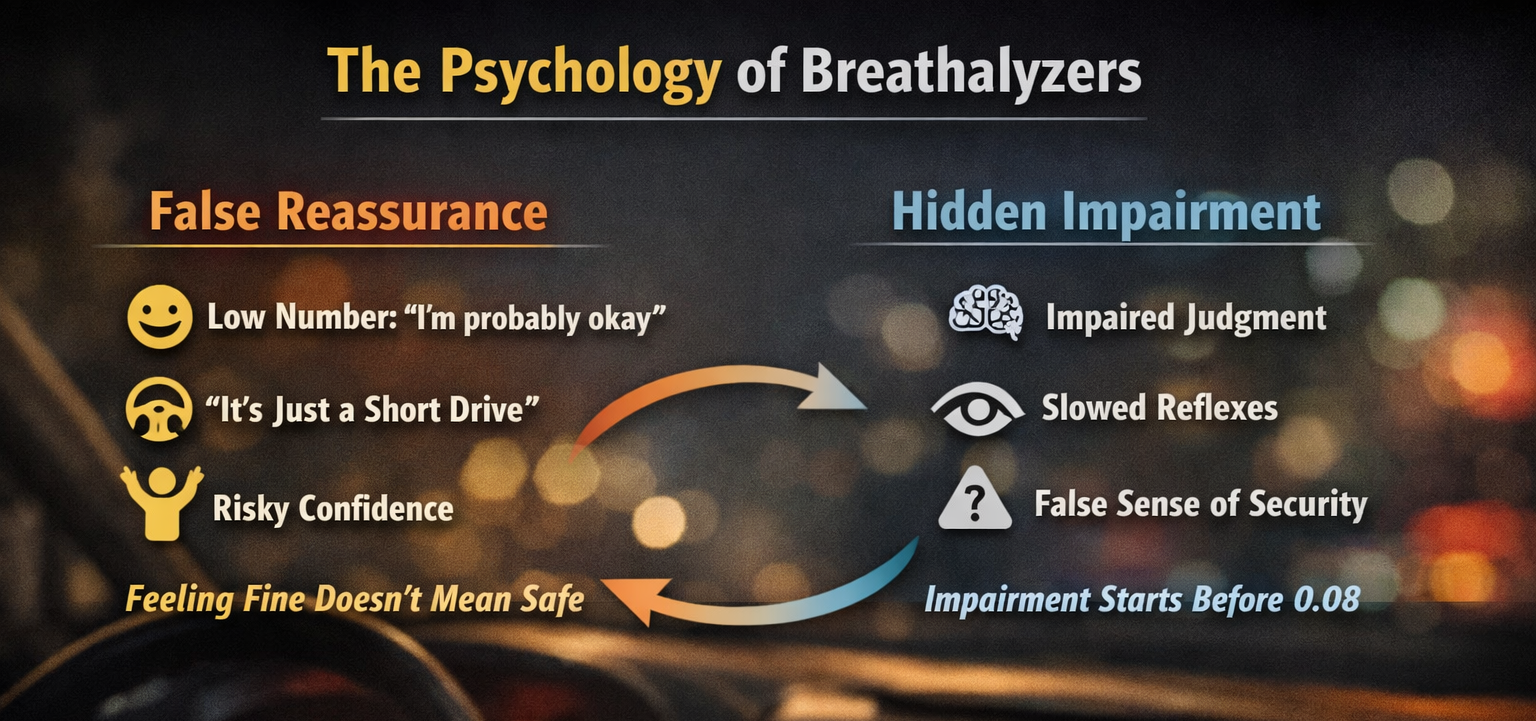
The biggest risk may not even be the technology itself. It’s human psychology. People rarely buy personal breathalyzers because they want uncertainty.
They buy them because they want reassurance. A low number confirms what they already hope is true – like – “I’m probably okay.” “I don’t feel drunk.” or, “It’s only a short drive.”
That emotional comfort can become more dangerous than not testing at all. Someone uncertain about their sobriety may choose caution.
Someone falsely reassured may take risks they otherwise wouldn’t take. And alcohol itself makes this even worse because confidence tends to rise before impairment becomes obvious.
That combination — impaired judgment mixed with technological overconfidence — is where real danger lives.
And it’s exactly why the so‑called 0.08 limit is misleading – it’s a legal line, not a biological safety guarantee. Impairment starts much earlier, often invisibly, long before the law says you’ve crossed the threshold.
So, can personal breathalyzers outsmart the law? Not really. Because the law is only responding to biology and physics.
Alcohol impairs human performance whether someone feels fine or not. A device cannot magically remove that reality.
What personal breathalyzers can do is help people make more informed decisions — but only if users understand their limitations. Semiconductor devices are rough screening tools at best.
Fuel cell devices are far closer to professional instruments. Neither should be treated as absolute proof of safety, but one is undeniably more trustworthy than the other.
Wrapping Up
Personal breathalyzers are often marketed as digital witnesses you can carry in your pocket. Cheap semiconductor devices may provide comfort, convenience, and a sense of control, but they can also create dangerous illusions of safety.
Fuel cell devices come much closer to the truth because they are designed for precision rather than reassurance.
And when the consequences involve lives, accidents, licenses, careers, or criminal charges, the difference between those two things becomes enormous.
Because the most dangerous thought after drinking has never been – “I’m drunk”. It has always been – “I’m probably fine”.
The 0.08 Limit is a Legal Line, But Impairment Starts Much Earlier
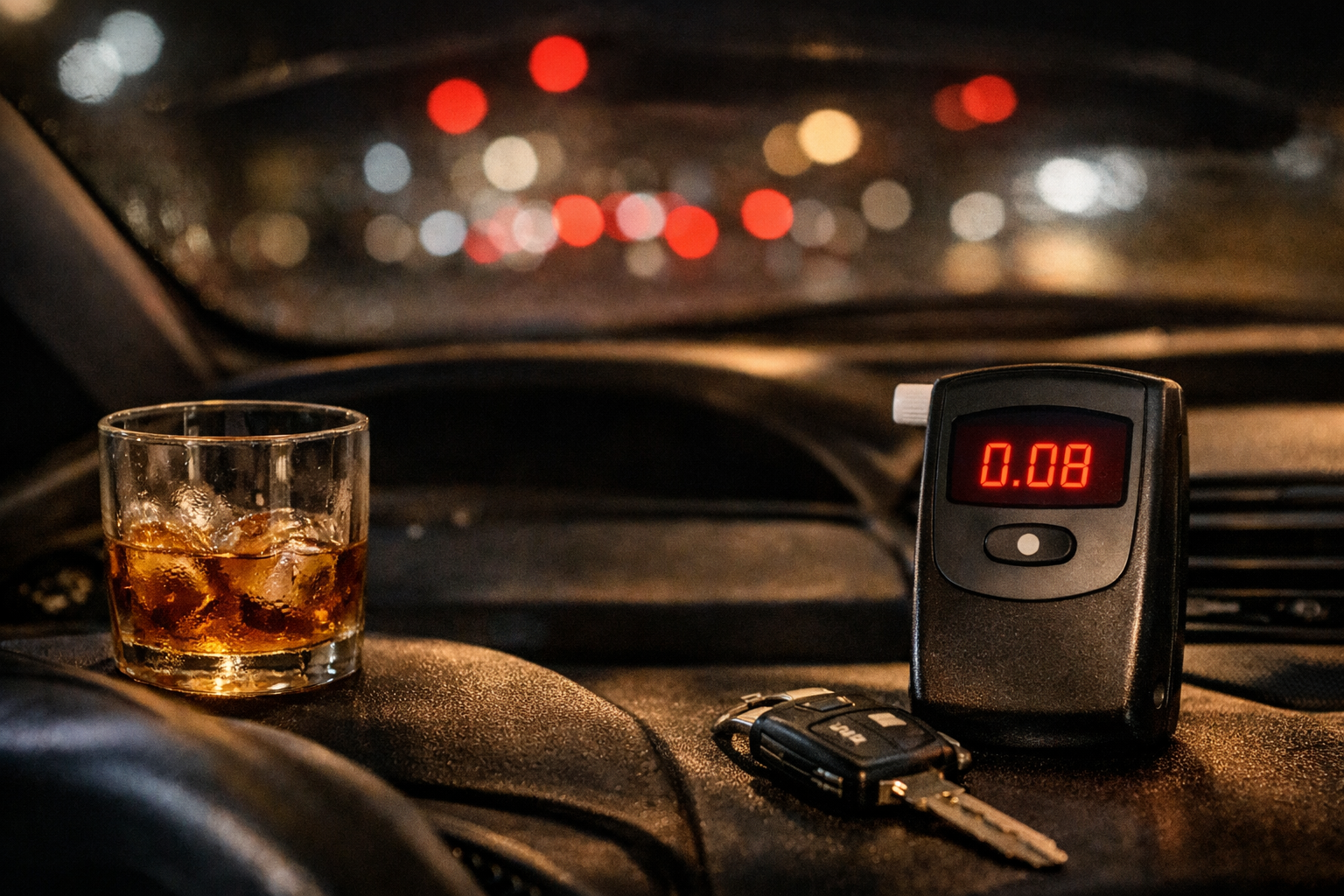
We all know the legal limit—0.08, the number stamped into law as the threshold where impairment becomes a crime. But the truth is, alcohol doesn’t wait for that number. It begins reshaping your judgment and reflexes much earlier, long before a breathalyzer ever says ‘too much. So, impairment starts earlier than the legal limit – 0.08.
The changes begin much earlier, quietly reshaping your judgment, your reflexes, your focus—long before a breathalyzer flashes too much.
Most people ask – How many drinks until I hit 0.08? They pull up a chart, punch numbers into a calculator, and check their BAC. But the truth is, those tools only sketch the outline of a much bigger story.
Because impairment isn’t just about numbers—it’s about the invisible shifts happening inside your brain while you still feel “fine.
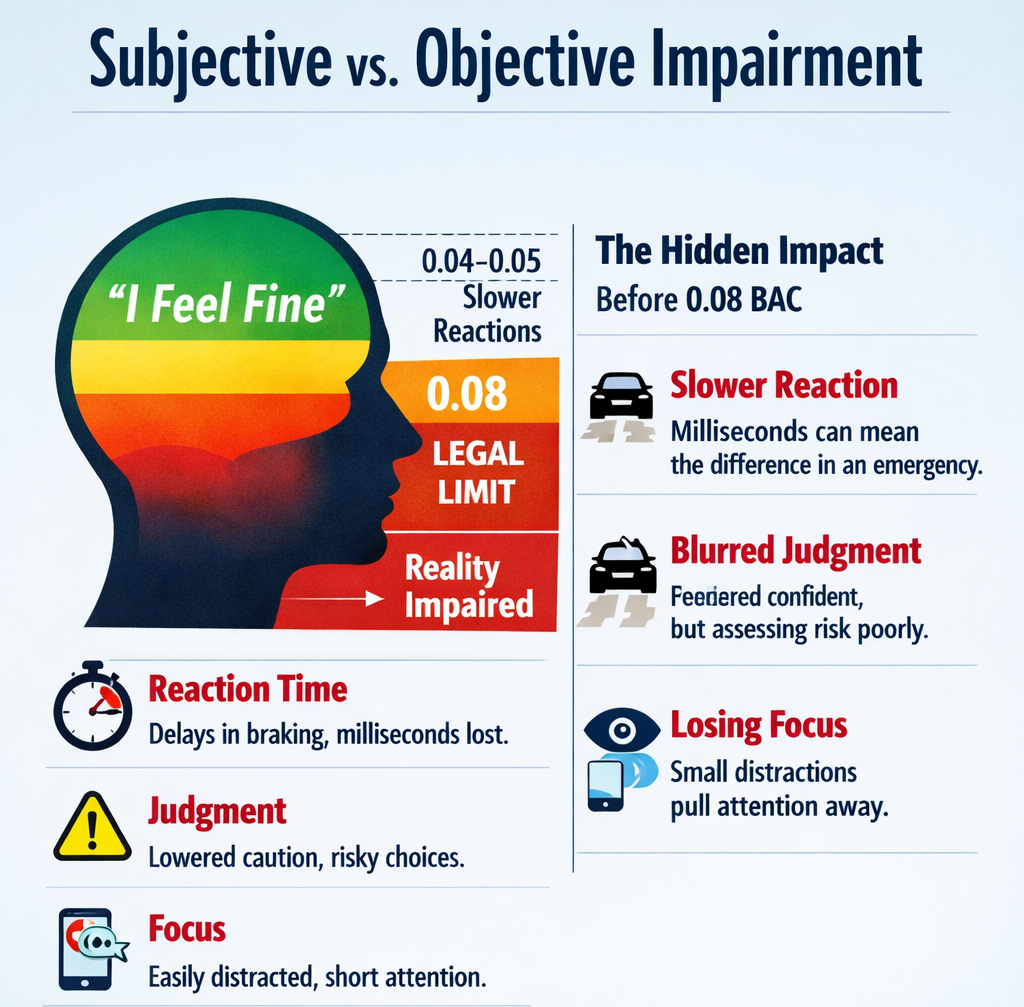
Subjective vs. Objective Impairment
On paper, impairment looks neat & tidy – a number, a threshold, a legal limit. But in reality, it’s messy, personal, and often invisible.
Think of it this way – the law says 0.08 is the point where you’re officially impaired. But your body doesn’t wait for that number. Long before you reach it, subtle changes begin to creep in.
At 0.04–0.05, your reaction times are already slowing. You might not notice it—you still feel “fine”—but your brain is processing information more sluggishly.
Reaction Time – At lower BAC levels, milliseconds are lost in decision-making. On the road, those milliseconds can mean the difference between braking in time or rear-ending the car ahead.
Judgment – Alcohol blurs the edges of caution. You may feel confident enough to drive, even though your ability to assess risk is compromised.
Focus – Distractions become harder to resist. A phone buzz, a passing light, or a stray thought can pull your attention away more easily.
Danger Zone – The gap between subjective experience – I feel fine and objective reality I’m impaired.
A BAC chart might say you’re safe, but your brain is already underperforming. That’s why relying only on how many drinks you’ve had or what a calculator tells you can be misleading.
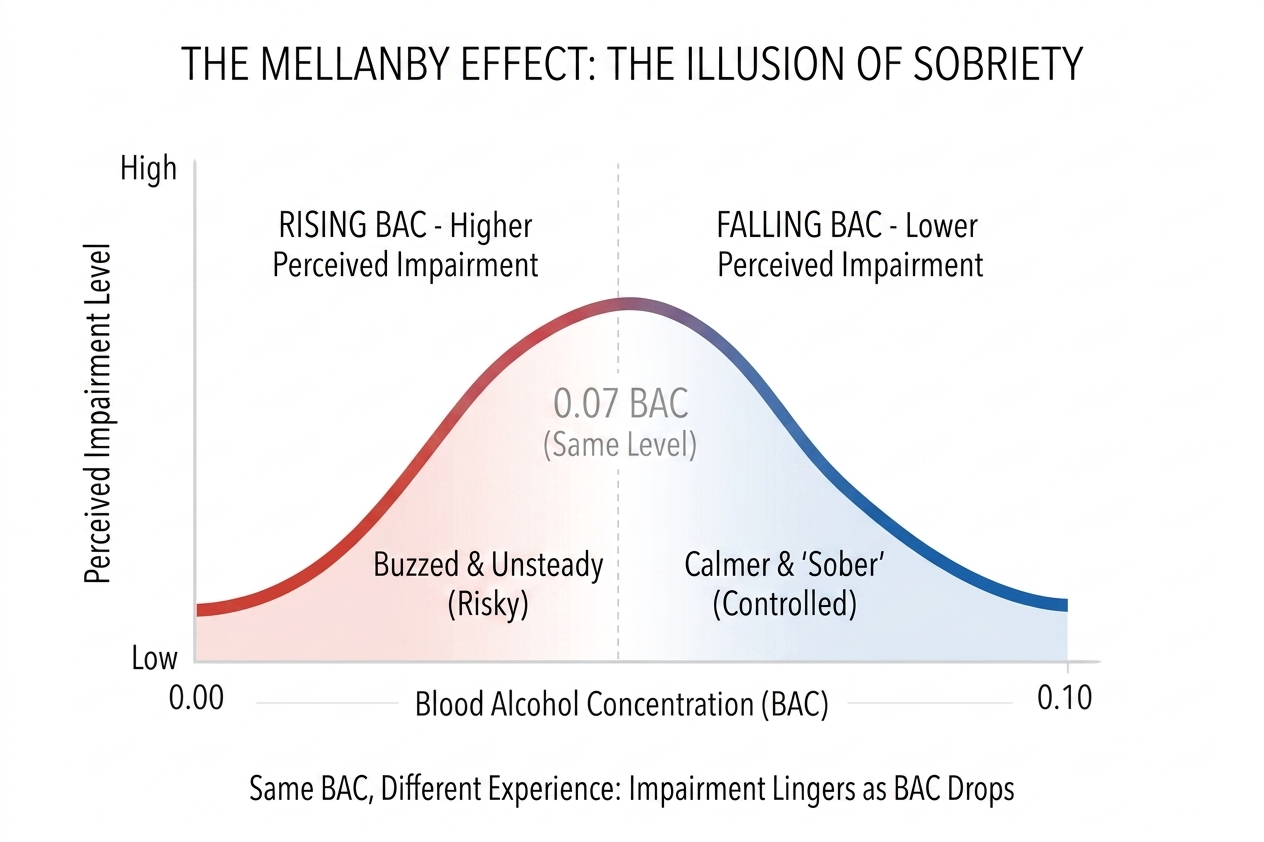
The Mellanby Effect – Rising vs. Falling BAC
Here’s where the story gets even more surprising- the Mellanby Effect.
Imagine this – you’re at 0.07 BAC while your alcohol level is rising. You feel buzzed, unsteady, maybe even reckless.
Later, you’re at the exact same 0.07 BAC, but now it’s falling. You feel calmer, more in control, almost “sober.”
Same number, different experience. Why? Because impairment is greater when BAC is rising than when it’s falling.
On the Way Up – The climb hits harder. Coordination falters, judgment slips faster, and impairment feels stronger.
On the Way Down – The same number feels less impairing. You believe you’re regaining control, even though your reflexes are still dulled.
The Illusion of Sobriety – This is the trap. People often think they’re “fine” once their BAC starts dropping, but the impairment lingers.
This means that even if a BAC calculator shows you’re under the legal limit, your body may still be reacting as if you’re impaired. Although, impairment starts earlier than the legal limit of 0.08.
Charts can’t capture this lived reality. Two identical numbers can feel worlds apart depending on whether your BAC is climbing or falling.
The Micro-Sleeps of 0.05
Tracking 0.08 is a losing game. By the time you hit that number, impairment has already been shaping your decisions for hours.
At 0.04–0.05, something subtle but dangerous happens -the brain begins to slip into micro-sleeps.
At 0.05 BAC, crash risk increases by about 40% compared to sober driving. A driver may miss a stop sign or brake too late.
At 0.04–0.05, students show slower reaction times and reduced focus in lab tests
Cognitive Processing Slows – Your brain takes longer to interpret signals. A red light doesn’t register as quickly, a pedestrian doesn’t stand out as sharply.
Attention Flickers – Focus becomes fragile. You may think you’re paying attention, but your mind drifts in tiny, unnoticed lapses.
Micro-Sleeps – Microsleeps are milliseconds of lost awareness—your brain “blinks” without your permission.
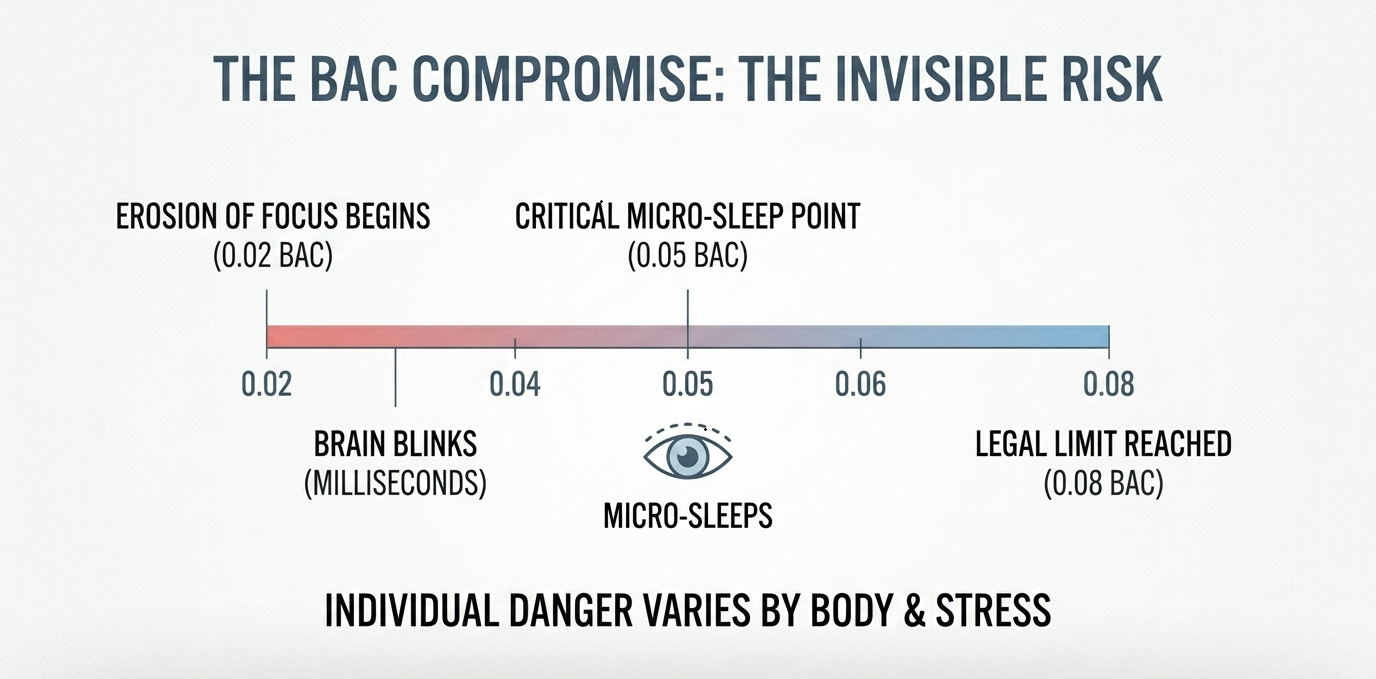
At 60 miles per hour, a micro-sleep can mean traveling the length of a football field without full awareness. It’s not dramatic like passing out—it’s invisible, silent, and deadly.
This is why the legal limit of 0.08 is misleading. By the time you reach it, your brain has already been compromised. The real danger begins earlier, in the quiet erosion of focus and reaction.
And here’s the kicker – how many drinks it takes to reach 0.05 or 0.08 varies wildly. Body weight, metabolism, food intake, and even stress levels change the equation. A BAC chart or calculator can give you an estimate, but it can’t tell you how impaired you feel or how impaired you actually are.
That’s why public health experts often say – Don’t just check your BAC here—listen to your body, too.
The Illusion Behind BAC Charts
The story of alcohol impairment isn’t about a single number—it’s about the hidden ways alcohol reshapes perception, judgment, and reaction long before the law steps in.
Charts and Calculators – They give you numbers, but not the full picture. A chart might say you’re “safe,” yet your brain could already be lagging behind.
How Many Drinks – It’s not a reliable measure. Two people can drink the same amount and end up with very different BACs depending on body weight, metabolism, food intake, or even stress levels.
BAC Checking Tools – Tools can help, but they don’t capture subjective impairment, the Mellanby Effect, or the micro‑sleeps that creep in at lower levels. Numbers alone can’t explain why you feel “fine” while your reflexes are compromised.
Alcohol doesn’t just change your BAC—it changes your experience of control. and impairment starts much earlier than the legal limit of 0.08. That’s the real story – impairment is personal, variable, and often invisible until it’s too late.
Wrapping Up
In the end, the most dangerous part of alcohol isn’t the number on a screen—it’s the confidence it gives you before that number ever looks alarming. Long before the law calls it impairment, your brain has already started to slow, your focus has begun to fracture, and your judgment has quietly shifted.
The danger isn’t 0.08—it’s everything that happens before it. By the time a number says you’re impaired, your brain already is.
Because the truth is, you don’t feel the moment you stop being at your best. So don’t ask, “Am I under the limit?” Ask, “Am I truly okay to drive?” When it comes to safety, the safest number isn’t 0.08—it’s zero.