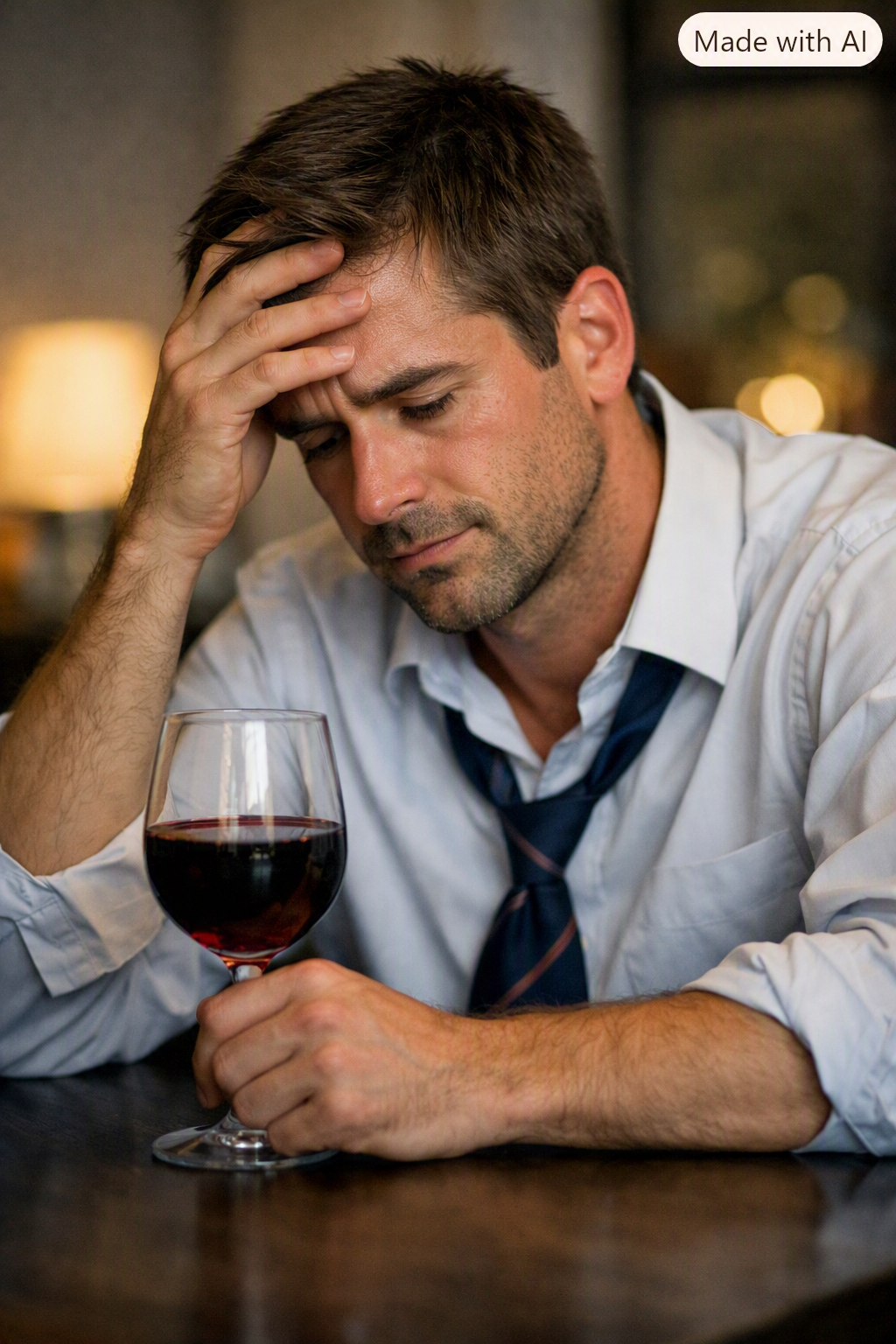
Many people believe that drinking alcohol while feeling stressed or anxious causes them to become intoxicated more quickly. You may have heard someone say, “I only had two drinks, but they hit me much harder than usual because I was stressed.”
Stress and anxiety do not directly increase your Blood Alcohol Concentration (BAC). However, they can significantly influence how alcohol affects your mind, your judgment, and your perception of intoxication.
Understanding this relationship is important for making safer decisions, especially if you’re relying on a BAC calculator, comparing results from different BAC calculators, or wondering whether you’re below the legal limit for driving.
Why Alcohol May Feel Stronger When You’re Stressed
Although stress does not increase your BAC, it can change how you experience alcohol.
When you’re under stress, your body releases hormones such as cortisol and adrenaline. These hormones affect attention, alertness, emotional processing, and decision-making. Alcohol, on the other hand, is a central nervous system depressant that slows brain activity.
When these two opposing states occur together, alcohol’s impairing effects may feel more noticeable. You might feel dizzier, more emotional, less focused, or more fatigued than you normally would after the same number of drinks.
This does not mean your Blood Alcohol Concentration is higher. Instead, your brain is responding differently because of your emotional state.
Stress Often Changes Drinking Behavior
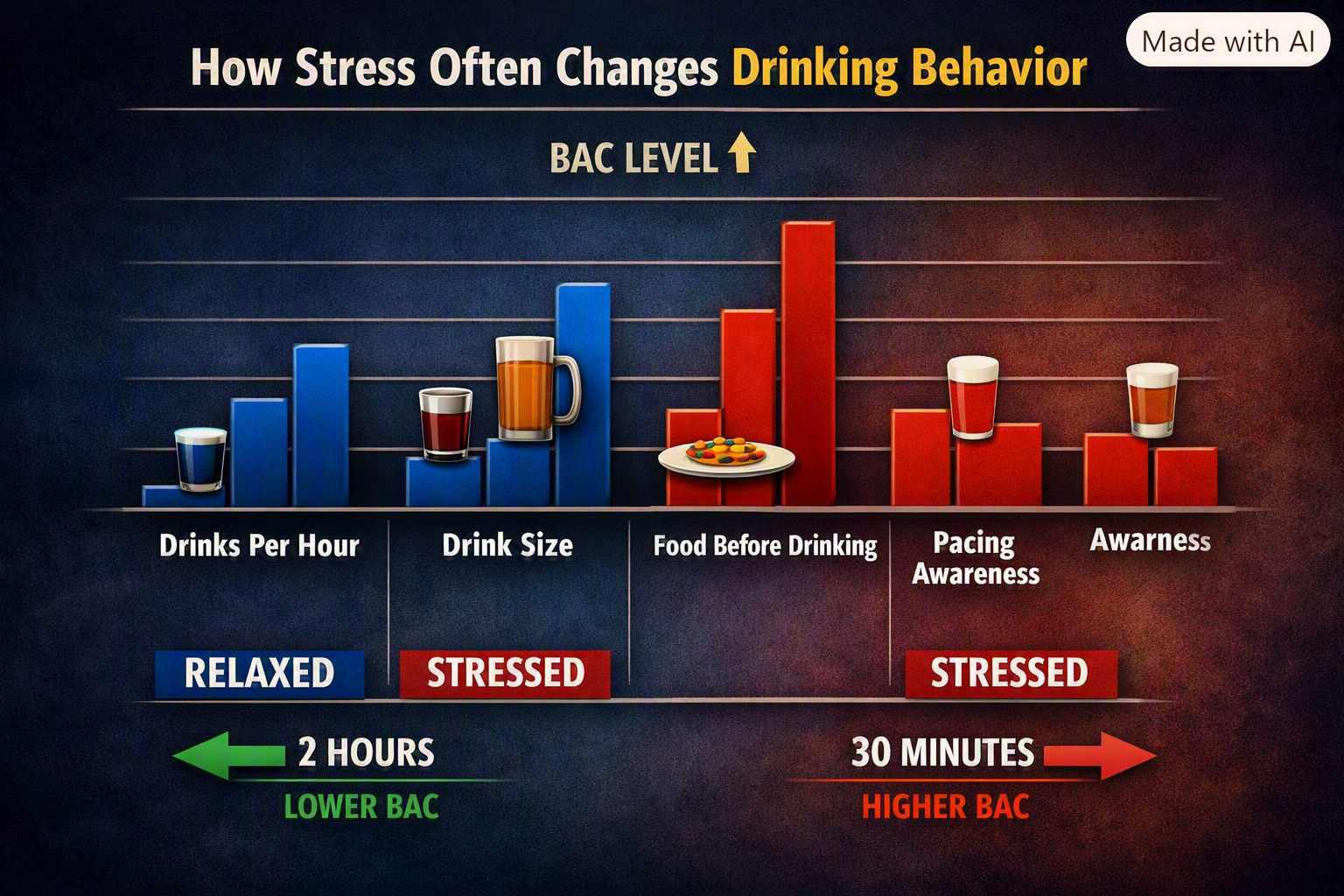
One of the biggest ways stress influences intoxication is by changing how people drink.
Someone experiencing anxiety or emotional stress is often more likely to:
- Drink more quickly
- Consume larger drinks
- Skip meals before drinking
- Continue drinking without realizing how much they’ve consumed
Each of these behaviors can cause your BAC to rise faster than expected. For example, imagine two coworkers finishing work on a Friday evening.
The first person has had a relaxed day and slowly drinks two beers over two hours while eating dinner. The second person has had an extremely stressful day and drinks the same two beers within thirty minutes on an empty stomach.
Although stress itself does not increase Blood Alcohol Concentration, the second person’s drinking pattern is much more likely to produce a higher BAC because alcohol is entering the bloodstream more rapidly.
Does Stress Affect Your BAC?
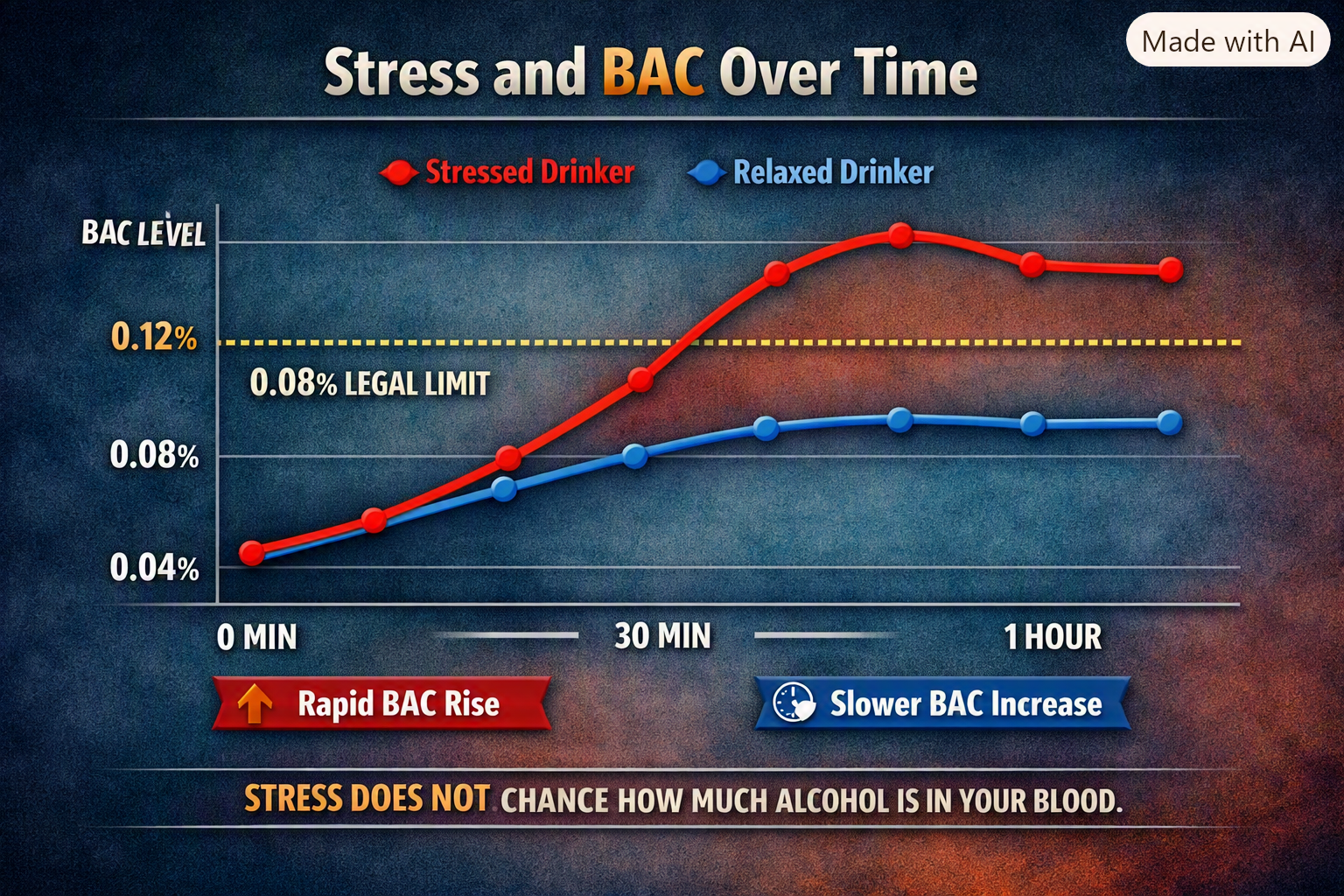
Many people assume that feeling stressed or anxious causes their Blood Alcohol Concentration (BAC) to rise faster. In reality, that’s not how alcohol works.
Your BAC is determined by measurable physical factors, including:
- The number of alcoholic drinks you consume
- The alcohol content of those drinks
- Your body weight and body composition
- Biological variability
- How quickly you drink
- Whether you’ve eaten before or while drinking
- The amount of time your body has had to metabolize the alcohol
Notice that stress and anxiety are not on this list. They do not directly increase the amount of alcohol in your bloodstream or raise your actual Blood Alcohol Concentration.
However, stress can still play an important role in alcohol intoxication. It can change how quickly you drink, influence your decisions, and make alcohol’s effects feel stronger. This is why two people with a similar BAC may experience intoxication differently, even when a BAC calculator estimates nearly identical Blood Alcohol Concentration levels for both.
Many people drink alcohol to unwind after work. If you’ve had an especially stressful day, you may finish drinks much faster than usual without paying attention to how much you’ve consumed.
Your BAC can increase quickly simply because you’re drinking at a faster pace—not because stress changes alcohol metabolism.
During Social Anxiety
People who feel nervous at parties or large gatherings sometimes drink rapidly to become more comfortable. Instead of sipping one drink over an hour, they may finish several drinks within a short period.
In this situation, stress indirectly contributes to a higher Blood Alcohol Concentration by influencing drinking behavior.
Emotional Situations
Events such as arguments, relationship problems, financial worries, or family conflicts can also affect how people consume alcohol.
Some individuals drink continuously without noticing how much they’ve had, making it easier for their BAC to exceed the legal limit before they realize it.
Why Two People Can Feel Different at the Same BAC
One of the most common misconceptions is that everyone experiences alcohol in exactly the same way. In reality, two people with similar Blood Alcohol Concentration levels may perceive intoxication differently.
For example – One person may feel relaxed and only mildly impaired.
Another person may feel dizzy, emotional, anxious, or mentally exhausted.
Stress, anxiety, fatigue, sleep deprivation, medications, and emotional state all influence how alcohol’s effects are perceived—even when the measured BAC is similar.
This is one reason why using a BAC calculator alone cannot predict exactly how intoxicated you will feel.
Can Stress Affect Alcohol Metabolism?
Current scientific evidence suggests that ordinary stress does not significantly change how quickly your liver processes alcohol.
Your liver metabolizes alcohol at a fairly consistent rate, regardless of whether you’re relaxed or anxious.
While severe illness or long-term medical conditions can affect alcohol metabolism, everyday work stress, exam anxiety, or emotional pressure do not directly raise your Blood Alcohol Concentration.
Can a BAC Calculator Account for Stress?
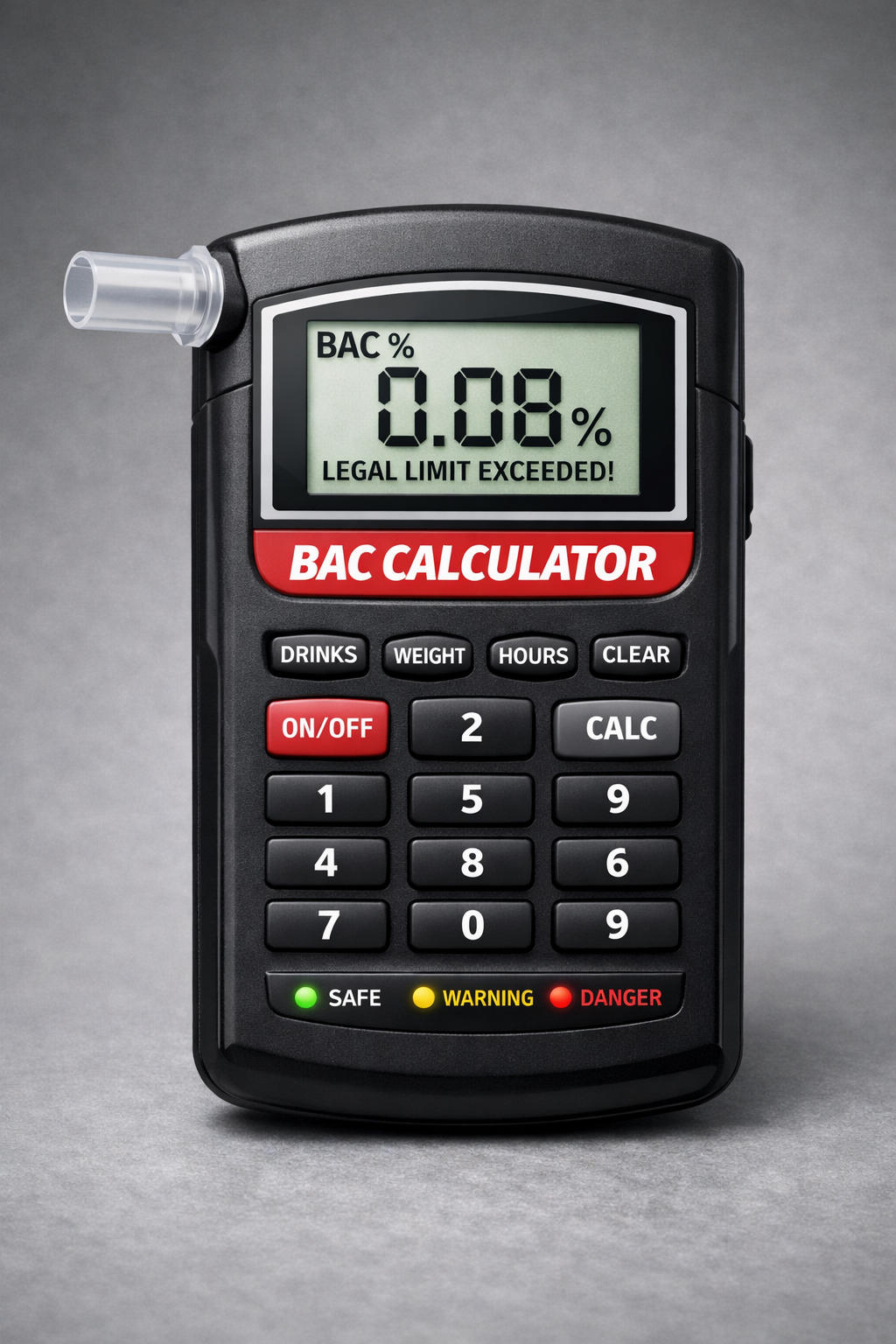
A BAC calculator estimates your Blood Alcohol Concentration using information such as:
- Number of drinks
- Alcohol percentage
- Body weight
- Biological sex
- Time spent drinking
It does not measure emotional stress, anxiety, fatigue, medications, or sleep quality because these factors do not directly determine BAC.
It’s also important to remember that BAC calculators only provide estimates. They cannot determine your exact Blood Alcohol Concentration because every person’s metabolism, health, food intake, and alcohol absorption rate are different.
Practical Tips for Drinking More Safely During Stress
If you choose to drink while feeling stressed or anxious, consider these precautions:
- Eat a proper meal before drinking.
- Pace yourself by drinking slowly.
- Alternate alcoholic drinks with water.
- Avoid using alcohol as your primary stress-management strategy.
Remember that stress may make alcohol feel stronger, even if your BAC has not increased.
Use BAC calculators only as rough estimates—not as proof that you’re safe to drive.
Wrapping Up
Stress and anxiety do not directly increase your BAC, but they can strongly influence how intoxicated you feel and how you behave while drinking.
Stress often leads people to drink faster, consume more alcohol, or pay less attention to their intake, which can indirectly result in a higher BAC.
At the same time, emotional stress can make alcohol’s impairing effects feel more noticeable, even when your Blood Alcohol Concentration remains unchanged.
The safest approach is to drink responsibly, understand your limits, and recognize that how you feel isn’t always the same as what your BAC alone can explain.
