Most people have heard at least one “quick sober-up” trick. Go for a run. Hit the gym. Take a brisk walk. Sweat it out.
The idea sounds reasonable. Exercise raises your heart rate, increases breathing, and makes you sweat—all signs that your body is working harder. It’s easy to assume that this extra activity burns off alcohol the same way it burns calories.
But alcohol doesn’t work like fat or sugar. In fact, one of the biggest dangers of exercising after drinking isn’t that it fails to lower your Blood Alcohol Concentration (BAC). The real problem is that it can make you feel more sober while your brain and body remain just as impaired.
Understanding why this happens is more important than simply knowing that exercise doesn’t reduce BAC. It helps explain why many people mistakenly believe they’re safe to drive even when they aren’t.
Why Exercise Feels Like It’s Working
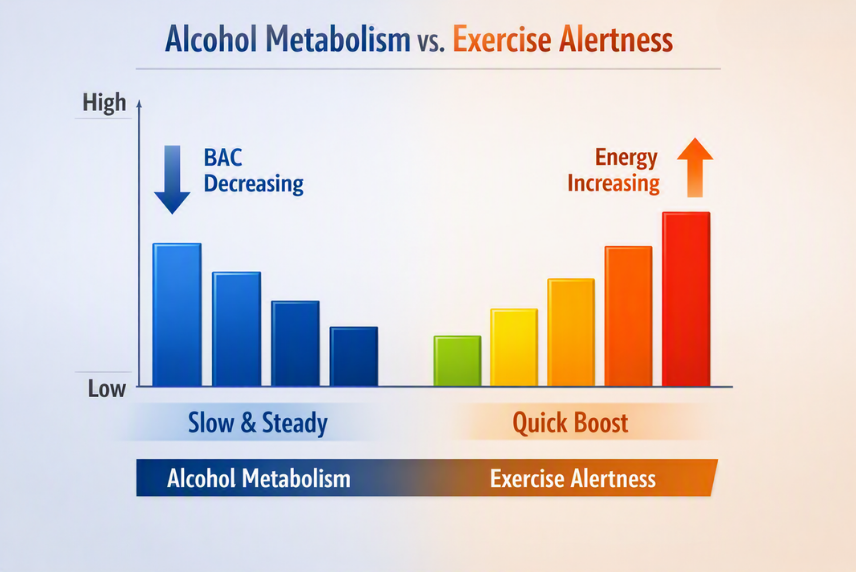
People rarely believe exercise lowers BAC because they’ve measured it. They believe it because of how they feel afterward.
A short run, an intense cycling session, or even climbing several flights of stairs causes the body to release adrenaline and other stress hormones. Blood flow increases, your heart pumps faster, and your body becomes more alert.
The result is a temporary sensation of waking up. You may feel less sleepy, more focused, more energetic, more confident, more capable of making decisions.
None of these feelings indicates that alcohol has left your bloodstream. Instead, they’ve simply changed your perception of intoxication.
This difference between feeling sober and being sober is one of the most misunderstood aspects of drinking.
Alcohol Doesn’t Leave Through Your Muscles
Many people subconsciously compare alcohol to calories. Since exercise burns calories, they assume it also burns alcohol. Your body treats these two substances very differently. Calories stored as carbohydrates or fat can be used directly by muscles during exercise.
Alcohol cannot. Instead, alcohol is treated as a toxin. Before your body can get rid of it, it must first be chemically broken down by the liver.
Nearly all of the alcohol you drink follows the same path- Alcohol is absorbed into the bloodstream. It circulates throughout the body, including the brain. The liver converts alcohol into acetaldehyde.
Acetaldehyde is further broken down into acetate. The remaining compounds are eventually converted into water and carbon dioxide. This process depends almost entirely on liver enzymes—not on how physically active you are.
Whether you’re lying on the couch watching television or finishing a 10-kilometer run, your liver continues processing alcohol at roughly the same pace.
Why Sweating Doesn’t “Sweat Out” Alcohol
One reason the myth survives is because people associate sweating with detoxification. It’s true that tiny amounts of alcohol leave the body through sweat.
That’s why certain wearable alcohol monitors can detect alcohol through perspiration. However, the amount is extremely small.
Around 90–98% of alcohol is metabolized by the liver, while only a tiny fraction leaves through sweat, breath, and urine. Even after an hour of intense exercise, the difference in your BAC is practically insignificant.
What exercise removes is water. This can actually leave you more dehydrated, making headaches, dizziness, and fatigue feel worse later.
The Hidden Risk: Exercise Can Increase Confidence
One of the less-discussed effects of exercise after drinking is confidence. After physical activity, people often feel mentally sharper, physically stronger, more coordinated, more awake. These sensations can create a false belief that they’re ready to drive.
Unfortunately, alcohol continues affecting the parts of the brain responsible for reaction time, judgment, impulse control, visual tracking, co-ordination.
These functions recover only as alcohol is metabolized. Feeling capable doesn’t mean those abilities have returned. This is why relying on “how sober you feel” is one of the least reliable ways to judge fitness to drive.
Can Exercise Ever Change a Breathalyzer Reading?
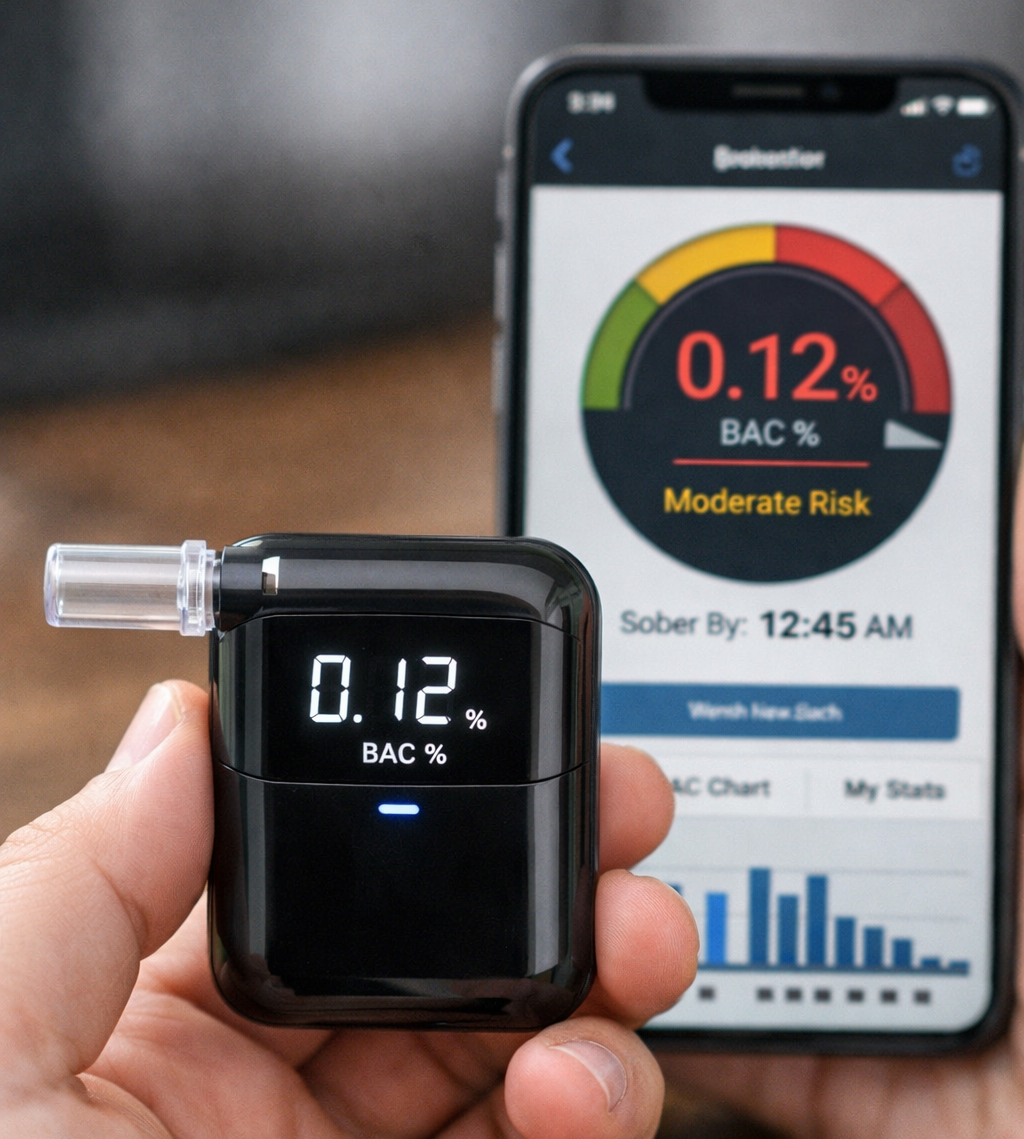
Some people wonder whether working out immediately before taking a breathalyzer could produce a lower reading. In normal circumstances, no.
Breath alcohol measurements reflect the concentration of alcohol in your bloodstream through your lungs. Since exercise doesn’t significantly reduce the amount of alcohol circulating in the blood, it won’t meaningfully lower your BAC.
If anything, strenuous activity can temporarily alter breathing patterns, but it doesn’t eliminate alcohol from the body or make a failed test become a passing one.
Why the Liver Has a Speed Limit
Many biological processes speed up when your body works harder. Heart rate increases. Breathing accelerates. Calories burn faster.
Alcohol metabolism is different. The liver contains a limited amount of enzymes—primarily alcohol dehydrogenase (ADH) and aldehyde dehydrogenase (ALDH)—that process alcohol step-by-step.
Once those enzymes are working at capacity, adding more physical activity doesn’t make them work significantly faster.
It’s similar to cars passing through a toll booth. If only a certain number of lanes are open, making the cars drive faster toward the booth doesn’t increase how many pass through each minute. The bottleneck remains the liver.
So What Actually Lowers BAC?
Despite countless internet tips, only one thing consistently lowers Blood Alcohol Concentration – Time. On average, BAC falls by about 0.015% per hour, although this varies between individuals. If you want to measure your BAC you can measure it here.
Several factors influence how high your BAC becomes, including:
- body weight
- biological variability
- number of drinks
- alcohol strength (ABV)
- drinking speed
- food consumed before drinking
- liver health
Once alcohol has entered your bloodstream, however, there is no proven way to dramatically accelerate its removal. Not exercise. Not coffee. Not cold showers. Not energy drinks. Not fresh air.
A Better Way to Estimate Impairment
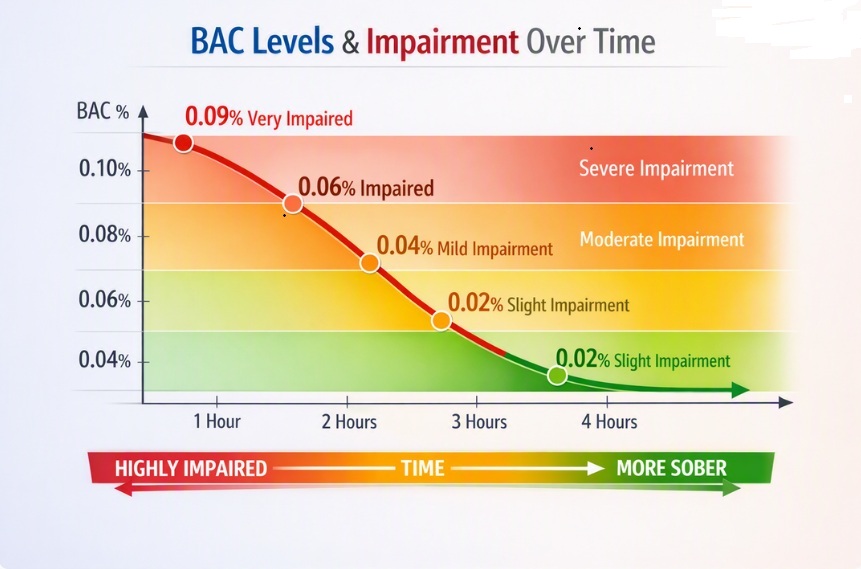
Because alertness can be misleading, estimating BAC based on objective information is far more reliable than relying on how you feel.
A BAC calculator uses factors such as:
- number of drinks
- drink size
- alcohol percentage (ABV)
- body weight
- biological sex
- time spent drinking
While no calculator can perfectly predict an individual’s BAC, it provides a much more realistic estimate than personal judgment alone.
Pairing that estimate with a BAC chart also helps illustrate how impairment increases as BAC rises—from subtle reductions in reaction time at lower levels to significant losses of coordination and judgment at higher concentrations.
Why High Alcohol Tolerance Doesn’t Help
People with a high alcohol tolerance often appear less intoxicated than occasional drinkers. They may speak clearly. Walk normally. Carry on conversations. But tolerance changes outward behaviour—not the amount of alcohol circulating in the bloodstream.
Two people with identical BAC levels can appear very different while experiencing similar reductions in driving ability. That’s why “I feel fine” is never a reliable indicator of safety.
Exercise is one of the healthiest things you can do for your body, but it isn’t a shortcut to sobriety. A workout may leave you feeling more alert, more energetic, and more confident, yet none of those sensations mean your Blood Alcohol Concentration has fallen.
Your liver—not your muscles—is responsible for removing alcohol, and it works at a pace that physical activity cannot meaningfully speed up.
Wrapping Up
If you’ve been drinking, don’t judge your ability to drive by how awake you feel after a run or a gym session.
Instead, give your body the time it needs to metabolize the alcohol, use a BAC calculator as a rough educational estimate, understand what a BAC chart tells you about impairment, and choose the safer option whenever there’s uncertainty.
The safest way to lower your BAC has never been exercise—it has always been time.
