
It’s Friday night. Two friends, meet at a rooftop bar after a long week. They order the same drink — a tall glass of wine. They sip at the same pace, laugh at the same jokes, and yet, within an hour, something feels different.
One is flushed, his head heavy, concentration slipping. Another friend, on the other hand, feels only a light buzz, still sharp and energetic. The difference isn’t the drink. It’s their biology — specifically, their genetics.
This explains why BAC charts and calculators can only provide estimates. Two people consuming the same amount of alcohol may show very different BAC readings. Genetics sets the baseline, but lifestyle factors amplify the differences.
Enzymes and Genetic Variations
Alcohol metabolism relies on two critical enzymes:
Alcohol Dehydrogenase (ADH) — converts ethanol into acetaldehyde.
Aldehyde Dehydrogenase (ALDH) — breaks acetaldehyde down into acetate, which is less toxic.
Genetic variations in these enzymes explain why some individuals experience stronger reactions. Reduced ALDH activity, for example, leads to acetaldehyde accumulation, causing flushing, headaches, and nausea.
This difference is measurable through BAC (Blood Alcohol Concentration). A BAC calculator can estimate levels, but genetics may cause actual results to differ. Two people consuming the same drink may show very different numbers on a BAC chart, even if their weight and gender are similar.
Population Patterns and Genetic Traits
Genetic differences are not random. Certain populations carry enzyme variants that affect alcohol metabolism:
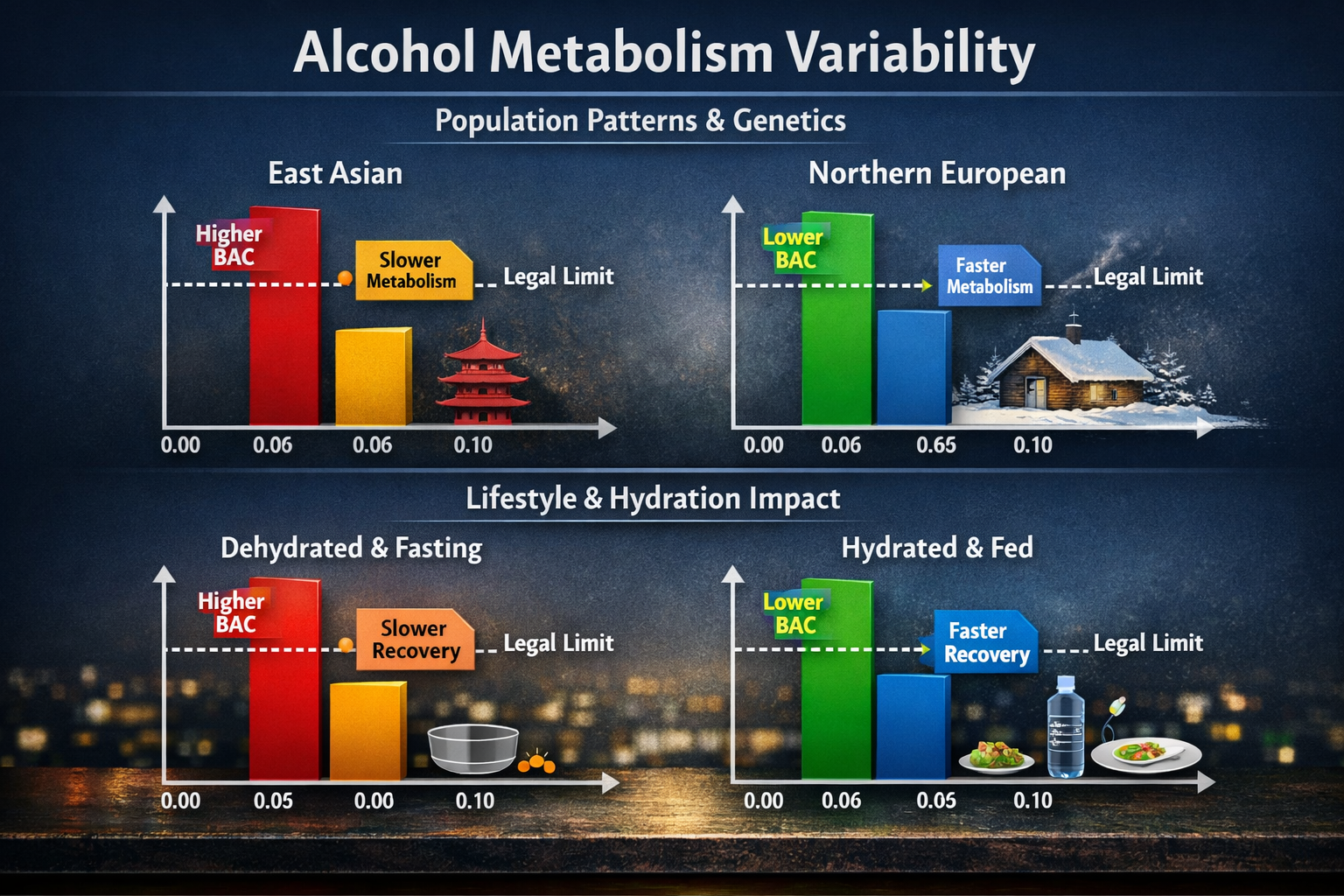
Some East Asian groups have ALDH variants that slow acetaldehyde breakdown, often causing the “Asian flush.”
Northern European populations tend to have more efficient enzyme activity, leading to faster clearance.
Tolerance, however, does not mean safety. Even if someone feels less impaired, their BAC may still rise above the legal limit. A BAC chart makes this clear – perception and actual concentration are not always aligned.
How Genetics Meets Lifestyle
A person spends hours outdoors, sweats heavily, and drinks little water. Later, they consume alcohol. Their body is already stressed, and alcohol pushes them past balance. Their BAC calculator reading may look similar to another person’s, but dehydration amplifies the effects, making concentration and energy drop faster.
Another person eats a proper meal, stays hydrated, and rests before drinking. Their BAC chart may show the same concentration, but their body handles the stress more effectively. They still reach impairment, but the experience feels less severe.
These scenarios highlight how genetics interacts with hydration, nutrition, and lifestyle. The same drink can lead to very different outcomes depending on preparation and biological differences.
Scientific Factors Beyond Genetics
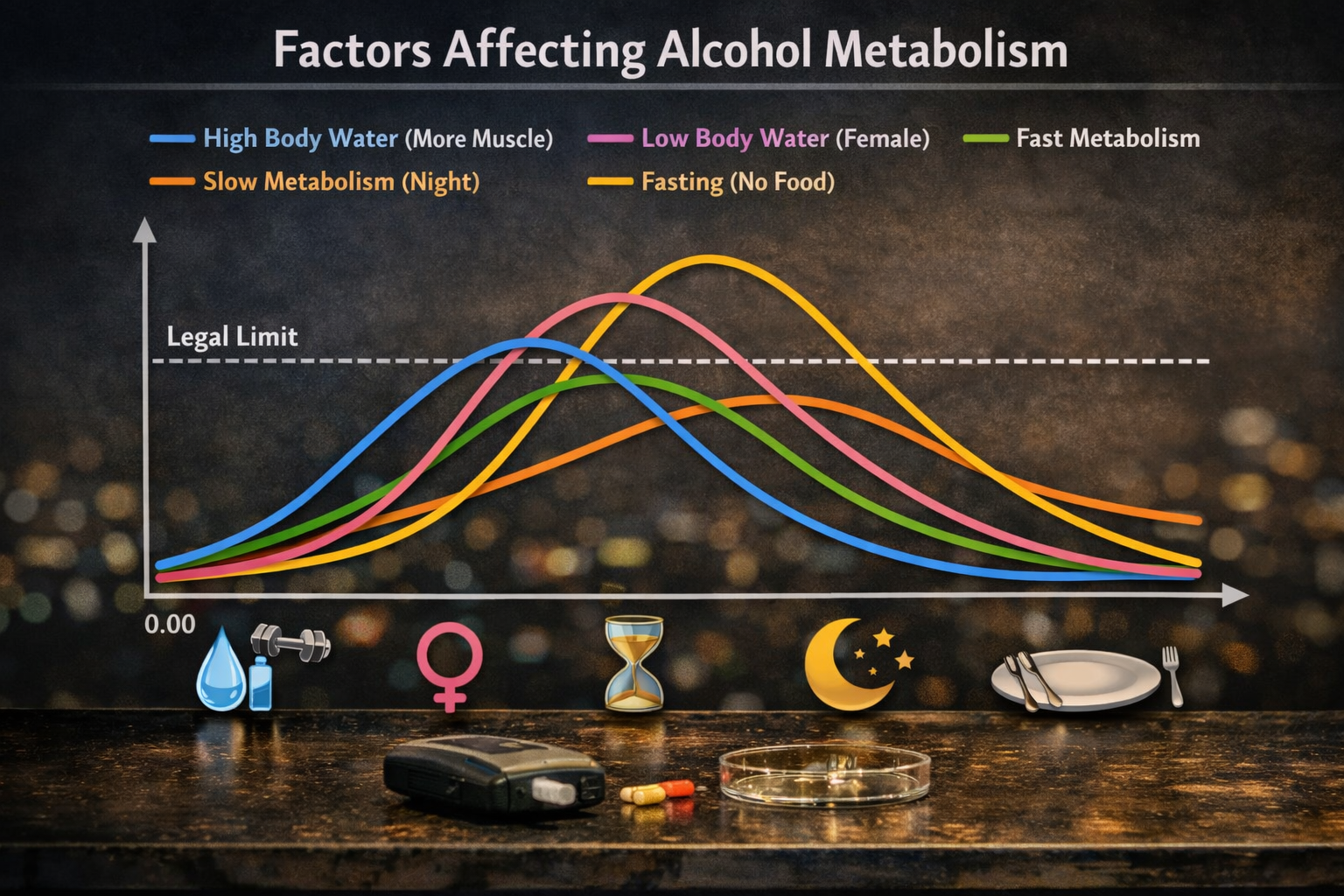
Genetics is only part of the story. Other scientific factors include:
- Body water percentage – Alcohol distributes through water, not fat. People with higher muscle mass (more water) tend to have lower BAC after the same drink.
- Sex differences – Women generally have lower body water percentage than men, leading to a higher BAC for the same intake.
- Metabolic rate – The liver processes alcohol at ~0.015 BAC per hour, regardless of hydration.
- Circadian rhythm – Studies suggest alcohol metabolism may vary depending on the time of day, with slower clearance at night.
- Nutritional status – Food slows absorption, while fasting accelerates it.
The Role of Legal Limits
The legal limit is a critical benchmark. At 0.08 BAC, driving becomes unsafe and illegal in most regions. Yet genetics can influence how quickly someone reaches that threshold. A person with slower enzyme activity may cross the legal limit after fewer drinks, while another may remain below it longer.
This is why relying solely on a BAC calculator is risky. Calculators provide estimates, but they cannot account for genetic differences, hydration status, or metabolic speed. A BAC chart is useful for general guidance, but it cannot replace the complexity of individual biology.
The morning often reveals the hidden role of genetics and hydration. Some people wake with severe headaches, fatigue, and difficulty concentrating, while others feel only mild tiredness. The difference lies in how efficiently their enzymes cleared acetaldehyde and how well their body managed fluid balance.
Wrapping Up
Genes influence how efficiently your enzymes break down alcohol, which shapes your BAC chart and how quickly you might reach the legal limit.
But those charts and calculators are only estimates — hydration, food intake, sleep, and lifestyle choices all play a major role in how alcohol actually affects you. In reality, your genetic baseline sets the pace, while everyday factors decide how the experience unfolds.
