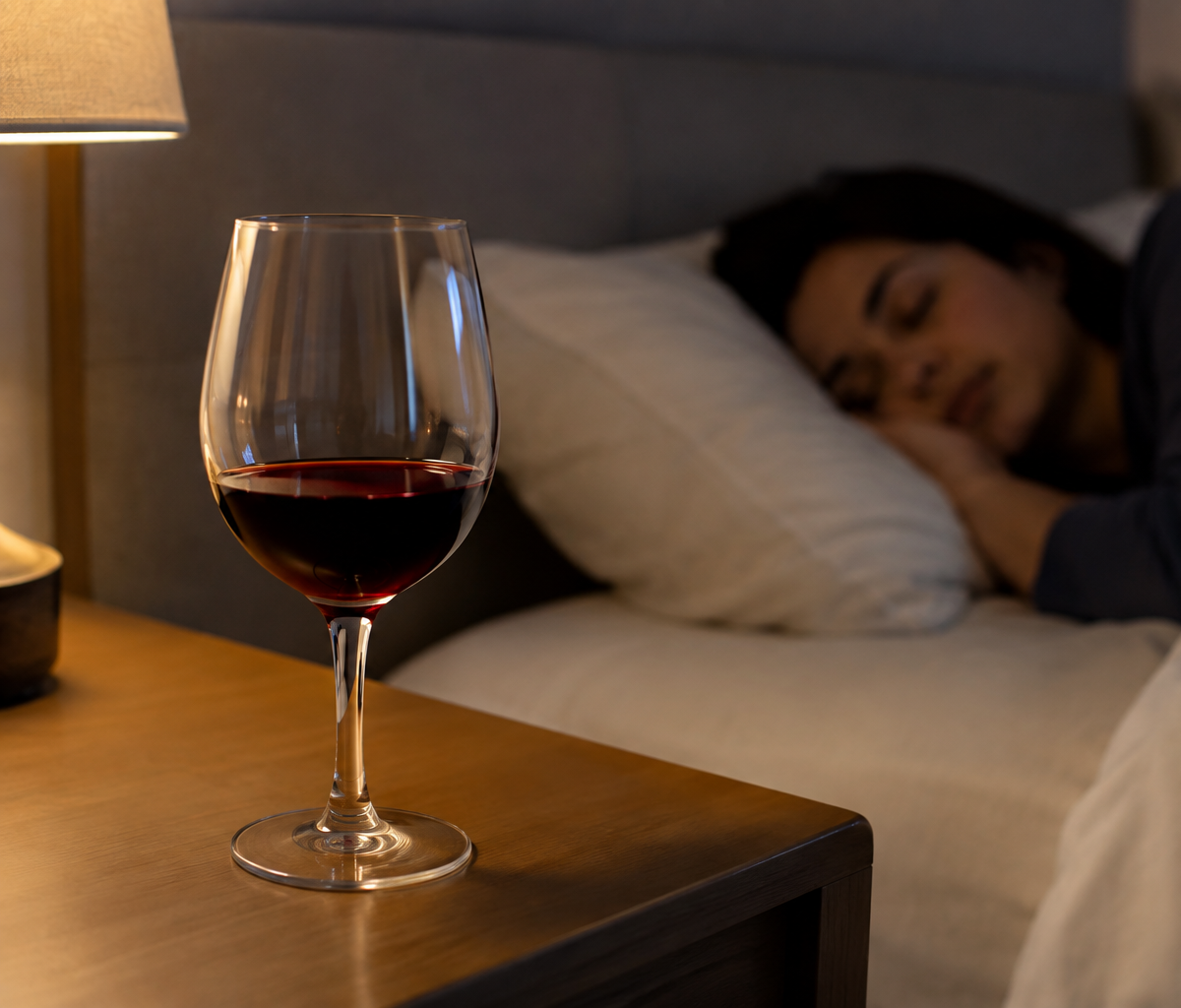
 You finish drinking, go to bed, and assume your blood alcohol concentration (BAC) will immediately start dropping. After all, you’re no longer drinking. But there is an important detail many people overlook: your BAC can continue to rise for a while after you stop drinking—even after you fall asleep.
This happens because alcohol does not enter your bloodstream all at once. The body needs time to absorb alcohol from the stomach and small intestine. Depending on factors such as how much you drank, whether you ate, and how quickly you consumed the alcohol, absorption can continue after your last drink. That means going to sleep does not automatically mean your BAC is already falling.
Why Can BAC Rise After You Stop Drinking?
When you drink alcohol, it passes through your digestive system and is gradually absorbed into your bloodstream. Alcohol is absorbed relatively quickly, but the process isn’t instantaneous.
If you have recently finished drinking, some of the alcohol may still be in your stomach or small intestine. As that alcohol continues to enter your bloodstream, your BAC can increase even though you are no longer drinking. This is sometimes called post-drinking absorption.
For example, imagine someone has several drinks over a short period and then goes to bed soon afterward. At the moment they lie down, not all of the alcohol they’ve consumed may have reached their bloodstream. During the next several hours, the remaining alcohol can continue to be absorbed. As a result, their BAC may initially rise before the body’s elimination of alcohol becomes the dominant process.
Does Sleeping Slow Down Alcohol Absorption?
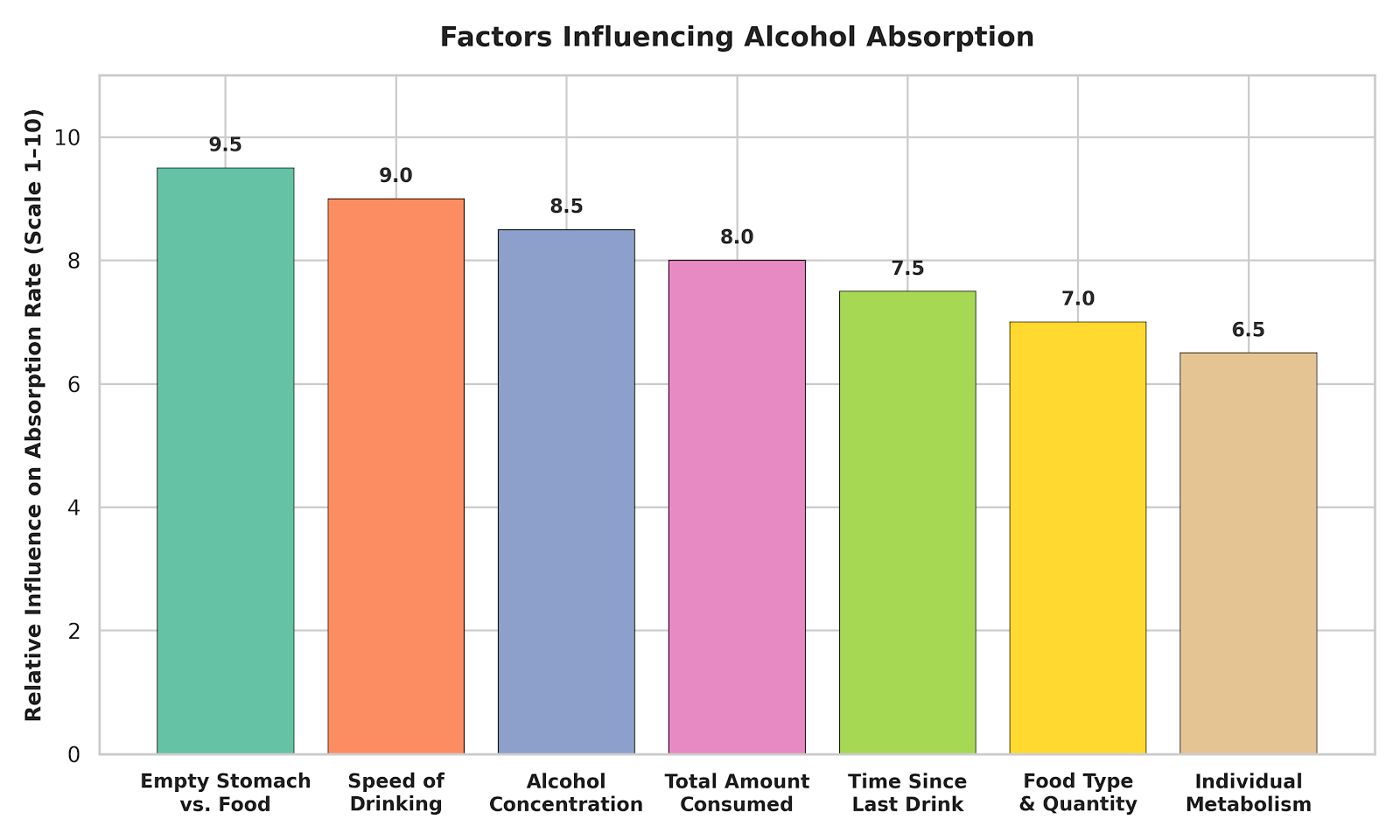
Sleep itself does not stop alcohol absorption. Your digestive system continues working while you sleep, and alcohol that remains in your stomach or intestine can still enter the bloodstream. However, the rate at which alcohol is absorbed varies considerably between individuals.
Several factors can influence this process, including:
- How much alcohol you consumed
- How quickly you drank
- Whether you drank on an empty stomach
- The amount and type of food you ate
- The concentration of alcohol in your drinks
- Your individual metabolism
- How long ago you had your last drink
Food generally slows the movement of alcohol from the stomach into the small intestine, where much of alcohol absorption occurs. Drinking rapidly or on an empty stomach can result in faster absorption.
When Does BAC Usually Peak?
There isn’t one exact time when everyone’s BAC reaches its highest point. For many people, BAC peaks after they stop drinking rather than immediately after the final drink. The timing can vary depending on the circumstances.
This is why judging your BAC based only on how you feel can be misleading. Someone might feel extremely tired and assume they are simply ready for bed, while their BAC is still increasing. Likewise, someone who wakes up feeling better the next morning may still have alcohol in their bloodstream. Feeling more awake does not necessarily mean your BAC has returned to zero. You can still fail the BAC test.
Does Your BAC Keep Rising All Night?
Usually, no. BAC does not typically continue rising throughout the entire night simply because you are asleep. Alcohol absorption eventually slows and stops as the alcohol in your digestive tract is absorbed.
After absorption is largely complete, the body begins eliminating alcohol from the bloodstream. The liver is responsible for metabolizing most of the alcohol in your body.
This process takes time, and sleeping, drinking coffee, taking a cold shower, or exercising does not make the liver eliminate alcohol dramatically faster. The exact timing and BAC level can differ significantly from person to person.
Can You Still Have a High BAC in the Morning?
If someone consumes a large amount of alcohol late at night, their BAC may still be elevated when they wake up. The fact that several hours have passed does not guarantee that all the alcohol has been eliminated. This is particularly important when considering driving the next morning.
For example, someone may go to sleep at 2 a.m. and wake up at 8 a.m. feeling relatively normal. That six-hour gap does not necessarily mean their BAC is zero. Alcohol can impair judgment, reaction time, coordination, and decision-making even when a person doesn’t feel noticeably intoxicated.
Why “Sleeping It Off” Can Be Misleading
The phrase “sleeping it off” makes it sound as though sleep removes alcohol from the body.
It doesn’t. Time is the main factor that allows your body to eliminate alcohol. Sleep may make you feel more rested, but it doesn’t provide a shortcut for alcohol metabolism.
This distinction matters because subjective feelings and actual BAC are not the same thing. A person can wake up feeling refreshed while still having alcohol in their bloodstream. Likewise, someone can feel tired or have a headache even after most of the alcohol has been eliminated.
What About Coffee, Water, or a Shower?
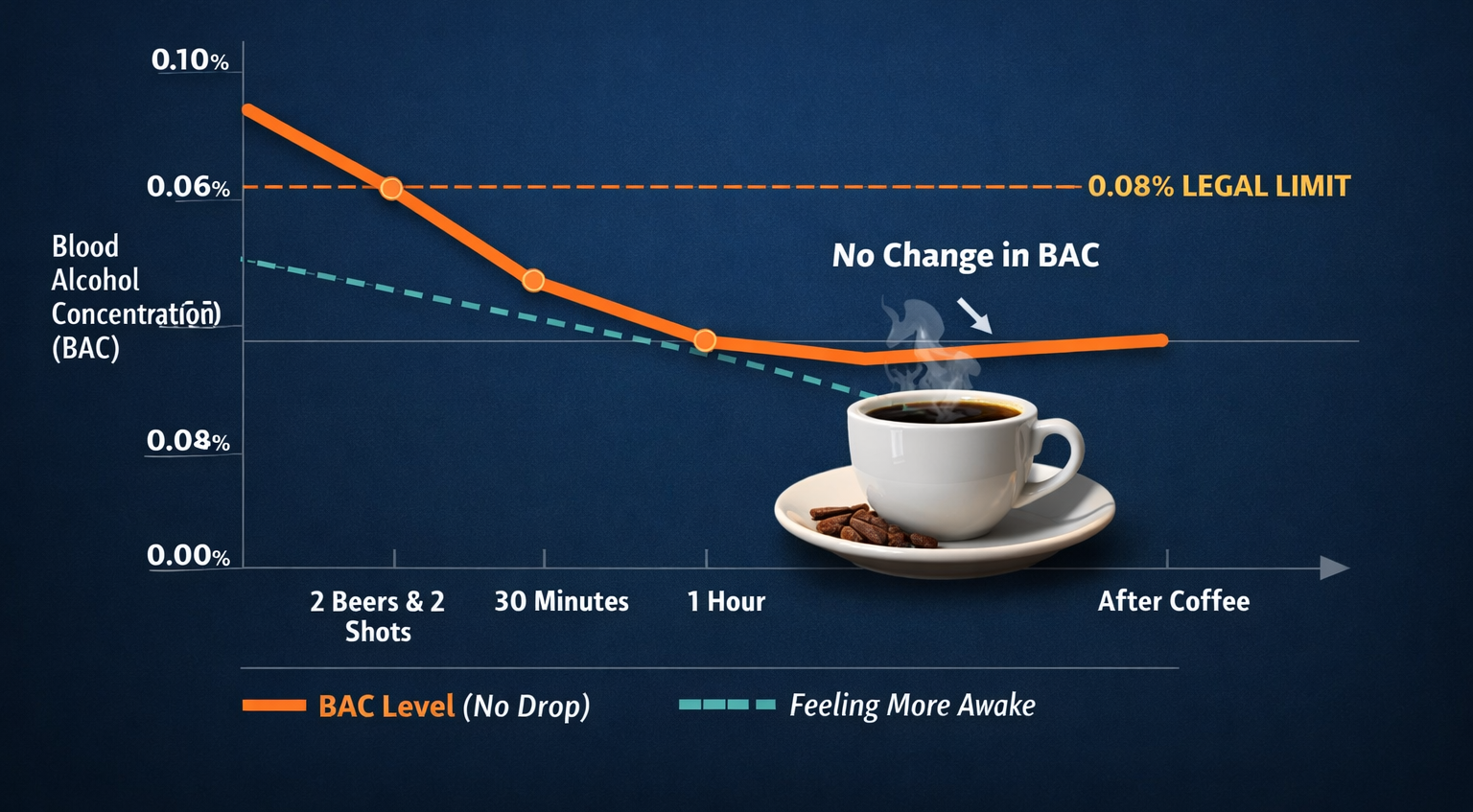
Common “sobering up” strategies don’t significantly speed up alcohol elimination. Coffee may make you feel more alert, but it doesn’t remove alcohol from your bloodstream. Drinking water can help with hydration, but it doesn’t rapidly lower BAC. A cold shower may make you feel more awake, but it doesn’t change how quickly your liver metabolizes alcohol.
The same principle applies while sleeping: your body needs time to process the alcohol.
Wrapping Up
So, can your BAC rise while you’re sleeping? Yes, it can—especially if you go to bed shortly after drinking. The reason is simple: alcohol can continue moving from your digestive system into your bloodstream after your last drink.
Your BAC may therefore increase for a period of time before reaching its peak and eventually declining as your body metabolizes the alcohol. Most importantly, don’t use sleep, how you feel, or the number of hours you’ve been asleep as proof that you’re safe to drive.
If there is any doubt about impairment, don’t drive. The safest approach is to allow enough time for alcohol to leave your system and use a reliable BAC measurement when appropriate rather than relying solely on how you feel.
