It was around midnight when a friend looked at the clock and realized something. The party was ending. He had been drinking with friends for a few hours, and now the first thought that came into his mind was -“Am I okay to drive home?”
One of his friends immediately said -“Don’t worry. Drink some coffee. Take a cold shower. You’ll be fine.” It sounds familiar because many people have heard these so-called tricks. Some people believe coffee can instantly remove alcohol.
Others believe eating a heavy meal, exercising, or sleeping for a short time can make alcohol disappear faster. But the truth is very different.
These “sobering up” hacks may make you feel more awake, but they do not actually remove alcohol from your body.
Your body needs time. And the only thing that truly lowers your BAC (Blood Alcohol Concentration) is your liver processing the alcohol naturally.
Understanding What Happens After Your Last Drink
When you finish your last drink, many people assume the alcohol immediately starts disappearing. But that is not exactly how it works.
After drinking, alcohol enters your bloodstream and affects your brain and nervous system. Your BAC can continue changing for a while depending on:
- How much alcohol you consumed
- How quickly you drank
- Whether you ate food
- Your body size and weight
- Your metabolism
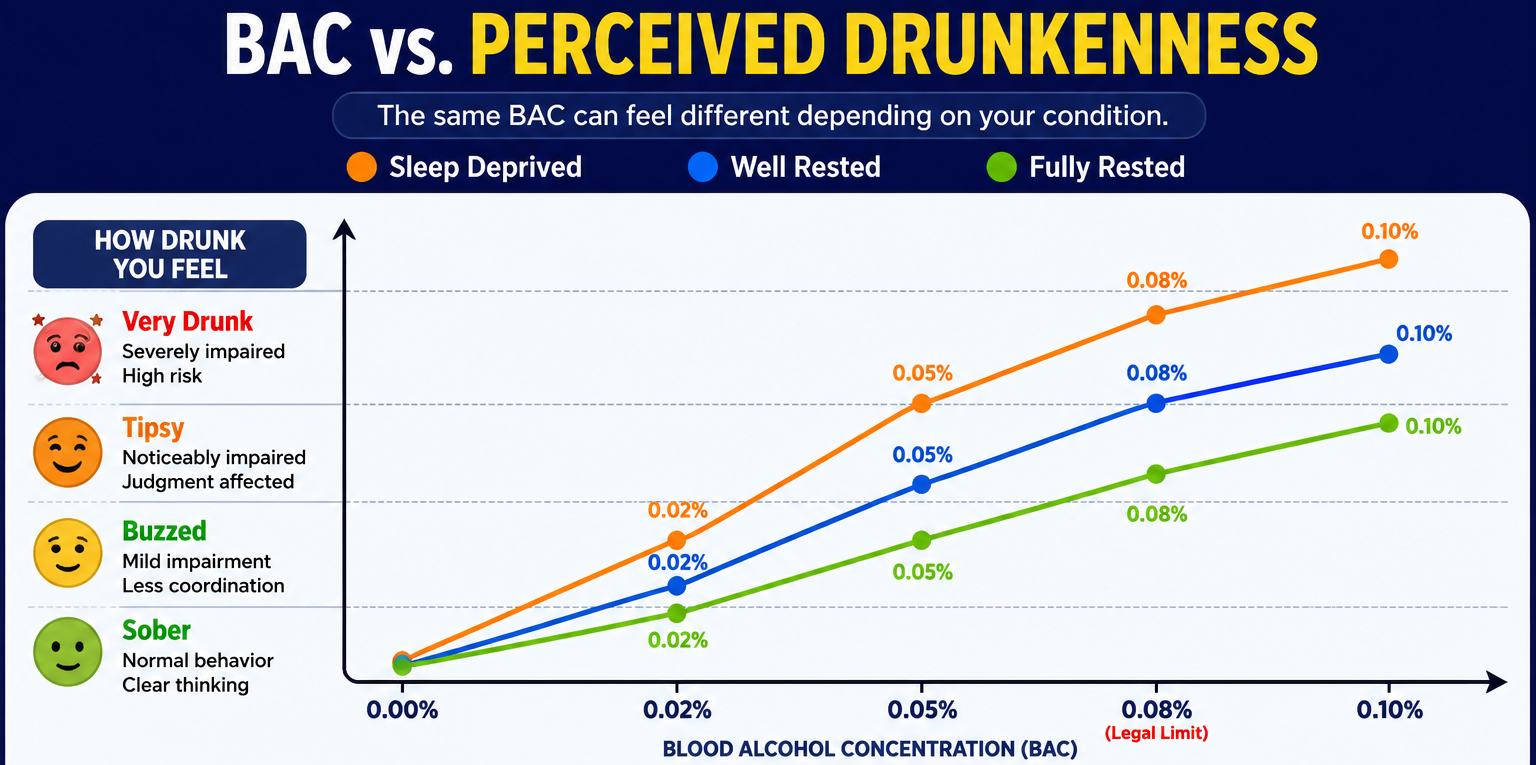
This is why someone may feel completely fine but still have alcohol affecting their body. A person’s feeling does not always match their actual BAC level.
The First Hour After Your Last Drink
Imagine a person. She is at a dinner with friends. She finishes her last drink and thinks – “I feel normal now. I should be okay.”
But inside her body, the process is still happening. During the first hour:
- Alcohol is still being absorbed
- BAC may continue rising
- The brain is still affected
- Reaction time can become slower
Many people make the mistake of thinking: “I stopped drinking, so I’m getting sober now.” But stopping alcohol consumption and becoming sober are two different things.
Why You May Feel Better But Still Have Alcohol in Your System
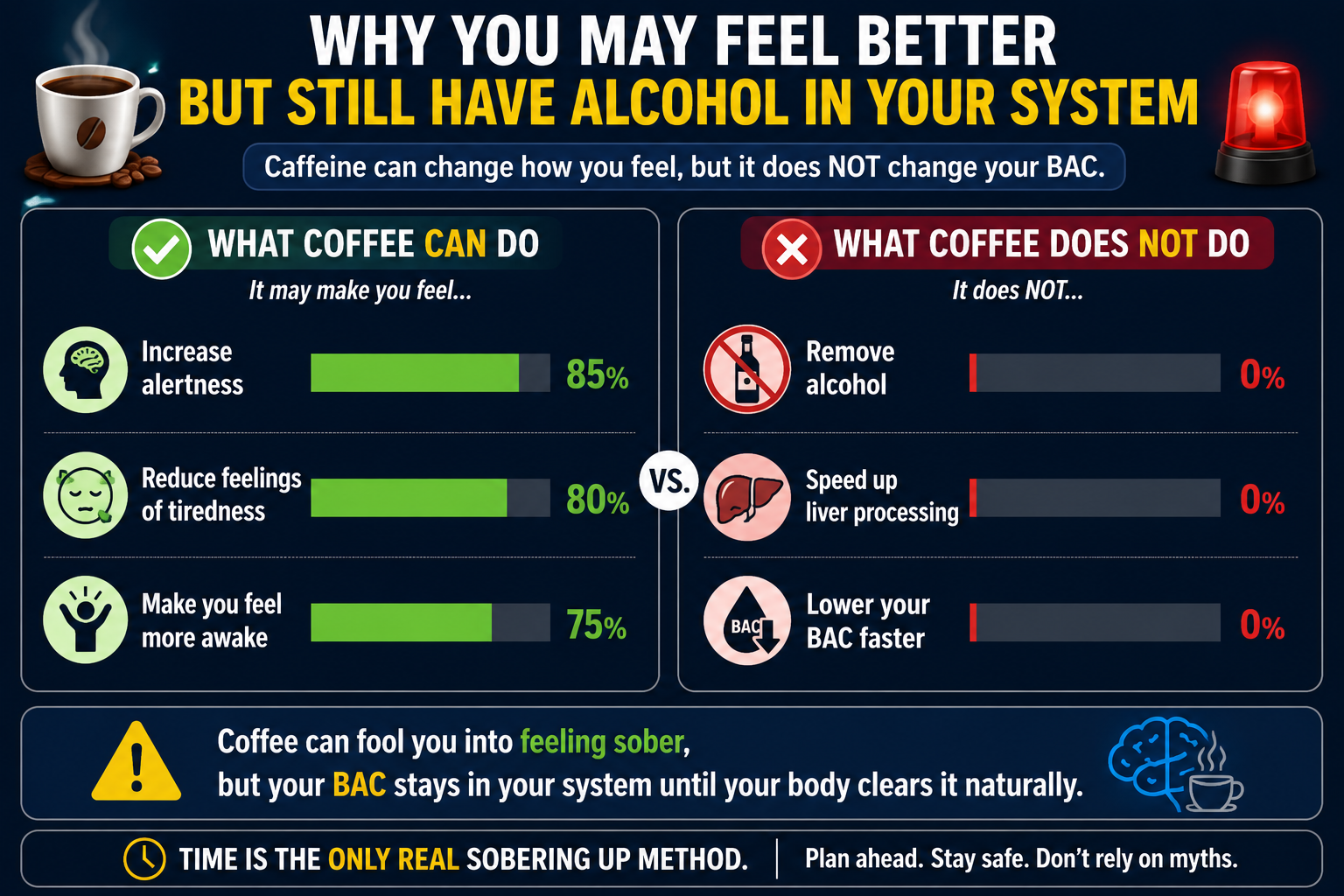
A couple of hours later, the person feels different. He is less tired. He drinks coffee. Suddenly, he feels more alert. This creates the illusion that he is sober. But caffeine does not lower BAC.
Coffee can:
- Increase alertness
- Reduce feelings of tiredness
- Make you feel more awake
However, it does not:
- Remove alcohol
- Speed up liver processing
- Lower your BAC faster
This is why using coffee as a “sobering up method” can be misleading.
Hour 3 and Beyond – Your Liver Is Doing the Real Work
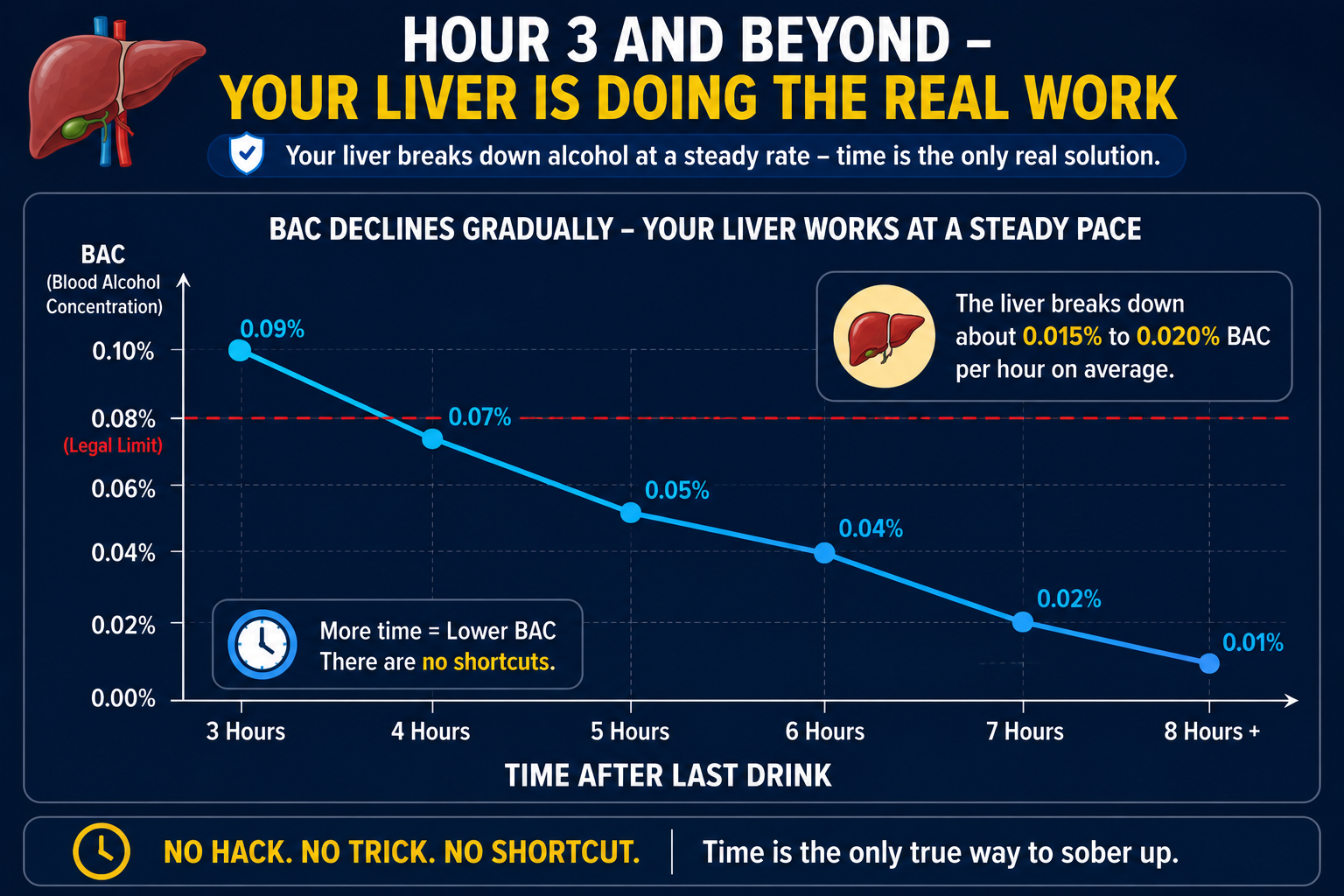
Your liver is the main system responsible for breaking down aIt processes alcohol at a fairly steady rate.
You cannot force it to work faster by using tricks. Things people commonly try include:
- Drinking coffee
- Taking cold showers
- Eating greasy food
- Drinking lots of water
- Exercising
These may change how you feel, but your BAC still depends mainly on time.
A Common Myth – Cold Showers Make You Sober
Imagine another person. After drinking at a party, he takes a freezing cold shower because someone told him -“This will wake you up.”
And it works. He feels refreshed. His eyes are open. He feels more energetic. But here is the problem.
Feeling refreshed does not mean his BAC has dropped. A cold shower changes your body sensation. It does not change how quickly alcohol leaves your bloodstream.
The BAC Calculator Problem
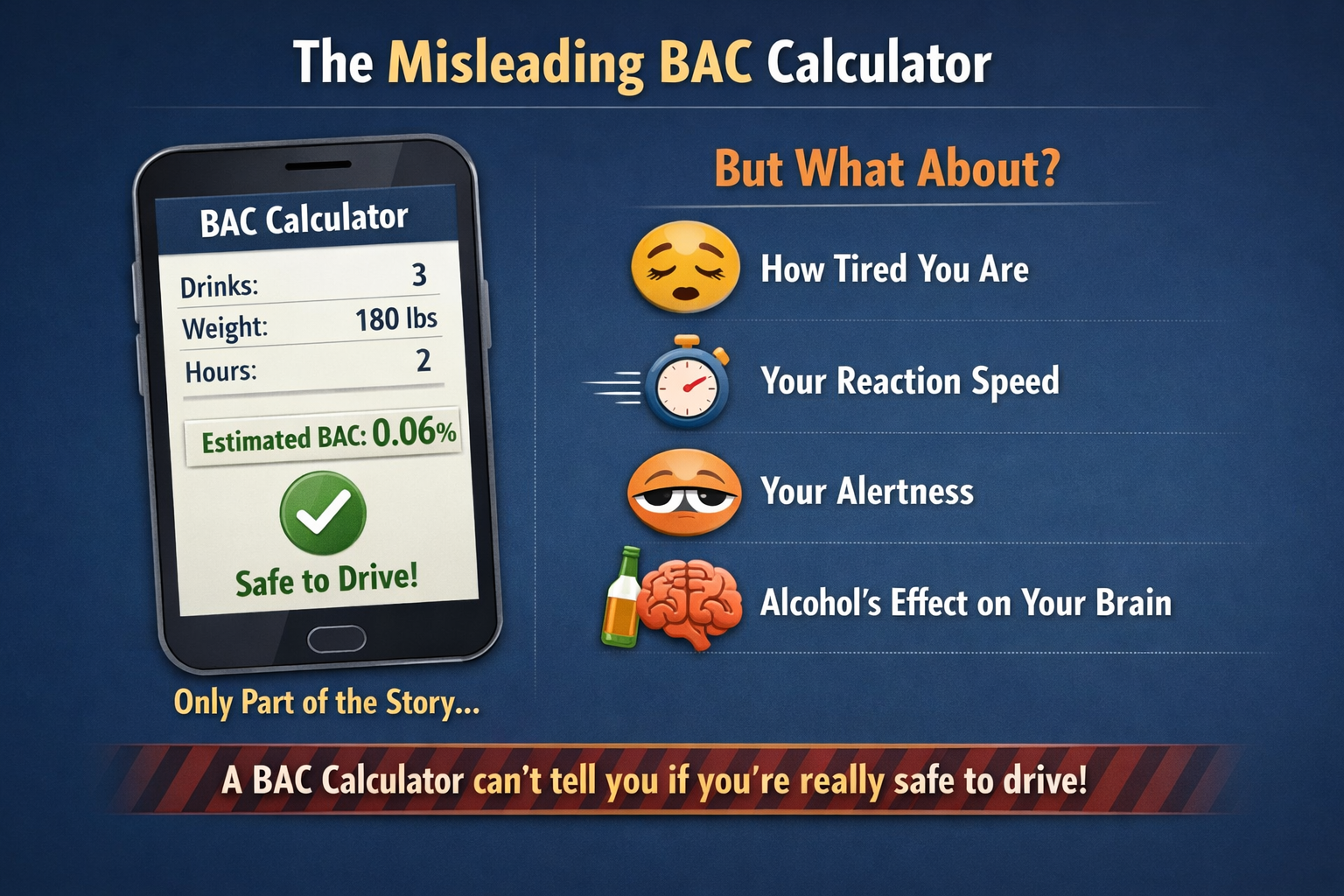
Many people use a BAC calculator to estimate whether they are safe after drinking. A BAC calculator can be useful because it gives an estimate based on information like:
- Number of drinks
- Alcohol percentage
- Body weight
- Time since drinking
However, a BAC calculator has limitations.
It cannot fully know:
- Your exact metabolism
- Your health condition
- How tired you are
- Your actual reaction ability
A BAC calculator is only an estimate. It should not be treated as a guarantee that someone is safe to drive.
Understanding the Legal Limit
Many people focus only on the legal limit. For example, in many places, the legal limit for driving is around 0.08% BAC, although the exact rule depends on location.
But there is something important to understand. Being below the legal limit does not automatically mean someone is performing perfectly.
Alcohol can affect:
- Focus
- Judgment
- Coordination
- Reaction time
Even small amounts can affect some people differently.
What Happens Hour by Hour – Simple Chart
| Time After Last Drink | What Happens Inside Your Body |
| First hour | Alcohol continues entering the bloodstream and BAC may still rise |
| 2 hours | You may feel more normal, but alcohol effects can remain |
| 3–4 hours | The liver continues processing alcohol slowly |
| Several hours later | BAC gradually decreases as your body removes alcohol |
| Next day | Effects may still remain depending on amount consumed |
Why Sleeping Does Not Instantly Fix Everything
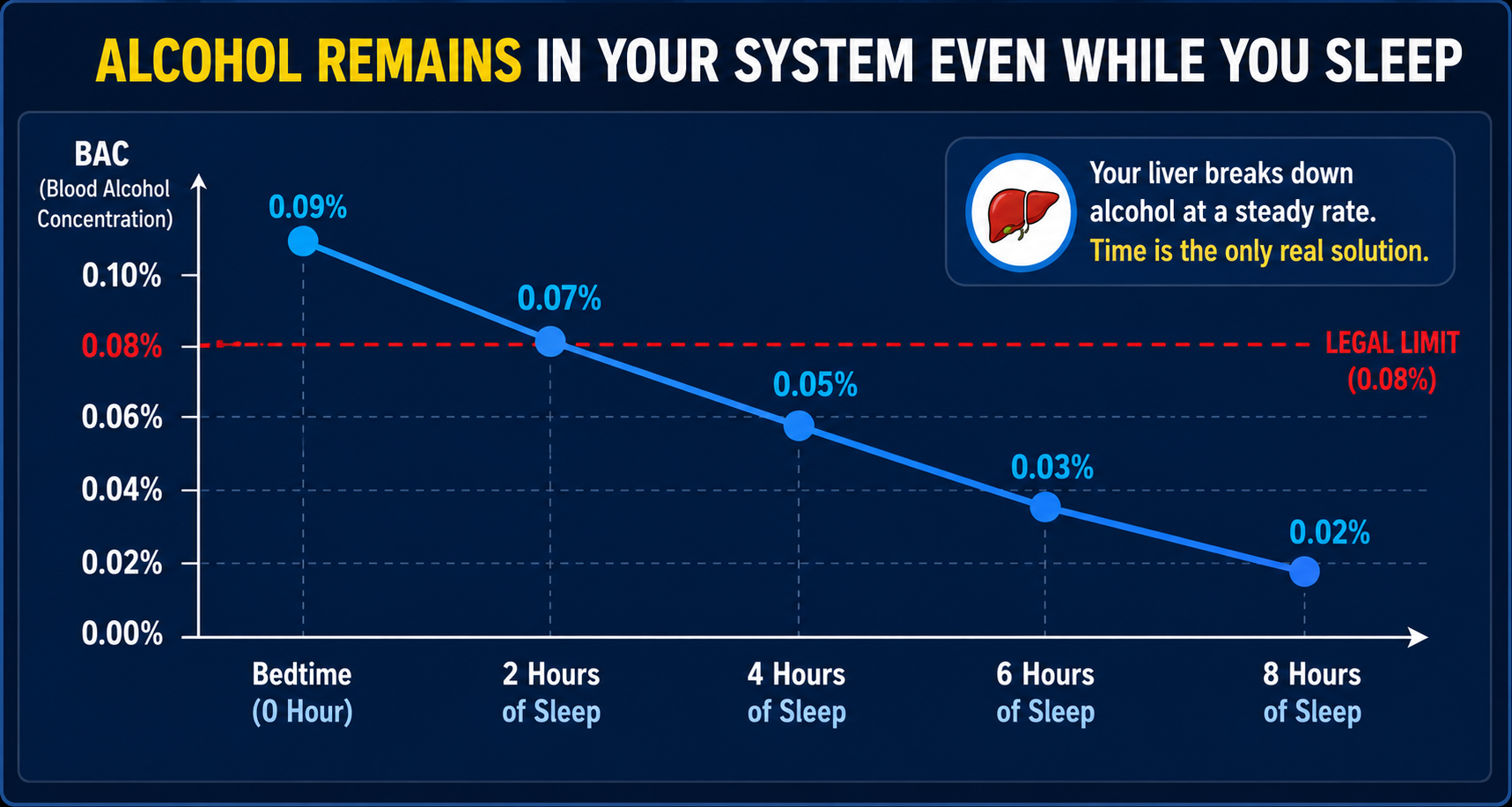
Another common belief -“I’ll just sleep for a few hours and wake up sober.” Sleep helps your body recover.
But sleep itself does not remove alcohol instantly. Your liver still needs time. Someone who drinks heavily before sleeping may wake up feeling better but still have alcohol remaining in their system.
The most dangerous part of these myths is not the coffee or the shower. It is the confidence they create.
A person may think -“I feel fine, so I must be fine.” But alcohol affects areas of the brain responsible for judgment. This can make people underestimate their impairment.
The Real Way to Become Sober
There is no magic trick. No drink. No food. No shower. No shortcut.
The real solution is – Time.
Your body needs time to process alcohol naturally. If you are unsure whether alcohol is still affecting you, the safest decision is to avoid driving or activities that require full attention.
Wrapping Up
The idea of “sobering up quickly” has existed for years. People have tried coffee, cold showers, exercise, and countless other methods.
But the science is simple – You can change how awake you feel, but you cannot trick your body into removing alcohol faster.
Your BAC decreases with time.A BAC calculator can estimate your level. The legal limit provides a guideline. But your body still needs time to recover.
So the next time someone says: “Just drink coffee. You’ll be fine.” Remember – Feeling awake is not the same as being sober.
