Why Alcohol Can Make Simple Tasks Harder Even When You Feel Normal
Have you ever felt perfectly normal after drinking, only to find yourself struggling to concentrate, type accurately, or remember a simple instruction? Alcohol does not always make its effects obvious. You may feel relaxed and alert while your brain is already having difficulty managing tasks that usually require little effort.
This happens because feeling sober and performing normally are not the same thing. Alcohol can affect attention, coordination, judgment, and information processing before you fully recognise a change in your abilities.
How Alcohol Affects Everyday Tasks
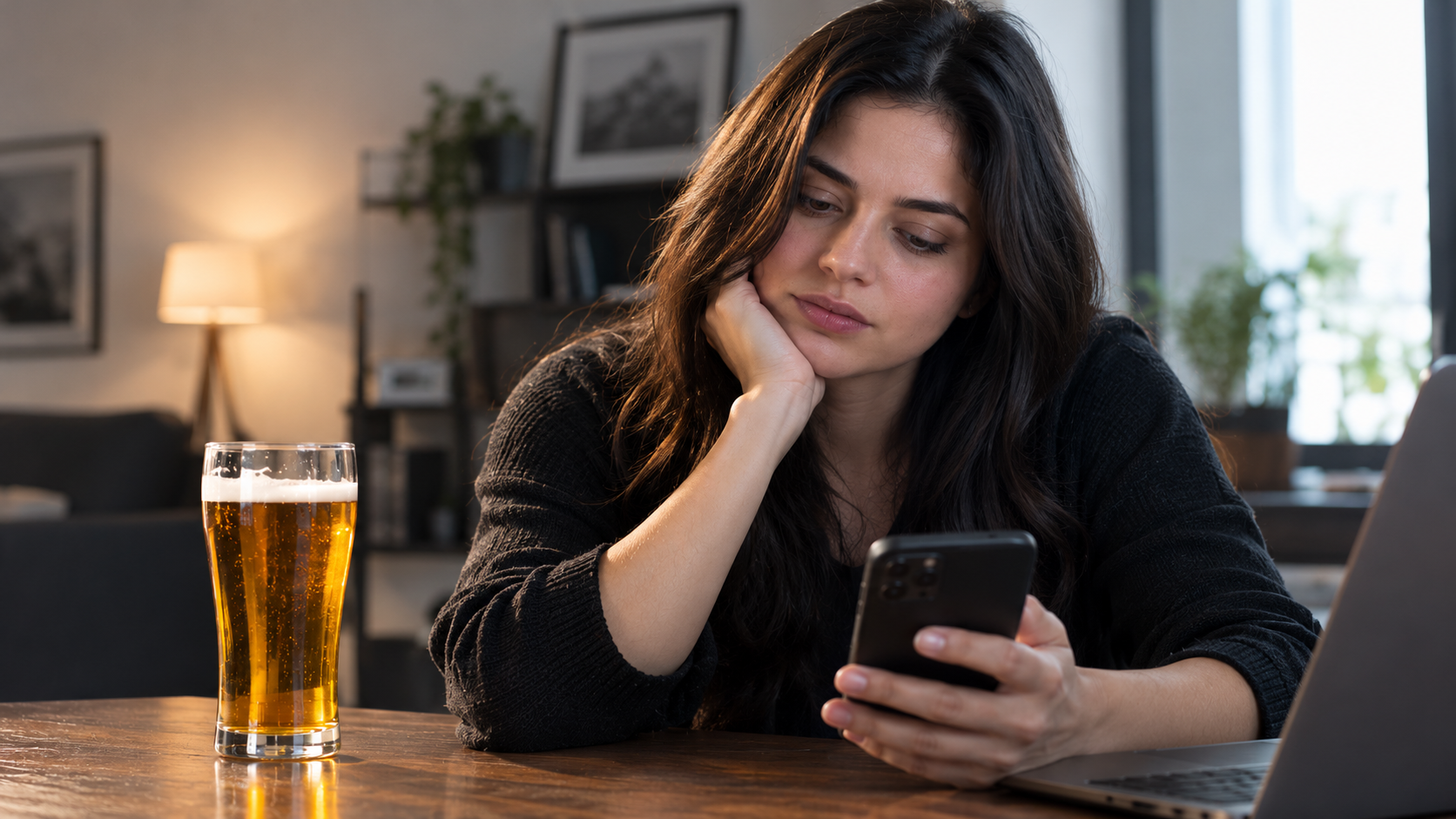
Alcohol changes communication between brain cells, particularly in areas involved in attention, movement, memory, and decision-making. As a result, familiar activities can require more effort than usual.
Typing and Using Your Phone
Sending a message, entering a password, or navigating an app may seem effortless when you are sober. After drinking, however, you may make more typing errors, overlook a notification, or take longer to find the right words.
These activities depend on several abilities working together, including visual attention, finger coordination, and working memory. Alcohol can interfere with these processes, making small mistakes more likely even when you feel mentally present.
Following Instructions
Imagine assembling a simple piece of furniture or following a recipe with several steps. You might understand each instruction but forget what comes next or accidentally skip a step.
This can happen because alcohol affects working memory, which temporarily holds information while you use it. It can also make it harder to divide your attention between multiple tasks.
Maintaining Balance and Coordination
Walking across a room, picking up a cup, or reaching for a small object involves constant adjustments between your eyes, muscles, and brain.
Alcohol can interfere with the brain systems responsible for movement and balance. You might notice less precise movements, slower corrections, or difficulty judging distances. These changes are not always dramatic enough to make someone visibly appear intoxicated.
Making Quick Decisions
Everyday decisions often require you to assess information, compare options, and anticipate consequences. Alcohol can impair these abilities by affecting judgment and inhibitory control.
You may interrupt someone, ovelook a potential problem, or choose an option without considering the alternatives carefully. The difficulty is not necessarily that you cannot understand a situation; rather, you may be less effective at evaluating it.
Switching Between Tasks
Answering a message while listening to someone speak or checking directions while carrying on a conversation requires your brain to switch attention.
Alcohol can make this switching less efficient. You may lose track of a conversation when interrupted or need extra time to return to what you were doing.
Why You Might Not Notice the Difference
One reason alcohol-related impairment can be misleading is that your subjective feeling of intoxication does not reliably reflect your actual performance.
If you drink regularly or gradually become accustomed to alcohol’s noticeable effects, you may feel less intoxicated at a given level of alcohol exposure. This is sometimes called tolerance. However, feeling less affected does not mean every cognitive or motor function has returned to normal.
Familiarity with a task can also hide problems. You may complete a routine activity reasonably well because you have practised it many times, while struggling more with an unfamiliar task that demands concentration and flexibility. In other words, you can feel confident about your abilities without accurately recognising changes in your performance.
Does Your BAC Determine How Difficult Tasks Become?
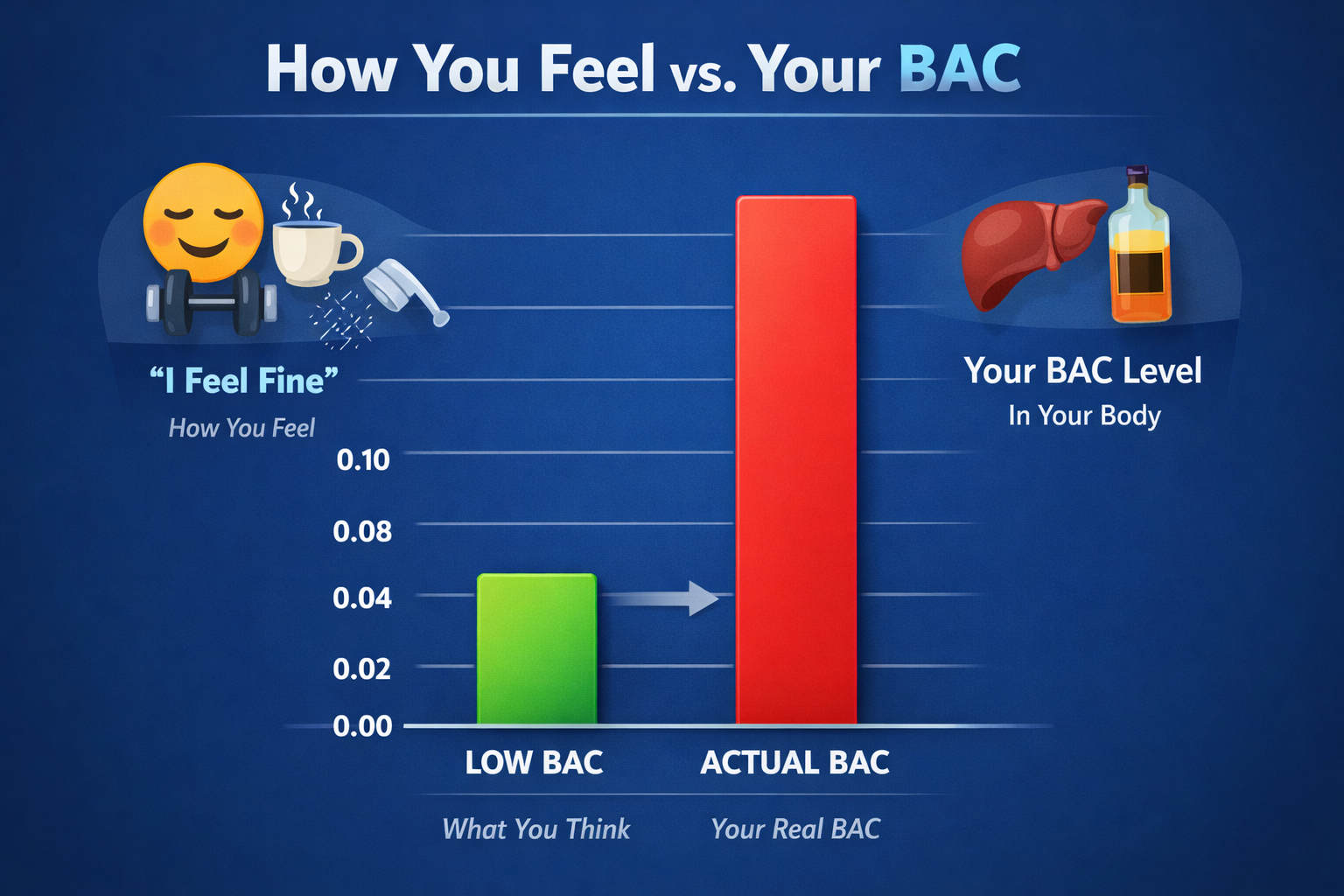
Blood alcohol concentration (BAC) measures the amount of alcohol in your bloodstream. As BAC increases, the risk of impairment generally increases too, but the relationship between BAC and performance is not identical for everyone.
The effects depend on factors such as the amount and speed of alcohol consumption, individual sensitivity, fatigue, and the complexity of the task. Some abilities may be affected at levels where a person notices few obvious symptoms.
There is no single BAC value below which every person can assume that all everyday skills are unaffected. Equally, a BAC estimate cannot tell you precisely how well you will perform a particular task.
How to Reduce the Risk of Alcohol-Related Mistakes
If you have been drinking, avoid activities where a lapse in attention or coordination could cause harm. These include driving, cycling in traffic, operating machinery, and handling potentially dangerous equipment.
Do not rely on feeling alert, drinking coffee, or completing a simple coordination test to determine whether you are safe to drive. These measures cannot reliably establish that alcohol-related impairment has resolved.
If a task requires careful judgment, accurate movements, or quick reactions, the safest approach is to postpone it until you are no longer affected by alcohol.
Wrapping Up
Alcohol does not always announce its effects through slurred speech or obvious loss of balance. Sometimes, the changes appear in smaller ways: a forgotten instruction, a typing mistake, a slower reaction, or a decision made without enough thought.
Feeling normal is a subjective experience, not a reliable test of cognitive or physical performance. Recognising that difference can help you make safer decisions, even when the effects of drinking are not immediately apparent.
Why People Sometimes Underestimate How Much They Have Drunk
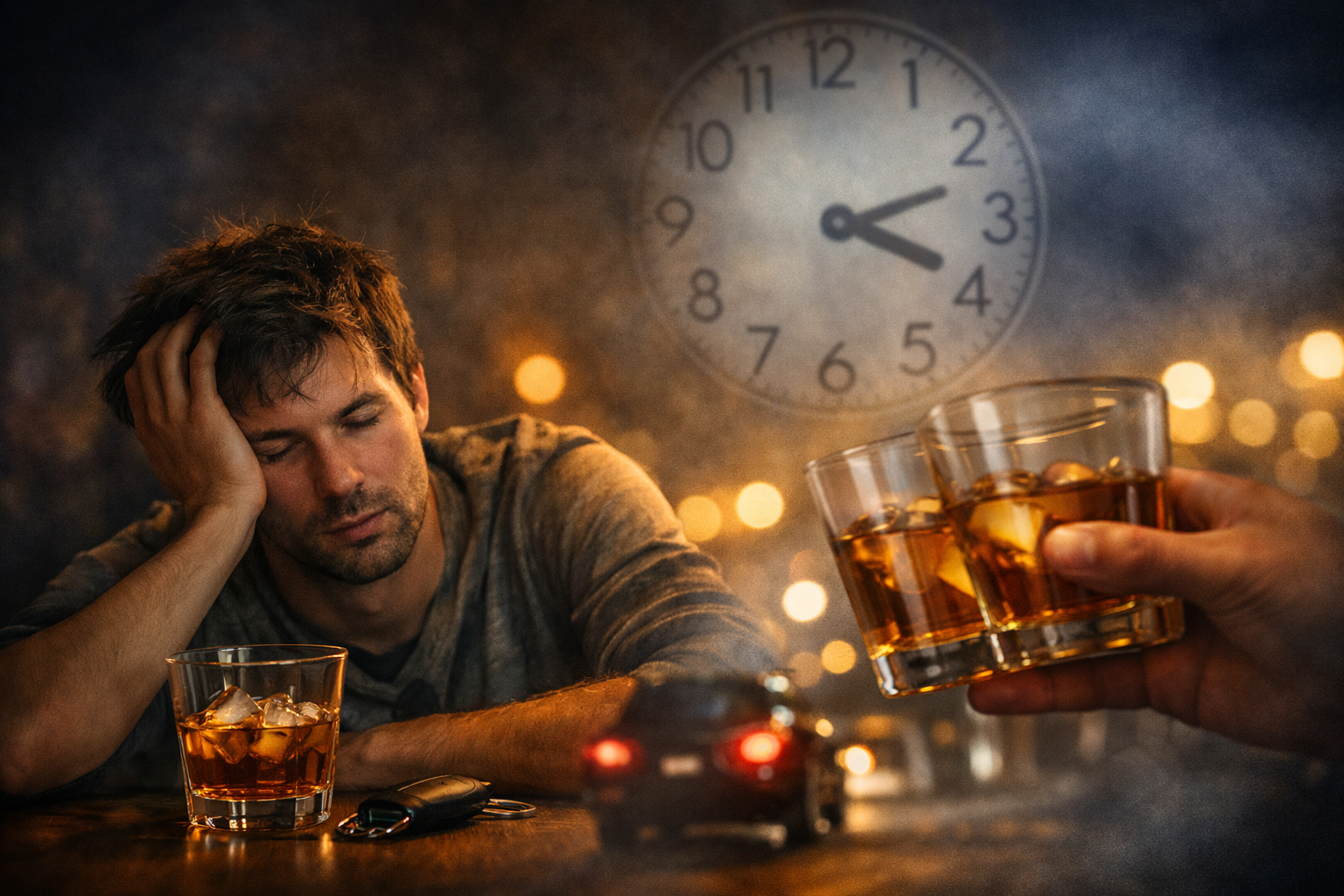
It is surprisingly easy to lose track of how much alcohol you have actually consumed. A large glass of wine may be counted as one drink even when it contains considerably more alcohol than a standard serving. A cocktail may look like a single drink but contain more than one standard drink.
This matters because the amount of alcohol consumed is one of the major factors influencing blood alcohol concentration (BAC). Understanding why people underestimate their alcohol intake can make BAC charts, BAC calculators, standard-drink information, and legal limits easier to understand—and, more importantly, can help people make safer decisions.
What Does It Mean to Underestimate Your Alcohol Intake?
Underestimating alcohol consumption does not necessarily mean someone is deliberately ignoring how much they drank.
Often, the problem is that people count containers or glasses rather than the actual amount of alcohol in them.
For example:
- One bottle of beer may be treated as one drink.
- One glass of wine may be treated as one drink.
- One cocktail may be treated as one drink.
- One refill may be forgotten.
- A large pour at home may be assumed to equal a standard serving.
But the amount of alcohol in each serving can vary substantially.
In the United States, one standard drink contains approximately 14 grams of pure alcohol. That’s roughly equivalent to 12 ounces of regular beer at 5% ABV, 5 ounces of wine at 12% ABV, or 1.5 ounces of distilled spirits at 40% ABV. Actual beverages and serving sizes vary, however.
That difference between a “drink” and a standard drink is one of the biggest reasons people misjudge their alcohol consumption.
The Difference Between a Drink and a Standard Drink
Imagine someone says “I had three drinks tonight.” That statement doesn’t tell us exactly how much alcohol they consumed.
Consider a person drinks three 12-ounce beers containing about 5% alcohol by volume. Depending on the specific product, this may be around three standard drinks.
Someone else drinks three 20-ounce beers with the same alcohol percentage. Although both people say they had “three beers,” the second person consumed substantially more alcohol.
Now imagine three beers with a higher ABV. The person may still describe the evening as “three beers,” even though those beers contain considerably more alcohol than three standard-strength beers.
This is why simply counting beverages can be misleading. Beverage size and alcohol concentration can vary significantly, and drinks often contain more alcohol than people realize.
Why Glass Size Can Be Deceptive
Wine is a particularly good example. A person may pour wine into a large glass and think: “That’s one glass.” But a glass is a container, not a standardized measurement.
A large wine glass can hold considerably more than a standard 5-ounce serving. Consider a dinner scenario. A girl pours herself what she considers one glass of wine while preparing dinner. Later, she pours another glass while eating. After dinner, she has a third glass while watching television. She remembers having “three glasses of wine.”
However, if each pour was larger than a standard serving, the actual amount of alcohol could be considerably higher than she assumes. The issue isn’t that Sarah is intentionally miscounting. Her mental definition of “one drink” is different from the standardized definition.
Cocktails Can Make Counting Even Harder
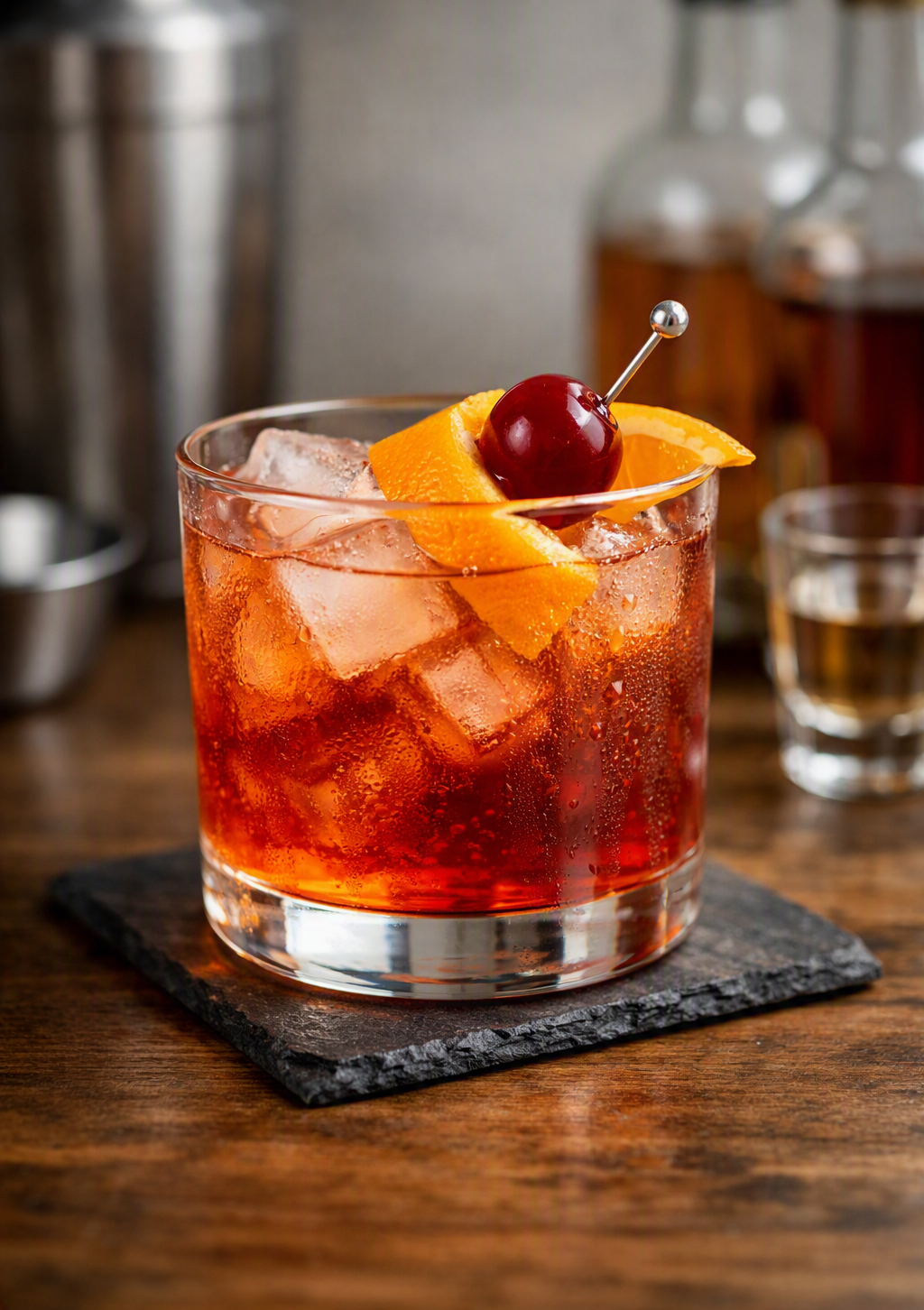
Mixed drinks create another problem. A cocktail may contain multiple alcoholic ingredients. For example, a cocktail could contain:
Vodka
Liqueur
Wine or fortified wine
Another spirit
A high-ABV mixer
Yet it arrives at the table as a single glass. Someone may therefore think: “I only had one drink.” But one cocktail can contain more than one standard drink depending on its recipe and pour sizes.
Why Your BAC May Be Higher Than You Expect
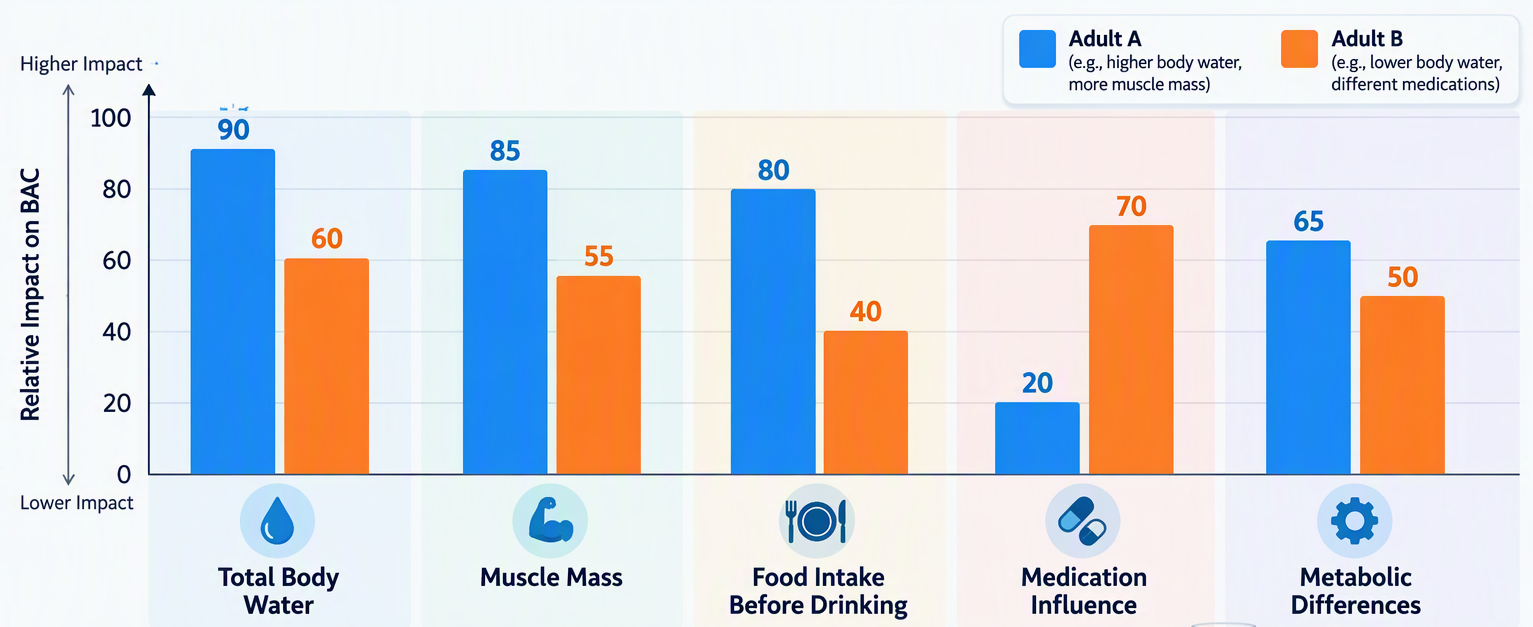
BAC, or blood alcohol concentration, represents the concentration of alcohol in the bloodstream. Several factors influence BAC, including:
- How much alcohol was consumed
- How quickly it was consumed
- Body size
- Body composition
- Biological Variability
- Food intake
- Individual differences in alcohol metabolism
- Time since drinking began
The more alcohol consumed, particularly over a shorter period, the greater the potential increase in BAC. This creates an important connection: Underestimating drinks can lead to underestimating BAC. If someone thinks they consumed two standard drinks when they actually consumed four, any BAC estimate based on those two drinks may be substantially misleading.
Social Situations Make Counting Drinks Difficult
Alcohol is rarely consumed in a laboratory environment. Real-life drinking often involves conversations, meals, parties, sporting events, celebrations, and refills. That creates several opportunities for accidental undercounting.
A glass gets topped up before it is completely empty. The person may think:”I’m still drinking the same glass.” But they have actually consumed another serving.
A bottle of wine is placed on the table, and several people pour their own glasses. Nobody is measuring the exact amount. Two cocktails with the same name can contain different amounts of alcohol depending on the recipe and pour.
Someone has a drink in one room, leaves it somewhere, forgets about it, and later accepts another drink. At the end of the night, remembering the exact number becomes difficult. These aren’t unusual situations. They’re examples of why drink counting is not always as straightforward as it sounds.
Why People Remember “Glasses” Instead of Alcohol Amount
Human memory tends to organize experiences into simple categories.
“I had two beers.”
“I had three glasses of wine.”
“I had a couple of cocktails.”
Those statements are convenient, but they don’t necessarily describe the amount of pure alcohol consumed. The problem becomes more obvious when beverage sizes vary. ABV, or alcohol by volume, tells you the concentration of alcohol in a beverage.
A beverage with a higher ABV contains more alcohol in the same volume. For example, a 12-ounce beverage at 10% ABV contains substantially more alcohol than a 12-ounce beverage at 5% ABV.
This is why checking the label can be more informative than simply counting containers. NIAAA points out that beer, wine, and other alcoholic beverages can vary substantially in alcohol concentration, and that some craft beers and flavored alcoholic beverages have considerably higher ABV than typical examples.
Food Can Also Change the Experience
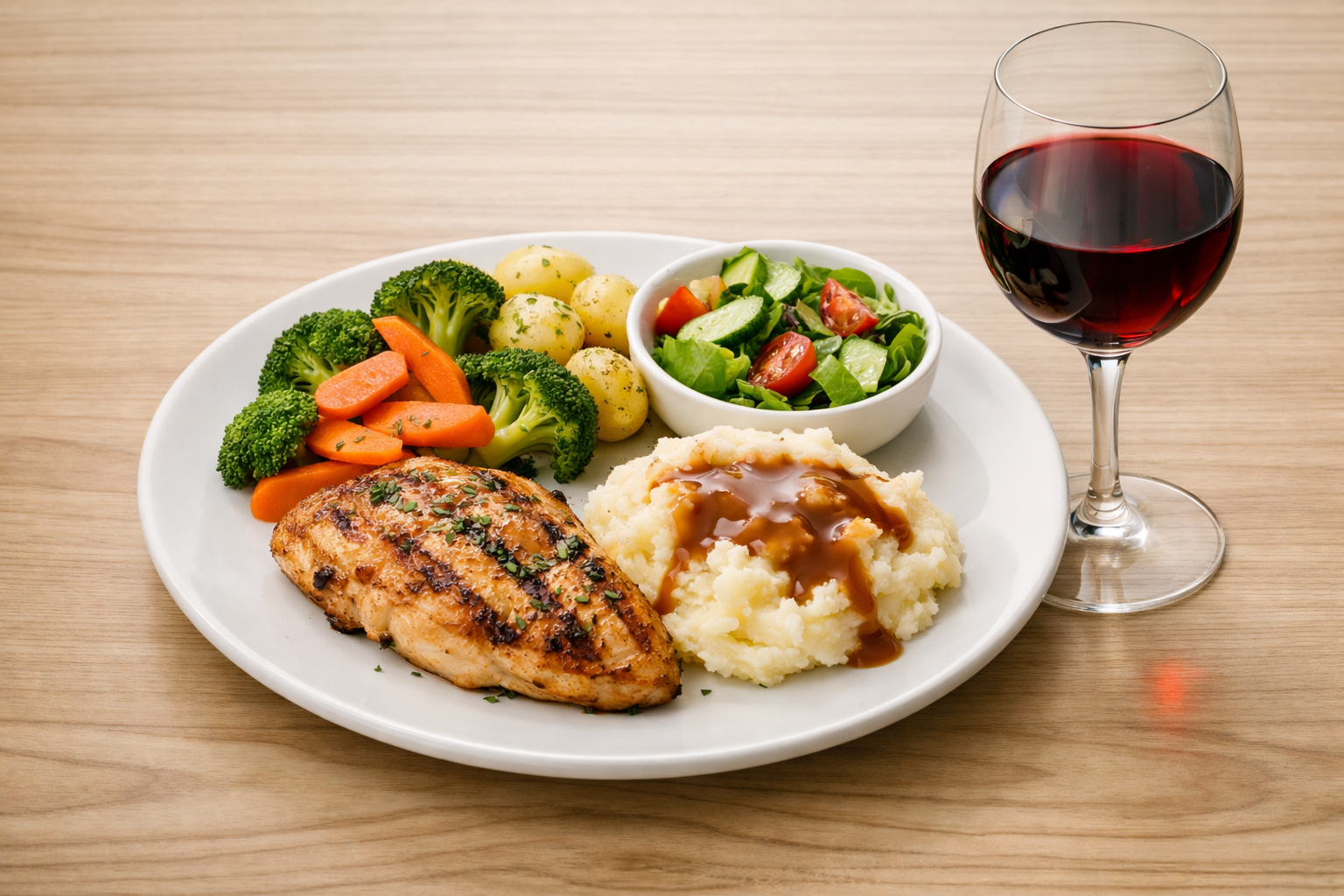
Another reason people may misjudge how much they have consumed is that alcohol doesn’t always feel the same. Someone who drinks with a substantial meal may experience alcohol differently from someone drinking on an empty stomach.
People sometimes use how they feel as an informal BAC test. Alcohol can affect judgment, coordination, attention, and reaction time without producing an obvious feeling of severe intoxication. A person may also become accustomed to the subjective effects of alcohol. Therefore, feeling normal is not the same as having a low BAC.
Common Reasons People Underestimate Their Drinking
Here are some of the most common reasons:
- They count glasses instead of standard drinks
- They don’t check ABV
- Cocktails hide the amount of alcohol
- They forget refills
- They drink over a long period
- They focus on how they feel
- They underestimate portion sizes
- They use “one drink” as a visual measurement
Why Underestimating Alcohol Matters Beyond BAC
The problem isn’t limited to driving. Underestimating alcohol consumption can also increase the likelihood of:
- Poor decision-making
- Falls and injuries
- Accidents
- Memory blackouts
- Medication interactions
- Excessive drinking
- Alcohol poisoning
- Other alcohol-related harms
Drinking too much, too quickly increases the risk of numerous acute harms, including injuries, crashes, blackouts, and other dangerous consequences. The more accurately someone understands what they are drinking, the easier it is to recognize when consumption is increasing.
Wrapping Up
People don’t always underestimate their drinking because they are careless. Often, the problem is that “one drink” is not a precise measurement.
A large beer, generous wine pour, strong craft beverage, or cocktail can contain considerably more alcohol than someone expects. Over the course of an evening, those differences can add up.
The best way to understand alcohol consumption is to look beyond the number of glasses and consider the actual amount of alcohol in each serving. When in doubt, don’t rely on how you feel, a drink count, or an estimated BAC to make a driving decision. If you’ve been drinking, don’t drive.
Can Your BAC Rise While You’re Sleeping
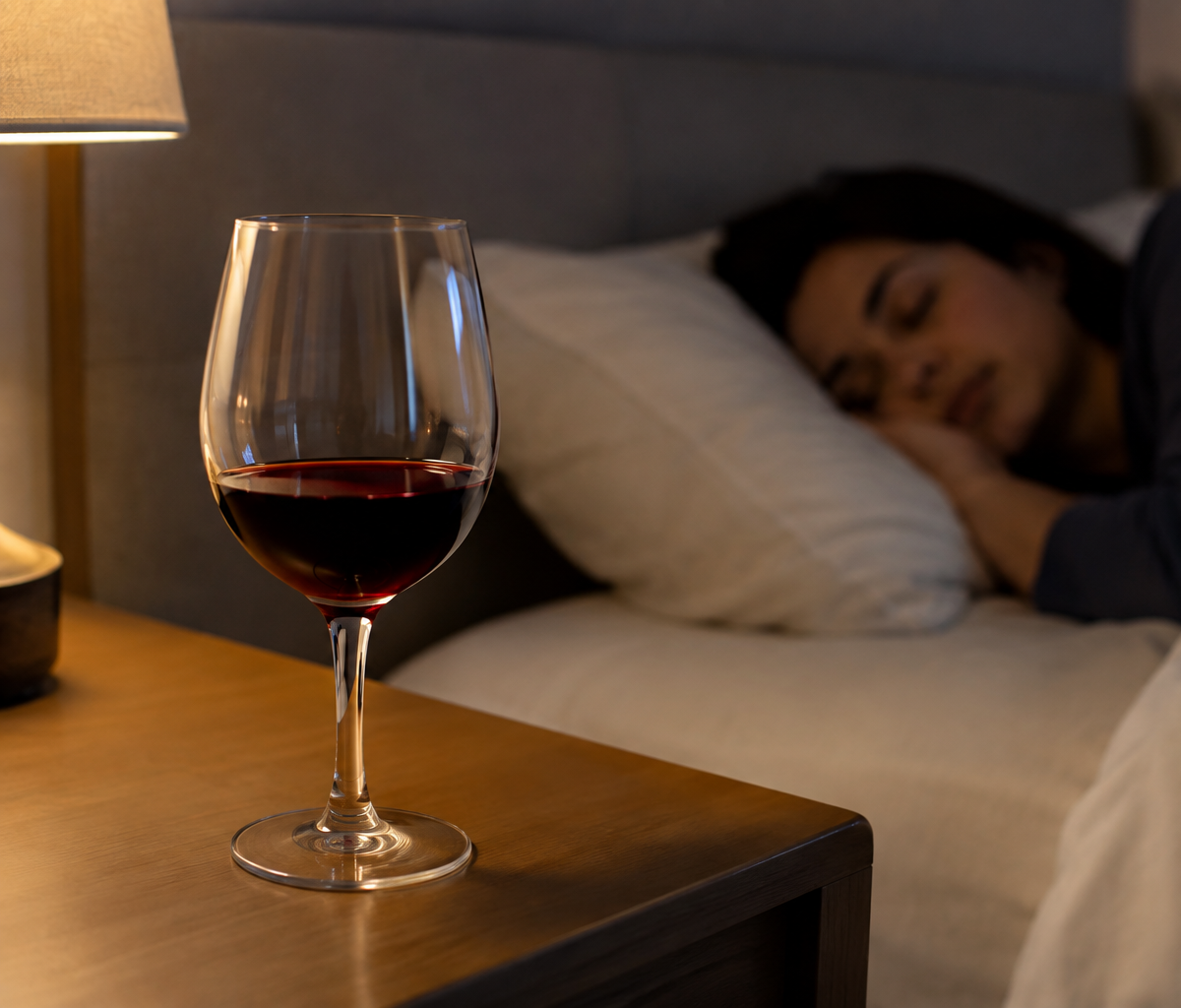 You finish drinking, go to bed, and assume your blood alcohol concentration (BAC) will immediately start dropping. After all, you’re no longer drinking. But there is an important detail many people overlook: your BAC can continue to rise for a while after you stop drinking—even after you fall asleep.
This happens because alcohol does not enter your bloodstream all at once. The body needs time to absorb alcohol from the stomach and small intestine. Depending on factors such as how much you drank, whether you ate, and how quickly you consumed the alcohol, absorption can continue after your last drink. That means going to sleep does not automatically mean your BAC is already falling.
Why Can BAC Rise After You Stop Drinking?
When you drink alcohol, it passes through your digestive system and is gradually absorbed into your bloodstream. Alcohol is absorbed relatively quickly, but the process isn’t instantaneous.
If you have recently finished drinking, some of the alcohol may still be in your stomach or small intestine. As that alcohol continues to enter your bloodstream, your BAC can increase even though you are no longer drinking. This is sometimes called post-drinking absorption.
For example, imagine someone has several drinks over a short period and then goes to bed soon afterward. At the moment they lie down, not all of the alcohol they’ve consumed may have reached their bloodstream. During the next several hours, the remaining alcohol can continue to be absorbed. As a result, their BAC may initially rise before the body’s elimination of alcohol becomes the dominant process.
Does Sleeping Slow Down Alcohol Absorption?
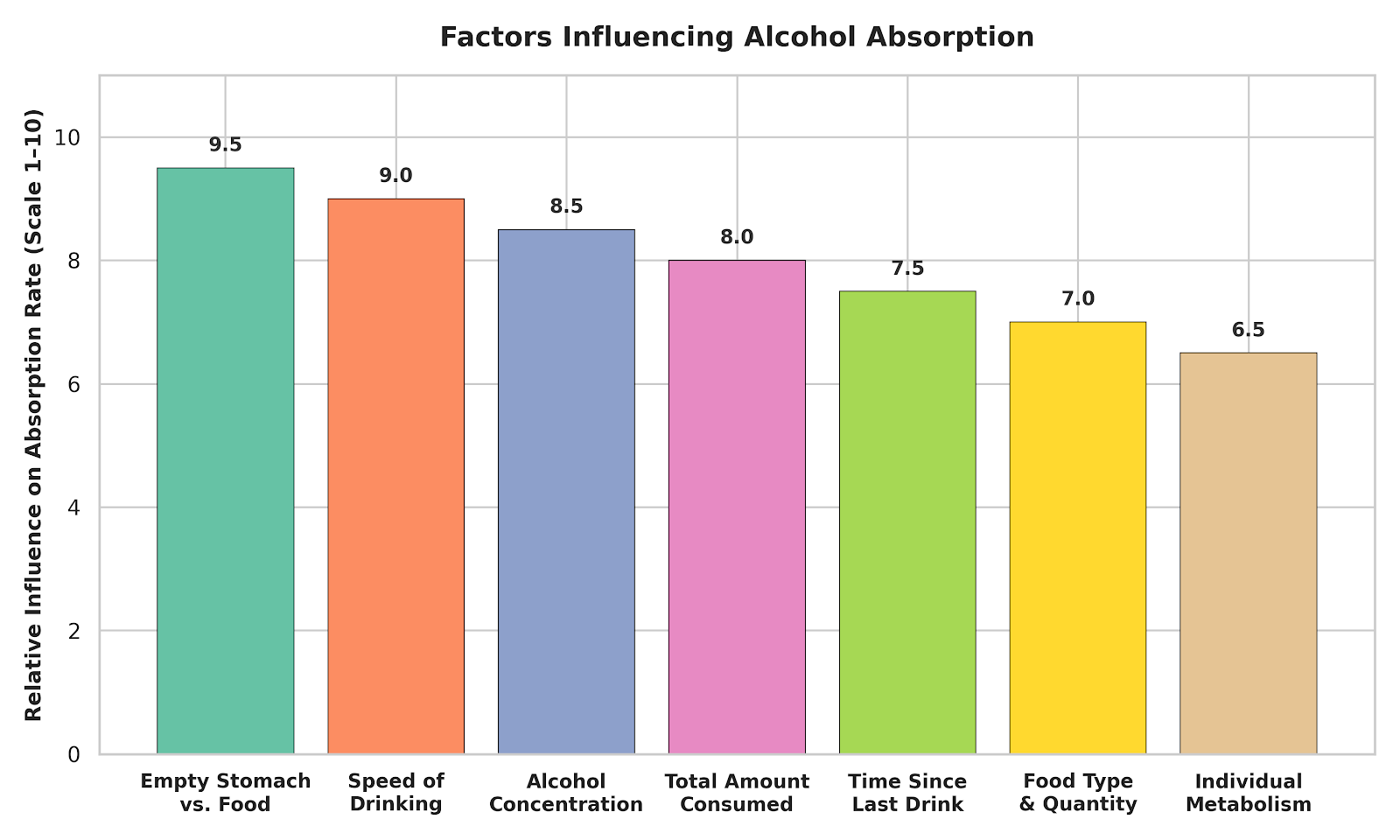
Sleep itself does not stop alcohol absorption. Your digestive system continues working while you sleep, and alcohol that remains in your stomach or intestine can still enter the bloodstream. However, the rate at which alcohol is absorbed varies considerably between individuals.
Several factors can influence this process, including:
- How much alcohol you consumed
- How quickly you drank
- Whether you drank on an empty stomach
- The amount and type of food you ate
- The concentration of alcohol in your drinks
- Your individual metabolism
- How long ago you had your last drink
Food generally slows the movement of alcohol from the stomach into the small intestine, where much of alcohol absorption occurs. Drinking rapidly or on an empty stomach can result in faster absorption.
When Does BAC Usually Peak?
There isn’t one exact time when everyone’s BAC reaches its highest point. For many people, BAC peaks after they stop drinking rather than immediately after the final drink. The timing can vary depending on the circumstances.
This is why judging your BAC based only on how you feel can be misleading. Someone might feel extremely tired and assume they are simply ready for bed, while their BAC is still increasing. Likewise, someone who wakes up feeling better the next morning may still have alcohol in their bloodstream. Feeling more awake does not necessarily mean your BAC has returned to zero. You can still fail the BAC test.
Does Your BAC Keep Rising All Night?
Usually, no. BAC does not typically continue rising throughout the entire night simply because you are asleep. Alcohol absorption eventually slows and stops as the alcohol in your digestive tract is absorbed.
After absorption is largely complete, the body begins eliminating alcohol from the bloodstream. The liver is responsible for metabolizing most of the alcohol in your body.
This process takes time, and sleeping, drinking coffee, taking a cold shower, or exercising does not make the liver eliminate alcohol dramatically faster. The exact timing and BAC level can differ significantly from person to person.
Can You Still Have a High BAC in the Morning?
If someone consumes a large amount of alcohol late at night, their BAC may still be elevated when they wake up. The fact that several hours have passed does not guarantee that all the alcohol has been eliminated. This is particularly important when considering driving the next morning.
For example, someone may go to sleep at 2 a.m. and wake up at 8 a.m. feeling relatively normal. That six-hour gap does not necessarily mean their BAC is zero. Alcohol can impair judgment, reaction time, coordination, and decision-making even when a person doesn’t feel noticeably intoxicated.
Why “Sleeping It Off” Can Be Misleading
The phrase “sleeping it off” makes it sound as though sleep removes alcohol from the body.
It doesn’t. Time is the main factor that allows your body to eliminate alcohol. Sleep may make you feel more rested, but it doesn’t provide a shortcut for alcohol metabolism.
This distinction matters because subjective feelings and actual BAC are not the same thing. A person can wake up feeling refreshed while still having alcohol in their bloodstream. Likewise, someone can feel tired or have a headache even after most of the alcohol has been eliminated.
What About Coffee, Water, or a Shower?
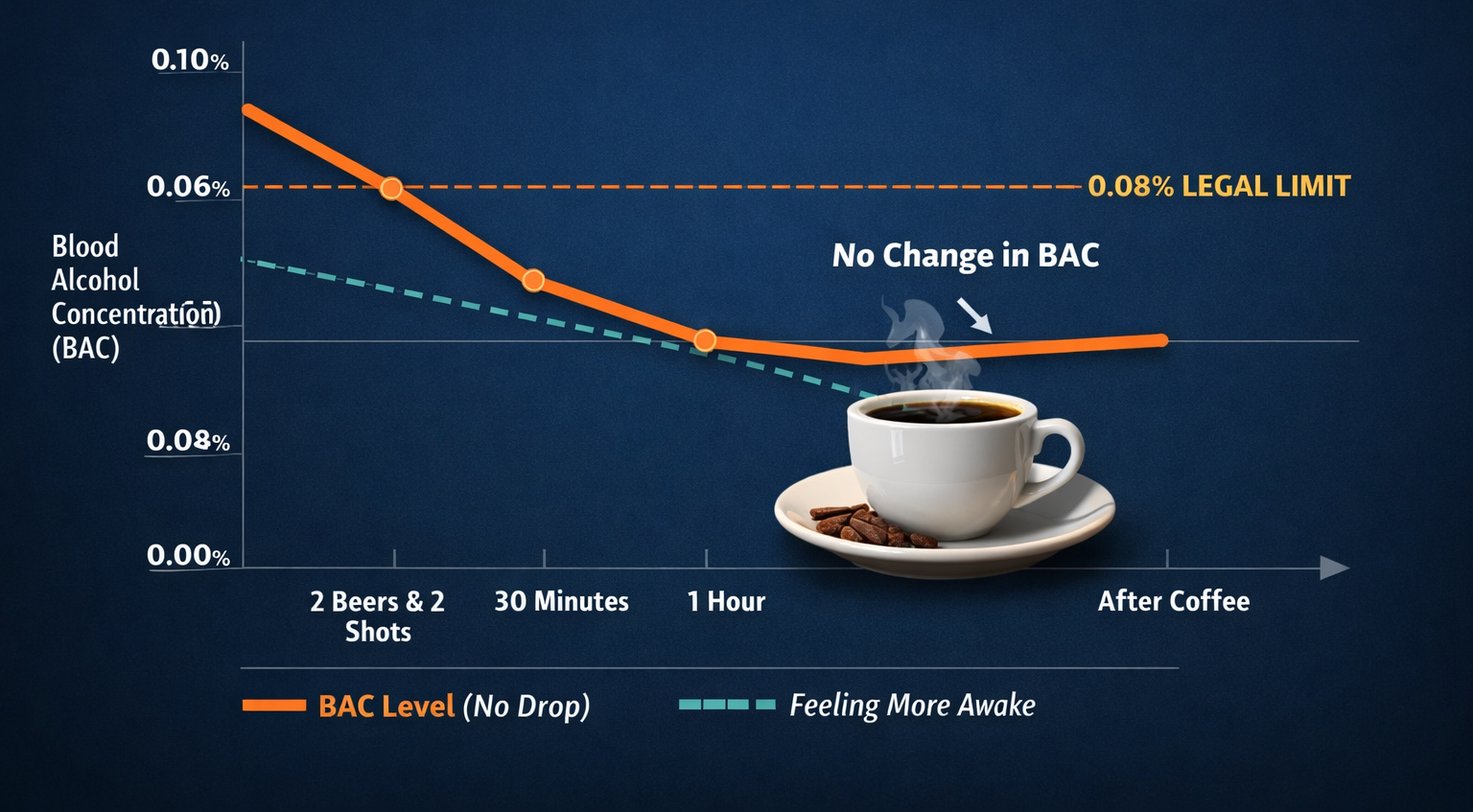
Common “sobering up” strategies don’t significantly speed up alcohol elimination. Coffee may make you feel more alert, but it doesn’t remove alcohol from your bloodstream. Drinking water can help with hydration, but it doesn’t rapidly lower BAC. A cold shower may make you feel more awake, but it doesn’t change how quickly your liver metabolizes alcohol.
The same principle applies while sleeping: your body needs time to process the alcohol.
Wrapping Up
So, can your BAC rise while you’re sleeping? Yes, it can—especially if you go to bed shortly after drinking. The reason is simple: alcohol can continue moving from your digestive system into your bloodstream after your last drink.
Your BAC may therefore increase for a period of time before reaching its peak and eventually declining as your body metabolizes the alcohol. Most importantly, don’t use sleep, how you feel, or the number of hours you’ve been asleep as proof that you’re safe to drive.
If there is any doubt about impairment, don’t drive. The safest approach is to allow enough time for alcohol to leave your system and use a reliable BAC measurement when appropriate rather than relying solely on how you feel.
Why Coffee Can’t Lower Your BAC

Imagine this. It’s late at night, and you are sitting at a party with friends. You had a few drinks, and now someone says:
“Don’t worry, just drink some strong coffee. It will wake you up and bring your alcohol level down.”
It sounds believable. The coffee is hot, bitter, and it makes you feel more alert. Your eyes feel open, your mind feels sharper, and suddenly you think -“Maybe I’m okay now.” But there is one problem.
Coffee can make you feel more awake, but it cannot make you sober. And that difference is extremely important.
The Difference Between Feeling Sober and Actually Being Sober

The reason this myth survives is because people confuse two different things:
When you drink alcohol, your body creates a measurement called BAC, which stands for Blood Alcohol Concentration.
BAC tells us how much alcohol is present in your bloodstream.
For example: A person with a BAC of 0.08% has 0.08 grams of alcohol per 100 milliliters of blood.
In many places, 0.08% BAC is the legal limit for driving, although the exact limit depends on the country or region. Now, if you want to measure your BAC, you can measure it here.
The important thing is this:
- Coffee does not remove alcohol from your bloodstream.
- Your liver has to process the alcohol, and that takes time.
Let’s say one friend goes to a party after work.
He has -Two beers, a couple of shots, some food. After a few hours, he feels tired. His friend says – “Drink coffee. It will fix you.”
He drinks a large cup of black coffee. Ten minutes later, John feels different.His eyes are open. He feels more energetic. He thinks:”I feel fine now.”
But inside his body, nothing magical happened. The alcohol level in his bloodstream is still there.The coffee only changed how alert he feels. His BAC did not suddenly drop.
Why Does Coffee Make You Feel Better?
Coffee contains caffeine. Caffeine is a stimulant. It affects your brain by making you feel – More awake – Less tired- More focused.
But alcohol works differently. Alcohol is a depressant. It slows down brain activity and affects:
- Reaction time
- Decision making
- Coordination
- Judgment
So coffee and alcohol are basically doing opposite things. Coffee pushes your brain toward alertness. Alcohol continues affecting your brain and body.
The result? You may feel less drunk, but your abilities can still be impaired.
The Alcohol Processing Reality

Your body mainly depends on your liver to break down alcohol.
The liver processes alcohol at a relatively steady rate.
You cannot speed this process up by:
- Drinking coffee
- Taking a cold shower
- Exercising
- Eating greasy food
- Drinking lots of water
These things may change how you feel, but they do not significantly reduce BAC.
The only real solution is – Time.
What About Eating Food? Many people believe food can instantly remove alcohol. That is also a misunderstanding.
Eating before drinking can slow down how quickly alcohol enters your bloodstream.
For example:
- Someone who drinks on an empty stomach may feel the effects faster.
- Someone who eats a meal may absorb alcohol more slowly.
But once alcohol is already in your bloodstream, food cannot remove it.
The biggest problem is not the coffee itself. The problem is the false confidence it can create.
Someone drinks coffee, feels more alert, and thinks: “I’m good to drive.”
But their reaction speed and judgment may still be affected. A person can look awake and still have a BAC above the legal limit.That is why relying on feelings alone can be misleading.
A Common Mistake – “I Only Had a Few Drinks”
Another reason people underestimate alcohol is because the effects vary.
BAC depends on many factors, including:
Two people can drink the same amount and have different BAC levels. So, How Do You Actually Become Sober?
The answer is simple but not exciting – Wait. Your body needs time to process the alcohol.
If someone has been drinking, the safest choice is to avoid driving or operating anything dangerous until they are fully sober.
Final Thoughts
The next time someone says -“Just drink coffee. It will sober you up.”
Remember – Coffee can wake you up. Coffee can make you feel less tired. But coffee cannot lower your BAC.
The alcohol is still in your system, and only your body’s natural processing over time can reduce it. Feeling awake is not the same as being sober.